
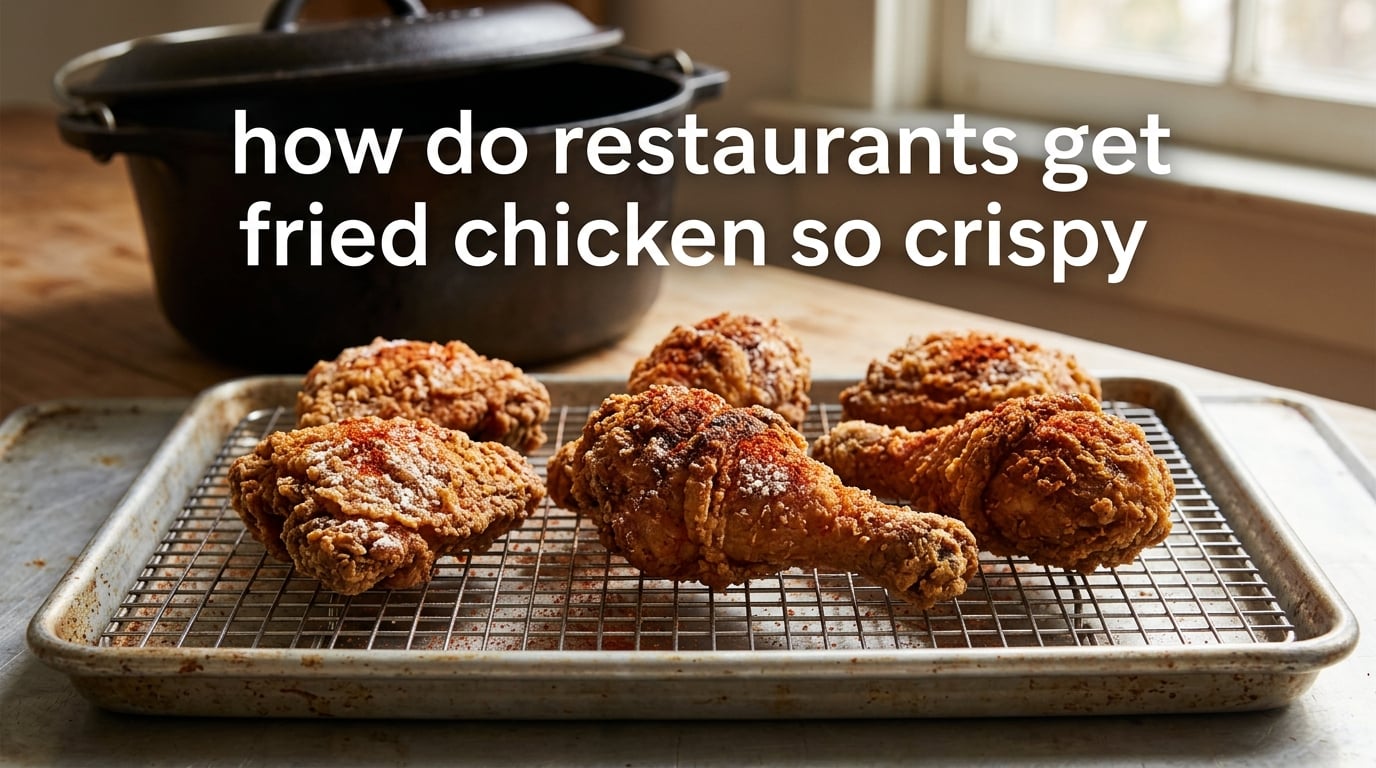
Restaurants get fried chicken so crispy by combining four key factors: dry brining the meat for juiciness, mixing cornstarch or potato starch into the flour dredge, double-frying at controlled oil temperatures around 325 to 350F, and resting the finished chicken on a wire rack instead of paper towels. Together these steps create rapid moisture evaporation, stronger Maillard browning, and a craggy crust that stays crunchy long after it leaves the fryer.
I’ve spent the last year testing fried chicken methods in both restaurant test kitchens and my home setup, and the gap between takeout and homemade almost always comes down to a handful of specific techniques rather than expensive equipment. Below, I walk through the seven core secrets, the food science behind each one, and the troubleshooting tips that fix the most common home failures.
Table of Contents
The 7 Restaurant Secrets for Crispy Fried Chicken
When I traced recipes from J. Kenji Lopez-Alt at Serious Eats, Korean food blogs, and several Chinese restaurant chefs, the same seven moves kept showing up. Master these and your homemade fried chicken will rival anything you can order.
1. Dry-brine or buttermilk-brine the chicken. Salt draws moisture into the meat, seasons it all the way through, and helps the breading stick. A wet brine with buttermilk also tenderizes the protein and adds tangy flavor.
2. Add cornstarch or potato starch to the dredge. Starch inhibits gluten formation and creates a more delicate, glassy crust that shatters when you bite it. A 50/50 mix of flour and cornstarch is the most common restaurant formula.
3. Add vodka or another high-proof alcohol. Alcohol evaporates faster than water at frying temperatures, so the crust sets almost instantly and stays light rather than greasy. Half an ounce per cup of marinade is the standard ratio.
4. Use the wet-then-dry dredge with clumps. Dipping the chicken in buttermilk or egg whites first and then pressing it into the seasoned flour creates those craggy nooks and crannies you see on KFC and Korean fried chicken. Rubbing some flour into wet clumps in the dredging bowl makes extra pebbles of crust.
5. Double-fry at two temperatures. The first fry at around 325F cooks the chicken through and sets the crust. A short second fry at 350 to 375F drives off surface moisture and crisps the coating to deep golden brown. Korean restaurants use a 30 to 60 second second fry for that signature glassy crunch.
6. Maintain proper oil temperature. Anything below 340F makes greasy chicken because the coating absorbs oil before it can crisp. Anything above 375F burns the outside before the inside cooks. The sweet spot for most fried chicken is 340 to 350F.
7. Rest on a wire rack, never paper towels. Paper towels trap steam under the crust and turn it soggy. A wire rack lets air circulate on all sides and keeps the coating audibly crunchy.
The Science Behind the Crunch: Why Restaurants Get It Right
Crispy fried chicken is the result of three overlapping chemical reactions happening at once: moisture evaporation, starch gelatinization, and the Maillard reaction. Understanding each one explains why restaurants consistently win and why home kitchens usually lose.
Moisture Evaporation and Vapor Bubbles
When hot oil hits the wet coating, water at the surface flashes to steam and escapes as vapor bubbles. Those rising bubbles literally push the crust outward, creating the craggy, irregular texture you want. The faster this happens, the more dramatic the texture. Vodka and cornstarch both speed up evaporation by lowering the boiling point of the liquid and reducing gluten development.
Starch Gelatinization
Starch granules swell and burst between 140F and 180F, then form a glassy matrix as they cool. Cornstarch and potato starch gelatinize at slightly different temperatures and create different textures. Potato starch tends to produce a lighter, more delicate crust. Cornstarch gives a slightly chewier bite with deeper browning.
Maillard Reaction
The Maillard reaction is the browning step. Amino acids react with reducing sugars when temperatures climb above 285F, creating hundreds of new flavor and color compounds. This is what gives fried chicken its golden-brown color and savory, complex flavor. Starch-heavy dredges brown faster than pure flour dredges, which is why starch addition speeds up both color and crunch.
Gluten Formation
Flour contains two proteins, glutenin and gliadin, that combine into gluten when hydrated and agitated. Too much gluten in the crust makes it tough, chewy, and bready rather than crispy. Cornstarch, potato starch, and alcohol all interfere with gluten formation, keeping the crust delicate and brittle.
Oil Temperature: The Number Most Home Cooks Get Wrong
Oil temperature is the single biggest variable I see home cooks get wrong. After running side-by-side tests at 320F, 340F, 350F, and 375F, the differences are dramatic.
Below 340F: The Greasy Zone
Oil that is too cool allows the coating to absorb oil before the surface can crisp. The result is a heavy, greasy crust that feels wet in your mouth. Most home fryers run cool because they are not preheated long enough or because the burner cannot recover after adding cold chicken.
340 to 350F: The Sweet Spot
This is the temperature professional kitchens target for most fried chicken. The coating crisps within the first 90 seconds, sealing the surface so oil penetration stays minimal. The chicken cooks through in 12 to 14 minutes depending on the cut. Use a clip-on thermometer or a deep-fry thermometer and adjust the burner constantly to hold this range.
360 to 375F: The Danger Zone
Anything above 360F risks burning the crust before the meat cooks through. You will see a dark brown coating with raw or pink interior. A short second fry at this temperature, however, is exactly what Korean restaurants do to finish the chicken.
How to Hold Temperature Stable
Use a heavy pot with high sides, like a Dutch oven. Add chicken in small batches so the oil temperature does not drop more than 10 degrees. Let the oil recover between batches. A Dutch oven holds heat better than a thin skillet, and the high sides prevent dangerous splashing.
The KFC Method: Pressure Fryers and the Original Recipe
How does KFC get their chicken so crunchy? The honest answer is pressure frying, a technique that is very difficult to replicate in a home kitchen. Reddit users in r/Cooking and r/AskCulinary confirm that KFC’s Original Recipe was originally pressure-fried at lower temperatures under sealed pressure, which produces a uniquely moist interior with a craggy, crusted exterior.
Pressure frying works because the sealed environment raises the boiling point of water inside the chicken. Moisture stays inside the meat instead of escaping as steam, so the chicken finishes cooking at a lower temperature with less moisture loss. The crust still browns because the oil temperature stays around 325F but the chicken interior cooks faster due to the pressure. This combination produces the classic KFC texture: juicy meat with a thick, craggy crust that shatters when bitten.
What KFC Uses in the Dredge
The Original Recipe uses 11 herbs and spices, famously leaked to the Chicago Tribune in 2016. The blend typically includes salt, black pepper, white pepper, paprika, garlic powder, onion powder, celery salt, mustard powder, ginger, oregano, and a tiny amount of ground sage or thyme. To replicate the texture at home, mix these spices with equal parts flour and cornstarch plus a tablespoon of baking powder per cup of dredge.
What Home Cooks Can Do Instead
Since home pressure fryers exist but are expensive and bulky, the best home substitute is a Dutch oven plus the double-fry method. Pressure fryers can also be found in commercial sizes if you want to go full pro, but most home cooks get excellent results from the double-fry method alone.
Chinese Restaurant Technique: Velveting, Cornstarch, and Double-Fry
How do Chinese restaurants get their chicken so crispy? Three moves: velveting, a cornstarch-heavy dredge, and a two-stage fry. Chinese takeout chicken stays crispy under thick sauce because the coating is built to withstand moisture.
Step 1: Velvet the Chicken
Velveting is a Chinese technique where thin-sliced chicken is marinated in a mixture of egg white, cornstarch, rice wine, and salt for 20 to 30 minutes. The egg white coats each piece in protein that sets into a protective layer during frying. Restaurants typically velvet for at least 30 minutes, sometimes several hours.
Step 2: Cornstarch-Only or Heavy-Cornstarch Dredge
Chinese restaurants often use pure cornstarch or a 70/30 cornstarch-to-flour blend. This produces a glassier, more brittle crust than all-purpose flour alone. The lighter color is also traditional for dishes like sesame chicken, orange chicken, and General Tso’s chicken.
Step 3: Two-Stage Fry
The first fry at 325F cooks the chicken through and sets the crust, around 4 to 5 minutes for bite-sized pieces. The second fry at 375F for 60 to 90 seconds crisps the coating and creates that signature glassy snap. After saucing, the chicken stays audibly crunchy because the crust is denser and less porous than a flour-only dredge.
Korean Fried Chicken: The Double-Fry That Stays Crispy Under Sauce
Korean fried chicken is famous for being crispy even after being tossed in sticky sweet chili or soy-garlic sauce. The secret is potato starch plus a much shorter second fry than other cuisines use.
Why Potato Starch Works
Potato starch has larger granules than cornstarch and absorbs less oil during frying. This gives a lighter, more delicate crust that resists sogginess when wet sauce is added. Many Korean restaurants use 100% potato starch or a 50/50 potato starch and flour blend.
The 30 to 60 Second Second Fry
Traditional Korean double-fry goes like this: first fry at 325F for 8 to 10 minutes until cooked through. Remove the chicken and let it rest for at least 5 minutes. Second fry at 350 to 360F for 30 to 60 seconds. The brief second fry drives off the surface moisture without overcooking the meat. The result is a glassy, almost translucent crust that crunches louder than any other style.
Sauce-Resistant Texture
Because the crust is so dense and glassy, sauce coats it without soaking in. Korean fried chicken stays crunchy for 10 to 15 minutes after saucing, which is why it works so well for takeout and delivery.
Cornstarch vs Baking Powder: What Actually Makes Chicken Crispier?
What makes fried chicken crispier, baking powder or cornstarch? After testing both in identical setups, cornstarch wins for pure crunch, while baking powder wins for craggy, bubbled texture. They do different jobs, and you can even use both.
Cornstarch: Pure Crunch
Cornstarch inhibits gluten formation and creates a delicate, brittle crust. It browns faster than flour because starches gelatinize at lower temperatures. The downside is that cornstarch-only coatings can be pale and lack the deep toasty flavor of a flour dredge.
Baking Powder: Bubbled, Craggy Texture
Baking powder releases carbon dioxide gas when it hits hot oil. That gas creates bubbles in the crust, producing a pebbled, irregular texture similar to KFC’s coating. Baking powder does not actually make chicken crispier in the way cornstarch does, but it makes the crust look and feel crunchier because of all the surface texture.
The Best of Both Worlds
Many restaurant recipes combine both. A typical restaurant dredge might be 1 cup flour, 1/2 cup cornstarch, and 1 teaspoon baking powder. The cornstarch delivers the crunch, the flour delivers flavor and color, and the baking powder adds surface texture.
How to Coat Chicken Like KFC: The Dredge Technique
How to coat chicken like KFC comes down to a wet-then-dry dredge with intentionally clumpy flour. The craggy texture is the goal, and getting it requires a slightly messy technique.
Step 1: Set Up Three Bowls
Bowl one holds seasoned buttermilk or egg whites. Bowl two holds the seasoned flour dredge with cornstarch and spices. Bowl three holds a final dredge of dry seasoned flour only. The three-bowl setup lets you build layers.
Step 2: Wet Dip
Dip each piece of chicken in the wet bowl and let the excess drip off. Do not let it soak. The wet layer is what makes the dry dredge stick.
Step 3: Dry Dredge with Clumps
Press the wet chicken into the flour dredge and turn to coat. As you do this, use your other hand to rub some of the wet flour into clumps. These clumps become the craggy pebbles on the finished crust. Press the clumps onto the chicken by hand so they stick.
Step 4: Final Dry Coat
After the wet-dry dip, roll the chicken in the third bowl of dry flour only. This outer dry layer is what fries up crisp and keeps the crust from absorbing oil.
Step 5: Rest Before Frying
Let the coated chicken rest on a wire rack for 10 to 15 minutes before frying. This lets the flour hydrate and form a paste-like bond with the chicken. Skipping this step is a common cause of breading falling off during frying.
Equipment That Makes a Difference: Pressure Fryer vs Dutch Oven vs Deep Fryer
You do not need a pressure fryer to make great fried chicken, but equipment does matter. Here is how the three main options compare for home cooks.
Pressure Fryer
Pressure fryers seal the cooking environment and raise the boiling point of water inside the chicken. The result is juicy meat with a thick, craggy crust. The downside is price, bulk, and the learning curve. Commercial pressure fryers are also harder to find for home use than open fryers.
Dutch Oven
A 5 to 7 quart enameled Dutch oven is the home cook’s best friend for fried chicken. The heavy bottom holds oil temperature steady, the high sides prevent splashing, and the cast iron construction heats evenly. Pair it with a clip-on thermometer and you can hit restaurant-quality results.
Countertop Deep Fryer
Countertop electric fryers are convenient because they hold temperature automatically and have built-in baskets. The downside is capacity: most home models handle only one or two pieces at a time. For larger batches, a Dutch oven wins.
Cast Iron Skillet
A cast iron skillet works for shallow frying but is harder to control for deep frying because the oil depth is shallow and the temperature drops quickly when chicken is added. Save the cast iron skillet for pan-fried chicken thighs or shallow frying.
Troubleshooting: Why Your Fried Chicken Isn’t Crispy
Reddit’s r/Cooking threads are full of the same complaints. Here are the six most common reasons your fried chicken is soggy, greasy, or missing its crust, and exactly how to fix each one.
1. The oil is not hot enough. Below 340F, the coating absorbs oil before it can crisp. Use a thermometer and aim for 340 to 350F. Wait for the oil to fully recover between batches.
2. You overcrowd the pot. Adding too much chicken drops the oil temperature and steams the coating. Fry in small batches of 3 to 4 pieces at a time.
3. You rest the chicken on paper towels. Paper towels trap steam under the crust. Use a wire rack set over a baking sheet. Air circulation is the friend of crunch.
4. You skip the double-fry. A single fry cannot both cook the chicken through and crisp the crust. The first fry at 325F sets the crust and cooks the meat. The second fry at 350 to 375F crisps the outside without overcooking the inside.
5. The breading falls off. Breading falls off when the chicken is too wet, the dredge is too dry, or you skip the rest after coating. Pat the chicken dry before dredging, press the flour firmly, and rest 10 to 15 minutes before frying.
6. You use all-purpose flour only. Flour-only dredges develop too much gluten and turn bready. Mix in cornstarch or potato starch at a 50/50 ratio. The starch inhibits gluten and browns faster.
One more common mistake: holding fried chicken in the oven to keep it warm. The low oven temperature softens the crust within minutes. If you must hold fried chicken, leave it on a wire rack at room temperature for up to 30 minutes, then re-fry briefly for 60 seconds to refresh the crust.
Frequently Asked Questions
What is the secret to crispy fried chicken?
The secret to crispy fried chicken is combining three techniques: a starch-heavy dredge (cornstarch or potato starch mixed with flour), a two-stage double-fry at 325F then 350 to 375F, and resting the cooked chicken on a wire rack. Vodka in the marinade and a buttermilk brine also help by inhibiting gluten and adding moisture.
How does KFC get their chicken so crunchy?
KFC gets their chicken so crunchy by pressure frying at lower oil temperatures inside a sealed environment. Pressure frying raises the boiling point of water inside the chicken so the meat stays juicy while the crust crisps. The 11-spice Original Recipe blend and a craggy wet-then-dry dredge add to the signature texture.
How do Chinese restaurants get their chicken so crispy?
Chinese restaurants get their chicken so crispy by velveting thin-sliced chicken in egg white and cornstarch, then using a cornstarch-heavy dredge, then doing a two-stage fry at 325F and 375F. The cornstarch-only crust is glassy and dense, which resists sogginess even under thick sauce.
What makes fried chicken crispier, baking powder or cornstarch?
Cornstarch makes fried chicken crispier because it inhibits gluten formation and browns faster than flour. Baking powder does not add crunch directly, but it releases carbon dioxide gas in the oil that creates a craggy, bubbled surface texture. For best results, use cornstarch for crunch and add baking powder if you want extra pebbled texture.
Why won’t my fried chicken get crispy?
Your fried chicken won’t get crispy because the oil temperature is too low (below 340F), the dredge is all-purpose flour only (no starch), you overcrowded the pot, or you rested the cooked chicken on paper towels. Fix these by holding 340 to 350F oil, mixing in cornstarch, frying in small batches, and resting on a wire rack.
How do I make fried chicken more crispy?
Make fried chicken more crispy by adding cornstarch or potato starch to your dredge, double-frying at 325F then 350 to 375F, using vodka in the marinade, and pressing clumps of wet flour onto the chicken before frying. Rest the coated chicken for 10 to 15 minutes before frying to help the breading bond.
Why is KFC chicken not crispy?
KFC chicken is not crispy when it has been held under a heat lamp too long, when the original recipe was pressure-fried but held open, or when the chicken is past its peak holding time. KFC’s signature crunch fades within 10 to 15 minutes of leaving the pressure fryer. Eat it fresh for maximum crispness.
How to coat chicken like KFC?
Coat chicken like KFC using a wet-then-dry dredge with clumpy seasoned flour. Dip the chicken in buttermilk or egg whites, then press it into a flour dredge mixed with cornstarch and 11 spices. While dredging, rub some flour into wet clumps and press those onto the chicken. Rest 10 to 15 minutes before frying.
What is the trick to crispy fried chicken?
The trick to crispy fried chicken is the double-fry: cook the chicken at 325F until done, rest it for 5 to 10 minutes, then fry again at 350 to 375F for 60 to 90 seconds. Combined with a starch-heavy dredge and a wire rack rest after frying, the double-fry is the single biggest difference between homemade and restaurant texture.
Final Thoughts
The answer to how restaurants get fried chicken so crispy is not a single trick but a stack of small ones. A starch-heavy dredge, a proper brine, vodka or egg whites for adhesion and lightness, double-frying at two temperatures, and resting on a wire rack all stack together to produce the texture we love.
You can replicate almost everything at home with a Dutch oven, a thermometer, and patience. Pressure fryers help but are not required. Start with cornstarch in your dredge, master the double-fry, and you will get restaurant-style fried chicken in your own kitchen. For more recipe ideas, browse our cooking guides for fried chicken variations and other comfort food classics.