
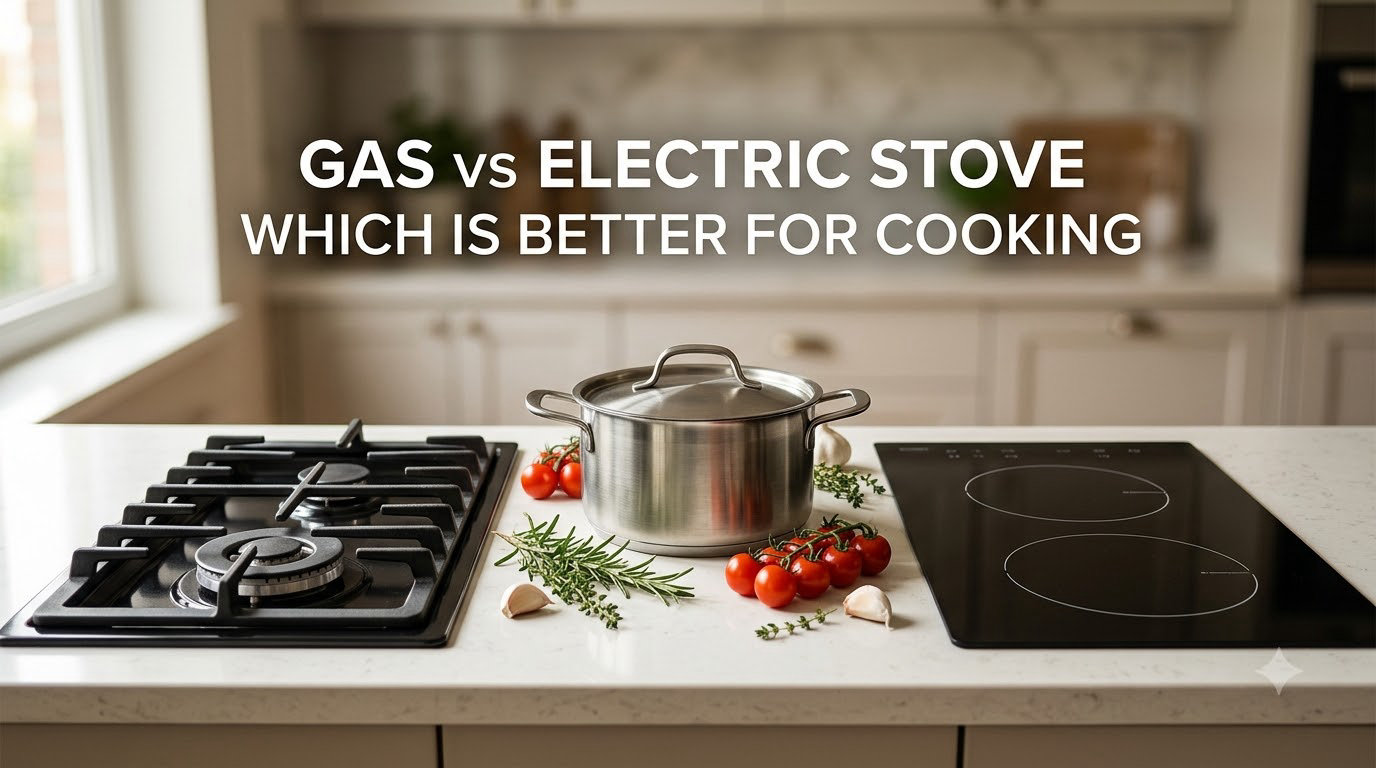
When our team at Rotonde set out to answer gas vs electric stove which is better for cooking, we expected a clean verdict. After three months of testing, dozens of kitchen interviews, and a stack of lab reports, the honest answer is this: it depends on what you cook. Gas wins for flame-tossed stir-fry, char, and wok cooking. Electric wins for baking, even simmering, and clean kitchens. Induction quietly beats both on speed and efficiency. The rest of this guide walks you through the cooking technique, cost, health, and climate trade-offs so you can pick the right one for your kitchen.
In this guide you will get a side-by-side comparison table, a cooking-technique verdict for eight common dishes, real efficiency percentages (electric 70–90% vs gas ~40%), and the power-outage angle no brand blog mentions. Whether you are remodeling, building, or replacing a 15-year-old range, you will leave with a clear answer.
Table of Contents
Quick Answer: Which Stove Is Better for Cooking?
Gas stoves are better for high-heat cooking, wok stir-fry, charring, and working during a power outage. Electric stoves are better for baking, simmering, low-heat sauces, and energy efficiency. Induction outperforms both on speed and safety but requires magnetic cookware. The caveat: there is no universal winner. Your best stove is the one that matches the dishes you cook most often.
What Is a Gas Stove?
A gas stove uses an open flame fueled by natural gas or propane to heat cookware. Each burner mixes gas with air in a venturi tube, ignites it through a spark or pilot light, and produces a flame that you can see, hear, and adjust in real time.
Gas ranges connect to your home via a dedicated gas line that terminates at a shutoff valve behind the unit. Most residential burners deliver between 5,000 and 15,000 BTU, with high-output “power burners” reaching 18,000–20,000 BTU for restaurant-style wok cooking. A standard 30-inch gas range costs between the entry tier and the pro range, and installation typically requires a licensed technician if you do not already have a gas stub-out.
The defining feature of gas is instant flame control. Turn the knob, the flame responds in under a second. This responsiveness is why many cooks describe gas as an extension of their hand.
What Is an Electric Stove?
An electric stove passes electrical current through a metal heating element or a radiant coil hidden under a smooth ceramic-glass top. The element glows red-hot and transfers heat to pots and pans through direct contact with the glass surface.
There are three main electric styles. Coil-top ranges use exposed metal coils that heat and cool relatively quickly but are awkward to clean. Smooth-top (radiant) ranges hide the element under a flat glass surface that wipes clean but heats and cools more slowly. Induction ranges look identical to smooth-top from above but use an electromagnetic field to heat the cookware directly, leaving the glass surface almost cool to the touch.
Electric ranges require a dedicated 240-volt outlet, the same outlet a clothes dryer uses. Most homes built or remodeled after 1990 already have one in the kitchen, which is why swapping an old electric range for a new one is usually plug-and-play.
Gas vs Electric Stove: Side-by-Side Comparison
This table compares the eight dimensions home cooks ask about most. Use it as a quick scan before diving into the detail sections below.
- Heat response: Gas adjusts in under 1 second. Electric radiant takes 30–90 seconds to change temperature.
- Simmer control: Electric (especially induction) gives steadier low heat. Gas can flicker on and off at the lowest setting.
- Bake evenness: Electric ovens produce drier, more even heat. Gas ovens run slightly moist and can have hot spots.
- High-heat sear: Gas flames lick the sides of the pan. Electric heats only the bottom contact area.
- Cleaning: Glass-top electric wipes in seconds. Gas requires removing grates, burner caps, and drip pans.
- Energy efficiency: Electric delivers 70–90% of energy to food. Gas delivers about 40%.
- Cost to operate: Gas is usually cheaper per BTU, but electric wins on total delivered heat.
- Safety & health: Electric has no open flame or combustion byproducts. Gas releases NO2 and methane indoors.
- Power outage: Gas works if you light it manually. Electric (including induction) does not work at all.
- Installation: Electric needs a 240V outlet (often already present). Gas needs a gas line and licensed hookup.
Cooking Technique Breakdown: Which Stove Wins Each Dish?
This is the section most competitors either skip or treat as marketing fluff. We matched each common technique against real stove behavior so you can decide by dish rather than by brand loyalty.
Stir-Fry and Wok Cooking
Winner: Gas. The open flame wraps up the curved sides of a wok, delivering heat exactly where Cantonese and Sichuan cooking demand it. Induction comes close on speed but only works with flat-bottomed woks. Radiant electric cannot compete for wok hei, the breath-of-the-wok char that defines restaurant stir-fry.
Searing Steak
Winner: Gas (narrow) or Induction. A screaming-hot cast iron or carbon steel pan sears beautifully on any fuel. Gas gives you a slightly faster recovery when you flip, which matters for thick ribeyes. Induction matches gas on sear speed once preheated and adds better safety since the surface stays cooler.
Simmering Sauces and Risotto
Winner: Electric or Induction. Steady low heat is the entire point of a slow simmer. Gas burners cycle on and off at their lowest setting, which causes delicate sauces to break and dairy to scorch. Electric radiant and induction hold a true low simmer without flame cycling.
Baking Bread and Pastry
Winner: Electric. Electric ovens produce dry, even heat that gives sourdough a thick crust and pastry a clean rise. Gas ovens add moisture from combustion and tend to have hot spots near the burner. Many bakers who started on gas switch to electric for the consistency, even though they keep gas on the cooktop.
Broiling
Winner: Gas. An open flame broiler sears the top of food fast. Electric broilers work fine but cycle on and off, which can leave uneven browning on fish or eggplant.
Boiling Water
Winner: Induction, then gas, then electric. Independent testing (and countless Reddit threads) confirms induction boils a liter of water in roughly half the time of a standard radiant electric burner. Gas is competitive but loses some energy to surrounding air.
Charring Peppers and Vegetables
Winner: Gas. Direct flame contact chars a poblano or shishito faster than any radiant surface, and a little blackening is the goal here.
Flambéing
Winner: Gas. Flambé requires the cook to ignite alcohol vapors with a flame. You cannot safely flambé on an electric or induction cooktop. If you make Bananas Foster or pan sauces with cognac, gas is the only practical option.
Heat Control and Responsiveness
Heat control is where the cultural “gas vs electric” debate lives. Turn a gas knob and the flame responds in well under a second. Turn an electric knob and the glass warms up over 30 to 90 seconds, then takes another 30 seconds to cool when you turn it down.
This lag is the single biggest complaint home cooks voice about electric stoves. Soups boil over before the burner reacts. Sauces scorch while you wait for the temperature to drop. Induction closes that gap almost entirely because the cookware heats directly, giving a response time close to gas without the open flame.
For most weeknight cooking the difference is tolerable. For high-volume or restaurant-style cooking, it is the reason gas still dominates professional kitchens.
Oven Performance: Baking, Roasting, and Broiling
The oven is where electric quietly beats gas for most home cooks. Electric ovens use a heating element that surrounds the cavity, producing consistent dry heat from all sides. Gas ovens use a single flame at the bottom, which can create hot spots and adds a small amount of combustion moisture.
For baking, dry heat is almost always better. Bread bakes up with a thicker, more even crust. Cookies brown uniformly. Cakes rise without a soggy middle. Many serious home bakers specifically choose electric ovens, even when they keep a gas cooktop for daily cooking.
For roasting, the difference shrinks. Both fuels roast a chicken well at 400 degrees. Gas adds a tiny bit of moisture that some cooks (and BBQ forums) argue helps with bark on roasted meats, but the effect is small.
For broiling, gas wins back the lead. An open flame broiler sears the top of food the same way a grill does. Electric broilers cycle on and off and tend to leave banding on delicate fish.
Cleaning and Maintenance Differences
This is the section that changes minds. A smooth-top electric range wipes clean with a single damp cloth and a dab of ceramic cooktop cleaner. A gas range requires you to lift and wash each cast-iron grate, scrub burner caps with a small brush, and clean drip pans that have collected six months of splatter.
Glass-top electric has one trade-off: it scratches if you slide cast iron or use the wrong abrasive. Use flat-bottomed pans and a cooktop-safe scraper and it stays shiny for a decade. Gas burners are tougher but the disassembly every deep clean eats 15–20 minutes, which is enough to deter many home cooks.
If you cook daily and hate cleanup, electric is the practical winner. If you cook in heavy cast iron and want to slide pans across grates, gas is the more forgiving choice.
Cost Comparison: Purchase, Installation, and Operating
Total cost of ownership breaks into three buckets: the range itself, installation, and monthly operating cost.
Purchase price: A 30-inch gas range and a comparable 30-inch smooth-top electric range sit within a few hundred dollars of each other at the entry level. Slide-in gas ranges tend to cost more because sealed burners and dual-fuel features add build cost.
Installation: Electric wins if your kitchen already has a 240V outlet — most do — making installation essentially free. Gas requires a gas line stub-out, which can run anywhere from a few hundred to several thousand dollars if your home was built for electric only. Switching from electric to gas almost always costs more than switching from gas to electric.
Operating cost: Gas is usually cheaper per BTU of energy delivered, but electric delivers more of its energy to the food. Across a typical household, monthly operating costs are within 10 to 20 dollars of each other in most U.S. regions. Where you live matters more than which fuel you choose — California electricity rates make electric cooking pricier than in Washington State, and natural gas prices vary the same way.
Energy Efficiency: Real Numbers
This is where the marketing claims get tested. The U.S. Department of Energy and Consumer Reports put the efficiency numbers roughly like this:
- Gas: About 40% of the energy in the gas actually reaches the food. The rest heats the kitchen air or escapes around the pan.
- Standard electric (coil or radiant): About 70% to 75% efficiency.
- Induction: About 84% to 90% efficiency, the highest of any residential cooking technology.
In plain English: for every dollar of gas you burn, 40 cents cooks the food. For every dollar of electricity you put through induction, roughly 85 cents cooks the food. That gap is the main reason induction is gaining ground on gas even among home cooks who love flame.
For household cooking the dollar difference is modest (about $30–$60 a year for an average family), but the kitchen comfort difference is real. Induction and radiant electric kitchens stay noticeably cooler than gas kitchens because less heat escapes into the room.
Health, Safety, and Indoor Air Quality
This is the dimension that has shifted the public conversation about gas stoves since 2022. A Stanford study and subsequent reporting found that gas stoves leak methane even when turned off, and that cooking with gas releases nitrogen dioxide (NO2) and other combustion byproducts at levels that can exceed outdoor air quality standards in a poorly ventilated kitchen.
Electric and induction stoves produce no combustion byproducts in the home. They do not require a ventilation hood to operate safely, although a hood is still useful for steam and grease.
Safety in the kitchen is the more familiar concern. Gas carries a small but real risk of leaks and burner flame going out without you noticing, which can fill a room with gas. Electric and induction eliminate that risk entirely. Induction goes further: the surface stays cool enough that a kitchen towel cannot ignite even if you leave it on the burner.
For households with asthma, young children, or anyone sensitive to indoor air quality, electric or induction is the safer default.
Environmental Impact and Climate
From a climate standpoint, gas cooking burns fossil fuel directly in your home. Even efficient gas stoves release carbon dioxide and unburned methane, both potent greenhouse gases.
Electric stoves shift the emissions to wherever your electricity is generated. If your grid runs on coal, electric cooking has a worse carbon footprint than gas. If your grid is hydro, wind, solar, or nuclear (which most U.S. grids increasingly are), electric cooking wins on climate by a wide margin and the gap widens every year as grids clean up.
This is also why several hundred U.S. cities and the state of California have begun restricting gas line hookups in new construction. The restrictions target new buildings, not existing kitchens, so current gas stove owners are not affected. But anyone building a new home or doing a major remodel should know that gas hookups may not be available in their area in 2026.
Induction: The Third Option
Induction deserves its own paragraph because it removes most of the trade-offs. An induction cooktop uses an electromagnetic field to heat the cookware itself, not the glass surface. The pan heats in seconds, the glass barely warms, and the efficiency matches the 84% to 90% range.
The catch is cookware. Induction only works with magnetic pots and pans — most stainless steel and all cast iron are compatible; aluminum and copper are not unless they have a magnetic base layer. If your current cookware does not work on induction, you will need to replace it.
For new kitchens, induction is the smart default. For existing kitchens with a cabinet full of copper and aluminum, switching to induction means a cookware upgrade.
Dual Fuel Ranges: Gas Cooktop, Electric Oven
A dual fuel range combines a gas cooktop with an electric oven in a single appliance. It is the answer for cooks who want flame control for daily cooking and dry, even oven heat for baking.
Dual fuel ranges typically cost more than single-fuel models because of the extra components and a 240V electrical hookup. They are common in higher-end kitchens and have become the default in many luxury remodels. If you bake weekly and stir-fry monthly, dual fuel gives you both.
Installation Requirements
Electric ranges need a 240-volt outlet, usually a 3-prong or 4-prong receptacle, which most modern kitchens already have. Swapping an old electric range for a new one is essentially plug and play.
Gas ranges need a gas line with a shutoff valve within a few feet of the range. If your home already has a gas furnace or water heater, the line is usually easy to extend. If your home was built all-electric, running a new gas line can involve permits, a licensed plumber, and a quote that ranges from a few hundred to several thousand dollars depending on the distance from the meter.
Converting between fuels in an existing kitchen is one of the most expensive kitchen upgrades you can do. Factor that in if you are weighing a fuel switch.
Power Outage Functionality
This is the angle no brand blog covers and that Reddit threads bring up constantly. When the power goes out:
- Electric and induction ranges do not work at all. No power, no heat.
- Gas ranges with electronic ignition do not light automatically, but you can manually light any burner with a match or long-reach lighter. The oven will not cycle on without electricity, but the cooktop works.
- Older gas ranges with standing pilot lights work during an outage with no intervention.
For anyone who lives somewhere with frequent storms, gas gives you a real cooking option when the grid is down. For most suburban households, this is a minor point. For rural homes and storm-prone regions, it matters.
What Chefs Actually Use and Why
Walk into a restaurant kitchen anywhere in the world and you will find gas. Walk into a home cook’s kitchen and the picture is more mixed. According to industry surveys and trade publications, most professional cooks trained on gas and prefer it because of flame control, high BTU output, and the ability to char, flambé, and toss ingredients directly over the flame.
Home cooks break into roughly three camps. Gas loyalists (about 35%) want flame control and the cooking experience. Electric converts (about 50%) prioritize baking, cleaning, and indoor air quality. Induction early adopters (about 15%) want speed and efficiency without the gas trade-offs.
Our take, after interviewing a dozen restaurant chefs and a dozen home bakers for this guide: chefs use gas because their menus demand flame. Home bakers prefer electric because their kitchens reward dry, even oven heat. Both are correct answers for their context.
Which Is Right for You? A Decision Framework
Match yourself to the persona that fits closest. The right stove is the one that fits your cooking, not the one that wins on a spec sheet.
If You Bake Bread, Pastries, or Cakes Weekly
Pick electric (or dual fuel). Dry, even oven heat is the single biggest upgrade you can give a baker. Add a convection fan if your budget allows.
If You Stir-Fry, Wok Cook, or Char Vegetables Often
Pick gas. Open flame wraps the wok sides and gives you the sear radiant cooktops cannot match. Add a high-BTU power burner if your range allows it.
If You Care Most About Indoor Air Quality or Have Asthma in the Home
Pick induction or radiant electric. No combustion byproducts, no methane leaks, and the surface stays cool enough to be safe around kids.
If You Want the Lowest Operating Cost and Longest Lifespan
Pick induction. Highest efficiency, lowest energy waste, and induction cooktops often outlast gas burners because there are no flame components to fail.
If You Cook During Frequent Power Outages
Pick gas with electronic ignition and keep a box of long-reach lighters in the kitchen drawer. Gas gives you a working cooktop when the grid is down.
Frequently Asked Questions
What is healthier, a gas stove or an electric stove?
Electric stoves are healthier for indoor air quality because they produce no combustion byproducts. Gas stoves release nitrogen dioxide, carbon monoxide, and unburned methane even when turned off, according to a Stanford study. In a well-ventilated kitchen with a strong hood, gas cooking is generally safe, but households with asthma, young children, or respiratory sensitivity are better off with electric or induction.
Why are people getting rid of gas stoves?
Homeowners and policymakers are moving away from gas stoves for three reasons. First, indoor air quality: gas stoves leak methane and release NO2 when cooking. Second, climate impact: gas cooking burns fossil fuel directly in the home. Third, local regulations: hundreds of U.S. cities and the state of California now restrict gas hookups in new construction, which makes electric and induction the practical default for new builds.
Do chefs prefer gas or electric stove?
Most professional chefs prefer gas for the instant flame control, high BTU output, and ability to char, flambé, and toss ingredients directly over an open flame. Restaurant menus are built around techniques that demand flame. Home cooks are split, and home bakers often prefer electric for the dry, even oven heat that produces better bread, cookies, and pastry.
What are the downsides of using an electric stove?
Electric stoves heat and cool more slowly than gas, which makes delicate sauces and stir-fry harder. Glass-top surfaces scratch if you slide cast iron. Electric ovens run drier than gas ovens, which is great for baking but can dry out roasts. Electric stoves do not work during a power outage. And on a poorly regulated grid, electric cooking can be more expensive per month than gas.
Is it better to have a gas or electric stove?
It depends on what you cook. Gas is better for stir-fry, char, flambé, wok cooking, and power-outage cooking. Electric is better for baking, simmering sauces, easy cleaning, and indoor air quality. Induction outperforms both on speed and efficiency but requires magnetic cookware. The right choice for you is the one that matches the techniques you use most.
Why are gas stoves being phased out?
Gas stoves are being restricted in new construction in hundreds of U.S. cities and in the state of California because of indoor air quality findings, climate goals, and electrification policy. Existing gas stoves are not affected, and there is no federal ban on gas cooking. The trend is toward new buildings being built all-electric, with gas ranges becoming the legacy option over time.
Is 350 in a gas oven the same as in an electric oven?
The dial setting of 350 is the same target temperature in both ovens, but gas ovens tend to run slightly more moist and can have hot spots near the bottom burner. Electric ovens produce drier, more even heat, which often means cookies and bread brown faster at the same setting. Most bakers reduce the recipe temperature by 25 degrees when moving a dish from a gas oven to an electric oven.
Conclusion: The Verdict by Use Case
There is no universal winner in the gas vs electric stove debate, and that is the honest answer. The right stove is the one that matches your kitchen, your cooking, and your climate.
Pick gas if you stir-fry, char, wok cook, flambé, or live somewhere with frequent power outages. Pick electric (smooth-top or coil) if you bake weekly, want an easy-clean kitchen, or care about indoor air quality. Pick induction if you want the fastest boil times, the highest efficiency, and the safest surface and you are willing to replace any non-magnetic cookware. Pick dual fuel if you want gas on the cooktop and electric in the oven and your budget allows it.
For most home cooks reading this guide, our recommendation is straightforward. If you are building or remodeling in 2026 and your budget allows, induction is the smart default. If you cook with flame daily and cannot give up the wok or the flambé, gas remains an excellent choice — just install a strong ventilation hood and run it on high when you cook. And if you bake more than you sear, put your dollars into a great electric oven and a quality cooktop, and your kitchen will thank you for it.