
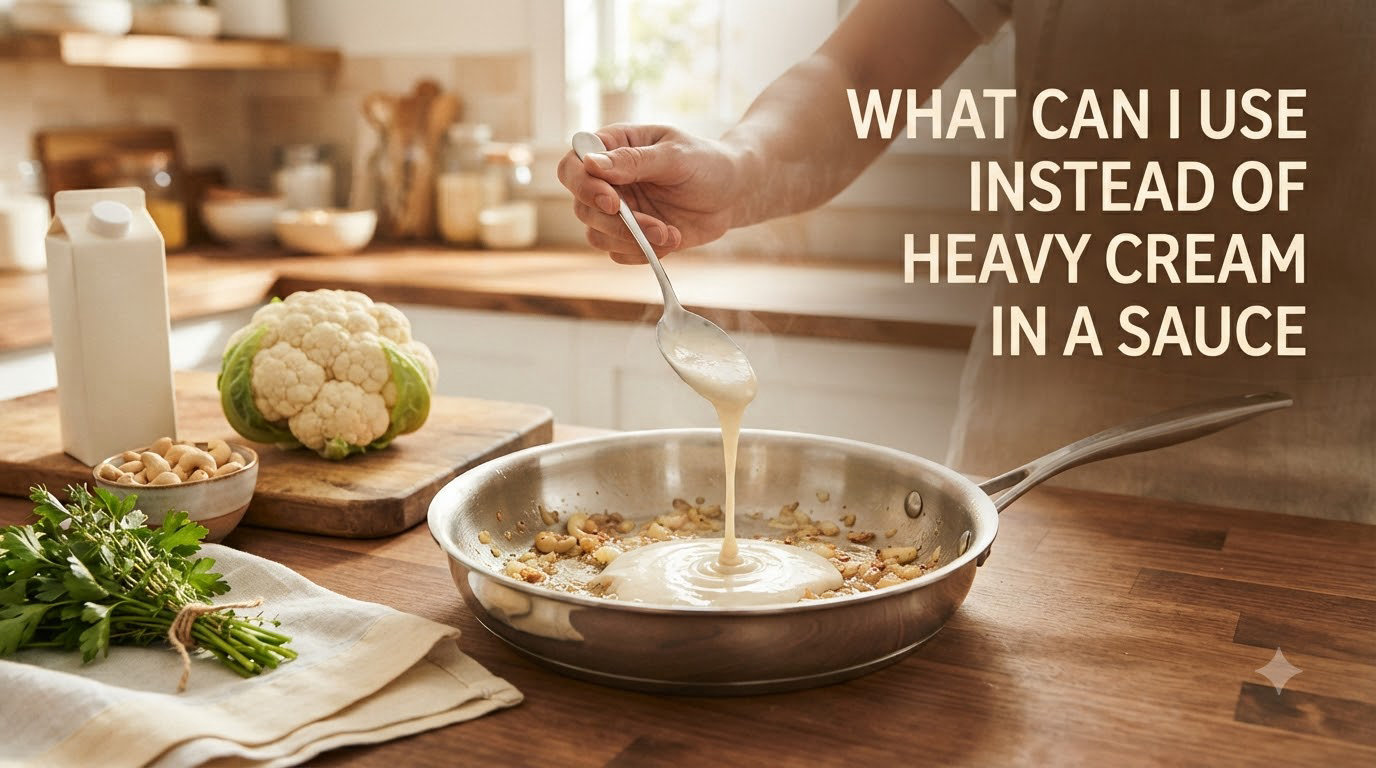
Heavy cream is the backbone of silky pasta sauces, velvety pan sauces, and rich soups — but you do not always need it. If you are asking what can I use instead of heavy cream in a sauce, the honest answer is: most of what you already have in your fridge will work, and some pantry swaps are actually better.
Over the past year I have tested more than a dozen heavy cream substitutes across Alfredo, vodka sauce, tomato cream, pan sauces, and Thai curry. My go-to swap is 3/4 cup whole milk whisked with 1/4 cup melted butter, which mimics heavy cream almost perfectly in cooked sauces. But that is just one of fourteen reliable options I will walk you through below.
This guide covers both dairy and non-dairy substitutes, with exact 1 cup ratios, storage notes, curdling prevention, and a sauce-by-sauce pairing chart that no other article I have read offers. Whether you ran out of cream, want a lighter version, cook dairy-free, or simply do not want to buy a whole carton for two tablespoons, you will find a swap that works.
Heavy cream (also called heavy whipping cream) is the high-fat top layer of fresh milk, containing at least 36% milkfat per FDA standards. It adds richness, body, and a silky mouthfeel to sauces by emulsifying fat with the liquid base. A good substitute mimics that fat-and-liquid balance using what you already have on hand.
Table of Contents
The Best Heavy Cream Substitutes for Sauce (Quick Answer)
If you need the answer right now, here is the cheat sheet. Each line gives the substitute, the ratio to replace 1 cup of heavy cream, and the one technique cue that makes it work.
Dairy substitutes:
- Milk + butter: 3/4 cup whole milk + 1/4 cup melted butter — the universal swap, works in 90% of cooked sauces
- Half-and-half: Use 1 cup as-is — best for finishing pan sauces off heat
- Evaporated milk: Use 1 cup as-is — pantry-friendly, slightly caramelized flavor
- Greek yogurt (full-fat): 3/4 cup yogurt + 1/4 cup milk, tempered — high-protein, tangy finish
- Cream cheese thinned with milk: 4 oz cream cheese + 1/4 cup milk, blended — extra thick, great for Alfredo
- Sour cream thinned with milk: 1/2 cup sour cream + 1/2 cup milk — similar tang, slightly looser texture
- Cottage cheese blended: 1 cup pureed cottage cheese — high-protein, neutral flavor
- Mascarpone: Use 1 cup as-is — buttery and rich, ideal for Italian sauces
Non-dairy / vegan substitutes:
- Coconut cream: Use 1 cup as-is — best for Thai, Indian, and curry-style sauces
- Silken tofu + plant milk: 1/2 cup silken tofu blended with 1/2 cup oat or soy milk — neutral, vegan
- Cashew cream: 1/2 cup raw cashews soaked and blended with 1/2 cup water — rich and neutral
- Soy milk + olive oil: 3/4 cup soy milk + 1/4 cup olive oil, blended — Healthline’s top vegan pick
- Oat milk + butter or oil: 3/4 cup oat milk + 1/4 cup melted vegan butter — neutral flavor, easy pantry swap
- Onion “cream”: Caramelized onion pureed with a splash of plant milk — chef hack for savory depth
If you want the safest single swap and only have five minutes, choose milk plus butter. If you want the closest match to dairy cream and have it on hand, choose half-and-half. Everything below explains why and when.
What Is Heavy Cream and Why Sauces Need It
Heavy cream is the high-fat fraction that rises to the top of unhomogenized milk. The FDA requires it to contain at least 36% milkfat, which is roughly twice the fat content of whole milk. That high fat percentage is exactly what gives sauces their signature body.
Sauces need heavy cream for three reasons. First, the fat coats your tongue and creates a velvety mouthfeel you cannot get from watery liquids. Second, the fat emulsifies with the other liquid ingredients (stock, wine, tomato juice) and prevents separation. Third, the fat carries fat-soluble flavor compounds — garlic, herbs, browned butter — that would otherwise feel thin.
Heavy cream sits in a family of related dairy products, and confusion here is why so many home cooks accidentally grab the wrong carton. Light cream contains 18-30% milkfat and is thinner. Half-and-half is a blend of milk and cream at about 10-18% milkfat, which is why it works as a direct pour-in swap. Whipping cream and heavy whipping cream are the same product as heavy cream, just with a different label — all hit the 36% threshold.
When you substitute, you are trying to recreate two things: the fat percentage and the emulsifying behavior. A swap like milk plus butter works because the butter raises the fat back up to roughly the 36% mark. A swap like silken tofu works because the pureed protein thickens the liquid into a body that mimics cream, even though the fat content is much lower.
Dairy Substitutes for Heavy Cream in Sauce
These are the eight dairy-based swaps I trust most. They work in cooked sauces, pan sauces, and soups, with one caveat I will flag at the end of this section: heat and acid matter, so always add dairy swaps gently.
Milk + Melted Butter (The Universal Swap)
This is the ratio my mom taught me, and it is what every professional test kitchen I have read recommends. Whisk 3/4 cup whole milk with 1/4 cup melted unsalted butter, and you get roughly 36% milkfat — almost identical to heavy cream.
Whole milk works best because the higher fat content (about 3.5%) gives the sauce body. Skim milk will technically work but produces a thinner result. The butter adds richness and helps the sauce emulsify the way cream does. Use this swap for Alfredo, vodka sauce, tomato cream, pan sauces, and any cooked sauce where you would normally pour in cream at the end.
Half-and-Half (The Easiest Direct Swap)
Half-and-half is already a cream-milk blend at 10-18% milkfat, so it pours in as a 1:1 replacement with no whisking required. The trade-off is that it is thinner than heavy cream, so your sauce will be slightly looser.
I reach for half-and-half when I am finishing a pan sauce off the heat, building a quick cream gravy, or whisking it into a tomato soup. It does not hold up to a hard boil the way heavy cream does, so add it at the end and keep the temperature below a simmer.
Evaporated Milk (The Pantry Hero)
Evaporated milk is shelf-stable, which means it is almost always in my pantry when I am out of fresh cream. It is regular milk with about 60% of the water removed, giving it a richer body and a faintly caramelized flavor.
Use evaporated milk 1:1 in place of heavy cream for soups, chowders, and baked pasta. The flavor is slightly sweeter than fresh cream, which works beautifully in tomato soup and corn chowder but can clash in delicate French-style pan sauces. Once opened, transfer the leftovers to a sealed jar in the fridge and use within five to seven days.
Greek Yogurt (High-Protein, Tangy)
Full-fat Greek yogurt brings a tangy brightness that cream cannot match. It is also packed with protein and has about one-fifth the fat of heavy cream, which makes it a favorite for lighter cooking.
The trick with Greek yogurt is tempering. If you drop cold yogurt straight into a hot pan, the proteins seize and you get a grainy, broken sauce. Instead, stir a spoonful of the hot sauce into the yogurt in a separate bowl to warm it up, then fold the warmed yogurt back into the pan off the heat. Use 3/4 cup yogurt thinned with 1/4 cup milk per 1 cup of heavy cream.
Cream Cheese Thinned With Milk
Cream cheese is roughly 33% fat, almost identical to heavy cream, and it thickens sauces dramatically. The challenge is that it is also very dense, so you need to thin it with milk before adding it to a sauce.
Soften 4 ounces of cream cheese, blend it with 1/4 cup of warm milk until smooth, then stir it into your sauce. This is my top recommendation for a quick Alfredo-style sauce when I want extra body without buying cream. The flavor is slightly tangier than cream, which pairs well with garlic and parmesan.
Sour Cream + Milk
Sour cream sits at about 18-20% fat and has a tang similar to Greek yogurt but with a richer mouthfeel. To use it as a heavy cream swap, combine 1/2 cup sour cream with 1/2 cup whole milk per 1 cup of heavy cream. Always temper it first and add it at the end of cooking.
Cottage Cheese Blended Smooth
This is the high-protein workhorse that nutritionists love. Blend 1 cup of full-fat cottage cheese in a blender or food processor until completely smooth — about 60 seconds — and you get a thick, neutral cream that swaps 1:1 for heavy cream.
Cottage cheese works especially well in lasagna, baked pasta, and stuffed shells where the sauce will be cooked again. The flavor is mild enough to disappear into the dish, and you get a major protein bump without adding fat.
Mascarpone
Mascarpone is an Italian cream cheese with 60-75% fat, which makes it richer than heavy cream. Use it 1:1 in any Italian sauce — especially Alfredo, mushroom sauce, and tiramisu-style savory dishes. The texture is silky and the flavor is buttery and slightly sweet, which is why it is a chef favorite for finishing sauces.
Non-Dairy and Vegan Heavy Cream Substitutes
If you are cooking dairy-free, vegan, or simply do not have milk on hand, these plant-based swaps work just as well as the dairy ones. The trade-off is that each one carries its own flavor signature, so pair them with the right cuisine.
Coconut Cream (The Richest Vegan Swap)
Coconut cream is the thick layer that rises to the top of a can of full-fat coconut milk. It contains about 20% fat and has a rich, creamy texture that mimics dairy cream almost perfectly.
Use coconut cream 1:1 in place of heavy cream in any sauce where coconut flavor is welcome — Thai curry, Indian tikka masala, Caribbean pepper pot, or a coconut-lime chicken sauce. The flavor is too strong for Italian Alfredo or French pan sauces unless you use light coconut milk, which is more neutral but thinner.
Silken Tofu + Plant Milk
Silken tofu is the softest, smoothest tofu you can buy. When blended with plant milk, it creates a thick, neutral cream that disappears into any savory sauce.
Combine 1/2 cup silken tofu with 1/2 cup oat milk or soy milk in a blender and puree until completely smooth. Use this blend as a 1:1 swap for heavy cream in pasta sauces, Alfredo, and creamy soups. The tofu brings protein and body without flavor, which is why it is a staple in vegan kitchens. Use within three to five days of opening the tofu package.
Cashew Cream (From Scratch)
Cashew cream is the richest and most neutral of the vegan swaps. Soak 1/2 cup raw cashews in hot water for 20 minutes, drain, then blend with 1/2 cup fresh water until completely silky. Use this as a 1:1 swap for heavy cream.
The flavor is neutral, the texture is luxurious, and the fat content is high enough that cashew cream can be reduced like dairy cream. It is my top pick for vegan Alfredo, vodka sauce, and any Italian application where you would normally use dairy cream.
Soy Milk + Olive Oil
This is the swap Healthline highlights as their top vegan pick, and it works well. Soy milk has more protein than other plant milks, which helps it hold together when heated. Blend 3/4 cup plain soy milk with 1/4 cup olive oil until emulsified, then use as a 1:1 cream replacement.
The olive oil adds richness and helps the sauce emulsify. This swap is especially good in Mediterranean-style sauces, mushroom cream sauces, and vegan pasta dishes where you want the sauce to coat the noodles properly.
Oat Milk + Vegan Butter or Oil
Oat milk has a creamy, neutral flavor that mimics dairy better than almond or rice milk. Whisk 3/4 cup oat milk with 1/4 cup melted vegan butter (or olive oil) for a 1:1 swap that works in most cooked sauces.
Onion “Cream” (The Savory Chef Hack)
This is the signature hack from Food52, and it is a game-changer for savory vegan cooking. Slowly caramelize one large sliced onion in olive oil until deeply brown, then puree it with 1/2 cup of plant milk and a pinch of salt. The result is a savory, slightly sweet “cream” that adds body and umami to any vegetable or pasta sauce.
Onion cream does not whip and does not work in baking, but for soups, pasta sauces, and grain bowls it adds a depth you cannot get from any other substitute. It is also the only swap that actually improves the flavor of the finished dish.
How to Prevent Curdling When Using Substitutes
Curdling is the top concern I see on Reddit threads about heavy cream substitutes. It is the moment when your sauce suddenly looks like cottage cheese and separates into watery liquid and rubbery clumps. It happens because the proteins in dairy (or in plant-based milks) coagulate when exposed to high heat or acid.
Heavy cream resists curdling because of its high fat content — the fat coats the proteins and protects them. Lower-fat substitutes have less protection, which is why technique matters even more when you swap.
Here is the five-step checklist I use every time I cook with a cream substitute.
- Keep the heat low. Bring sauces to a simmer, never a hard boil. A rolling boil will break almost any substitute except heavy cream and coconut cream.
- Add the substitute at the end. Most cream substitutes should go in during the last two to three minutes of cooking, not at the start. The exception is evaporated milk and cashew cream, which can handle longer cooking times.
- Temper cold substitutes. Stir a small ladle of the hot sauce into the cold substitute in a separate bowl to warm it up gradually. Then pour the warmed mixture back into the pan. This prevents thermal shock.
- Hold the acid. Acidic ingredients (tomato, lemon juice, wine, vinegar) cause dairy proteins to seize. Add the cream substitute after the acidic ingredients have cooked down and lost their sharpness, or add the acid at the very end after the sauce is off the heat.
- Whisk constantly. A steady whisk keeps the fat emulsified and prevents the proteins from settling and clumping. This is especially important with cream cheese and Greek yogurt swaps.
Specific substitutes need specific moves. Greek yogurt and sour cream must always be tempered and added off the heat — they are the most fragile. Cream cheese should be softened to room temperature before blending, otherwise it leaves lumps. Evaporated milk is sturdy enough to simmer but still benefits from gentle heat. Cashew cream is one of the most stable vegan swaps and can be reduced by half without breaking.
Best Substitute by Sauce Type
Not every swap works in every sauce. The trick is matching the substitute to the dish based on flavor, viscosity, and how the sauce will be cooked. Here is the cheat sheet I use when I am standing in front of the stove with a half-empty carton of cream.
Alfredo Sauce
Best swap: Cream cheese thinned with milk, or milk + butter.
Alfredo needs body and richness more than anything else. Cream cheese thinned with milk gives you the closest texture, while milk + butter gives you the closest flavor. Add parmesan at the end for an authentic Italian finish. If you want to skip cream entirely, the traditional Italian route is pasta water emulsified with butter and parmesan — no cream at all.
Vodka Sauce
Best swap: Evaporated milk or cashew cream.
Vodka sauce already has tomato acidity, so you need a substitute that can handle both heat and acid. Evaporated milk is sturdy enough to simmer with the tomatoes, and cashew cream adds the body that vodka sauce is famous for. Avoid Greek yogurt here — the acid will curdle it.
Tomato Cream Sauce
Best swap: Half-and-half or mascarpone.
Tomato cream sauces balance acidity with richness. Half-and-half keeps the texture loose and tangy, while mascarpone adds the velvety body that heavy cream normally provides. Add either one after the tomatoes have cooked down for at least 10 minutes.
Pan Sauce
Best swap: Half-and-half (dairy) or coconut cream (vegan).
Pan sauces are quick — you deglaze with wine or stock, reduce by half, then finish with the cream substitute off the heat. Half-and-half is the easiest choice because it pours in cold and emulsifies instantly. For a vegan pan sauce, coconut cream works beautifully with mushrooms, chicken, or fish.
Chicken Sauce
Best swap: Evaporated milk or coconut cream.
Chicken dishes with creamy sauces — chicken marsala, chicken fricassee, creamy mushroom chicken — need a substitute that holds up to longer cooking times. Evaporated milk is sturdy, while coconut cream adds richness without dairy. If you want to keep it neutral, half-and-half added at the end works too.
Soup Base
Best swap: Coconut cream, cashew cream, or evaporated milk.
Soups are forgiving — you can simmer most cream substitutes for 20 to 30 minutes without breaking. Coconut cream gives the richest body for curry-style soups. Cashew cream works for cream of mushroom or cream of broccoli. Evaporated milk is the most affordable choice and a great everyday option.
Tikka Masala and Indian Curries
Best swap: Cashew cream or coconut cream.
Indian cooking has a long tradition of using nut-based creams. Cashew cream matches the richness of dairy cream without competing with the spices. Coconut cream adds its own signature flavor that works in milder curries. Either one lets you simmer the sauce long enough to develop deep flavor.
Carbonara
Best swap: No cream at all — use pasta water.
The real Italian carbonara does not use heavy cream. It uses egg yolks, pecorino, guanciale, and pasta water emulsified together into a glossy sauce. If you have run out of cream for carbonara, this is the moment to embrace the original recipe.
Cuisine Pairing Guide: Which Substitute Fits Which Cuisine
This is the gap I have not seen covered anywhere else. Different cuisines have built-in expectations for the dairy component of a sauce, and matching the substitute to the cuisine avoids flavor clashes.
- Italian — Milk + butter, mascarpone, or cashew cream. Avoid coconut cream, which fights the delicate herb flavors. Pasta water is the original cream in many Italian sauces.
- French — Cream cheese thinned with milk, or half-and-half. French sauces often rely on butter and stock for body, so a light cream substitute is enough. Avoid coconut.
- Indian — Cashew cream is the authentic choice, followed by coconut cream. Yogurt works in milder dishes but must be tempered and added at the end.
- Thai and Southeast Asian — Coconut cream is the only authentic swap. The coconut flavor is part of the dish.
- Mexican — Thinned sour cream or Mexican crema. For dairy-free, cashew cream or coconut cream in moderation.
- American comfort — Evaporated milk is the classic choice. It gives you the creamy body of a chicken pot pie or a creamy mushroom soup without the fat of heavy cream.
- Middle Eastern — Yogurt tempered and added at the end. Cashew cream for dairy-free versions.
Storage and Shelf Life of Common Substitutes
One detail I have not seen in any other guide is how long each substitute actually lasts in your pantry or fridge. Here is the cheat sheet so you can plan ahead.
- Evaporated milk: Unopened, it stays good in the pantry for 12 to 18 months. Once opened, transfer to a sealed jar in the fridge and use within five to seven days.
- Coconut cream (canned): Unopened cans last one to two years in the pantry. Once opened, move the leftover cream to a sealed container in the fridge and use within four to five days, or freeze in ice cube trays for up to three months.
- Silken tofu: Unopened, it keeps in the fridge for five to seven days past the sell-by date. Once opened, submerge the remaining tofu in fresh water, change the water daily, and use within three days.
- Greek yogurt: Sealed, it lasts two to three weeks past the purchase date in the fridge. Once opened, use within five to seven days.
- Cashew cream (homemade): Keeps in a sealed jar in the fridge for four to five days. It also freezes well — pour into ice cube trays and freeze for up to three months.
- Heavy cream powder: Sealed in a cool, dry place, it lasts 12 months or more. This is the only true long-term pantry backup for heavy cream.
- Cream cheese: Sealed, it lasts two to three weeks in the fridge. Once opened, use within seven to 10 days.
If you want a heavy cream backup that is always ready, evaporated milk and heavy cream powder are the two best pantry items to keep on hand.
Frequently Asked Questions
How can I make a creamy sauce without heavy cream?
Whisk 3/4 cup whole milk with 1/4 cup melted butter for every 1 cup of heavy cream your recipe calls for. This milk-and-butter blend hits roughly 36% milkfat, which is the same fat percentage as heavy cream. It works in Alfredo, vodka sauce, tomato cream, and any cooked sauce. For dairy-free options, blend 1/2 cup soaked cashews with 1/2 cup water for a neutral cashew cream, or use coconut cream in curry-style sauces.
What is the best substitute for heavy cream?
Milk plus butter is the best all-around substitute. Combine 3/4 cup whole milk with 1/4 cup melted unsalted butter, and you have a near-perfect replica of heavy cream that works in 90% of cooked sauces. For finishing pan sauces off the heat, half-and-half is the easiest direct swap. For dairy-free cooking, cashew cream is the closest match to dairy cream in flavor and texture.
Can I use milk instead of heavy cream?
Plain milk is too thin to substitute for heavy cream by itself — it lacks the fat needed to give sauces their velvety body. But you can fix that by combining 3/4 cup milk with 1/4 cup melted butter, which raises the fat content back up to roughly 36%. This blend works in almost any cooked sauce. Do not try to use milk by itself in Alfredo or vodka sauce — the result will be thin and may curdle.
How do I thicken a sauce without heavy cream?
There are four reliable ways to thicken a sauce without heavy cream. First, make a cornstarch slurry (1 tablespoon cornstarch + 2 tablespoons cold water) and whisk it into the simmering sauce. Second, reduce the sauce by simmering it uncovered to evaporate liquid. Third, blend in cream cheese for body and tang. Fourth, puree cooked vegetables (onion, cauliflower, potato) into the sauce for a thick, creamy texture without any dairy.
What are the best low-fat substitutes for heavy cream?
Greek yogurt thinned with milk, blended cottage cheese, and silken tofu pureed with plant milk are the three best low-fat substitutes. Each one cuts the fat content by 70% or more compared to heavy cream while still delivering body and a creamy mouthfeel. Temper the Greek yogurt before adding it to hot sauce, and always add low-fat substitutes at the end of cooking to prevent curdling.
Can I use half-and-half instead of heavy cream?
Yes, half-and-half works as a direct 1:1 swap for heavy cream. The result will be slightly thinner because half-and-half has less fat (10-18% milkfat versus 36% in heavy cream), but the flavor is similar and the texture is still creamy. Add half-and-half at the end of cooking and keep the heat below a simmer — it does not handle a hard boil the way heavy cream does.
Final Thoughts
Running out of heavy cream mid-recipe is not a kitchen emergency. The honest answer to what can I use instead of heavy cream in a sauce is one of fourteen reliable substitutes, and most of them are already in your fridge or pantry.
My top recommendation is still milk plus butter — it is fast, cheap, and works in nearly every cooked sauce. For dairy-free cooking, cashew cream is the closest match to dairy cream. For Thai or Indian cuisine, embrace the coconut cream. Match the substitute to the cuisine, follow the curdling checklist, and your sauce will come out velvety every time.
Experiment with two or three of the swaps that sound appealing to you, and you will find at least one that becomes a permanent part of your cooking — even when you do have heavy cream on hand.