
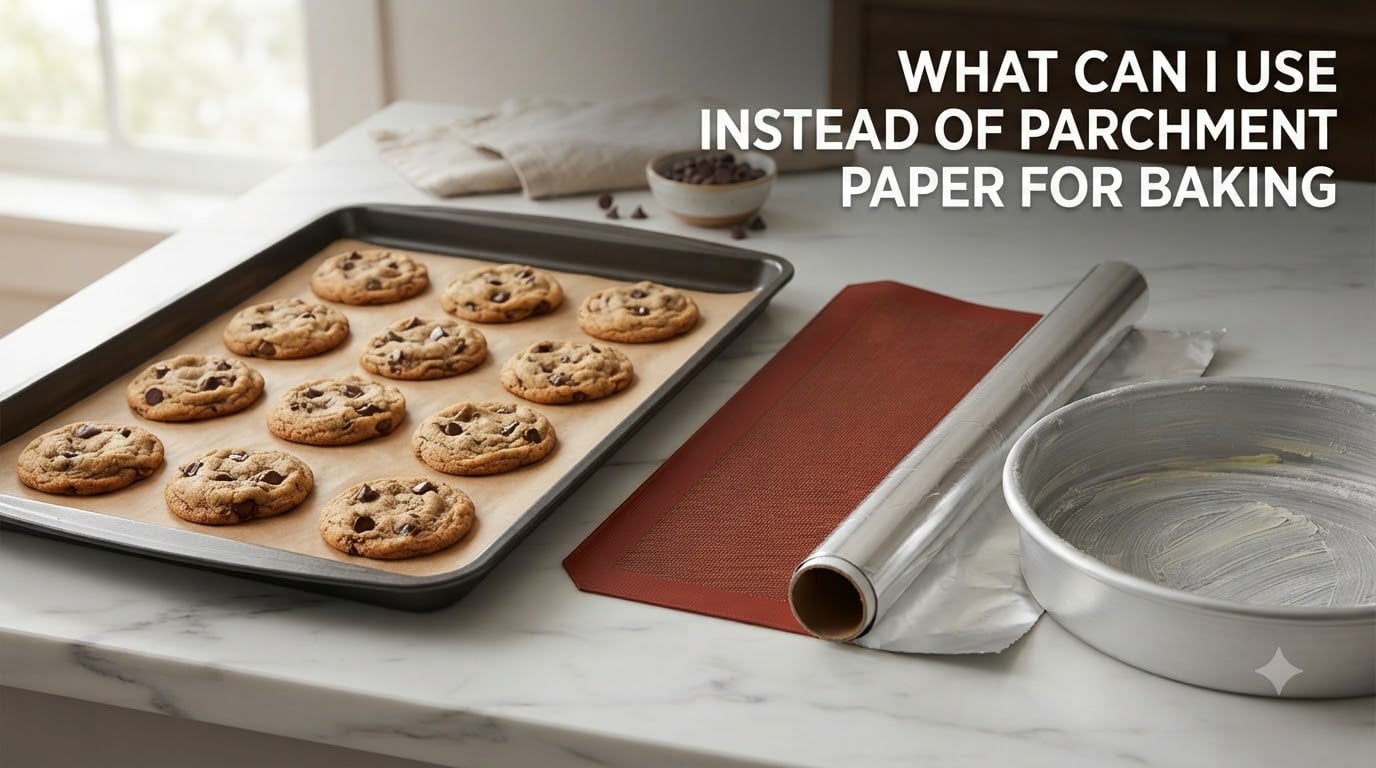
You’re halfway through a recipe when you reach for the parchment paper roll and find it empty. We’ve all been there. Whether you ran out at the worst possible moment or simply want to cut down on single-use kitchen products, knowing what you can use instead of parchment paper for baking saves the day every time.
The good news? Several reliable substitutes work just as well, and some even outperform parchment paper for certain tasks. In this 2026 guide, we cover every practical alternative, when to use each one, and what to absolutely avoid putting in your oven.
Table of Contents
Quick Answer: Top Parchment Paper Substitutes
Here are the best alternatives to parchment paper ranked by versatility and ease of use:
1. Silicone Baking Mat (Silpat) – Reusable, non-stick, and heat-safe up to 480°F. The most popular long-term replacement.
2. Aluminum Foil – Widely available, excellent for roasting and high-heat cooking. Requires greasing.
3. Greased Baking Pan – Butter, flour, or cooking spray. Simple and always on hand.
4. Cooking Spray – Quick non-stick coating for any baking surface.
5. Wax Paper – Only for cold or room-temperature tasks. Never put it in the oven.
Silicone Baking Mat (Silpat): Best Overall Alternative
A silicone baking mat is the closest direct replacement for parchment paper. These flexible, reusable mats lay flat on your baking sheet and create a non-stick surface without any additional greasing. Most silicone mats handle temperatures from -40°F to 480°F, making them suitable for nearly every baking task.
The main advantage is cost savings over time. A single silicone mat replaces hundreds of sheets of parchment paper. If you bake several times a month, the investment pays for itself within a few weeks.
Silicone mats work exceptionally well for cookies, pastries, and sheet-pan dinners. They distribute heat evenly, which helps prevent the burnt bottoms that sometimes happen with parchment paper on dark baking sheets.
Best Uses for Silicone Mats
- Cookies and biscuits
- Sheet pan dinners
- Roasting vegetables
- Rolling out dough
- Freezing items before transferring to storage bags
Limitations to Know
Silicone mats are not ideal for broiling or recipes that call for temperatures above 480°F. They also retain odors over time if you bake a lot of strongly flavored foods like fish or garlic-heavy dishes. Hand-washing with mild soap helps extend their lifespan.
Aluminum Foil: Versatile and Widely Available
Aluminum foil works as a parchment paper substitute for roasting, baking, and grilling. It handles high heat well and conducts it efficiently, which makes it particularly good for roasting meats and vegetables where you want browning and crispiness.
The key difference: aluminum foil is not naturally non-stick. You need to grease it generously with butter, oil, or cooking spray before adding food. Without greasing, your baked goods will stick badly and likely tear apart when you try to remove them.
For cookies specifically, expect slightly crispier bottoms when using foil compared to parchment paper. The foil conducts heat more directly, which can work in your favor if you prefer a crunchier cookie.
How to Use Aluminum Foil for Baking
- Preheat your oven as the recipe directs.
- Tear a sheet of aluminum foil slightly larger than your baking pan.
- Press it flat onto the pan, smoothing out wrinkles.
- Apply a generous layer of cooking spray, butter, or oil.
- Place your food on the prepared foil and bake as directed.
Safety Notes
Aluminum foil is oven-safe at all standard baking temperatures. However, avoid using it with highly acidic foods like tomatoes or citrus, as the acid can react with the aluminum and affect the flavor of your food. For acidic recipes, use parchment paper or a silicone mat instead.
Wax Paper: Cold Tasks Only
Wax paper and parchment paper look similar, but they behave very differently under heat. Wax paper has a thin wax coating that melts at around 200°F, which makes it unsuitable for oven use. The wax can transfer onto your food, create smoke, and in rare cases become a fire hazard.
That said, wax paper works perfectly for tasks that do not involve direct heat. It is an excellent substitute for parchment paper in these cold or room-temperature applications:
- Wrapping sandwiches and cold snacks
- Lining countertops for rolling out dough
- Layering between stacked cookies or candy for storage
- Creating piping cones for cake decorating
- Lining containers for no-bake desserts
- Covering work surfaces when doing messy prep like chocolate dipping
Wax Paper vs Parchment Paper
The confusion between these two products is one of the most common baking mistakes. Parchment paper is coated with silicone, which withstands temperatures up to 420-450°F without melting. Wax paper is coated with paraffin or soy wax, which melts at low temperatures. If you can only buy one, always choose parchment paper or a silicone mat.
Greased Baking Pan: The Classic Method
Before parchment paper became a kitchen staple, bakers relied on greasing their pans. This old-school method still works remarkably well and requires only ingredients you already have at home.
Butter and Flour Method
- Use a paper towel or your fingers to spread a thin, even layer of softened butter across the entire inside surface of your pan.
- Add a tablespoon of flour to the greased pan.
- Tilt and tap the pan so the flour coats all the buttered surfaces.
- Turn the pan upside down and tap out any excess flour.
- Add your batter or dough and bake as directed.
Cooking Spray Method
For a quicker option, hold a can of cooking spray about 6 inches from your pan and apply a light, even coat. Non-stick cooking sprays work best because they contain lecithin, which creates an effective barrier between the food and the pan surface.
This method is particularly useful for cake pans and muffin tins where the shape makes parchment paper difficult to use anyway. Many professional bakers prefer greased cake pans over parchment for layer cakes.
Other Creative Substitutes
Several other options work in specific situations. These are less common but worth knowing about for certain cooking styles and cuisines.
Banana Leaves
Banana leaves are a traditional cooking wrapper in many tropical cuisines. They add a subtle, earthy flavor to steamed and baked dishes. Find them at Asian or Latin American grocery stores, typically sold frozen. They work well for wrapping fish, tamales, and sticky rice before baking.
Corn Husks
Soaked corn husks wrap tamales, steamed fish, and certain desserts. They are oven-safe when properly soaked and add a light corn flavor. You can find dried corn husks in the international aisle of most grocery stores.
Oil or Butter Directly on the Pan
If you have no cooking spray, simply rub a thin layer of oil or softened butter directly on your baking sheet using a paper towel. This works in a pinch and is the method most experienced home bakers default to when they run out of parchment paper.
Best Substitute by Baking Task
Different substitutes work better for different jobs. Here is a quick reference for choosing the right alternative based on what you are making.
For Baking Cookies
Best choice: Silicone baking mat. It provides even heat distribution and a reliable non-stick surface. If you do not have one, a greased baking sheet or aluminum foil with cooking spray work well. Expect slightly different textures with each option.
For Baking Cakes
Best choice: Greased and floured pan. Most cake pans are shaped in ways that make parchment liners tricky anyway. The butter-and-flour method creates an excellent release and actually contributes to the cake’s outer texture.
For Roasting Vegetables and Meats
Best choice: Aluminum foil. Foil conducts heat efficiently and promotes browning. Line your sheet pan with foil, grease it, and enjoy easy cleanup. Silicone mats work here too, but they do not produce the same level of caramelization.
For Steaming in the Oven
Best choice: Aluminum foil (sealed pouch method). Create a sealed packet with foil to trap steam around fish or vegetables. Banana leaves also work beautifully for oven-steaming and add flavor.
For Freezing and Storing
Best choice: Wax paper. Layer wax paper between items to prevent them from freezing together. It costs less than parchment paper and performs identically for cold storage.
What NOT to Use Instead of Parchment Paper
Not everything that looks like paper is safe in the oven. Avoid these common mistakes that can ruin your food or create safety hazards.
Paper Grocery Bags
Paper grocery bags may seem like a natural substitute, but they are a serious fire risk. The paper ignites at oven temperatures, and many bags contain recycled materials with inks and chemicals that release toxic fumes when heated. Never use paper bags in the oven under any circumstances.
Printer Paper or Newspaper
Regular paper catches fire well below standard baking temperatures. The inks used on newspapers and printer paper contain chemicals you do not want anywhere near your food. Stick to materials specifically designed for food contact.
Plastic Wrap
Even microwave-safe plastic wrap will melt and warp at oven temperatures. It releases harmful chemicals into your food and can damage your oven. Plastic wrap is only for covering food at room temperature or in the refrigerator.
Frequently Asked Questions
Can I use aluminum foil instead of parchment paper?
Yes, aluminum foil works as a substitute for parchment paper. Grease it generously with cooking spray, butter, or oil before adding food to prevent sticking. Foil is especially good for roasting and high-heat baking where you want browning.
Can I use wax paper instead of parchment paper for baking?
No, wax paper should not go in the oven. The wax coating melts at around 200°F, which can transfer onto your food and create smoke. Use wax paper only for cold tasks like wrapping, layering between stored items, or lining countertops for dough rolling.
What is the difference between parchment paper and wax paper?
Parchment paper is coated with silicone and withstands heat up to 420-450°F, making it oven-safe. Wax paper is coated with paraffin or soy wax that melts at about 200°F, so it is only safe for cold or room-temperature use.
Can you put wax paper in the oven?
No. Wax paper is not oven-safe because the wax coating melts at low temperatures. This can cause the wax to transfer to your food, create smoke, or potentially start a fire. Always use parchment paper, aluminum foil, or a silicone baking mat for oven use.
Can you use silicone baking mats instead of parchment paper?
Absolutely. Silicone baking mats are one of the best substitutes for parchment paper. They are reusable, non-stick, and heat-safe up to about 480°F. They work well for cookies, roasted vegetables, and most baking tasks.
Is it safe to bake with aluminum foil?
Yes, aluminum foil is safe for baking at all standard oven temperatures. However, avoid using foil with highly acidic foods like tomatoes or citrus, as the acid can react with the aluminum and affect the taste of your food.
Can I bake cookies without parchment paper?
Yes. Use a silicone baking mat, greased baking sheet, or aluminum foil with cooking spray. A greased and floured pan also works. Cookies may have slightly different textures depending on the substitute, but all methods produce good results.
Do you need to grease aluminum foil for baking?
Yes, you should always grease aluminum foil before baking on it. Without greasing, food will stick to the foil and likely tear when you try to remove it. A generous coating of cooking spray, butter, or oil creates the non-stick barrier you need.
Final Thoughts on Baking Without Parchment Paper
Running out of parchment paper is not a baking emergency. The silicone baking mat is the best long-term substitute if you want a reusable, non-stick option that works for nearly every task. Aluminum foil with a generous greasing handles roasting and high-heat cooking well. And the classic butter-and-flour method never fails for cake pans.
Now that you know what you can use instead of parchment paper for baking, you can tackle any recipe with confidence. Keep a silicone mat in your drawer, a roll of foil in the pantry, and butter in the fridge, and you will never be stuck mid-recipe again.