
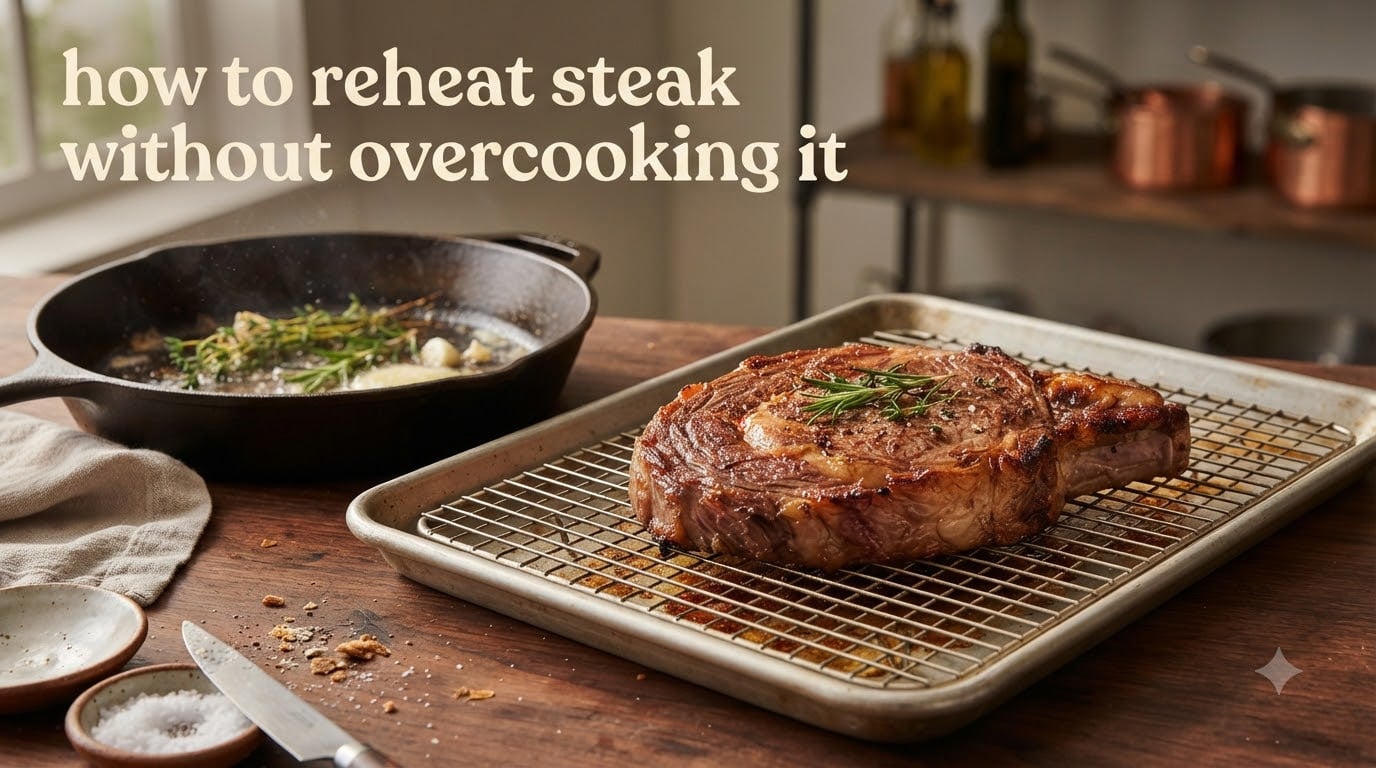
Yes, you can reheat steak without overcooking it. The trick is gentle indirect heat first, then a fast, high-heat sear to rebuild the crust. This guide walks through the exact temperatures, times, and methods I use to bring leftover steak back to a juicy, just-cooked state.
If you spent good money on a ribeye or NY strip, throwing it in the microwave until it turns gray and rubbery is heartbreaking. I’ve tested every reheating technique out there over the past few years. What follows is what actually works at home, kitchen by kitchen, cut by cut.
Table of Contents
Key Takeaways
- Best method: Low oven at 250°F for 20-30 minutes, then a 30-60 second sear in a smoking-hot cast iron skillet.
- Pull temperature: Remove steak from the oven about 10°F below your original doneness target. The final sear adds heat.
- Never start cold: Let steak sit at room temperature for 20-30 minutes before reheating to avoid uneven warming.
- Use a wire rack: Elevating the steak on a rack over a baking sheet lets air circulate and prevents a soggy bottom.
- Rest after reheating: Give it 5 minutes before slicing. This lets juices redistribute.
- Skip the microwave unless desperate: It turns steak gray and tough. Only use it for thin cuts or emergency situations.
Why Steak Overcooks So Easily When Reheated
Steak is unforgiving on the second round of heat. Once meat proteins hit 140°F and above, they tighten and squeeze out moisture. Reheat it too fast, and that second tightening turns a perfect medium-rare into a gray, chewy puck.
The crust is the other casualty. Refrigeration softens the Maillard browning you worked to build during the original sear. High heat reheating burns that crust before the center warms up. Low, gentle heat preserves what you have left and gives you a clean canvas for a quick final sear.
Lean cuts like flank and skirt have almost no margin for error. They’re already low in fat, which means less moisture to begin with. Thick, well-marbled cuts like ribeye tolerate reheating much better. If you have a choice, save the cheaper, leaner cuts for recipes where they’ll be sliced thin and tossed in a sauce or stir-fry.
The Best Method: Low Oven Plus a Quick Sear
After testing oven-only, skillet-only, sous vide, air fryer, and microwave methods side by side, this is the winner. It gives you precise temperature control in the oven, then a fast sear to put the crust back. Here’s the exact process.
Step 1: Bring the steak to room temperature. Take it out of the fridge 20-30 minutes before you plan to reheat. Cold steak in a hot oven warms unevenly – the outside overcooks before the center catches up.
Step 2: Preheat your oven to 250°F. This is the gentle, indirect heat zone. You’re warming the steak through without pushing it past its original doneness.
Step 3: Set up a wire rack over a baking sheet. Pat the steak dry with paper towels. Place it on the rack. Air circulation on all sides prevents a soggy bottom and encourages even reheating.
Step 4: Warm for 20-30 minutes. Use an instant-read thermometer to check internal temperature. Pull the steak when it’s about 10°F below your original doneness target. Here’s a quick reference:
- Medium-rare original (130-135°F): pull at 120-125°F
- Medium original (140-145°F): pull at 130-135°F
- Well-done original (155°F+): pull at 145°F
Step 5: Sear in a smoking-hot cast iron skillet. Heat the skillet over high heat until it just starts to smoke. Add a tablespoon of high-smoke-point oil. Sear the steak 30-60 seconds per side. The Maillard reaction rebuilds the crust in under two minutes total.
Step 6: Optional butter baste. Toss in a tablespoon of butter, a crushed garlic clove, and a sprig of thyme during the last 15 seconds. Tilt the pan and spoon the foaming butter over the steak. This is the restaurant-style finishing move that adds richness and aroma.
Step 7: Rest for 5 minutes. Don’t skip this. The juices need to settle. Slice against the grain and serve.
Alternative Reheating Methods That Actually Work
The oven-plus-sear method isn’t always practical. Maybe you only have 10 minutes. Maybe you’re reheating a thin sliced skirt steak for fajitas. Here are the next-best options, ranked by precision and risk.
Stovetop Skillet Method (Best for Thin Cuts)
For sliced steak or cuts under 1 inch thick, the stovetop is faster than the oven. Heat a cast iron or stainless skillet over medium-low heat. Add the steak and warm for 2-3 minutes per side. Don’t crank the heat – you’re warming, not searing. A splash of beef broth in the pan creates steam that prevents drying out.
This works particularly well for reheating flank or skirt steak destined for tacos, salads, or stir-fries. Slice the cold steak thin against the grain, then warm the slices in the skillet for just 1-2 minutes.
Sous Vide Method (Most Precise)
If you own an immersion circulator, this is the most foolproof method. Set the water bath to your original doneness temperature (130°F for medium-rare, 140°F for medium). Seal the steak in a vacuum bag or use the water displacement method with a zip-top bag. Warm for 30-45 minutes.
The steak comes out evenly heated from edge to edge with zero risk of overcooking. You can finish with a quick 30-second sear per side in a hot skillet if the crust needs reviving. Reddit’s r/Cooking community regularly calls this the gold standard for reheating expensive cuts like filet mignon.
Air Fryer Method (Quick and Crisp)
Only one major competitor covers the air fryer, which is a gap worth filling. Set your air fryer to 350°F. Place the steak in the basket – no oil needed if it’s already cooked. Heat for 3-4 minutes, flip, then another 2-3 minutes. Total time: about 6 minutes for a 1-inch thick steak.
The air fryer does a decent job of crisping the exterior without drying out the center, but timing varies by model. Start checking internal temperature at the 4-minute mark. Pull at 10°F below your target doneness, just like the oven method. This works best for cuts between 3/4 inch and 1.5 inches thick – anything thinner overcooks too fast.
Microwave Method (Last Resort)
I almost never recommend the microwave for steak, but sometimes it’s the only option. If you must, here’s how to minimize damage. Place the steak on a microwave-safe plate. Cover with a damp paper towel – this adds moisture and prevents the surface from drying out. Microwave at 50% power in 30-second bursts, checking between each.
Expect the steak to turn gray on the outside. The microwave excites water molecules unevenly, which is why the texture goes rubbery fast. Reserve this for thinly sliced steak destined for a Philly cheesesteak or a steak hash where the final texture won’t matter as much.
Reheating by Cut and Original Doneness
Not all steaks handle reheating equally. Here’s a cut-by-cut breakdown to help you pick the right method.
Thick, Marbled Cuts (Ribeye, NY Strip, Rib Steak)
These have the most fat and the most thermal mass, which makes them the easiest to reheat without drying out. The oven-plus-sear method is ideal. You can pull from the fridge and go straight to a 250°F oven – the thickness protects the center during the warming phase.
Filet Mignon
Filet is leaner than ribeye but thick enough to handle gentle heat. Sous vide is the best choice here because precision matters most. Pull at exactly your original doneness and sear briefly. A butter baste adds the richness that filet lacks from its lean profile.
Flank and Skirt Steak
These thin, lean cuts are the hardest to reheat without overcooking. My honest recommendation: don’t reheat them whole. Slice them cold against the grain into thin strips, then warm the slices briefly in a skillet with a splash of beef broth or soy sauce. Toss into tacos, salads, or stir-fries. The original texture was never meant to be served hot and whole anyway.
Sauces or Glazes (Teriyaki, Peppercorn, BBQ)
Sauced steak needs a gentler approach. The sugars in most glazes burn fast under high heat. Use the low oven method without the final sear, or warm sauced steak slices in a covered skillet over low heat with a splash of water to keep the sauce loose. Avoid the air fryer for heavily glazed cuts – the sugar caramelizes and burns before the meat warms through.
Well-Done vs Medium-Rare Reheating
Well-done original steak has zero margin for error. It’s already at 155°F+ internally, and any additional heat tightens proteins further. Warm it gently at 225°F for 15-20 minutes and skip the high-heat sear entirely. Medium-rare gives you a 10-15°F window before it crosses into medium territory, which is much more forgiving.
Food Safety: How Hot Does Reheated Steak Need to Be?
The USDA recommends reheating leftover beef to an internal temperature of 165°F for food safety. This is the temperature at which bacteria are reliably killed. However, many home cooks reheat steak to lower temperatures (130-140°F) to preserve the original doneness.
Is this safe? The answer depends on how the steak was handled after cooking. If you refrigerated it within 2 hours of cooking and kept it at or below 40°F, the bacterial load stays low. Reheating to 130-140°F carries some risk, particularly for pregnant people, young children, the elderly, or anyone with a compromised immune system.
For higher-risk individuals, follow the USDA guidance and reheat to 165°F. The texture will suffer, but the safety margin is larger. For everyone else, reheating to your original doneness temperature is a reasonable personal choice – just understand the tradeoff.
The danger zone is 40°F to 140°F. Bacteria multiply rapidly in this range. Don’t leave cooked steak sitting out for more than 2 hours at room temperature. According to FoodSafety.gov, leftover steak keeps for 3-4 days in the fridge when stored properly in an airtight container.
Common Mistakes That Dry Out Reheated Steak
I’ve made most of these myself. Here’s what to avoid.
- Skipping the rest before reheating. Cold steak straight from the fridge warms unevenly and shocks the proteins. A 20-30 minute rest at room temperature makes a real difference.
- Using high heat to “save time.” Cranking the oven to 400°F or blasting the microwave on full power is the fastest way to ruin steak. Low and slow is the only path to even reheating.
- Not using a thermometer. Guessing doneness by touch is unreliable on the second cook. An instant-read thermometer costs a few dollars and takes the guesswork out.
- Skipping the rest after reheating. Cutting into steak right after the sear sends all the juices onto the plate. Wait 5 minutes.
- Slicing with the grain. Always slice against the grain, especially on the second cook. The fibers have tightened, and cutting across them keeps each bite tender.
- Reheating more than once. Each cycle of cooling and reheating degrades texture and increases bacterial risk. Reheat only what you’ll eat in one sitting.
Frequently Asked Questions
Can you reheat steak in the microwave without ruining it?
You can, but it won’t taste great. The microwave heats unevenly and turns the surface gray and rubbery within 60 seconds. If you must use it, microwave at 50% power in 30-second bursts with a damp paper towel over the steak. Reserve the microwave for thin slices destined for cheesesteaks, hashes, or stir-fries where texture matters less.
Is it safe to reheat steak to medium-rare instead of 165°F?
The USDA recommends 165°F for reheating leftovers, but many cooks reheat to lower temperatures to preserve doneness. This carries some risk, especially for pregnant people, young children, the elderly, or anyone with a compromised immune system. If the steak was refrigerated within 2 hours of cooking and kept below 40°F, reheating to medium-rare is a reasonable choice for healthy adults – just acknowledge the safety tradeoff.
How long can leftover steak sit in the fridge before reheating?
According to FoodSafety.gov, cooked steak keeps for 3-4 days in the refrigerator when stored in an airtight container at or below 40°F. After day 4, the risk of bacterial growth increases significantly. If you won’t eat it within that window, freeze it – frozen cooked steak keeps for 2-3 months.
Does resting steak before reheating actually matter?
Yes, it matters a lot. A 20-30 minute rest at room temperature takes the chill off the steak so it warms evenly in the oven. Cold steak straight from the fridge overheats on the outside before the center catches up. Pull it out while you preheat the oven.
Why does my reheated steak turn gray instead of staying pink?
The gray color comes from proteins tightening and moisture being squeezed out during a second round of high heat. Low oven temperatures (250°F) and a short final sear preserve the pink interior better than cranking the heat. An instant-read thermometer helps you pull the steak at the right moment – about 10°F below your original doneness target.
Can you reheat steak more than once?
Technically yes, but I don’t recommend it. Each cycle of cooling and reheating tightens proteins further, dries out the meat, and increases bacterial risk. Reheat only what you’ll eat in one sitting, and store the rest cold. If you have a large portion, slice it cold and only warm the slices you need.
Final Thoughts
The oven-plus-sear method at 250°F is the most reliable way to reheat steak without overcooking it. Pull the steak 10°F below your target doneness, sear it briefly in a smoking-hot cast iron skillet, and let it rest for 5 minutes before slicing.
For thinner cuts, the stovetop is faster. For maximum precision, sous vide can’t be beat. Reserve the microwave for emergencies. With these techniques in your back pocket, no leftover steak has to end up dry and gray again.