
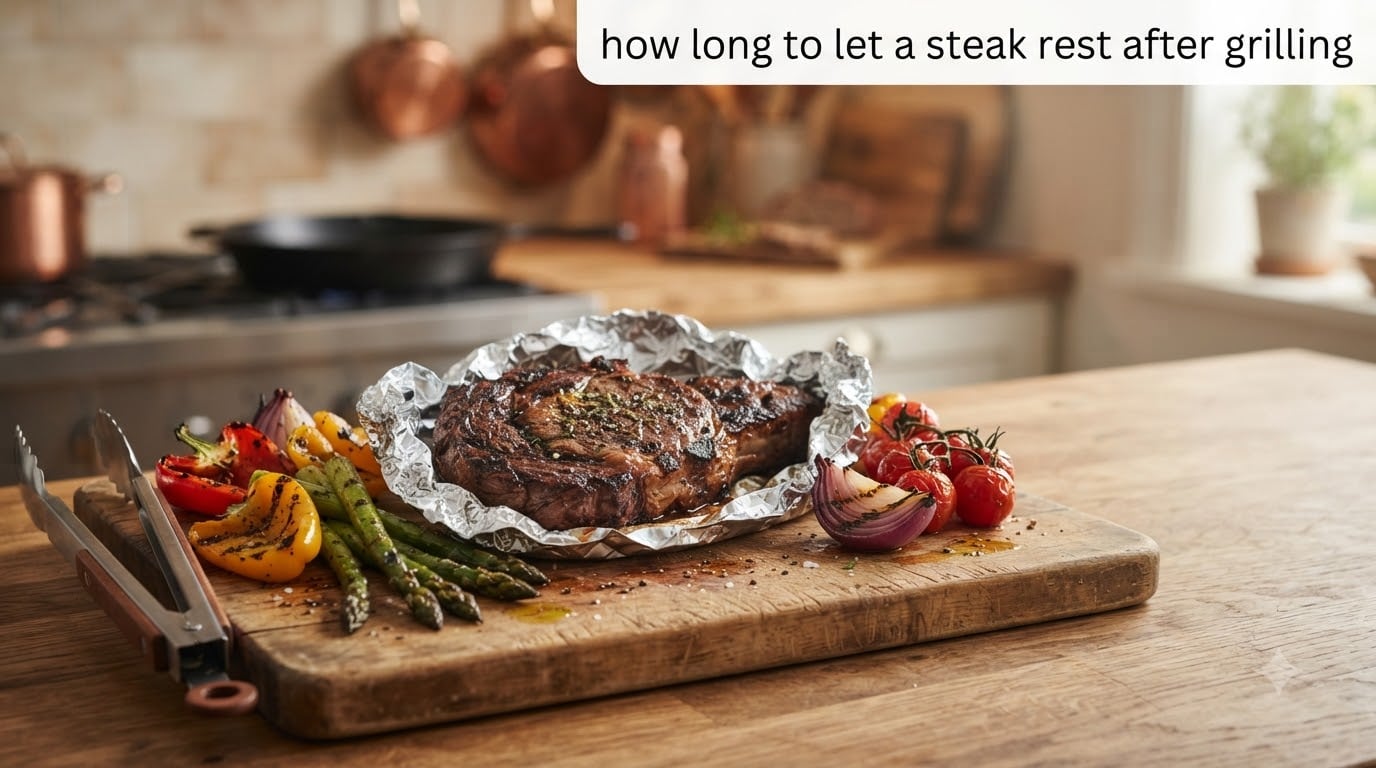
After grilling a steak, let it rest for 5 to 15 minutes depending on thickness. A 1-inch steak needs about 5 minutes, while a 2-inch-thick ribeye or strip should rest 10 to 15 minutes. Resting lets the juices redistribute so they don’t flood your cutting board when you slice in. If you’ve ever cut into a steak and watched all the flavor pool onto your plate, you already know why this step matters.
I’ve grilled hundreds of steaks over the years, and the resting step is the single easiest improvement most home cooks skip. It costs you nothing but a few minutes of patience. In this guide, I’ll walk you through the exact times, the science behind why resting works, and the techniques that keep your steak warm without overcooking it.
Table of Contents
How Long to Let a Steak Rest After Grilling
The general rule is 5 minutes for every inch of thickness. Thin cuts like a 3/4-inch flank steak need only 3 to 5 minutes. A standard 1-inch ribeye or New York strip benefits from 5 to 7 minutes. For thick-cut steaks at 1.5 inches or more, plan on 10 to 15 minutes of rest time.
America’s Test Kitchen tested this extensively and found that 5 to 7 minutes produces the best results for most steaks. Beyond 10 minutes, the exterior temperature drops noticeably unless you take steps to keep it warm. Their panel tests confirmed that rested steaks retained significantly more juice when sliced compared to steaks cut immediately off the grill.
Why Resting a Steak After Grilling Matters
When a steak hits high heat, the muscle fibers contract and push moisture toward the center of the meat. Think of it like squeezing a sponge from the outside in. The hotter the exterior, the more aggressively the juices get driven inward.
If you cut the steak right away, all that concentrated moisture rushes out onto the cutting board. Resting allows the temperature to equalize across the meat. The fibers relax, and the juices redistribute more evenly through every bite.
This process is called carryover cooking, and it’s real physics. A steak pulled off the grill at 120°F can rise another 5 to 10°F while resting. That thermal momentum means you should always pull your steak a few degrees before your target doneness temperature.
Resting Time by Steak Thickness
Thickness is the most reliable predictor of resting time. A thin steak loses heat faster and equalizes quickly, while a thick steak holds heat much longer in the center. Use the table below as your reference.
Steak Resting Time Guide:
3/4 inch thick: 3 to 5 minutes of rest
1 inch thick: 5 to 7 minutes of rest
1.5 inches thick: 8 to 10 minutes of rest
2 inches thick: 10 to 15 minutes of rest
2.5 inches or thicker: 15 to 20 minutes of rest
A useful rule of thumb is roughly 1 minute of rest per inch of thickness, then add a few extra minutes for very thick cuts. BBC Good Food suggests resting for about half the total cooking time, which works well when you lose track of the exact thickness.
Carryover temperature rise also scales with thickness. A thin 1-inch steak might rise 3 to 5°F, while a thick 2-inch cut can gain 8 to 12°F. Factor this into your pull temperature so you don’t overshoot your target doneness.
How to Rest a Steak After Grilling
Transfer the steak to a clean cutting board, wire rack, or warm plate immediately after pulling it from the grill. The surface you choose affects how the steak holds heat and how much juice you retain.
A wire rack set over a sheet pan is ideal if you want to preserve the seared crust. Air circulates underneath, preventing the bottom from steaming. If you don’t have a wire rack, a warm plate works fine.
Foil tent method: Loosely tent a piece of aluminum foil over the steak, creating a small dome. Do not wrap tightly. Tight foil traps steam and softens the crust you just worked to build. The loose tent reflects enough heat to keep the surface warm without causing condensation.
Some grillers prefer resting uncovered, especially for thick steaks with a hard sear. The crust stays crisp, but the surface cools faster. If you go this route and are serving a thick steak, consider resting it in a low oven set to 150 to 170°F to prevent the exterior from dropping below serving temperature.
Common Mistakes When Resting Steak
Cutting too soon. This is the most common error by far. Even 2 minutes of rest is better than none, but 5 minutes is the minimum for a standard steak. The juice on your cutting board tells the story.
Wrapping tightly in foil. A tight wrap steams the crust and creates condensation. Use a loose tent or skip the foil entirely for grilled steaks. Save the tight wrap for brisket or pulled pork where steam is your friend.
Resting too long. Beyond 15 to 20 minutes without a warming method, a steak will cool below ideal serving temperature. The interior may still be warm, but the surface will feel lukewarm. If you need a longer rest for timing reasons, use a warm oven.
Forgetting carryover cooking. Pull your steak 5°F below your target doneness. If you want 130°F medium-rare, pull it at 125°F. The carryover rise during rest will bring it to the right spot.
Not accounting for crowd timing. When cooking multiple steaks, stagger your pulls by 3 to 5 minutes. The first steak off the grill gets the longest rest while you finish the others. This way everything reaches the table at roughly the same temperature.
Does Your Grill Type Affect Resting Time?
Charcoal grills tend to produce higher searing temperatures than gas grills, which means more carryover cooking. A steak pulled from a charcoal kettle at 500°F may gain 10°F during rest, while the same steak from a gas grill at 425°F might gain only 5 to 7°F.
Pellet grills operate at lower, more even temperatures, so the heat gradient between the surface and center is less extreme. Pellet-grilled steaks may need slightly less resting time than charcoal-grilled ones, though the difference is small.
The key variable is always the temperature differential between the surface and the center. Higher cooking temperatures create a steeper gradient, which means more carryover. If you’re using a high-heat charcoal chimney sear or a flat-top griddle at 600°F, add an extra minute or two to your rest.
Frequently Asked Questions
How long should you let a steak rest after grilling?
Rest a steak for 5 to 15 minutes after grilling, depending on thickness. A 1-inch steak needs about 5 minutes, while a 2-inch-thick cut benefits from 10 to 15 minutes. A good rule of thumb is roughly 1 minute per inch of thickness.
What happens if you don’t let a steak rest?
If you skip resting, the juices that were pushed to the center during cooking will rush out the moment you slice. This results in a drier steak and wasted flavor pooling on your cutting board instead of staying in the meat.
Should you rest steak in foil or uncovered?
A loosely tented piece of foil is the best approach. It reflects enough heat to keep the surface warm without trapping steam that softens the crust. Avoid wrapping tightly, which creates condensation and ruins the sear.
Does steak temperature rise while resting?
Yes, a steak continues to cook while resting due to carryover cooking. A steak pulled off the grill at 120°F can rise 5 to 10°F during rest. Always pull your steak a few degrees below your target doneness to account for this.
Can you rest a steak too long?
Yes. Beyond 15 to 20 minutes without a warming method, the surface of the steak will cool below ideal serving temperature. If you need a longer rest for timing, place the steak in a low oven set to 150 to 170°F.
How long should you rest a steak before cutting?
Wait at least 5 minutes for a standard 1-inch steak before cutting. For thicker cuts at 1.5 inches or more, wait 10 to 15 minutes. This gives the muscle fibers time to relax and the juices time to redistribute evenly.
Conclusion
Knowing how long to let a steak rest after grilling is one of those small details that makes a big difference in the final result. Pull your steak a few degrees early, give it 5 to 15 minutes depending on thickness, and use a loose foil tent if you want to keep it warm. Your cutting board will stay dry, and every bite will be juicier for it.