
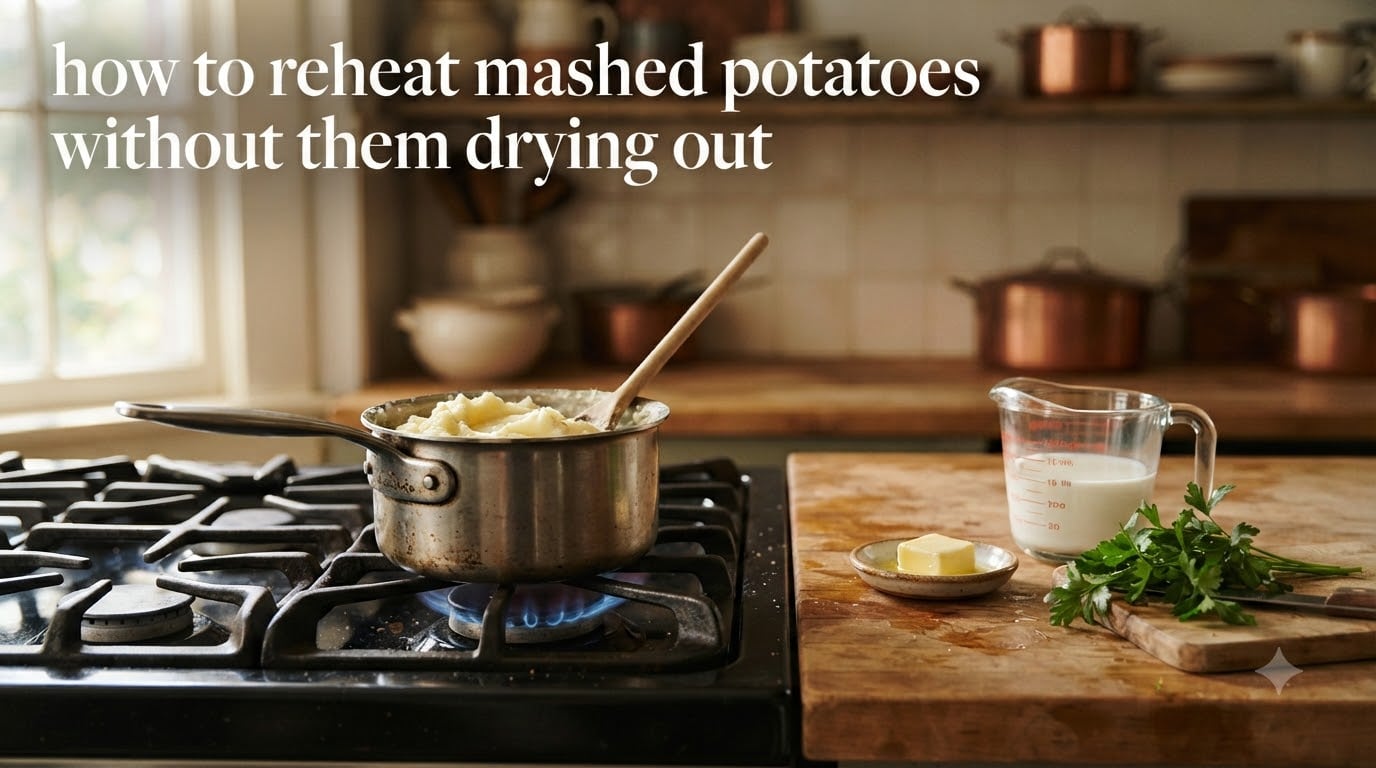
If you have ever pulled a bowl of leftover mashed potatoes from the fridge hoping for that same silky texture from dinner the night before, you know the disappointment of dried-out, gluey spuds. I have been there more times than I would like to admit, and after years of testing in our restaurant kitchen and at home, I can tell you that learning how to reheat mashed potatoes without drying them out comes down to three things: low heat, added fat, and a splash of dairy.
In this guide, I will walk you through the methods that actually work, from a quick microwave rescue to a slow-cooker setup for a holiday crowd. I will also explain why mashed potatoes dry out in the first place, so you know exactly why each step matters.
Table of Contents
Quick Answer: How to Reheat Mashed Potatoes Without Drying Them Out
If you only have a minute, here are the three best ways to reheat mashed potatoes and keep them creamy.
- Stovetop (best overall): Warm in a saucepan with a splash of milk and a pat of butter over medium-low heat, stirring frequently, for 5 to 10 minutes.
- Oven (best for large batches): Spread in an oven-safe dish, dot with butter, cover with foil, and bake at 350°F for 20 to 30 minutes.
- Microwave (fastest single serving): Loosen with milk, cover with a damp paper towel, and heat at 50% power in 1-minute bursts, stirring between each.
Whichever method you pick, the two non-negotiables are gentle heat and added moisture. Skip those, and you will end up with either rubbery or cardboard-like potatoes.
Why Mashed Potatoes Dry Out (and Get Gummy) When Reheated
Before we get to the methods, it helps to know what is happening inside that bowl of leftovers. When mashed potatoes cool in the fridge, two things happen at once.
First, the starches go through a process called retrogradation. The starch molecules realign and squeeze out the water they once held, which is why cold mashed potatoes look stiff and slightly weepy. Second, moisture evaporates from the surface, leaving the top layer dry and crusty.
When you then blast those potatoes with high heat, the starches swell and burst, releasing more starch into the liquid. That is what gives reheated potatoes their gummy, gluey texture. The fix is simple in theory: rehydrate gently, and do not let any part of the pot get too hot too fast.
How to Reheat Mashed Potatoes on the Stovetop
The stovetop is my go-to method and the one our line cooks reach for during service. It gives you direct control over the heat and lets you stir in moisture as you go.
- Place your leftover mashed potatoes in a cold saucepan. Adding them cold prevents the bottom from scorching while the center stays cold.
- Add 1 to 2 tablespoons of milk or cream per cup of potatoes, plus a small pat of butter.
- Set the burner to medium-low heat. Do not be tempted to crank it up; patience is the whole game.
- Stir frequently with a wooden spoon or silicone spatula, scraping the bottom and sides.
- Once the potatoes are loose and steamy, taste and adjust with more milk, salt, or butter as needed.
Total time is usually 5 to 10 minutes for one to two cups. For a bigger batch, work in a wide skillet instead of a tall saucepan so the layer stays thin and heats evenly.
How to Reheat Mashed Potatoes in the Oven
The oven is the right call when you are feeding a crowd or want hands-off reheating while you finish the rest of the meal. The trick is keeping the moisture trapped.
- Preheat the oven to 350°F.
- Spread the mashed potatoes in an even layer in an oven-safe baking dish. A thin to medium layer heats more evenly than a deep mound.
- Dot the top with 2 to 3 tablespoons of butter cut into small pieces.
- Pour 2 to 3 tablespoons of milk or cream around the edges of the dish, not directly on top, so it seeps in as it heats.
- Cover tightly with aluminum foil. If the foil does not seal well, lay a second sheet across the top.
- Bake for 20 to 30 minutes, until the potatoes are hot all the way through. Remove the foil for the last 5 minutes if you want a lightly browned top.
To check doneness, insert a knife into the center. If it comes out hot to the touch, you are good. Stir before serving to redistribute the butter and cream.
How to Reheat Mashed Potatoes in the Microwave
The microwave gets a bad reputation for turning mashed potatoes into paste, and honestly, that reputation is deserved if you nuke them on full power. Used correctly, it is the fastest way to reheat a single serving.
- Spoon the potatoes into a microwave-safe bowl and stir in a splash of milk.
- Cover loosely with a damp paper towel. The steam from the towel keeps the surface from drying out.
- Heat at 50% power for 1 minute.
- Remove, stir well, and repeat in 30-second bursts at 50% power until heated through.
- Stir in a small pat of butter at the end for richness.
For more than one serving, microwave in separate bowls rather than one large one. A big mound heats unevenly, and the outer edges turn rubbery before the center warms up.
Slow Cooker Method: How to Reheat Mashed Potatoes for a Crowd
For Thanksgiving, Easter, or any meal where the potatoes need to hold for an hour or more, the slow cooker is the most forgiving tool. We use this method at the restaurant whenever we are running a family-style service.
- Lightly grease the inside of a 4 to 6 quart slow cooker with butter.
- Add the cold mashed potatoes, then stir in about 1/4 cup of cream or half-and-half per quart.
- Cover and set to LOW or WARM. Avoid the HIGH setting, which will scorch the bottom layer.
- Stir gently every 30 minutes and add another splash of cream if the potatoes start to thicken.
Potatoes can hold this way for up to 2 hours without losing texture. For longer holds, switch to a buffet steam tray, which is the same idea with a water bath underneath.
How to Reheat Mashed Potatoes in an Air Fryer
This is a newer trick that has been showing up in restaurant test kitchens, and it works surprisingly well for smaller portions. The dry, circulating heat forms a golden crust on top while the inside stays fluffy.
- Spoon the mashed potatoes into a small oven-safe dish or ramekin that fits inside your air fryer basket.
- Stir in a splash of milk to loosen them.
- Set the air fryer to 300°F and heat for 4 to 6 minutes.
- Check at the 4-minute mark. The top should be lightly crisped and the center piping hot.
This is not the method for a big batch, but for one or two servings it adds a nice textural contrast to plate up alongside a roast or grilled meat.
How to Fix Already-Dried-Out Mashed Potatoes
If your leftovers are already past the point of no return, do not throw them out. Almost any dried mashed potatoes can be rescued.
- Transfer the potatoes to a saucepan and set the heat to low.
- Add warm milk or cream, a tablespoon at a time, stirring gently. Warm dairy absorbs better than cold.
- Add a generous pat of butter and let it melt into the potatoes.
- Whisk vigorously with a hand whisk once the mixture loosens. The whisking brings back air and fluffiness.
- Season with salt and pepper, taste, and adjust.
If the potatoes are severely dried, you can also fold in 2 to 3 tablespoons of sour cream or crème fraîche at the end for extra richness. They will not be quite as light as the original batch, but they will be creamy and worth eating.
How to Store and Freeze Mashed Potatoes for Next Time
The best reheat starts with smart storage. A few habits make a real difference.
In the fridge, mashed potatoes stay safe for 3 to 4 days in a sealed container. Press a piece of plastic wrap directly onto the surface before closing the lid to block air and slow that drying crust from forming.
For freezing, mashed potatoes freeze better than most people think. Spoon them into a freezer-safe container or heavy zip-top bag, leave about an inch of headspace, and freeze for up to 2 months. Thaw overnight in the fridge, then reheat using the stovetop or oven method with extra dairy stirred in.
Dairy-free mashed potatoes made with olive oil or non-dairy milk reheat the same way. Just use warm plant-based milk and an extra drizzle of oil at the end.
Reheating Mashed Potatoes With Gravy Already Added
If your potatoes already have gravy stirred in, you need to lower the heat even further. Gravy has starches and proteins that can break or scorch at high temperatures.
- Transfer the potatoes to a saucepan and warm over low heat.
- Stir frequently, almost constantly, to keep the gravy from sticking to the bottom.
- If the gravy tightens up, loosen it with a splash of stock or water rather than more milk.
The microwave also works for gravied potatoes, but again at 50% power with stirring every minute. High heat will split the gravy and turn the whole batch greasy.
Frequently Asked Questions
What is the best way to reheat mashed potatoes?
The best way to reheat mashed potatoes is on the stovetop over medium-low heat with a splash of milk and a pat of butter, stirring frequently for 5 to 10 minutes. The gentle heat and added dairy restore the original creamy texture without making the potatoes gummy.
Can you reheat mashed potatoes in the microwave?
Yes, you can reheat mashed potatoes in the microwave. Use 50 percent power in 1-minute bursts, cover with a damp paper towel, and stir between intervals. This keeps the moisture in and prevents the starches from overcooking into a rubbery texture.
How do you keep mashed potatoes from drying out when reheating?
Keep mashed potatoes from drying out by adding fat and dairy before reheating, using gentle low heat, covering the dish to trap steam, and avoiding the microwave on full power. A splash of milk and a pat of butter stirred in at the start is usually enough.
How long do you reheat mashed potatoes in the oven?
Reheat mashed potatoes in the oven at 350 degrees F for 20 to 30 minutes, covered tightly with foil. Remove the foil for the last 5 minutes if you want a lightly browned top, and stir before serving.
How do you revive dried out mashed potatoes?
To revive dried out mashed potatoes, warm them in a saucepan over low heat with warm milk or cream added a tablespoon at a time, plus a generous pat of butter. Whisk vigorously at the end to bring back fluffiness, and season to taste.
Can you freeze and reheat mashed potatoes?
Yes, you can freeze mashed potatoes for up to 2 months in a sealed container or zip-top bag. Thaw overnight in the fridge, then reheat on the stovetop or in the oven with extra milk or cream stirred in to refresh the texture.
The Bottom Line
Learning how to reheat mashed potatoes without them drying out is really about respecting the starch. Gentle heat, a splash of dairy, a pat of butter, and a covered dish are the four ingredients that bring leftovers back to life.
Pick the stovetop for a single portion, the oven when you are feeding a crowd, the slow cooker for long holiday holds, and the microwave only when you are in a hurry and willing to stir. With these methods in your back pocket, you will never face dried-out, gluey mashed potatoes again.