
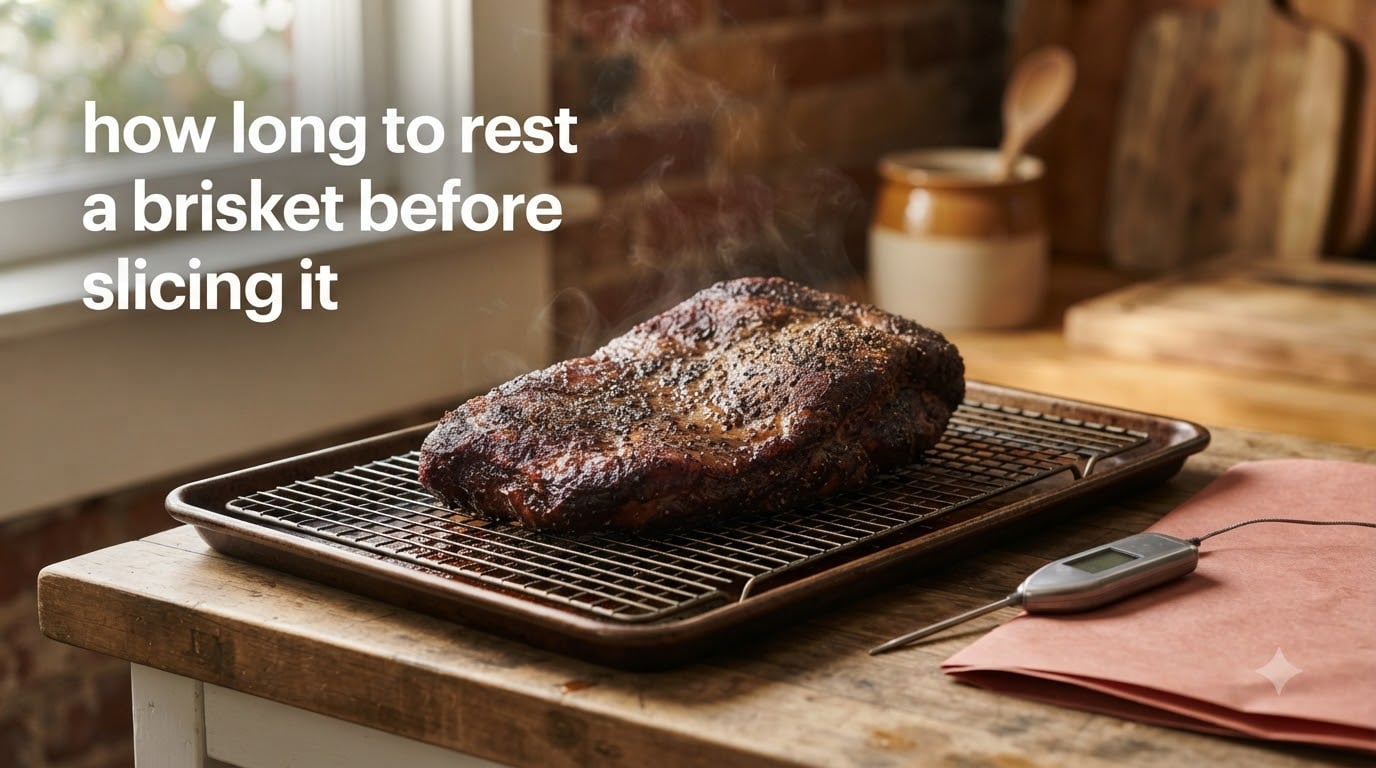
You should rest a brisket for at least 1 hour before slicing it, though 2 to 4 hours gives noticeably better results. With proper insulation in a cooler or Cambro, you can extend that rest to 6 or even 8 hours without drying the meat out. After fifteen years of smoking briskets at home and alongside competition cooks, I can tell you the resting window is where most of the magic happens.
If you’ve ever sliced into a brisket right off the smoker and watched a puddle of juice flood the cutting board, you already know why resting matters. This guide walks you through exactly how long to rest a brisket, the science that makes resting work, and four reliable methods you can use whether you cook on a backyard offset or a competition rig.
Table of Contents
How Long Should You Rest a Brisket Before Slicing It
The short answer: rest your brisket for a minimum of 1 hour, ideally 2 to 4 hours, and up to 8 hours in an insulated container. The exact window depends on the size of the brisket, the temperature you pulled it at, and the resting method you use.
Here is the resting time breakdown I follow and recommend:
- Minimum rest: 1 hour at room temperature or in a warm cooler. This is the floor below which slicing ruins texture.
- Ideal rest: 2 to 4 hours. Most competition teams I know aim for this window because the brisket holds heat and the connective tissue finishes breaking down.
- Extended rest: 6 to 8 hours in an insulated Cambro or faux cambro setup. This works only when the meat stays above 140°F, which we’ll cover in the temperature safety section below.
Pull the brisket from the smoker when it is probe tender and the internal temperature reads between 200°F and 205°F in the thickest part of the flat. Carryover cooking will push that temperature up another 5 to 10°F during the rest, so don’t be surprised if your instant-read probe climbs briefly after you set the meat down.
Why Resting a Brisket Matters: The Science Behind Juicy Meat
Resting is not a passive pause. Three things happen inside the meat during a proper rest, and understanding them is the difference between a brisket your guests remember and one they politely chew through.
Moisture Redistribution
During the cook, heat forces juices toward the center of the brisket through muscle fiber contraction. If you slice immediately, those juices escape onto the board and the meat dries out. A 1 to 2 hour rest gives the muscle fibers time to relax and reabsorb that moisture, so it stays locked inside each slice.
Collagen Gelatinization
Brisket is loaded with connective tissue, especially in the deckle and between the muscle groups. When the internal temperature hits 160°F to 205°F, collagen converts to gelatin. Resting extends that conversion window. According to research on meat doneness, the breakdown continues for hours after the meat leaves the heat, which is why a rested brisket feels silkier on the palate.
Carryover Cooking
The internal temperature of a 12 to 16 pound brisket climbs another 5°F to 10°F after you pull it from the smoker. That residual heat finishes the render and helps dissolve the last bits of tough connective tissue. If you pull at 195°F and slice right away, you may notice the slices feel tight. Pull at 200°F to 205°F, rest properly, and the same brisket cuts like butter.
On forums like r/smoking and r/BBQ, experienced pitmasters often say the rest is more important than the last hour of the cook. I agree. The bark is set, the smoke has bonded to the meat, and your job is simply to give the interior time to finish.
Best Brisket Resting Methods Step by Step
There is no single right way to rest a brisket. The method you pick depends on the equipment you own, the ambient temperature, and how long you need to hold before serving. Below are the four methods I trust most.
Method 1: Room Temperature Rest
This is the simplest approach and works well for briskets under 12 pounds when you plan to slice within 1 to 2 hours.
- Pull the brisket from the smoker at 200°F to 205°F internal.
- Leave it on the butcher paper or unwrap it depending on your bark preference.
- Set it on a wire rack over a sheet pan so air circulates underneath.
- Loosely tent a layer of foil over the top if you want to slow the surface cooling.
- Rest for 1 to 2 hours in a room that is at least 70°F.
The downside is that the bark can soften as moisture escapes and condenses. The upside is zero special equipment and the brisket is ready to slice relatively quickly.
Method 2: Faux Cambro Rest (Cooler Method)
This is my go-to for backyard cooks. A faux cambro is a regular ice chest that mimics the professional holding box used in competition barbecue.
- Line a clean, empty cooler with several thick towels (old bath towels work great).
- Wrap the brisket loosely in butcher paper or place it directly on the towels.
- Set the brisket inside and fold the towels over the top to seal in heat.
- Close the lid and leave it alone for 2 to 6 hours.
The trapped residual heat keeps the brisket well above the food safety danger zone, and the towels buffer any sharp temperature drop. Most smokers I’ve talked to say the meat holds a steady 160°F to 180°F for hours in a pre-warmed cooler. To pre-warm, fill the cooler with boiling water, close the lid for 15 minutes, dump, and dry.
Method 3: Cambro Container Rest
If you cater or cook competitively, a real Cambro hot holding box is worth the investment. These are the plastic boxes restaurants use to keep food hot for hours.
- Wrap the brisket in butcher paper or foil.
- Place it in a pre-warmed Cambro container.
- Close the lid tightly.
- Hold for up to 8 hours if needed.
Competition pitmasters routinely hold briskets for 4 to 6 hours in a Cambro between turn-in times and pulled pork. The meat arrives at the slicing table still steaming and tender.
Method 4: Steam Cabinet Rest
A steam cabinet is more common in restaurant kitchens and high-end catering setups. The cabinet circulates low humidity at 140°F to 160°F, which keeps the brisket warm without overcooking the bark.
- Transfer the wrapped brisket to the steam cabinet immediately after pulling.
- Set the cabinet to 150°F.
- Hold for up to 6 hours.
If you don’t have a steam cabinet, you can approximate the effect by placing a pan of hot water on the lower rack of an oven set to its lowest temperature. The water creates humidity and the low oven temp keeps the brisket in the safe holding range.
Resting Time by Brisket Size and Weight
One gap I see in most guides is a clear breakdown of resting time by brisket weight. Larger briskets retain more heat, so they rest longer before temperature drops become a concern. Smaller briskets cool faster and need a tighter window.
Use this table as a starting point and adjust based on your specific cook and ambient conditions.
- 6 to 8 pound brisket flat: 1 to 2 hours minimum, 3 hours ideal. Smaller cuts cool faster so don’t extend beyond 3 hours unless insulated.
- 10 to 12 pound packer: 2 hours minimum, 3 to 4 hours ideal. This is the most common size for backyard cooks and gives excellent results with the cooler method.
- 14 to 16 pound packer: 2 to 3 hours minimum, 4 to 5 hours ideal. The extra mass acts as a thermal buffer and benefits from longer holds.
- 18 to 20 pound packer: 3 hours minimum, 5 to 6 hours ideal. Used in catering and competition where holding times stretch.
One quick rule of thumb I use: allow about 15 minutes of rest time per pound of brisket as a minimum. A 12 pound packer gets at least 3 hours, a 16 pound packer gets at least 4 hours, and so on.
Wrapped vs Unwrapped: Which Is Better for Resting Brisket
Both approaches work, but they produce different results. The right choice depends on what you value most.
Wrapped in butcher paper: This is the most common choice among competition teams. The paper lets the bark breathe just enough to stay firm while trapping enough heat to keep the interior warm. It’s a good middle ground for moisture and texture.
Wrapped in aluminum foil: Foil creates a tighter seal and holds more heat, which is helpful if you are resting for 4 hours or longer. The trade-off is the bark can soften and turn mushy because trapped steam has nowhere to escape. If you go this route, leave one corner of the foil loose to vent.
Unwrapped: Best for short rests of 1 to 2 hours when you want maximum bark crunch. The exposed surface dries slightly during the rest, which preserves the texture. Beyond 2 hours, unwrapped briskets tend to cool past the safe zone faster than wrapped ones.
My recommendation: wrap in butcher paper for rests of 3 hours or longer, and leave unwrapped or loosely tented for shorter holds.
Temperature Safety and the Danger Zone When Resting Brisket
The food safety danger zone sits between 40°F and 140°F. Pathogens multiply rapidly in that range, so the goal during any rest is to keep the brisket above 140°F the entire time.
With the cooler or Cambro methods, this is rarely a problem. A 12 pound brisket pulled at 205°F will still read 160°F to 175°F after 4 hours in an insulated container. Smaller briskets and longer holds push closer to the 140°F threshold, which is why I rarely recommend resting more than 6 hours on briskets under 10 pounds.
Can you rest a brisket overnight? Technically yes if you have a Cambro or warming cabinet that holds above 140°F for 8 to 12 hours. At home, an oven set to 150°F to 170°F with a pan of water can serve the same purpose. I do not recommend resting on the counter overnight because the meat will fall into the danger zone within 3 to 4 hours.
Always check the internal temperature with a clean probe before slicing. If the brisket has dropped below 140°F during the rest, slice it and either serve immediately or refrigerate. You can reheat gently in a 250°F oven wrapped in foil with a splash of beef broth.
Troubleshooting Common Brisket Resting Problems
Even experienced cooks hit issues during the rest. Here is how I handle the four most common problems.
The Bark Turned Soft or Soggy
Soft bark is almost always caused by trapped steam. To rescue a soggy bark, unwrap the brisket, place it on a wire rack, and put it in a 275°F oven or back on the smoker for 10 to 15 minutes. The dry heat will crisp the surface back up without overcooking the interior.
The Brisket Dried Out During the Rest
Dry meat usually means the brisket was overcooked before the rest or held too long without enough insulation. If the meat is sliced and feels dry, drizzle warm au jus or beef broth over the slices just before serving. For the next cook, pull 5°F earlier and wrap earlier in the stall to retain more moisture.
The Brisket Is Still Tough After Resting
Toughness usually points to undercooking, not a failed rest. The internal temperature may have looked right but the connective tissue did not fully render. Wrap the brisket tightly in foil with a splash of broth, return it to a 275°F smoker or oven, and cook until a probe slides into the flat like a hot knife into soft butter. Then rest again for 1 hour before slicing.
How Do I Know the Brisket Is Done Resting
Forget the clock and use feel. Gently press the flat between your fingers. A properly rested brisket feels firm but yields slightly, similar to the pad of your thumb when you touch the tip of your index finger. The bark should still feel set, not tacky. If you slice and the juice barely beads on the cut surface, the rest worked.
Frequently Asked Questions
How long should you rest a brisket?
Rest a brisket for at least 1 hour, ideally 2 to 4 hours, and up to 8 hours in an insulated cooler or Cambro. Smaller briskets cool faster, so plan shorter holds for briskets under 10 pounds.
Can you rest brisket too long?
Yes, if the meat drops below 140°F for more than 2 hours, bacteria can grow. Use an insulated cooler, Cambro, or warming cabinet to keep the brisket above 140°F if you need to hold longer than 3 hours.
What happens if you don’t rest brisket?
Slicing a brisket without resting causes juices to run out onto the cutting board, leaving dry, tough meat. The connective tissue also does not have time to finish breaking down, so the texture feels tight rather than tender.
Should you rest brisket wrapped or unwrapped?
Wrap in butcher paper for rests longer than 2 hours to keep the bark from turning soggy. For short rests of 1 to 2 hours, leaving unwrapped or loosely tented preserves maximum bark crunch.
How do you rest brisket in a cooler?
Pre-warm a clean cooler with boiling water, line it with thick towels, place the wrapped brisket inside, fold the towels over the top, and close the lid. The brisket will hold 160°F or higher for 3 to 6 hours.
What temperature should brisket rest at?
The brisket should stay above 140°F throughout the rest for food safety. Ideal holding temperatures in a cooler or Cambro are between 150°F and 180°F, which keeps the meat warm without overcooking.
Can you rest brisket for 8 hours?
Yes, in a pre-warmed Cambro, faux cambro, or warming oven set to 150°F, a 14 pound or larger brisket can rest for 8 hours and still slice cleanly. Smaller briskets may drop below 140°F on that timeline.
Should I rest brisket at room temperature?
Room temperature rest works for short holds of 1 to 2 hours on briskets under 12 pounds. Beyond that, the meat cools into the food safety danger zone, so switch to an insulated container for longer rests.
Final Thoughts on Resting Brisket the Right Way
Knowing how long to rest a brisket before slicing it is the single biggest upgrade you can make to your cook. Pull at 200°F to 205°F, rest for at least 1 hour, aim for 2 to 4 hours if your schedule allows, and use a cooler or Cambro for any rest beyond 2 hours. Keep the meat above 140°F and slice against the grain in pencil-thick slices for the cleanest presentation.
Whether you are smoking your first brisket at home or turning in to your next competition, the rest is where your brisket becomes tender, juicy, and worth every minute of patience. Fire up the smoker, plan ahead for the hold, and your guests will notice the difference from the very first bite.