
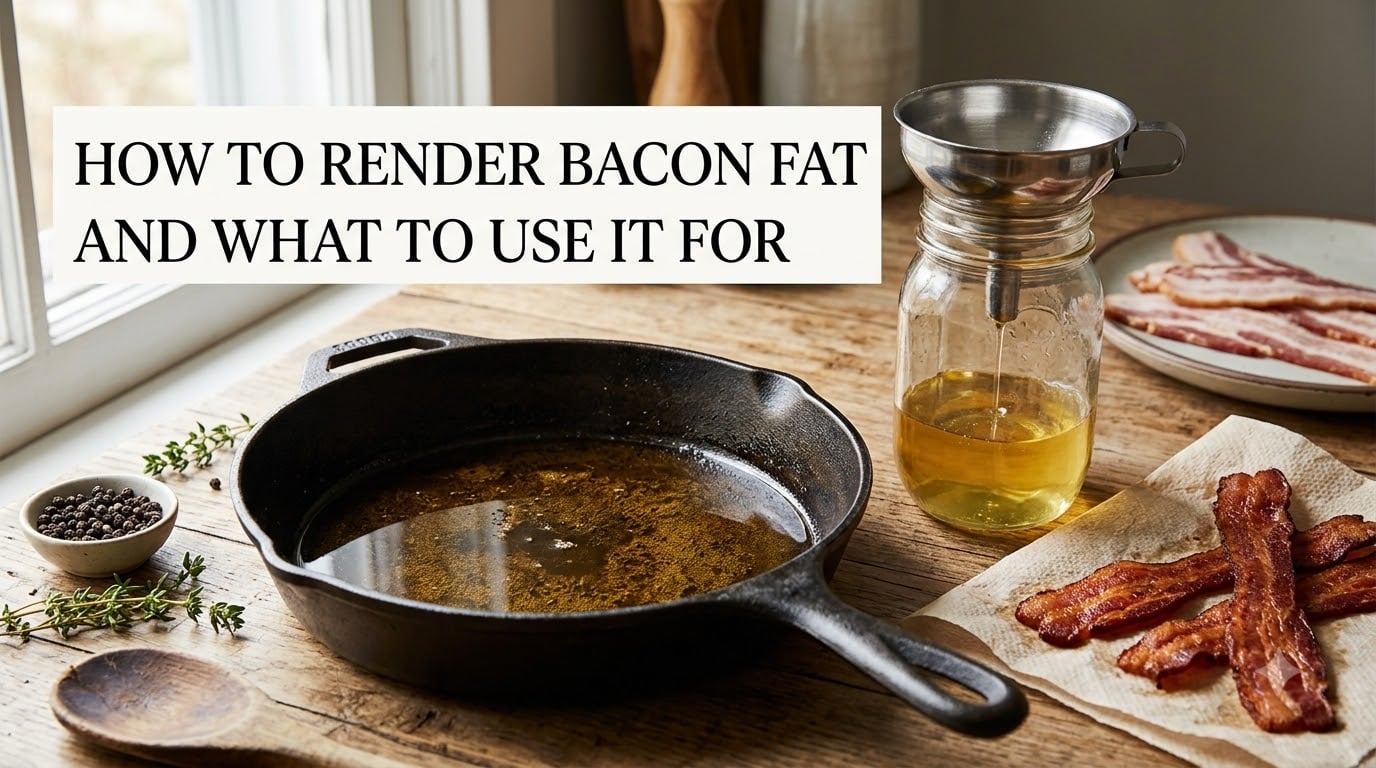
Bacon fat has earned the nickname “liquid gold” for good reason. Every time you cook bacon, you produce a flavorful cooking fat that home cooks have prized for generations. Knowing how to render bacon fat and what to use it for turns a kitchen byproduct into one of the most versatile ingredients in your pantry.
Our team has rendered gallons of bacon fat over the years, from single strips in a cast-iron skillet to big batches of bacon ends from the butcher. In this guide, I’ll walk you through the low-and-slow rendering process, three storage methods, 15 cooking uses, and a few non-cooking tricks that make bacon fat genuinely useful beyond the frying pan.
Table of Contents
Quick Answer: How to Render Bacon Fat and What to Use It For
To render bacon fat, cook bacon in a single layer over low heat for 10 to 12 minutes until the fat liquefies, then strain it through a fine-mesh sieve or cheesecloth into a glass jar. Stored properly, it keeps for months and adds smoky flavor to eggs, cornbread, vegetables, potatoes, popcorn, biscuits, gravy, and more.
Once you have a jar of rendered bacon fat in your fridge, you’ll find dozens of ways to use it. Fry eggs, sauté greens, roast potatoes, bake biscuits, pop popcorn, and even start a campfire. It’s one of the easiest flavor upgrades you can make at home.
What Does It Mean to Render Bacon Fat?
Rendering means cooking fat out of meat slowly enough to separate it cleanly from the solids. When you render bacon, you melt the fat cap and connective tissue into a clear, golden liquid while leaving behind crispy bits called cracklings.
The technique relies on low, steady heat. Too hot and the fat browns, smokes, and develops a bitter taste. Too fast and the fat scorches before all of it has melted. Patience is what separates pale, mild rendered bacon fat from something that tastes burnt.
Once strained, rendered bacon fat is sometimes called bacon grease or bacon drippings. All three names refer to the same thing: a smoky, savory cooking fat you can use in place of butter, oil, or lard in most savory recipes.
Reddit users in r/Cooking describe it as “liquid gold” almost unanimously. Many grew up watching a grandmother keep a coffee can or mason jar of bacon grease by the stove. There’s a reason that tradition stuck around: a small jar of rendered fat quietly upgrades nearly everything you cook.
How to Render Bacon Fat: Step-by-Step
The rendering process takes about 15 minutes of hands-on time and rewards careful attention. Here is the method we use every week in our kitchen.
Step 1: Choose the Right Pan
A heavy pan gives you the most control. Cast-iron skillets and stainless-steel frying pans are ideal because they hold steady heat and won’t warp. Non-stick pans work but rarely get hot enough to crisp the bacon evenly.
For small batches, a 10-inch skillet handles about 6 to 8 strips of bacon. For larger batches, use a Dutch oven or wide saucepan. The key is keeping the bacon in a single layer without crowding, which lets moisture escape and fat render cleanly.
Step 2: Start with Cold Pan and Low Heat
Place the bacon strips in the pan before turning on the burner. Cold-start rendering is the secret to even fat extraction. As the pan warms, the fat slowly melts and the bacon cooks in its own grease.
Set the burner to medium-low or low. The target rendering temperature sits between 250 and 300 degrees. The bacon should sizzle gently, not violently. If the pan is smoking, the heat is too high.
Step 3: Cook 10 to 12 Minutes, Flipping Once
Let the bacon cook undisturbed for 6 to 8 minutes. The fat will pool around the strips and turn translucent as it renders. Flip the bacon with tongs and cook another 4 to 5 minutes until both sides are deeply golden and crisp.
Visual cues matter more than the clock. The fat should look clear and golden, not milky or foamy. If it’s bubbling aggressively, drop the heat. If it sits perfectly still, nudge it up slightly.
Step 4: Remove the Bacon, Pour Off the Fat
Lift the crispy bacon strips out and set them on a paper-towel-lined plate. Pour the rendered fat through a fine-mesh sieve or cheesecloth into a heatproof glass jar or bowl. The sieve catches small bits of meat that would otherwise burn during storage.
For the cleanest fat, strain twice. The first pass removes large solids, the second pass catches anything that slipped through. The result is a clear, golden liquid that looks similar to olive oil.
Step 5: Cool, Then Store
Let the fat cool to room temperature before sealing and refrigerating. Warm fat in a sealed container can condense moisture inside the lid, which encourages spoilage. Most cooks let it sit on the counter for 30 minutes before moving it to the fridge.
For a smoother result, render bacon ends instead of whole strips. Bacon ends and trimmings are cheaper, render more fat per pound, and strain into a cleaner product. Many butchers sell them by the pound.
How to Store Bacon Fat So It Lasts
How long rendered bacon fat lasts depends entirely on how you store it. Rendered fat is stable at room temperature for short periods, but cooler storage slows oxidation and extends shelf life. Choose a method that matches how often you cook.
Counter Storage (1 to 3 Months)
A covered jar on the counter works if you live in a cool kitchen and use the fat within a few weeks. This is the traditional method, and many home cooks swear by it. The fat stays soft, ready to scoop with a spoon.
Risks go up if your kitchen runs warm or if the fat has any moisture or meat particles. Rancid bacon fat smells sharp and slightly chemical, like old crayons or paint. If you notice that smell, toss it.
Refrigerator Storage (6 to 12 Months)
Refrigeration is the safest option for most home cooks. The cold keeps the fat solid and slows the breakdown of compounds that cause off flavors. A sealed glass jar in the fridge lasts 6 months easily, often longer.
Use a wide-mouth mason jar or any glass container with a tight lid. Plastic containers can absorb odors and stain. Label the jar with the date so you know when you rendered it.
Freezer Storage (Up to a Year)
Freezing extends the shelf life to a year or more. Pour the rendered fat into ice cube trays, silicone molds, or small jars, leaving headspace for expansion. Once frozen, pop the cubes into a freezer bag for easy portioning.
Fat cubes are handy. Toss one into a hot pan to sauté vegetables, melt a few into cornbread batter, or drop one onto popcorn. America’s Test Kitchen popularized this trick and it really does make weeknight cooking easier.
15 Cooking Uses for Rendered Bacon Fat
This is where bacon fat earns its nickname. Once you have a jar in your fridge, you’ll find excuses to use it almost daily. Here are the cooking uses our team reaches for most often.
1. Fry Eggs
Bacon fat fried eggs are a revelation if you’ve never tried them. The fat crisps the edges of the whites and adds a smoky depth that butter cannot match. Use about a tablespoon per egg over medium heat.
2. Sauté Vegetables
Spinach, kale, green beans, brussels sprouts, and cabbage all benefit from a bacon fat sauté. The smoky notes complement bitter greens especially well. Start the veg in a tablespoon of fat for deep flavor.
3. Roast Potatoes
Toss cubed potatoes in melted bacon fat before roasting at 425 degrees. The exterior gets crisp, the interior stays fluffy, and the flavor beats any oil-based recipe. This is one of the most popular uses on r/Cooking.
4. Bake Cornbread
Replace the butter or oil in any cornbread recipe with an equal amount of melted bacon fat. The result is a richer, more savory crumb that pairs perfectly with chili, soup, or beans. Many Southern cooks consider this non-negotiable.
5. Make Biscuits
Cut bacon fat into flour the same way you would use cold butter or lard. The biscuits bake up flaky and layered with a subtle smokiness. For extra depth, brush the tops with melted bacon fat before going into the oven.
6. Pop Popcorn
Popcorn popped in bacon fat is the stuff of movie-night legend. Use about a tablespoon of fat per quarter-cup of kernels. Season with salt and you’ve got a savory, salty snack that beats buttered popcorn hands down.
7. Build Gravy
After roasting meat, use a few tablespoons of bacon fat instead of butter to start your roux. The gravy takes on a deeper, smokier profile. This works especially well with country-style sausage gravy.
8. Cook Refried Beans
Traditional refried beans get their richness from pork fat. Bacon fat works beautifully here. Sauté onions in the fat, add cooked pinto beans, mash, and finish with a splash of the cooking liquid.
9. Pan-Fry Chicken
Bone-in chicken thighs and drumsticks come out incredibly crisp when seared in bacon fat. The fat renders under the skin and bastes the meat as it cooks. Aim for skin-on, bone-in pieces for the best results.
10. Sear Steaks and Pork Chops
A tablespoon of bacon fat in a hot cast-iron skillet gives steaks and pork chops a deep, browned crust. The high smoke point handles the searing temperature, and the flavor compounds add complexity.
11. Make Hash Browns and Home Fries
Shredded potatoes cooked in bacon fat are the gold standard for breakfast hash. The fat crisps the edges and seasons the potatoes all the way through. Use about 2 tablespoons per pound of potatoes.
12. Bake a Savory Pie Crust
Substitute bacon fat for half the butter or shortening in a savory pie crust. Quiches, pot pies, and chicken pot pie get a subtle smoky undertone. The fat also makes the crust extra tender.
13. Dress a Warm Vinaigrette
Bon Appétit recommends bacon fat as a base for warm vinaigrettes for spinach or frisée salads. Whisk a tablespoon of warm fat with vinegar, mustard, and a touch of honey. Pour over greens while still warm.
14. Boost Cast-Iron Seasoning
Rub a thin layer of bacon fat onto a warm cast-iron pan after cleaning. Heat the pan in the oven for an hour to polymerize the fat into the seasoning. Bacon fat produces a hard, glossy surface that rivals flaxseed oil.
15. Make Mayonnaise or Aioli
Blend a tablespoon of room-temperature bacon fat into homemade mayonnaise for a smoky aioli. It pairs beautifully with burgers, grilled fish, or roasted vegetables. America’s Test Kitchen highlights this use as a creative twist.
Bacon Fat vs Butter vs Oil: How They Compare
Reaching for bacon fat instead of butter or oil works in many recipes, but the three fats behave differently. Here is how they stack up.
Bacon fat has a smoke point around 325 to 375 degrees depending on how well it’s strained and what bacon you used. Butter burns around 350 degrees and many vegetable oils push past 400 degrees. For high-heat searing, a neutral oil still wins, but for moderate-heat cooking, bacon fat holds up fine.
Flavor is where bacon fat dominates. Butter adds richness but a sweeter, dairy note. Oil adds moisture without flavor. Bacon fat adds richness, savoriness, and a distinct smokiness that transforms simple dishes. The trade-off is that bacon fat does not work in sweet baked goods where you want a neutral taste.
Storage rules apply to all three. Butter lasts weeks in the fridge, oil lasts months at room temperature, and bacon fat sits somewhere between, lasting months refrigerated and a year in the freezer.
Non-Cooking Uses for Bacon Fat
Cooking is the obvious use, but bacon fat has a few surprising applications around the house and garden.
Fire Starters
Mix rendered bacon fat with sawdust or shredded paper, pack it into a muffin tin, and let it solidify. The fat blocks burn for 15 to 20 minutes each, perfect for fireplaces, campfires, and wood stoves. Hidden Springs Homestead popularized this trick among off-grid readers.
Leather Conditioner
A thin layer of bacon fat rubbed into dry leather boots, belts, or bags softens the material and restores water resistance. Wipe off the excess after a few hours. Test on a small spot first since heavily smoked fats can darken light leathers.
Remove Sticky Labels
Rub a small amount of bacon fat into the residue left by price tags or stickers. Let it sit for a few minutes, then wipe clean. The fat dissolves the adhesive without scratching the surface underneath.
Bird Suet Cakes
Mix cooled bacon fat with birdseed, oats, or dried fruit, and pack into small containers or molds. Hang them outside in winter as high-energy food for woodpeckers, chickadees, and nuthatches. Suet cakes work especially well in cold weather.
Lubricate Squeaky Hinges
For a short-term fix on a squeaky door hinge, rub a small amount of bacon fat into the pin. The fat quiets the squeak for weeks. This is a homestead trick worth remembering.
Tips and Common Mistakes to Avoid
Most bacon fat disasters come down to a handful of recurring mistakes. Avoid these and your jar of liquid gold will stay fresh and flavorful for months.
Mistake 1: Rendering Too Hot
Crisp bacon smells good while cooking, but high heat scorches the fat. The result tastes bitter and burns easily when you try to cook with it later. Stick with low and slow rendering for clean flavor.
Mistake 2: Skipping the Strain
Bits of meat left in the fat burn during storage and turn the whole jar rancid within weeks. Always strain through a fine-mesh sieve or cheesecloth. For very clean fat, strain twice.
Mistake 3: Using Flavored Bacon Unknowingly
Applewood, peppered, maple, and hickory-smoked bacons all transfer their flavors into the rendered fat. That’s usually a plus, but if you want a neutral flavor, stick with plain bacon. Avoid uncured bacon if you want long shelf life.
Mistake 4: Mixing Fresh Fat with Old Fat
Don’t pour fresh fat on top of older fat in the jar. Old fat may have started to oxidize, and the new batch will pick up that off flavor. Use separate jars or finish the old batch first.
Mistake 5: Forgetting About Salt Content
Rendered bacon fat carries trace salt from the bacon itself. Bon Appétit recommends reducing added salt by about half when you substitute bacon fat for butter in baking or sautés. Taste as you go.
Pro Tip: Save the Cracklings
The crispy bits left in the strainer are called cracklings, and they are delicious. Sprinkle them on salads, baked potatoes, or cornbread. Store them in the fridge and use within a week for best texture.
Frequently Asked Questions
What can I use rendered bacon fat for?
Rendered bacon fat works for frying eggs, sautéing vegetables, roasting potatoes, baking cornbread and biscuits, popping popcorn, making gravy, refrying beans, pan-frying chicken, searing steaks, cooking hash browns, baking savory pie crust, dressing warm vinaigrettes, seasoning cast iron, and blending into aioli. You can also use it outside the kitchen as a fire starter, leather conditioner, sticky label remover, bird suet, or hinge lubricant.
How long will rendered bacon fat last?
Rendered bacon fat keeps for 1 to 3 months in a covered jar at room temperature, 6 to 12 months in the refrigerator, and up to a year in the freezer. The exact shelf life depends on how well it was strained, the storage temperature, and how much salt and moisture remain in the fat. Always smell the fat before using it; a sharp, chemical, or crayon-like odor means it has gone rancid and should be discarded.
What is the best way to render bacon fat?
The best way to render bacon fat is to cook bacon strips in a single layer in a heavy cast-iron or stainless-steel skillet over low heat for 10 to 12 minutes, flipping once. Pour the liquid fat through a fine-mesh sieve or cheesecloth into a glass jar, let it cool, then refrigerate. Low heat keeps the flavor clean, and straining removes the small meat particles that would otherwise burn during storage.
Is cooking with bacon grease healthier than butter?
Both bacon fat and butter are high in saturated fat and similar in calories, so neither is a clear nutritional winner. Bacon fat does contain slightly more monounsaturated fat and a bit less saturated fat than butter, but the difference is small. The bigger factor is flavor and how much you use. Use bacon fat when you want smoky depth, butter when you want dairy richness, and a neutral oil when you want higher heat tolerance.
Start Saving Your Bacon Fat Today
Learning how to render bacon fat and what to use it for is one of the simplest upgrades you can make to your cooking. A single jar in the fridge gives you a smoky, ready-to-use fat for eggs, vegetables, cornbread, popcorn, and dozens of other dishes. It also costs nothing extra, since you would have thrown the fat away otherwise.
Render a small batch this week, store it in a glass jar, and start experimenting. Once you taste the difference bacon fat makes, you will never go back to dumping it down the drain.