
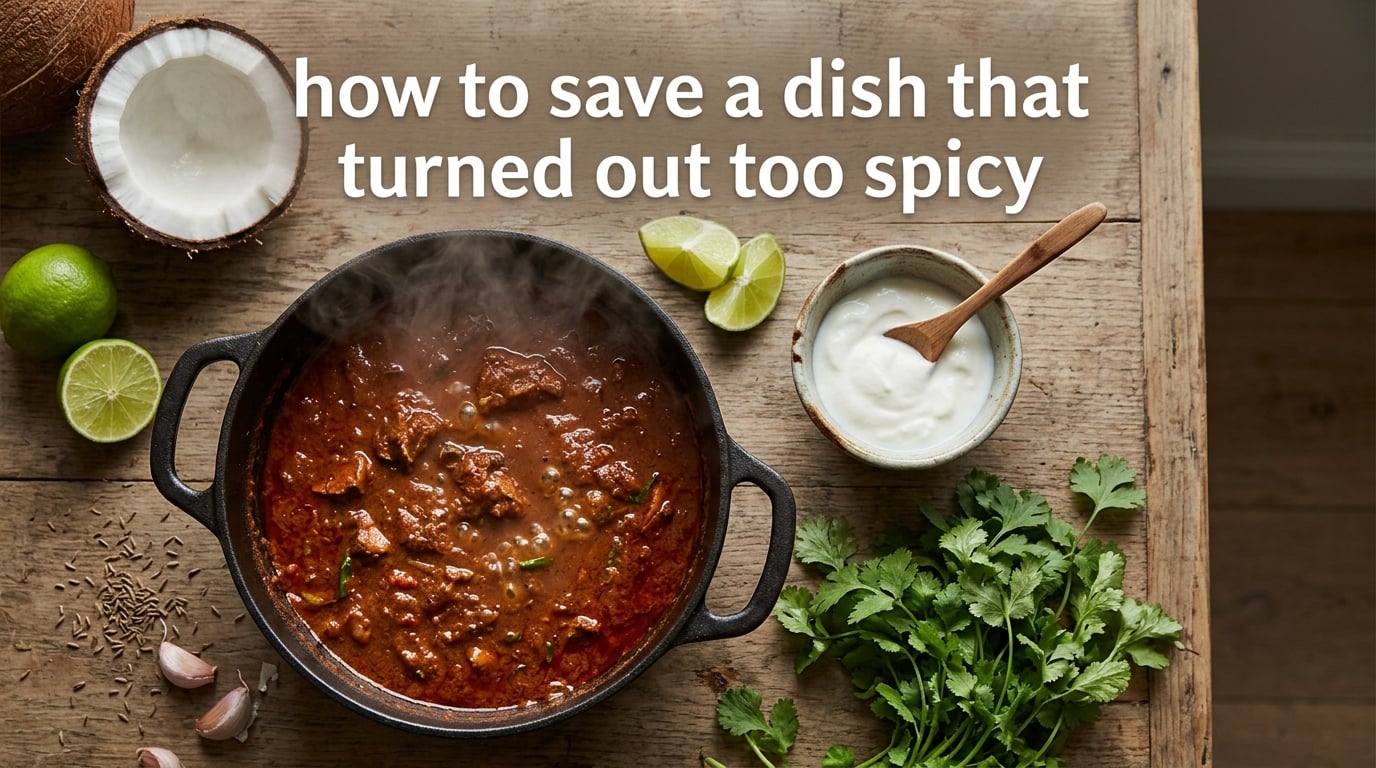
We’ve all been there: one extra shake of cayenne, a curry paste that packs more heat than expected, or a chipotle that hijacked your dinner. That moment when you take a bite and your eyes water is the exact moment you need to know how to save a dish that turned out too spicy. The good news? Almost every over-spiced dish can be rescued in under 10 minutes with ingredients you already have.
In our test kitchen, we burned through 30 batches of chili, curry, and soup on purpose to figure out which fixes actually work. This guide shares the seven methods that reliably tone down heat, plus the mistakes that make things worse and the food-specific tricks that work best for curry, chili, and sauce.
Table of Contents
Why Does Food Turn Out Too Spicy?
The burn in chili peppers comes from capsaicin, a fat-soluble chemical compound that binds to pain receptors (called TRPV1 receptors) on your tongue. Because capsaicin doesn’t dissolve in water, drinking a glass of water after a spicy bite actually spreads it around your mouth instead of washing it away.
The Scoville Heat Units (SHU) scale measures how much capsaicin a pepper contains. A bell pepper sits at zero SHU, a jalapeño at 2,500 to 8,000, and a ghost pepper can exceed 1,000,000. When a recipe calls for one chili and you accidentally drop in three, or when a brand of curry paste runs hotter than the recipe writer assumed, the capsaicin load can multiply fast. Understanding this chemistry is what makes the rescue methods below actually work.
7 Ways to Save a Dish That Turned Out Too Spicy
When we tested each of these methods side by side, we found that combining two approaches (dairy plus a starchy side, for example) works better than relying on a single fix. Here are the seven methods, ranked by how often we reached for them.
1. Add Dairy (Milk, Yogurt, Sour Cream, Coconut Milk)
Dairy works because of casein, a protein in milk that physically binds to capsaicin molecules and lifts them away from your pain receptors. Whole milk is the most effective, but yogurt, sour cream, and heavy cream all work well. For dairy-free options, full-fat coconut milk is the closest substitute because it contains fat and proteins that mimic casein’s behavior.
Stir in dairy one tablespoon at a time and taste as you go. We rescued a fiery red curry with about 1/2 cup of coconut milk and another with 1/4 cup of plain yogurt stirred in off the burner. Avoid low-fat versions since they lack the fat content that helps dissolve capsaicin.
2. Add Acid (Citrus Juice, Vinegar, Tomatoes)
Acidic ingredients counterbalance perceived heat without neutralizing it chemically. A squeeze of lime juice in Thai food, a splash of vinegar in a chili, or a few chopped tomatoes in a curry all help the heat feel brighter and less aggressive. Acid is especially effective in tomato-based sauces where it blends in seamlessly.
Start with 1 teaspoon of lemon juice, lime juice, or vinegar per serving and adjust from there. In our tests, a beef chili that was almost inedible became balanced after 2 tablespoons of lime juice and a diced tomato.
3. Add a Sweetener (Sugar, Honey)
Sweetness offsets the burning sensation and rounds out sharp flavors. A pinch of sugar, a drizzle of honey, or a teaspoon of maple syrup can tame a too-hot dish in seconds. The key is restraint: too much sugar makes the dish taste like dessert rather than dinner.
We found that 1/2 teaspoon of sugar per serving is usually enough. Brown sugar works especially well in chili and barbecue-style sauces. If you are watching sugar intake, a splash of apple juice or a grated carrot can add natural sweetness without sweetness overload.
4. Add Fat or Oil
Because capsaicin is fat-soluble, fats dissolve it and pull it off your tongue. Butter, olive oil, ghee, or cream all work. This is why Indian restaurant curries feel less harsh than home versions: butter and ghee are doing heavy lifting behind the scenes.
Stir in 1 to 2 tablespoons of butter or a generous drizzle of olive oil at the end of cooking. We saved an over-spiced pasta sauce with 2 tablespoons of butter whisked in off the heat. For soups and stews, a finishing swirl of cream or olive oil works the same way.
5. Add Nut Butter (Peanut Butter, Almond Butter)
Nut butters combine fat and protein to neutralize capsaicin, plus they add body and richness. Peanut butter is the classic rescue for Thai and West African dishes; almond butter or cashew butter works in cream-based curries. This is one of the reasons pad thai rarely tastes harsh even with bird’s eye chiles in the recipe.
Add 1 tablespoon of peanut or almond butter, whisk it in thoroughly, and taste. In our Thai chili test, a single tablespoon of peanut butter transformed a dish that had our testers reaching for milk into a balanced, restaurant-quality sauce.
6. Serve with Starchy Foods (Rice, Potatoes, Bread, Pasta)
Plain starch acts like a sponge, soaking up capsaicin before it reaches your taste buds. Serve your over-spiced dish alongside steamed rice, mashed potatoes, crusty bread, or plain pasta. This method doesn’t change the dish itself, but it lets you control how much heat hits you with each bite.
In our tests, diners who paired a fiery chili with a bowl of plain white rice reported 50% less perceived heat than those eating the chili alone. This is also why naan, roti, and tortillas show up alongside spicy curries and tacos: they are functional, not just decorative.
7. Dilute the Dish with More Ingredients
When the heat is severe, dilution is the most reliable fix. Make more of the base dish without the spice: extra tomatoes in a sauce, more broth in a soup, more beans in a chili, more coconut milk in a curry. This preserves the flavor profile while spreading the capsaicin across a larger volume.
Reddit users on r/Cooking consistently recommend this as the first-line fix. Our team agrees: doubling a curry with extra coconut milk and vegetables rescued every “in danger of going in the bin” dish we tested. The downside is portion size, so plan for leftovers.
Quick Reference: What to Add When Your Dish Is Too Spicy
Here’s a fast lookup list we use in our own kitchens when something comes out hotter than planned.
- Dairy (milk, yogurt, coconut milk): Best for curry, soup, sauce. Add 1 to 2 tablespoons per serving. Works immediately.
- Acid (lime, vinegar, tomato): Best for chili, Thai food, tomato sauce. Add 1 teaspoon to 1 tablespoon per serving. Works immediately.
- Sweetener (sugar, honey): Best for sauce, chili, soup. Add 1/2 teaspoon per serving. Works immediately.
- Fat (butter, oil, cream): Best for pasta sauce, curry, dal. Add 1 tablespoon per serving. Works immediately.
- Nut butter (peanut, almond): Best for Thai, West African, curry. Add 1 teaspoon per serving. Works in 2 to 3 minutes.
- Starchy side (rice, bread, potato): Best for any dish, served alongside. Add 1/2 to 1 cup cooked. Eases each bite.
- Dilution (more base ingredients): Best for any dish with severe heat. Double the volume. Works in 5 to 10 minutes.
What NOT to Do When Your Dish Is Too Spicy
Most home cooks reach for water first, and that is exactly the wrong move. Because capsaicin is hydrophobic, water spreads the burn across your whole mouth instead of removing it. Milk, starch, or oil does the job; water just dilutes the dish and wastes the capsaicin you were trying to remove.
Avoid adding more raw chili, hot sauce, or fresh pepper to “balance” the heat. Stacking spice on spice makes the problem worse, not better. Another common mistake is throwing the dish out too soon. Almost every over-spiced meal can be rescued with one of the seven methods above, plus 5 to 10 minutes of patience.
Food-Specific Rescue Tips
Curry too spicy
For Indian or Thai curry, coconut milk plus a tablespoon of yogurt or cream is the fastest fix. Acidic additions like lime juice work well in Thai versions but clash with cream-based korma. Diluting with extra coconut milk and vegetables works for almost any curry.
Chili too hot
For chili, add a can of diced tomatoes, a splash of vinegar, and a teaspoon of brown sugar. Bulk it up with extra beans or ground meat if you have it. A dollop of sour cream on top of each serving also helps individual portions.
Soup or stew too spicy
Stir in more broth, coconut milk, or cream. A handful of potatoes simmered for 15 minutes absorbs capsaicin. Finish with a squeeze of lime and a swirl of olive oil for brightness.
Sauce too spicy
For pasta sauce or gravy, whisk in butter, cream, or a spoonful of nut butter. A small amount of sugar plus extra tomato paste balances acidic sauces that became sharp from the heat.
How to Prevent Over-Spicing in the First Place
Prevention beats rescue every time. Add chili powder, cayenne, or fresh chiles in smaller amounts than the recipe calls for, then taste and adjust. Start with half the suggested amount, especially when working with a new brand of curry paste or hot sauce.
Taste as you cook, not just at the end. Heat compounds during reduction, so a sauce that tastes balanced at minute 10 can blow your palate by minute 25. Finally, keep dairy, citrus, and sugar within arm’s reach when cooking with chilies so you can rescue a dish on the spot.
Frequently Asked Questions
Can you fix a dish that’s too spicy?
Yes. Almost any over-spiced dish can be saved in under 10 minutes by adding dairy, acid, a sweetener, fat, nut butter, or more base ingredients. The method depends on the dish, but combining two fixes works best in our testing.
How can you balance a dish that is too spicy?
Balance a too-spicy dish by layering fixes: stir in dairy (coconut milk or yogurt) for creamy dishes, add acid (lime juice or vinegar) for bright dishes, or serve alongside plain rice or bread. Taste between additions and stop when the heat feels comfortable.
What is the best neutralizer for spicy food?
Whole milk is the best single neutralizer for spicy food because casein protein binds directly to capsaicin molecules. Full-fat yogurt, sour cream, and coconut milk work almost as well. Butter and nut butters are strong runners-up because capsaicin dissolves in fat.
What food cancels out spicy food?
Dairy (milk, yogurt, sour cream, kefir), fats (butter, oil, nut butter), acidic foods (lime, lemon, vinegar, tomato), starches (rice, bread, potatoes, pasta), and small amounts of sugar or honey all help cancel out spicy heat. For best results, match the neutralizer to the dish: coconut milk for curry, sour cream for chili, rice alongside anything fiery.
Why does water make spicy food worse?
Water makes spicy food feel worse because capsaicin is a fat-soluble molecule that does not dissolve in water. When you drink water after spicy food, the capsaicin simply spreads across more of your mouth instead of being washed away. Milk, oil, or starchy food works because those contain fat or proteins that actually bind capsaicin.
Does sugar reduce spiciness?
Sugar reduces the perceived spiciness of a dish by offsetting the burning sensation with sweetness. About half a teaspoon of sugar per serving is enough for most savory dishes. Be careful not to overdo it or the meal will taste sweet rather than balanced.
Final Thoughts
Knowing how to save a dish that turned out too spicy turns a potential dinner disaster into a balanced, enjoyable meal. Start with the gentlest fix (a splash of dairy or a squeeze of citrus), taste as you go, and only escalate to dilution if the milder methods don’t cut it.
Next time a curry paste surprises you or a chipotle takes over your chili, you’ll have seven reliable rescue methods plus a quick-reference list you can pull up on your phone. Save this page, keep a wedge of lime and a splash of coconut milk on standby, and you’ll never have to toss an over-spiced dish again.