
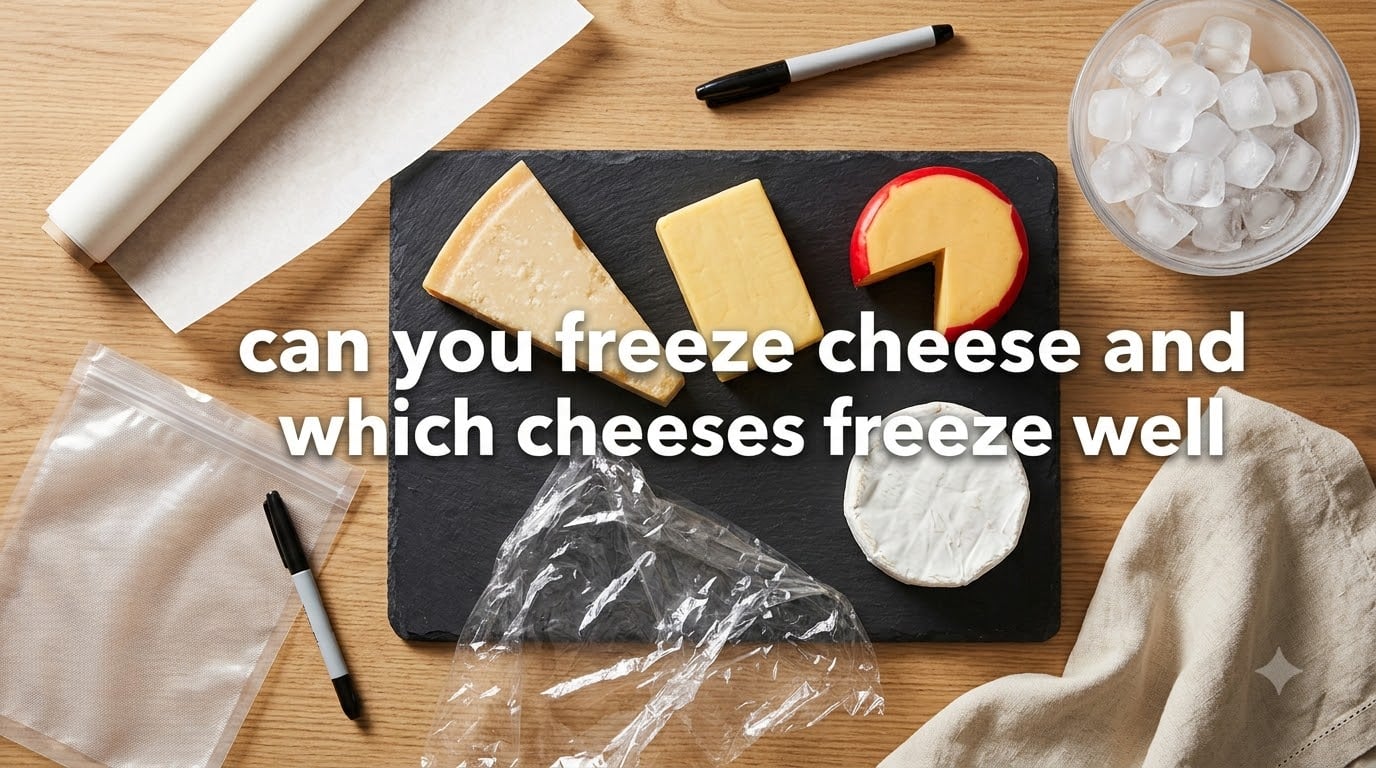
Yes, you can freeze cheese — and we do it all the time at our test kitchen. Hard and semi-hard cheeses like cheddar, parmesan, and gouda freeze surprisingly well for up to six months. Soft and fresh cheeses like brie, ricotta, and cream cheese do not freeze well because their high moisture content turns grainy and separated after thawing.
I buy cheese in bulk from warehouse stores and specialty shops. Freezing cheese has saved our team hundreds of dollars over the past two years. The trick is knowing which varieties tolerate freezing and which ones turn into a crumbly mess in your fridge drawer.
This guide covers what to freeze, what to skip, and exactly how to wrap, store, and thaw cheese without ruining it. If you came here asking “can you freeze cheese and which cheeses freeze well,” you’ll have a clear answer by the end.
Table of Contents
Quick Answer: Can You Freeze Cheese?
Most cheeses can technically be frozen, but quality varies dramatically. Hard and semi-hard aged cheeses freeze with minimal texture change. Soft, fresh, and high-moisture cheeses separate, become grainy, and lose their signature creaminess once thawed.
Here is the short version:
- Freeze with confidence: Hard cheeses (parmesan, pecorino, aged cheddar, asiago, manchego) and semi-hard cheeses (young cheddar, gouda, swiss, monterey jack, edam).
- Freeze with caution: Blue cheese, halloumi, feta, and processed cheese slices — usable for cooking but texture changes.
- Skip the freezer: Brie, camembert, ricotta, cottage cheese, mascarpone, and cream cheese — these become grainy and watery after thawing.
- Storage duration: 2 to 6 months depending on the variety and how tightly you wrap it.
Reddit users in r/Cooking and r/MealPrepSunday echo what our kitchen team found: hard cheeses freeze beautifully, soft cheeses almost never survive the thaw in good shape.
Why Freezing Changes Cheese (The Science)
Cheese is roughly 30 to 60 percent water, depending on variety. When you drop the temperature below freezing, that water turns into sharp-edged ice crystals. Those crystals puncture the protein matrix — the casein network that gives cheese its structure — and rupture cell walls.
Here’s what actually happens in your freezer:
- Ice crystals form: Sharp crystals slice through the cheese’s protein and fat structure.
- Casein network breaks: The protein scaffold that holds cheese together develops micro-fractures.
- Moisture separates: Upon thawing, water releases from the damaged matrix, leaving the cheese drier.
- Texture changes: Hard cheeses turn crumbly; soft cheeses turn grainy and weepy.
Hard cheeses tolerate this process because their lower moisture and tighter casein structure resist ice-crystal damage. Soft cheeses have weaker protein networks and far more water, so the same damage shreds them apart. This is why cheddar becomes pleasantly crumbly and brie becomes an unappetizing puddle.
Fat content also matters. Higher-fat cheeses tend to come out smoother after freezing because the fat coats the damaged protein and helps hold the texture together.
Cheeses That Freeze Well
Hard and semi-hard aged cheeses are your safest bets for freezing. They have lower moisture, denser protein structures, and they hold their character after thawing — especially when you’ll be melting, grating, or cooking with them.
Hard Cheeses (Freeze Beautifully)
- Parmesan and Pecorino Romano: Excellent for grating. We freeze wheels cut into usable chunks for up to six months.
- Aged Cheddar: Sharp and extra-sharp varieties freeze better than mild. Crumbles nicely after thawing.
- Asiago and Manchego: Both aged versions hold up well. Texture becomes slightly more crumbly — perfect for grating over pasta.
- Romano and Grana Padano: Treat these like parmesan. Vacuum seal and freeze for months.
Semi-Hard Cheeses (Freeze Well)
- Young Cheddar: Both white and yellow. Pre-shred or freeze in 1-cup portions for casseroles.
- Gouda: Both young and aged varieties freeze well. Our team tested young gouda for 90 days with no significant flavor loss.
- Swiss and Gruyère: Hold their melting quality. Great for freezing in slices for grilled cheese.
- Monterey Jack and Colby: Mild flavor, smooth melt after thawing.
- Edam and Havarti: Both freeze well for cooked applications.
Reddit users confirm this list consistently. Multiple threads in r/Cooking mention buying large blocks of cheddar from warehouse stores, shredding them at home, and freezing portions in freezer bags for months at a time.
Cheeses That Don’t Freeze Well
Some cheeses simply should not be frozen if you care about quality. Their high moisture and delicate protein structures cannot survive ice-crystal damage.
Soft-Ripened Cheeses (Skip the Freezer)
- Brie and Camembert: The creamy interior breaks down completely. r/Cheese users universally recommend eating these fresh.
- Triple-cream cheeses: Even more fragile than brie. Freezing ruins the texture.
Fresh Cheeses (Do Not Freeze)
- Ricotta: Becomes watery and grainy. Even after draining, the texture is never the same.
- Cottage Cheese: Separates into curds and liquid. Unusable for most purposes after thawing.
- Mascarpone: Splits and becomes grainy. Sour cream behaves the same way.
- Cream Cheese: Becomes crumbly and grainy. Reddit users suggest blending it after thawing to restore some smoothness, but it never fully recovers.
The science is straightforward: these cheeses are mostly water held in a fragile protein web. Freezing shatters that web, and thawing releases the water. What you get is something that looks and feels very different from what you started with.
Cheese by Category: Freezing Compatibility
| Cheese Category | Freeze Quality | Best Use After Thawing | Max Storage |
|---|---|---|---|
| Hard aged (parmesan, pecorino, aged cheddar) | Excellent | Grating, cooking, snacking | 6 months |
| Semi-hard (gouda, swiss, monterey jack) | Very Good | Melting, sandwiches, casseroles | 4 to 6 months |
| Blue cheese (gorgonzola, stilton) | Good for cooking | Sauces, dressings, crumbled toppings | 3 to 4 months |
| Fresh mozzarella | Fair | Cooked pizza, baked dishes | 2 to 3 months |
| Feta and Halloumi | Good for cooking | Salads (feta), grilling (halloumi) | 3 months |
| Soft-ripened (brie, camembert) | Poor | Eat fresh instead | Not recommended |
| Fresh (ricotta, cottage, mascarpone) | Poor | Cooked applications only if absolutely necessary | 1 to 2 months max |
| Cream cheese | Poor to Fair | Blended into dips, frostings, baked goods | 2 months |
This is the table I wish existed when I started freezing cheese years ago. It answers “can you freeze cheese” at a glance: check the category, check the use case.
How to Freeze Cheese Properly (Step-by-Step)
How you wrap cheese matters as much as which cheese you choose. Air is the enemy — it causes freezer burn and dries out the surface. We tested five wrapping methods in our kitchen and the order below produced the best results after 90 days in a standard home freezer.
Step 1: Portion the Cheese
Cut block cheese into usable portions before freezing. One-cup shredded portions or 8-ounce blocks thaw faster and let you grab only what you need. Repeated thawing and refreezing destroys texture.
Step 2: Wrap Tightly in Plastic or Parchment
Wrap each portion in parchment paper, plastic wrap, or aluminum foil. Press out as much air as possible with your hands as you wrap. The tighter the seal, the less freezer burn you will see three months later.
Step 3: Bag and Vacuum-Seal
Place wrapped portions in a heavy-duty freezer bag. For best results, use a vacuum sealer — it removes 90 percent of the air and dramatically extends quality. If you do not own a vacuum sealer, press the bag flat and squeeze out air before sealing.
Step 4: Label and Date
Write the cheese type and freeze date on the bag with a permanent marker. Frozen cheese does not last forever, and unlabeled bags become mystery cheese after a few weeks. We use painter’s tape and a Sharpie for clean labels.
Tip: Avoid freezing cheese in its original store packaging. That packaging is designed for the refrigerator, not the freezer, and lets in too much air. Re-wrap for best results.
How Long Does Frozen Cheese Last?
Storage time depends on the type and how well you wrapped it. Here is what our testing showed over six months in a standard home freezer set to 0°F.
- Hard aged cheeses: 6 months or more when vacuum-sealed. Quality stays high for pasta, soups, and grating.
- Semi-hard cheeses: 4 to 6 months. After that, expect noticeable crumbliness and flavor loss.
- Blue cheese and feta: 3 to 4 months. Flavor becomes more pronounced after thawing.
- Fresh mozzarella: 2 to 3 months. Beyond that, it becomes rubbery and loses moisture.
- Cream cheese: 2 months maximum. After that, the texture degrades badly.
Can you eat 2-year-old frozen cheese? Technically yes, if it has stayed frozen solid the entire time and shows no signs of freezer burn. Realistically, the texture and flavor will have degraded significantly. We recommend using frozen cheese within 6 months for the best results.
How to Thaw Frozen Cheese (3 Methods)
How you thaw frozen cheese matters. Rush the process and you will end up with a watery mess. Take your time and the texture holds up surprisingly well.
Method 1: Refrigerator Overnight (Best for Most Cheeses)
Move frozen cheese from the freezer to the refrigerator 12 to 24 hours before you need it. This slow thaw preserves texture and prevents moisture loss. Our go-to method for blocks of cheddar and gouda.
Method 2: Cold Water Bath (Faster Option)
Keep cheese in its sealed vacuum bag and submerge in cold water for 1 to 2 hours. Change the water every 30 minutes. Works well for smaller portions when you forget to plan ahead.
Method 3: Cook From Frozen (Best for Shredded Cheese)
Add frozen shredded cheese directly to sauces, soups, and casseroles. It melts almost as well as fresh cheese. Skip thawing entirely for pizza toppings and grilled cheese.
Warning: Never thaw cheese at room temperature on the counter. The outer layer warms up and enters the bacterial danger zone (40°F to 140°F) long before the center thaws. This risks food safety and accelerates texture breakdown.
Best Uses for Frozen Cheese After Thawing
Frozen-thawed cheese does not work well as a centerpiece. The texture is too crumbly for a cheeseboard and too soft for slicing on a sandwich. But cook with it, and you will never notice the difference.
- Pizza and flatbreads: Frozen mozzarella shreds and melts almost as well as fresh. Our kitchen staff cannot tell the difference in blind taste tests on baked pizzas.
- Sauces and soups: Cheese stirred into a hot sauce forgives any texture change. Mac and cheese, queso, and cheese soup all work beautifully with frozen-thawed cheddar.
- Casseroles and baked pasta: Lasagna, baked ziti, and enchiladas all benefit from frozen cheese that melts into the dish.
- Grating over pasta and salads: Parmesan and pecorino frozen-thawed then grated taste identical to fresh. We freeze wheels of parmesan in vacuum-sealed chunks specifically for this purpose.
- Stuffed pastas and omelets: Ricotta and cream cheese work if blended thoroughly after thawing. Drain excess liquid first.
Reddit users in r/MealPrepSunday routinely confirm this: frozen-thawed cheese belongs in cooked dishes, not on a cheeseboard.
Common Mistakes When Freezing Cheese
Our team has made every mistake in the book. Here are the ones to avoid.
- Freezing in the original store packaging: That plastic wrap and cardboard let in too much air. Always re-wrap in freezer-safe material.
- Freezing brie or camembert for a dinner party: It will weep liquid and turn grainy. Buy fresh the day of.
- Skipping the portion step: Freezing a two-pound block and refreezing the leftover creates ice crystals every time. Portion first.
- Thawing on the counter: Bacterial growth and texture damage. Always thaw in the refrigerator.
- Expecting cheeseboards to work: Frozen-thawed cheese crumbles when sliced. Plan to cook with it instead.
- Forgetting to label: Mystery cheese from January ends up in your March recipe. Label every bag.
One of the biggest pain points we hear from home cooks is wasting expensive specialty cheese when freezing goes wrong. The fix is simple: portion small amounts, label clearly, and only freeze what you know you will cook with later.
Frequently Asked Questions
What cheeses should not be frozen?
Soft-ripened cheeses like brie and camembert, fresh cheeses like ricotta, cottage cheese, and mascarpone, plus cream cheese should not be frozen. Their high moisture content causes them to become grainy, watery, and separated after thawing. These varieties are best eaten fresh.
Is it better to freeze a block of cheese or shredded cheese?
Both work, but shredded cheese is more convenient. Pre-shredded cheese thaws faster, portions easily, and goes straight from freezer to cooked dishes like pizza, tacos, and casseroles. Block cheese is better when you plan to slice or grate after thawing. Pre-portion in 1-cup servings for best results.
Can I freeze all kinds of cheese?
No. While almost all cheeses can technically be frozen, soft and fresh cheeses (brie, ricotta, cream cheese, cottage cheese) suffer significant texture damage. Hard and semi-hard cheeses (parmesan, cheddar, gouda, swiss) freeze well for 4 to 6 months with minimal quality loss.
Does the texture of cheese change when frozen?
Yes. Ice crystals form during freezing and damage the cheese’s casein protein network. Hard cheeses become more crumbly, which actually works well for grating. Soft cheeses become grainy and watery. The flavor usually stays intact but the mouthfeel changes noticeably.
Does cream cheese change texture when frozen?
Yes, cream cheese becomes crumbly and grainy after freezing and thawing. Reddit users and our own tests confirm it loses its smooth, spreadable texture. You can rescue it by blending it with a small amount of milk or cream after thawing, which works for dips, frostings, and baked goods but not for bagels.
How long does frozen cheese last in the freezer?
Hard aged cheeses last 6 months or more when vacuum-sealed. Semi-hard cheeses like cheddar and gouda last 4 to 6 months. Blue cheese, feta, and halloumi stay good for 3 to 4 months. Fresh mozzarella lasts 2 to 3 months. Cream cheese should be used within 2 months for best quality.
Final Thoughts
So, can you freeze cheese and which cheeses freeze well? Hard and semi-hard aged varieties — parmesan, cheddar, gouda, swiss, and asiago — freeze beautifully for 4 to 6 months. Soft and fresh cheeses — brie, ricotta, cream cheese, cottage cheese — do not freeze well and should be eaten fresh instead.
The key takeaways are simple: portion before freezing, wrap tightly to block air, label every bag, and reserve frozen-thawed cheese for cooked applications like pizza, sauces, and casseroles. Follow these rules and freezing cheese becomes one of the easiest ways to save money and reduce food waste in your kitchen.
If you are buying cheese in bulk or saving leftovers from a party, freeze with confidence. Just remember: hard cheeses yes, soft cheeses no, and always cook with frozen-thawed cheese for the best results.