
I remember the first time I tried cooking rice on my own. I dumped dry grains into water, set the burner to high, and walked away. Twenty minutes later, I had a pot of wallpaper paste. The grains had dissolved into a single gummy mass that stuck to my spoon like cement.
If you have ever opened a pot expecting light, separate grains and found a clumpy mess instead, you are not alone. Sticky rice is one of the most common cooking frustrations in home kitchens. After testing dozens of methods across rice cookers, stovetops, and microwaves, I have learned what separates fluffy rice from gummy rice every single time.
This guide covers everything you need to cook rice fluffy and not sticky in 2026. We will start with the science behind why rice clumps, walk through a step-by-step stovetop method that works for any variety, and tackle the troubleshooting questions that come up when something goes wrong. By the end, you will have a repeatable system for perfect rice without a rice cooker or fancy equipment.
Table of Contents
Quick Answer: How to Cook Rice Fluffy and Not Sticky
Cook rice fluffy and not sticky by rinsing away surface starch, using the correct water-to-rice ratio (1:1.25 for long grain, 1:1 for short grain), and resting the rice off heat for 10 minutes before fluffing with a fork. These three steps, rinse, ratio, and rest, control the moisture and starch that cause stickiness.
Restaurants get fluffy rice by following the same principles at scale. They rinse rice in batches, use heavy pots with tight-fitting lids to trap steam evenly, and never lift the lid during cooking. The steam cycle is what cooks the grains from above while the water absorbs from below.
Here is the quick version for a standard pot of long grain white rice:
- 1 cup long grain white rice
- 1 and 1/4 cups water
- Pinch of salt
- 1 teaspoon oil or butter (optional)
Cook covered on low for 15 to 18 minutes, then rest off heat for 10 minutes with a kitchen towel under the lid. Fluff with a fork before serving.
Why Rice Gets Sticky: The Starch Science
Rice gets sticky because of starch on the surface of each grain. When rice is milled and packaged, fine particles of starch coat every kernel. Once that rice hits hot water, the starch gelatinizes and forms a glue-like layer that bonds neighboring grains together.
There are two main starches in rice. Amylose is a long, straight-chain molecule that stays firm when cooked and keeps grains separate. Amylopectin is a branched molecule that swells and dissolves easily, creating that sticky texture. Long grain varieties like basmati and jasmine are high in amylose, which is why they cook up fluffy. Short grain rice like sushi or arborio is high in amylopectin, which is intentional for dishes like risotto and rice pudding.
The stickiness you experience with otherwise fluffy rice comes from excess surface starch, not the internal starch. This is why rinsing works so well. You are removing the loose starch before it has a chance to gelatinize in the pot.
According to Bon Appétit’s cooking tests, even short grain rice becomes less sticky after a thorough rinse. The starch content inside the grain does not change, but the exterior residue that causes clumping gets washed away.
Other factors that increase stickiness include too much water, cooking at too high a temperature, and lifting the lid during cooking. Each of these disrupts the gentle steam absorption that gives you separate grains.
Rice Type Comparison: Which Grain Gives Fluffiest Results
Not all rice behaves the same way in the pot. The variety you choose has a direct effect on the final texture. Here is how the most common types stack up.
Long grain white rice (like jasmine or basmati) has the highest amylose content and cooks up the fluffiest. Each grain stays distinct and tender. This is the best choice for stir-fries, side dishes, and any recipe where you want separate grains.
Short grain white rice (like sushi rice or arborio) is higher in amylopectin and cooks up stickier by design. Use this when you want rice to hold together, such as for sushi rolls, rice balls, or creamy risotto.
Brown rice retains the bran layer, which means it needs more water and longer cooking time. It will never be as fluffy as white rice, but it has a pleasant chewy texture when cooked properly. Expect a 1:1.75 water-to-rice ratio and 40 to 45 minutes of cook time.
Basmati and jasmine are aromatic long grain varieties. Basmati tends to be the fluffiest of all, with grains that elongate as they cook. Jasmine is slightly more tender but still separates well. Both rinse easily and benefit from the standard 1:1.25 ratio.
One more note: parboiled rice (like Uncle Ben’s or converted rice) has been partially precooked, which actually makes it easier to cook fluffy. The grains have less free surface starch and absorb water more predictably.
How to Cook Rice Fluffy and Not Sticky: Step-by-Step Method
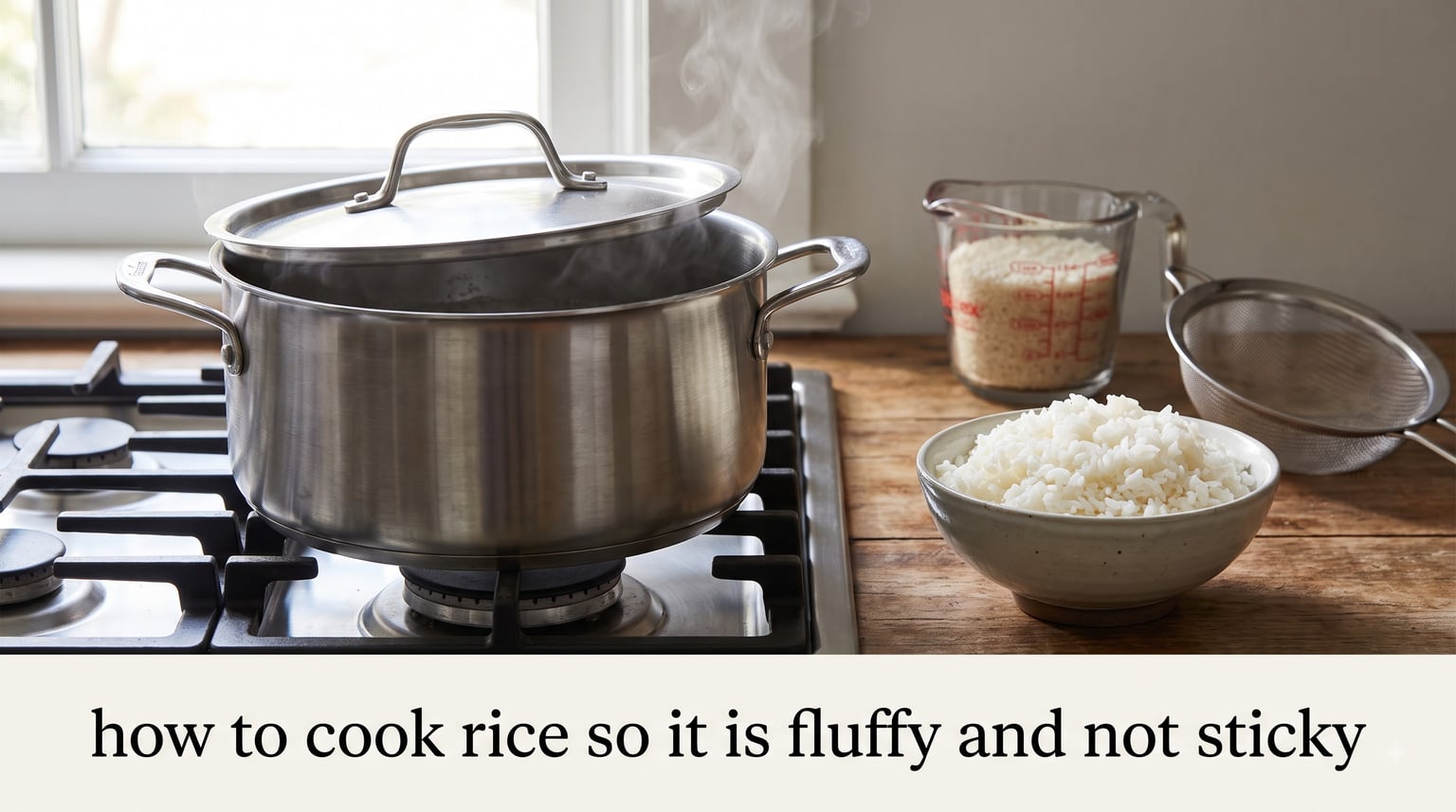
This stovetop method works for any long grain white rice. It uses simple ingredients you already have and a heavy pot with a tight-fitting lid. No rice cooker required.
Step 1: Measure and rinse the rice. Measure 1 cup of long grain white rice into a fine-mesh strainer. Rinse under cold running water, swishing the grains with your hand, until the water runs mostly clear. This usually takes 1 to 2 minutes. Drain well.
Step 2: Combine rice, water, and salt in a heavy pot. Add the rinsed rice, 1 and 1/4 cups of cold water, and a pinch of salt to a heavy-bottomed saucepan. A Dutch oven or thick stainless steel pot works best. The heavy base distributes heat evenly and prevents the bottom from scorching.
Step 3: Bring to a boil, then cover and reduce heat. Set the burner to high and bring the water to a full boil. As soon as you see bubbles breaking the surface, give it one quick stir, clamp the lid on tight, and reduce the heat to the lowest setting your stove allows.
Step 4: Cook without lifting the lid for 15 to 18 minutes. Set a timer and resist the urge to peek. Every time you lift the lid, steam escapes and the cooking environment changes. Trust the process.
Step 5: Rest off heat with a kitchen towel under the lid. When the timer goes off, remove the pot from the heat entirely. Place a clean kitchen towel between the pot and the lid. The towel absorbs condensation that would otherwise drip back down onto the rice and make the top layer gummy. Let it rest undisturbed for 10 minutes.
Step 6: Fluff with a fork and serve. Remove the lid and the towel. Use a fork (not a spoon) to gently separate the grains. A fork breaks up clumps without compressing the rice. Serve immediately or store for later use.
This method produces consistently fluffy rice with separate grains every time. The total active work is under 5 minutes; the rest is hands-off cooking and resting.
Water-to-Rice Ratio Guide by Rice Type
The ratio matters as much as rinsing. Too much water leaves rice soggy. Too little leaves it undercooked and crunchy in the center. Here is the reliable starting point for each variety.
Long grain white rice: 1 cup rice to 1 and 1/4 cups water. This is the most common ratio and what most rice packages recommend. It works for jasmine and basmati.
Short grain white rice: 1 cup rice to 1 cup water. Short grain absorbs less water, so a 1:1 ratio prevents overcooking.
Brown rice: 1 cup rice to 1 and 3/4 cups water. The bran layer needs extra hydration. Expect a longer cook time of 40 to 45 minutes.
Parboiled or converted rice: 1 cup rice to 2 and 1/4 cups water. The grains have been pre-steamed, so they need more water to finish cooking.
Adjustments for altitude: If you live above 3,000 feet, water boils at a lower temperature. Add an extra 1 to 2 tablespoons of water per cup of rice and extend the cook time by 5 minutes.
Always measure water precisely for best results. A simple liquid measuring cup works better than eyeballing it.
Pro Tips for Perfect Fluffy Rice Every Time
Once you have the basics down, a few extra techniques push your rice from good to restaurant quality.
Toast the rice in oil first. Before adding water, heat 1 teaspoon of olive oil or butter in the pot and add the rinsed rice. Stir for 1 to 2 minutes until the grains turn slightly translucent and you smell a faint nutty aroma. This adds flavor and creates a thin oil barrier that prevents grains from bonding together. This trick comes from home cooks who wanted extra flavor without losing fluffiness.
Use the kitchen towel trick. After removing the pot from heat, slide a clean, dry kitchen towel under the lid for 10 minutes. The towel catches steam that condenses on the lid, preventing it from dripping back onto the rice. This single step, popularized by Serious Eats, makes the top layer of rice just as fluffy as the bottom.
Choose a heavy pot with a tight lid. A heavy base prevents hot spots and scorching. A tight-fitting lid traps steam so the rice cooks evenly from all sides. Thin pots and loose lids are the most common cause of unevenly cooked, partially crunchy rice.
Add acid or fat. A small squeeze of lemon juice, a splash of rice vinegar, or a teaspoon of butter can slightly inhibit starch gelatinization. This is the same reason sushi rice gets seasoned with rice vinegar. It keeps grains more separate without changing the flavor much.
Do not stir during cooking. Stirring releases starch into the water and creates a creamier texture, similar to risotto. If you want fluffy rice with separate grains, leave the lid on and walk away.
Salt the water lightly. A pinch of salt enhances flavor without affecting texture. Skip the salt if you are cooking plain rice to serve with a strongly seasoned dish.
Cooking Method Comparison: Stovetop vs Rice Cooker vs Microwave
No single method is right for everyone. Each has strengths depending on your kitchen setup and how often you cook rice.
Stovetop method gives you the most control. You can adjust the heat, change the ratio on the fly, and use the kitchen towel trick. It requires a heavy pot with a tight lid and about 25 minutes of total time, including rest. Best for cooks who want flexibility and already own a good saucepan.
Rice cooker method is hands-off and consistent. You measure rice and water, press a button, and walk away. Most modern rice cookers have sensors that adjust cooking time and temperature automatically. They also keep rice warm for hours without overcooking. Best for households that eat rice multiple times per week.
Microwave method is the fastest option for small portions. Combine rice and water in a microwave-safe bowl, cover loosely, and cook on high for about 5 minutes, then medium for 15 minutes. Let it rest for 5 minutes before fluffing. Best for single servings or quick meals.
Pasta method (boiling in excess water) is a backup if your rice keeps turning out gummy. Boil rice in a large pot of salted water like pasta, drain when tender, then return to the pot and let it steam dry for 5 minutes. This guarantees separate grains because excess starch washes away in the cooking water. Best when all else fails.
If you are just starting out, the stovetop method gives you the best learning experience. Once you understand what fluffy rice should look and feel like, you can move to a rice cooker or microwave with confidence.
Troubleshooting: Why Your Rice Is Still Sticky
Even with a good recipe, things go wrong. Here are the most common reasons rice turns out sticky, and how to fix them.
Problem: Rice is mushy or porridge-like. This usually means too much water or cooking too long. Next time, reduce water by 2 tablespoons per cup and check for doneness at 15 minutes instead of going to 18. To fix a current batch, spread the rice on a baking sheet and let it dry for 10 minutes, fluffing occasionally.
Problem: Rice is sticky on top but dry on the bottom. The lid is too loose and steam is escaping unevenly. Use a heavier pot or weigh the lid down with a clean towel. The kitchen towel trick also helps because it manages condensation more effectively.
Problem: Rice sticks to the bottom of the pot. Your burner is too hot, or your pot is too thin. Use the lowest heat setting your stove has and switch to a heavy-bottomed pot. A tablespoon of oil or butter stirred in before cooking also creates a barrier.
Problem: Rice is clumpy despite rinsing. You may not have rinsed thoroughly enough, or the rinse water ran clear too quickly because the starch is finer. Try rinsing 3 to 4 times, or soak the rice in cold water for 5 minutes before the final rinse. Reddit home cooks report this extra step eliminates stickiness in stubborn batches.
Problem: Rice is undercooked and crunchy. Not enough water, or the lid came off during cooking. Add 2 to 3 tablespoons of hot water, re-cover, and cook on low for another 5 minutes. Then rest as usual.
How to fix already sticky rice: Spread the cooked rice on a rimmed baking sheet in a thin layer. Let it sit for 10 to 15 minutes, fluffing occasionally with a fork. Air exposure dries out the surface moisture and lets the grains separate. You can also return it to the pot over very low heat for 5 minutes with the lid off, stirring gently.
If sticky rice is a recurring problem despite following the method above, check the age of your rice. Older rice has more surface starch buildup from extended storage. Buy smaller bags and use them within 6 months for best results.
Frequently Asked Questions
How do restaurants make their rice so good?
Restaurants make fluffy rice by rinsing it thoroughly to remove surface starch, using heavy pots with tight-fitting lids to trap steam, and resting the rice off heat for 10 minutes before serving. They also use consistent water-to-rice ratios and never lift the lid during cooking.
Do you boil water first before putting in rice?
No, you do not need to boil water first. Add cold water and rice together, bring to a boil, then immediately reduce heat to low and cover. Boiling water first can cause uneven cooking and is an unnecessary extra step for most home setups.
What can you add to rice to make it less sticky?
Add a small amount of fat such as butter, olive oil, or a squeeze of lemon juice to inhibit starch gelatinization. Toasting the rice in oil before adding water also creates a barrier that keeps grains separate. Rinsing the rice thoroughly before cooking is the single most effective method.
Why is my rice always sticky when I cook it?
Rice is sticky when surface starch gelatinizes during cooking. Common causes include not rinsing the rice, using too much water, cooking at too high a temperature, or lifting the lid during cooking. Switch to long grain varieties, rinse until water runs clear, and use a 1:1.25 water-to-rice ratio.
How long should rice rest after cooking?
Let rice rest off heat for 10 minutes with the lid on. Place a clean kitchen towel under the lid to absorb condensation. This resting period lets the remaining steam finish cooking the grains evenly and prevents the top layer from becoming gummy.
Can I make fluffy rice without a rice cooker?
Yes, absolutely. The stovetop method described above produces consistently fluffy rice with just a heavy pot and a tight-fitting lid. A rice cooker is convenient but not necessary for great results.
Final Thoughts: Mastering Fluffy Rice
Cooking rice fluffy and not sticky comes down to three reliable habits. Rinse the rice until the water runs clear. Use the right water-to-rice ratio for your grain type. Let the rice rest off heat with a kitchen towel under the lid before fluffing with a fork.
Once you have these three steps dialed in, you will never serve gummy rice again. Your rice will absorb sauces better, pair cleanly with curries and stir-fries, and give you the light, separate grains that make any meal feel complete. Practice the method once or twice, and it becomes second nature.