
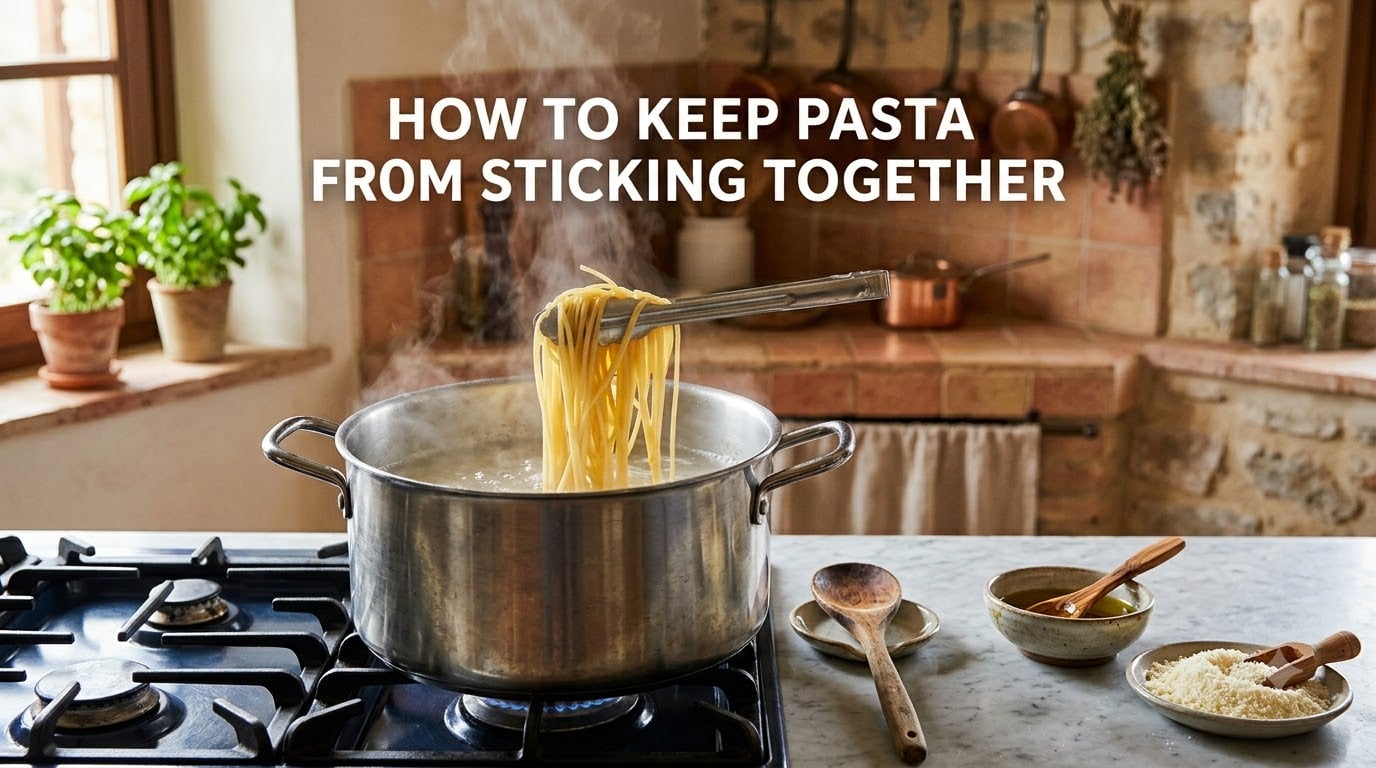
Pasta sticking together is one of the most common kitchen frustrations, and it usually happens because surface starches release into the cooking water and act like glue between strands or shapes. The good news: learning how to keep pasta from sticking together comes down to six reliable habits. I have tested these methods in my own kitchen for years, and the same principles appear again and again in restaurant kitchens and Italian home cooking. In this guide, I will walk you through why pasta clumps, the exact steps to prevent it, and how to rescue pasta that has already stuck together.
Table of Contents
Key Takeaways: The 6 Rules for Non-Sticky Pasta
If you only have 30 seconds, here are the six rules that prevent pasta from sticking every single time.
- Use a large pot with plenty of water. Aim for 4 to 6 quarts of water per pound of pasta. Crowded pasta sticks.
- Wait for a rolling boil. Cold or barely simmering water makes pasta gummy and clumpy.
- Salt the water generously. Add 1 to 2 tablespoons of salt per gallon once the water boils, before adding pasta.
- Stir during the first 2 minutes. This is when the surface starch releases. A quick stir separates every strand or shape.
- Skip the oil in the water. Oil coats the pasta and prevents sauce from clinging later.
- Toss pasta with sauce immediately after draining. Sauce and starchy pasta water create a silky coating that stops sticking.
Why Does Pasta Stick Together? The Science Explained
Pasta sticks because of starch. When dried pasta hits hot water, the starch molecules on the surface absorb water, swell, and burst out of the pasta in a process called gelatinization. This released starch turns the cooking water slightly cloudy, and it acts like glue between any noodles that touch each other.
Three things speed up this clumping. First, not enough water means the starch concentration rises fast. Second, no stirring during the first two minutes lets strands fuse together while the starch is still sticky. Third, overcooking softens the pasta so much that the surface breaks down and releases even more starch, creating a gummy mess.
Italians have managed this for generations by using abundant water, salting it well, and giving the pasta attention during the first minute or two. The starch is not the enemy. It is the same starch that helps sauce cling to your noodles. You just need to control how it behaves in the pot.
How to Keep Pasta from Sticking: Step-by-Step Guide
Follow these steps in order, and you will get separate, perfectly coated pasta almost every time.
Step 1: Choose a Large Pot and Fill It with Plenty of Water
A small pot is the most common reason home cooks end up with a sticky clump. Pasta expands as it cooks, and you want each piece to move freely in the water. Use at least 4 quarts of water for every pound of pasta, and ideally 6 quarts for long shapes like spaghetti and linguine.
Fill the pot first, then place it on the burner. Covering the pot brings the water to a boil faster, which saves time and energy.
Step 2: Bring the Water to a Full Rolling Boil
Pasta should always go into water that is already at a vigorous, rolling boil. Adding pasta to lukewarm or simmering water causes the surface starch to release slowly and unevenly, which leads to gummy, sticky noodles.
If you are cooking at high altitude or using a thinner pot, the boil may be gentler. Wait until you see large bubbles breaking continuously across the surface before adding the pasta.
Step 3: Salt the Water Generously Before Adding Pasta
Add 1 to 2 tablespoons of kosher salt per gallon of water once the water is boiling. The water should taste like sea water. Salt does two important things here. It seasons the pasta from the inside out, and it tightens the protein network so the pasta holds its shape better.
Stir the salt in briefly, then add your pasta right away. Do not add salt after the pasta is in the pot, because it can leave grains stuck to the noodles.
Step 4: Stir the Pasta in the First 2 Minutes
This is the single most important step for preventing sticking. During the first two minutes, the surface starch releases rapidly. If the pasta sits still, neighboring strands or pieces fuse together into clumps that are almost impossible to separate later.
Give the pot a good stir with a wooden spoon or tongs right after adding the pasta. Then stir again once or twice in the first two minutes. After that, occasional stirring is fine.
Step 5: Cook to Al Dente, Not Soft
Al dente means tender but with a slight bite in the center. This texture is not just about preference. Al dente pasta has a firmer outer surface that releases less starch and resists clumping. Overcooked pasta has a soft, almost mushy surface that releases more starch and sticks to everything.
Check the package time, then taste a piece two minutes early. When the pasta is just tender with a tiny bit of resistance at the core, drain it right away.
Step 6: Reserve Pasta Water Before Draining
Before you drain, scoop out a mug of the cloudy cooking water and set it aside. This starchy water is liquid gold. It is salty, starchy, and perfect for emulsifying sauces so they cling to the noodles instead of sliding off.
Step 7: Drain Quickly and Toss With Sauce Immediately
Drain the pasta in a colander, then immediately transfer it to your sauce in the pan. Do not let it sit in the colander. Pasta continues cooking from residual heat, and a naked strand of pasta with nothing to coat it will start sticking within a minute or two.
Toss the pasta with the sauce over low heat for 30 seconds, adding splashes of the reserved pasta water until the sauce coats every piece in a silky layer.
The Oil Myth: Why You Should Not Add Oil to Pasta Water
Many home cooks add a glug of olive oil to the pasta water, hoping it will keep the noodles from sticking. It does not work, and it can actually make things worse.
Oil floats on top of the water, and only a tiny amount ever touches the pasta. The droplets that do coat the noodles leave a slippery film that prevents sauce from sticking later. Your beautiful bolognese will slide right off your spaghetti.
Italian cooks almost never add oil to pasta water. They rely on abundant salted water and early stirring instead. If you have ever wondered whether a recipe is wrong when it tells you to add oil, trust your instinct. Skip it.
The one exception is pasta salad. After draining, tossing the cold pasta with a small amount of olive oil helps keep the pieces from clumping in the fridge.
Should You Rinse Pasta After Cooking?
No, do not rinse pasta after cooking, unless you are making a cold pasta salad. Rinsing washes away the surface starch that helps sauce cling to the noodles. It also cools the pasta quickly, which stops the cooking process but leaves a watery, bland coating on the surface.
For hot pasta dishes, skip the rinse and go straight from the colander into the sauce. For pasta salad, a quick rinse under cold water stops the cooking and removes excess starch that would otherwise make the salad gluey.
Shape-Specific Tips: Long, Short, and Fresh Pasta
Different pasta shapes have different sticking risks. A few shape-specific tricks go a long way.
Long Pasta: Spaghetti, Linguine, Fettuccine
Long strands stick because they have more surface area touching each other. Use the maximum water your pot can hold, and stir more frequently in the first two minutes. Some cooks push the strands against the pot wall as they soften, letting them fan out and sink naturally. If the pasta bends above the water, push it down gently with a wooden spoon.
Short Pasta: Penne, Rigatoni, Fusilli
Short shapes stick at the cut ends, where the exposed starch is most concentrated. Stir early and often in the first minute. For tube shapes like penne and rigatoni, slightly undercooking them keeps the edges firm and reduces sticking in the colander.
Orecchiette and Other Cupped Shapes
Orecchiette has a delicate cup shape that traps starch. Cook it in very abundant water and stir gently so you do not break the cups. Toss with sauce immediately after draining.
Fresh Pasta
Fresh pasta has more moisture and surface starch than dried pasta. It sticks within seconds if you do not stir. Dust fresh noodles lightly with semolina flour before cooking, and stir the moment they go into the water. Fresh pasta cooks in just 2 to 4 minutes, so stay close to the pot.
How to Keep Pasta from Sticking After You Drain It
Most sticking happens after draining, not during cooking. Once the pasta leaves the water, residual heat keeps softening the surface and starch continues to leach out. Without sauce or oil to coat the noodles, they fuse together fast.
Here is what to do. Drain the pasta, shake off excess water, and transfer it to the sauce within 30 seconds. If your sauce is not ready yet, toss the drained pasta with a splash of olive oil or a ladle of sauce to create a thin protective coat.
For long shapes like spaghetti, do not use a colander if you can avoid it. Use a spider or slotted spoon to lift the pasta directly from the pot into the sauce pan. This avoids clumping at the bottom of the colander.
Cooking Pasta Ahead of Time Without Sticking
Cooking pasta ahead for a party or meal prep is a real challenge, but it can be done.
Method 1: Par-Cook and Finish
Cook the pasta 3 to 4 minutes shy of al dente. Drain, toss with a small amount of olive oil, and spread it on a sheet pan to cool quickly. When you are ready to serve, drop the par-cooked pasta into boiling water for 60 to 90 seconds, then transfer it directly into your hot sauce.
Method 2: Sauce Coating
Cook the pasta fully to al dente, drain, and immediately toss it with enough sauce to coat every piece. The sauce acts as a barrier that prevents sticking. Reheat gently in a pan with a splash of pasta water when you are ready to serve.
Method 3: Cold Water Rinse for Pasta Salads
For pasta salads, cook the pasta fully, rinse under cold water to stop the cooking and remove starch, then toss with a light vinaigrette. The acid in the dressing helps keep the pieces separate.
How to Reheat Pasta Without Sticking
Refrigerated pasta almost always clumps together overnight. Reheating it in the microwave without a plan will give you a single solid brick of noodles. Here is how to avoid that.
For saucy leftovers, add the pasta to a skillet over medium-low heat with a splash of water or broth. Stir gently while it warms, and the moisture will loosen the noodles back into separate pieces.
For plain pasta, place it in a pot of boiling water for 20 to 30 seconds, just until the pieces separate. Then drain and toss with hot sauce.
For microwave reheating, place the pasta in a bowl with a tablespoon of water per serving. Cover loosely with a plate and microwave in 30-second bursts, stirring between each. The steam from the added water keeps the noodles from drying out and fusing together.
How to Fix Already-Sticky Pasta
Sometimes you open the lid and find a clump. Do not panic. You can still rescue it.
If the pasta is still in the pot with water, stir it vigorously with a wooden spoon. Sometimes the clump separates on its own once the starch dilutes.
If the pasta is drained and clumping in the colander, run hot water over it briefly to rinse off the sticky surface starch, then toss immediately with hot sauce. The sauce will replace the sticky starch layer with a smooth coating.
If the pasta is stuck together cold from the fridge, drop it into a pot of boiling water for 20 to 30 seconds, drain, and toss with sauce. Do not try to microwave a solid block of cold pasta without water first. It will stay fused.
For a heavily overcooked, gluey pot of pasta, there is no full recovery, but you can repurpose it. Toss the gummy pasta with butter, parmesan, and a splash of cream to make a quick starchy base for a frittata, or use it in a baked pasta dish where texture is less critical.
Frequently Asked Questions
How do Italians stop pasta from sticking?
Italians rely on three habits: abundant salted water, a vigorous rolling boil, and stirring the pasta during the first two minutes. They never add oil to the water, because it prevents sauce from clinging later. Most Italian home cooks also toss the drained pasta with sauce immediately to keep it from sitting naked in a colander.
How do you keep pasta from sticking together after you drain it?
Toss the pasta with sauce within 30 seconds of draining. The sauce coats every strand and creates a barrier that prevents sticking. If your sauce is not ready yet, toss the pasta with a splash of olive oil or a ladle of sauce to keep the pieces from fusing together in the colander.
How to cook pasta ahead of time without it sticking together?
Par-cook the pasta 3 to 4 minutes shy of al dente, drain, toss with olive oil, and spread on a sheet pan to cool. Finish by dropping it into boiling water for 60 to 90 seconds, then transfer directly into hot sauce. Alternatively, cook fully and toss with enough sauce to coat every piece for storage.
How do you keep pasta warm and not stick together?
Hold the cooked pasta in a large pot with a splash of olive oil or butter over very low heat, stirring occasionally. For longer holding, drain the pasta a minute early and keep it in a pot of warm salted water off the heat. Finish by draining and tossing with hot sauce when ready to serve.
Do you rinse pasta to keep it from sticking?
No, rinsing pasta washes away the surface starch that helps sauce cling to the noodles. The only exception is cold pasta salad, where rinsing stops the cooking and removes excess starch that would make the salad gluey.
What do you put in spaghetti to keep it from sticking?
Put salt and plenty of water in the pot before adding spaghetti. That is all. Skip the oil. Stir the pasta in the first two minutes, cook to al dente, and toss with sauce immediately after draining. The salt seasons the pasta and the abundant water keeps the starch concentration low.
How do restaurants keep pasta from sticking?
Restaurants use very large pots of boiling salted water, stir pasta constantly in the first minute, and finish the pasta in the sauce pan rather than the colander. They reserve starchy pasta water to emulsify the sauce, and they often lift pasta directly from the pot with a spider instead of draining.
Conclusion
Learning how to keep pasta from sticking together is really about controlling starch. Use plenty of boiling salted water, stir the pasta during the first two minutes, cook it al dente, skip the oil, and toss it with sauce right after draining. Those six habits cover almost every pasta dish you will ever make.
For the moments when things go wrong, remember that a quick rinse with hot water followed by sauce can rescue most clumps, and that a brief dip in boiling water revives leftover pasta without turning it into a brick. With these techniques in your back pocket, you will never serve a sticky bowl of noodles again.