
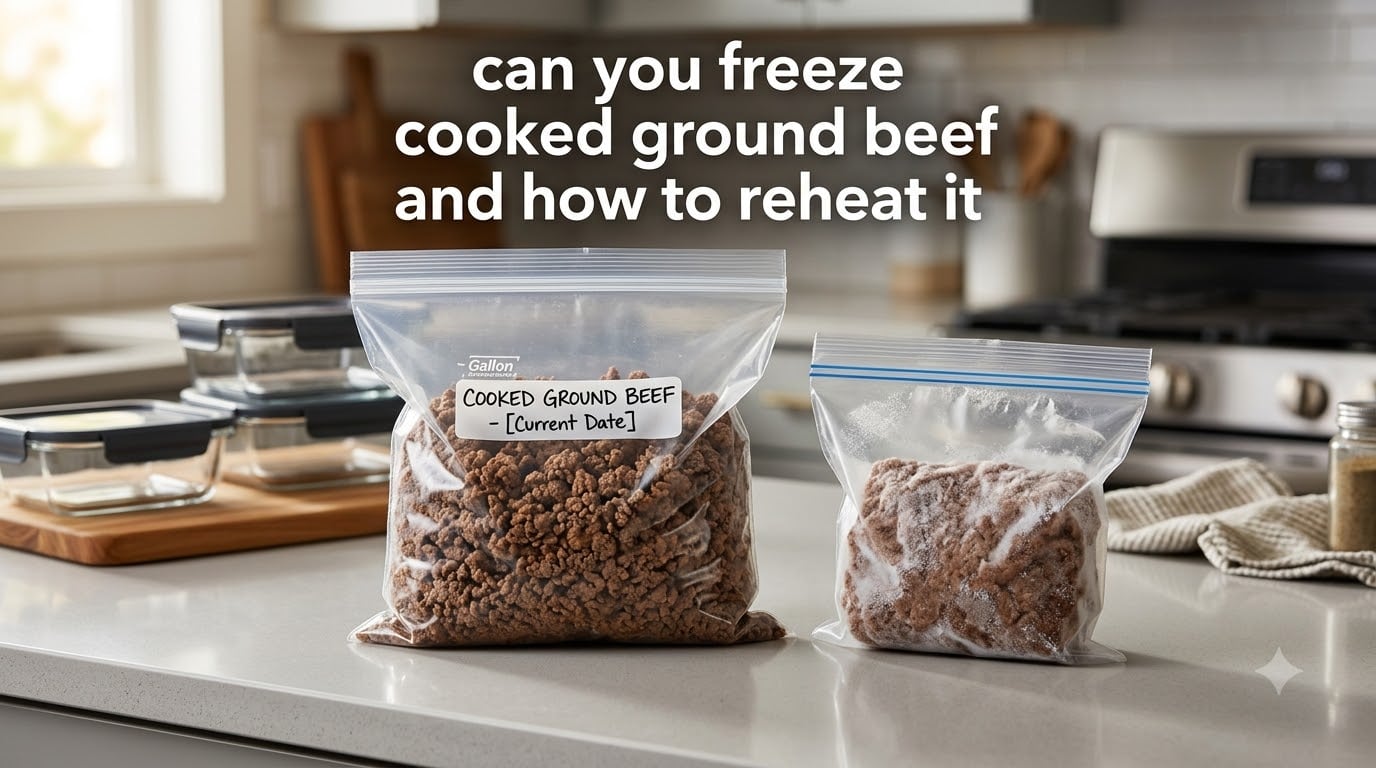
Yes, you absolutely can freeze cooked ground beef — and doing so is one of the smartest meal prep strategies I use in my kitchen. When you brown and freeze ground beef ahead of time, you transform a 20-minute weeknight task into a 5-minute reheat job. In this guide, I walk you through exactly how to freeze cooked ground beef, how long it stays safe in the freezer, and the best methods to reheat it so it tastes just as good as the day you cooked it.
I’ve batch-cooked ground beef for years and tested every freezer bag, portion size, and reheating method you can think of. Some approaches leave the meat dry and crumbly. Others keep it juicy and flavorful months later. Below, I share what actually works — backed by food safety guidelines and real kitchen experience.
Table of Contents
Why Freeze Cooked Ground Beef?
Freezing cooked ground beef saves you time, money, and stress on busy weeknights. Instead of browning meat from scratch every time you make tacos or spaghetti, you grab a pre-portioned bag from the freezer and dinner comes together in minutes.
Budget-conscious home cooks benefit the most. When ground beef goes on sale, buying in bulk and freezing it cooked means you lock in savings without worrying about spoilage. A single batch-cooking session on Sunday can stock your freezer with enough protein for two weeks of meals.
There’s also the food waste angle. Cooked ground beef lasts only 3 to 4 days in the fridge. If you know you won’t use it all in time, freezing prevents that sad moment when you toss leftover meat into the trash.
When Freezing Makes the Most Sense
I recommend freezing cooked ground beef in these situations:
- You bought ground beef in bulk on sale and want to preserve it before it spoils
- You’re doing a meal prep session and want ready-to-use protein for the week ahead
- You cooked more than you need for tonight’s dinner
- You want to prepare taco meat, sloppy joe filling, or chili base in advance
- You’re stocking a freezer before a busy season (back to school, holidays, new baby)
How to Freeze Cooked Ground Beef Step by Step
Freezing cooked ground beef properly takes about 30 minutes of active work for 5 pounds of meat. The key steps are cooking it thoroughly, cooling it quickly, portioning it smartly, and sealing it tight. Skip any of these and you risk freezer burn, mushy texture, or food safety issues.
Step 1: Brown the Ground Beef Thoroughly
Start by cooking the ground beef in a large skillet over medium-high heat. Break it into small crumbles as it cooks using a wooden spoon or spatula. You want uniformly small pieces — they freeze and reheat more evenly than large chunks.
Cook until there’s no pink remaining. The USDA recommends ground beef reach an internal temperature of 160°F. Use an instant-read thermometer to check. Undercooked meat doesn’t freeze safely and can harbor bacteria that survive the freezer.
One tip I picked up from years of batch cooking: don’t overcrowd the pan. If you pile too much meat in at once, it steams instead of browning. Brown in batches of 1 to 1.5 pounds for the best results. The Maillard reaction — the browning that creates flavor — only happens when meat has direct contact with hot metal.
Step 2: Drain the Grease
Once the beef is cooked through, drain the rendered fat. I tilt the pan and spoon grease into a heat-safe container. You can also use a colander lined with paper towels for a faster approach.
Removing excess grease matters for two reasons. First, fat oxidizes in the freezer and develops off-flavors over time. Second, grease-soaked meat reheats unevenly and can taste greasy rather than savory. Drain well, but don’t press the meat dry — you still want some moisture for reheating.
Step 3: Cool the Meat Completely
This step is non-negotiable. Never put hot or warm meat directly into the freezer. Hot food raises the temperature inside your freezer, which can partially thaw surrounding items and create food safety risks.
Spread the cooked ground beef on a sheet pan in a thin layer and let it cool to room temperature. This takes about 20 to 30 minutes. For faster cooling, place the sheet pan in the refrigerator for 15 minutes.
Skipping this step also causes excess condensation inside your freezer bags. That moisture turns into ice crystals, which leads directly to freezer burn.
Step 4: Portion into Meal-Ready Sizes
Portioning is where most home cooks either waste time or waste food. I use a kitchen scale to measure out 1-pound portions for family dinners and 8-ounce portions for single-serving meals.
From forum discussions on r/MealPrepSunday, many home cooks recommend 4-ounce portions for individual meals — that’s roughly half a cup of cooked meat. This size works perfectly for single tacos, a bowl of chili, or a quick pasta topping.
Think about how you actually use ground beef. If you always make tacos for four people, portion into 1-pound bags. If you cook for one, smaller 4 to 8-ounce portions make more sense. The goal is to thaw exactly what you need without waste.
Step 5: Bag, Seal, and Label
Place each portion into a freezer-safe bag. Ziploc-style bags work fine, but press out as much air as possible before sealing. Air is the enemy in the freezer — it causes freezer burn, which dries out the meat and creates that unpleasant gray, leathery surface.
For best results, use the water displacement method. Place the meat in a zip-top bag, slowly lower it into a bowl of water (keeping the zip seal above water level), and the water pressure pushes all the air out. Then seal the bag completely.
Vacuum-sealed bags are even better if you have a vacuum sealer. Reddit users on r/Cooking frequently recommend vacuum sealing as the single best way to prevent freezer burn and extend quality storage time.
Always label each bag with the contents and date. Use a permanent marker directly on the bag or stick on a piece of masking tape. You think you’ll remember what’s in that mystery bag — you won’t.
Step 6: Freeze Flat, Then Store Upright
Before stacking bags in the freezer, lay them flat on a baking sheet. Once frozen solid (about 2 to 3 hours), you can stand them upright like file folders. This flat-freeze method saves a surprising amount of freezer space and makes bags easier to organize.
Flat bags also thaw faster than thick, bunched-up packages. The increased surface area lets heat transfer more efficiently whether you’re thawing in the fridge or using cold water.
How to Reheat Frozen Cooked Ground Beef
This is the part most guides skip — and it’s arguably more important than the freezing itself. Reheating frozen cooked ground beef the wrong way leaves you with dry, rubbery, flavorless meat. Done right, it tastes nearly identical to freshly cooked.
I tested four reheating methods side by side over two weeks. Here’s what I found.
Method 1: Stovetop (Best Overall)
The stovetop method produces the best texture and flavor. Place the frozen ground beef in a skillet over medium heat with 1 to 2 tablespoons of water or broth. Cover with a lid and heat for 5 to 7 minutes, stirring occasionally.
The steam from the liquid gently reheats the meat without drying it out. Once warmed through, remove the lid and let any excess moisture evaporate. Season with salt, pepper, or whatever your recipe calls for.
This method takes about 8 to 10 minutes total and gives you the most control. You can adjust the heat, add seasonings, and incorporate the meat directly into whatever dish you’re making.
Method 2: Microwave (Fastest)
For speed, the microwave wins. Place the frozen ground beef in a microwave-safe bowl, add a tablespoon of water, and cover loosely with a microwave-safe lid or damp paper towel.
Microwave on medium power (50%) in 1-minute intervals, stirring between each round. A 1-pound portion typically takes 3 to 4 minutes total. Using medium power instead of full power prevents the edges from overcooking while the center stays frozen.
The tradeoff is texture. Microwave-reheated ground beef can come out slightly rubbery if you’re not careful. The 50% power technique helps, but it’s still not as good as the stovetop for dishes where texture matters.
Method 3: Slow Cooker (Most Hands-Off)
If you’re reheating a large batch for tacos, chili, or sloppy joes, the slow cooker works beautifully. Place the frozen ground beef directly in the slow cooker with your sauce or seasoning, set it to low for 2 to 3 hours or high for 1 to 1.5 hours.
This method works especially well when the ground beef is going into a saucy dish. The meat absorbs flavors as it thaws and reheats, often tasting better than freshly cooked. Many Reddit users on r/Cooking and r/EatCheapAndHealthy swear by the slow cooker-from-frozen approach.
Method 4: Oven (Best for Large Batches)
Preheat your oven to 350°F. Spread the frozen ground beef in an oven-safe dish, cover tightly with foil, and heat for 15 to 20 minutes. Stir halfway through for even reheating.
The oven method works well when you’re reheating 2 or more pounds at once. The even, ambient heat prevents hot spots that you get with a microwave. Add a splash of broth to the dish before covering to keep the meat moist.
Reheating Method Comparison
Here’s a quick breakdown of all four methods:
- Stovetop: 8–10 minutes, best texture and flavor, ideal for 1-pound portions
- Microwave: 3–4 minutes, fastest but slightly rubbery texture, best for single servings
- Slow Cooker: 2–3 hours (low), most hands-off and great for saucy dishes
- Oven: 15–20 minutes, best for large batches of 2+ pounds
How Long Does Cooked Ground Beef Last?
Knowing how long cooked ground beef stays safe — and tasty — prevents both food waste and foodborne illness. The timeline differs significantly between the fridge and the freezer.
In the Refrigerator
Cooked ground beef lasts 3 to 4 days in the fridge at 40°F or below. That’s the USDA guideline, and I follow it strictly. Day 3 is usually when I either use it or freeze it.
If your cooked ground beef has been in the fridge for 5 days, the safety question gets tricky. Technically, it might still be fine if it was stored properly and your fridge stays at the right temperature. But the quality drops noticeably — flavor fades, texture changes, and the risk of bacterial growth increases. When in doubt, freeze it by day 3 or toss it by day 5.
In the Freezer
Frozen cooked ground beef stays safe indefinitely in the freezer from a food safety standpoint. However, quality degrades over time. For the best taste and texture, use it within 3 to 4 months.
After 4 months, freezer burn starts to affect the meat even in well-sealed bags. You’ll notice dry, discolored patches. The meat is still safe to eat, but the texture and flavor suffer. At 6 months, most people notice a significant quality drop.
Here’s the quality timeline I’ve observed from my own freezer tests:
- 0–3 months: Optimal quality — tastes nearly fresh
- 3–4 months: Good quality — minor texture changes
- 4–6 months: Acceptable — noticeable freezer burn on poorly sealed bags
- 6+ months: Safe but quality declines — best used in heavily seasoned dishes
Can You Refreeze Thawed Cooked Ground Beef?
Yes, you can refreeze cooked ground beef that was thawed in the refrigerator, according to USDA guidelines. The key is that it must have been thawed safely — in the fridge, not on the counter. Meat thawed in cold water or the microwave should be cooked before refreezing.
Keep in mind that each freeze-thaw cycle degrades quality. Refrozen cooked ground beef tends to be drier and less flavorful. If you refreeze it, plan to use it in saucy dishes like chili, spaghetti sauce, or taco filling where added moisture compensates for the texture loss.
Signs Your Frozen Ground Beef Has Gone Bad
Trust your senses when evaluating frozen ground beef:
- Smell: Sour or off odors after thawing indicate spoilage — discard immediately
- Color: Gray or brown surface discoloration suggests freezer burn or oxidation; the meat is still safe but quality is poor
- Texture: Slimy or sticky texture after thawing means bacterial growth — throw it away
- Ice crystals: Heavy ice buildup inside the bag signals air exposure and freezer burn
Common Mistakes to Avoid
After years of freezing cooked ground beef and reading countless forum threads, I’ve seen the same mistakes come up again and again.
Freezing before cooling: Putting warm meat in the freezer creates condensation, leads to ice crystals, and raises the temperature of surrounding foods. Always cool completely first.
Leaving too much air in the bag: Air exposure is the primary cause of freezer burn. Squeeze out every bit of air or use a vacuum sealer.
Not seasoning before freezing: Plain frozen ground beef can taste bland when reheated. Many experienced meal preppers on Reddit recommend freezing with basic seasonings already added — taco seasoning, Italian herbs, or garlic and onion powder. The flavors meld during storage and taste more developed when reheated.
Freezing in too-large portions: A 3-pound block of frozen ground beef takes forever to thaw and forces you to defrost more than you need. Smaller portions give you flexibility.
Using regular storage bags instead of freezer bags: Regular plastic bags are thinner and allow more air exchange. Freezer bags are specifically designed to prevent freezer burn. The small price difference pays off in quality.
Frequently Asked Questions
Can you freeze ground beef that is already cooked?
Yes, you can freeze cooked ground beef safely. Cook it to an internal temperature of 160°F, drain the grease, cool it completely, then portion it into freezer bags with the air removed. It will maintain good quality for 3 to 4 months in the freezer.
What is the best way to reheat frozen cooked ground beef?
The stovetop method produces the best results. Place the frozen meat in a skillet over medium heat with 1 to 2 tablespoons of water or broth, cover, and heat for 5 to 7 minutes, stirring occasionally. The steam keeps the meat moist while it reheats evenly.
How long can you freeze cooked ground beef?
Cooked ground beef stays safe indefinitely in the freezer but tastes best within 3 to 4 months. After that, freezer burn gradually affects texture and flavor. After 6 months, the quality decline is noticeable and the meat works best in heavily seasoned dishes.
Why does ground beef taste different after freezing?
Freezing causes ice crystals to form inside the meat fibers. When thawed, these crystals damage the cell structure, releasing moisture that carries flavor compounds. The result is drier, slightly less flavorful meat. Proper sealing and shorter storage times minimize this effect.
Will cooked ground beef last 5 days in the fridge?
The USDA recommends using cooked ground beef within 3 to 4 days when stored at 40°F or below. At 5 days, the quality declines and the risk of bacterial growth increases. If you cannot use it by day 3, freeze it to preserve both safety and taste.
Can I freeze cooked ground beef in Ziploc bags?
Yes, Ziploc freezer bags work well for freezing cooked ground beef. Use the water displacement method to remove air: place the meat in the bag, slowly lower it into a bowl of water while keeping the seal above the waterline, then seal. This pushes out nearly all the air and prevents freezer burn.
Can you freeze cooked ground beef with taco seasoning?
Absolutely — freezing ground beef with taco seasoning already mixed in is a popular meal prep strategy. The flavors develop further during storage. When reheated, the meat tastes more seasoned and cohesive than if you added spices after thawing.
Final Thoughts
Freezing cooked ground beef is one of the simplest meal prep habits that makes the biggest difference in your weekly routine. The process takes 30 minutes of work on a weekend and saves you hours during the week. Brown the meat, cool it, portion it, seal it tight, and freeze it flat.
When you need it, reheating is straightforward. The stovetop method with a splash of broth delivers the best results for most dishes. The slow cooker works beautifully for saucy meals like chili and tacos. And the microwave handles single-serving portions in under 4 minutes.
If you follow the storage guidelines in this guide, you can freeze cooked ground beef and reheat it with confidence whenever dinner needs to come together fast. Start with one batch this weekend — once you see how much time it saves, you’ll never go back to browning ground beef on a Tuesday night.