
I learned how to soften butter quickly without melting it the hard way: one flat cookie tray, one batch of greasy muffins, and a stick of butter that turned into a puddle inside the microwave. If you have ever pulled cold butter out of the fridge five minutes before guests arrive, this guide is for you.
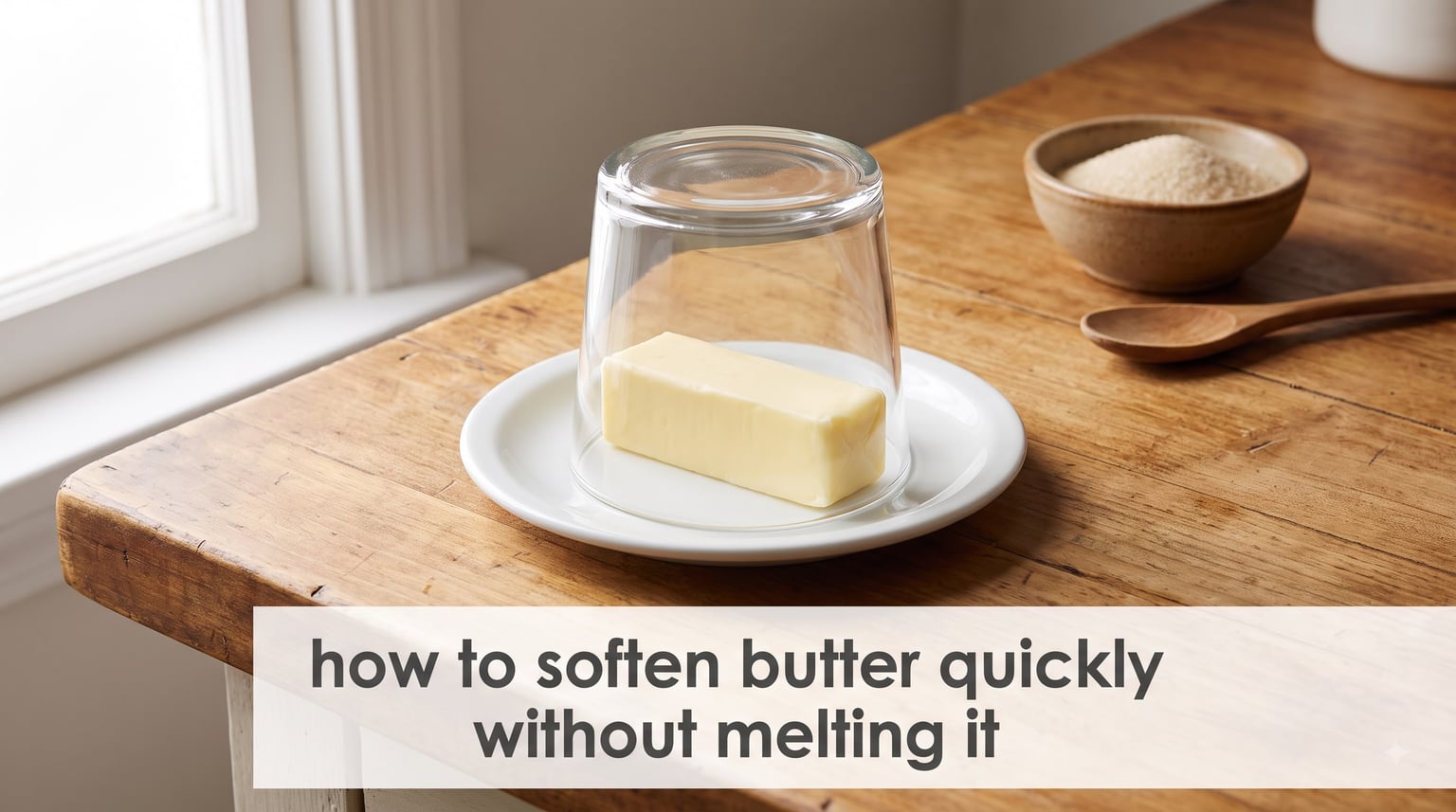
The fastest reliable trick is the warm glass method: invert a hot drinking glass over a stick of butter on a plate, and it softens in about 5 to 10 minutes without melting. It is the method bakers on Reddit call a “decade-in-the-making” discovery, and it works on cold, hard butter straight from the fridge.
Below I walk through five methods I have tested myself, the science of why softened butter matters, and the mistakes that turn good butter into a melted mess.
Table of Contents
Why Softened Butter Matters in Baking
Softened butter is room-temperature butter, roughly 65 to 68°F, that feels cool to the touch but yields when you press it. Your finger should leave a clean indent without sinking through. Anything softer is overworked; anything colder is still too firm to cream.
Why does temperature matter so much? When you beat softened butter with sugar, the sugar crystals cut tiny air pockets into the fat. Those pockets expand in the oven and lift your cake, cookies, or muffins. Cold butter cannot trap air, so baked goods come out dense, flat, or greasy. Melted butter cannot hold air at all, which is why recipes that call for “softened” rarely forgive melted.
At the molecular level, butter is a network of milk-fat crystals suspended in liquid fat. Cool temperatures keep the crystals firm and rigid. Gentle warming loosens the crystals just enough to bend and trap air. Push past about 80°F and the structure collapses into liquid.
How to Soften Butter Quickly: 5 Reliable Methods
Here are the five methods I trust when time is short. I have included time estimates, the steps, and the best use case for each so you can pick the right one for your recipe.
1. The Warm Glass Method (My Top Pick)
This is the fastest no-microwave trick I have used, and it consistently beats every other passive method.
Time: 5 to 10 minutes
Steps:
- Fill a heatproof drinking glass with very hot tap water.
- Let it sit for 1 to 2 minutes to warm the glass, then dump the water.
- Invert the warm glass directly over a stick of butter on a plate.
- Walk away for 5 minutes. By the time you preheat the oven, the butter is ready.
Best for: Cookies, cakes, and quick breads where you need one or two sticks softened evenly without any equipment.
2. The Microwave Method (Use With Caution)
The microwave is fast, but it is also where butter turns into a greasy puddle. The trick is low power and short bursts.
Time: 30 to 60 seconds total
Steps:
- Unwrap the butter and place it on a microwave-safe plate.
- Set the microwave to 30% power (the defrost setting on most machines).
- Microwave for 10 seconds, then check. The edges should feel pliable while the center stays cool.
- Repeat in 5-second bursts if needed. Stop the moment your finger leaves an indent.
Best for: Last-minute baking when you need softened butter in under a minute. Never use full power; melted butter cannot be rescued for creaming.
3. The Grating Method
A box grater turns cold butter into soft, ready-to-use shreds in about 30 seconds.
Time: Under 1 minute of active work
Steps:
- Use the large holes of a standard box grater.
- Grate the cold stick of butter directly into your mixing bowl.
- The shreds soften within a few minutes from the increased surface area.
Best for: Pie crusts, biscuits, and any recipe where small, even pieces blend faster. The shreds incorporate into sugar almost immediately when you start creaming.
4. Cut Into Cubes
Cutting is the simplest method, and it requires no special tools beyond a knife and cutting board.
Time: 10 to 15 minutes
Steps:
- Slice the stick into roughly half-inch cubes.
- Spread the cubes in a single layer on a plate.
- Let them sit on the counter. The smaller pieces soften 3 to 4 times faster than a whole stick.
Best for: When you have 15 minutes and want minimal cleanup. The cubes soften evenly without any hot spots.
5. The Stand Mixer Method
The friction from a stand mixer’s paddle attachment generates gentle heat that softens butter in minutes.
Time: 3 to 5 minutes
Steps:
- Cube cold butter and place it in the mixer bowl.
- Fit the paddle attachment and mix on low speed.
- Increase to medium and beat for 3 to 5 minutes until the butter looks smooth and pliable.
Best for: Cookie dough and buttercreams where you would be creaming anyway. Skip this if your recipe calls for creaming by hand.
Softening Butter in Cold Kitchens and Winter Months
If your kitchen runs cold in winter, butter can stay rock-hard for hours even after you leave it out. Cold kitchens are one of the most common complaints on baking forums, and most methods above will slow down significantly.
Here is what works when the room temperature trick fails you:
- Aluminum pan trick (Reddit favorite): Place the butter on a pre-warmed aluminum pan. Aluminum conducts heat several times faster than a ceramic plate, so the butter softens in roughly half the usual time.
- Move closer to a heat source: Set the butter near (not on) a warm oven, a sunny window, or a radiator. Even a few extra degrees of ambient warmth cuts softening time.
- Pre-warm your mixing bowl: Run your stand mixer bowl under hot water, dry it, then add butter. The bowl heats the butter gently while the mixer does its work.
A Reddit user in r/Baking described discovering the warm water glass trick after a decade of baking and wrote “how have I been so stupid.” That reaction is common because the method is so simple it is easy to overlook.
Common Mistakes When Softening Butter
Most baking failures from butter come from one of three mistakes. Avoid these, and your cookies, cakes, and muffins will turn out the way the recipe intended.
Using full microwave power. Standard microwave settings heat butter unevenly and fast. The outside turns liquid while the inside stays frozen, or the whole stick melts in 15 seconds. Always use the defrost setting, and check every 5 to 10 seconds.
Leaving butter out overnight. Butter is fine on the counter for a day or two, but it picks up odors and can go rancid if left longer. If you forget to set butter out, soften it the same day using one of the methods above.
Skipping the test press. A common mistake is judging softened butter by looks. The proper test is the finger press: your finger should leave a clean indent without sliding through. If it sinks, the butter is too warm. If it does not leave a mark, give it more time.
Cutting with a hot knife. Running a knife under hot water and using it to slice butter sounds clever, but it warms the cut surface unevenly and creates hard edges as the butter cools. Stick with a cold knife and cube by hand.
How to Store Butter After Softening
Once you have softened butter you are not using right away, you have two main storage options depending on when you will use it.
Short term (under 2 hours): Leave the butter on a covered plate at room temperature. A butter dome or overturned bowl keeps dust and odors off the surface.
Longer term: Return softened butter to the fridge in a sealed container. It will firm up again, but you can re-soften the exact portion you need. Many bakers portion softened butter into cubes and freeze them for next time.
For ongoing storage, a butter dish with a tight-fitting lid keeps butter spreadable on the counter for up to a week, depending on your kitchen temperature.
Frequently Asked Questions
How long should you let butter sit out to soften?
A whole stick of butter typically takes 1 to 2 hours to soften at room temperature (about 68 to 70°F). Cut into half-inch cubes, it softens in 10 to 15 minutes. The warm glass method shortens that to 5 to 10 minutes.
Will butter soften in 2 hours?
Yes, a stick of butter left on the counter at typical room temperature softens fully in about 1 to 2 hours. In colder kitchens it can take longer, sometimes 3 hours or more.
Is it okay to microwave butter to soften it?
Yes, but only on the defrost setting (around 30% power) in short 5 to 10 second bursts. Full power melts the butter unevenly and ruins its ability to cream with sugar.
How can I make hard butter spreadable quickly?
The fastest reliable method is the warm glass trick: invert a hot, empty drinking glass over the butter on a plate for 5 minutes. Grating the butter or cutting it into cubes also speeds up softening dramatically.
How long should I put a stick of butter in the microwave to soften it?
Plan for 20 to 40 seconds total on the defrost setting. Microwave for 10 seconds, check, then continue in 5-second bursts until your finger leaves a clean indent in the butter.
The Bottom Line
Learning how to soften butter quickly without melting it comes down to choosing the right method for your timeline. If you have 5 minutes, use the warm glass. If you have 30 seconds, grate it. If you have 15 minutes, cube it and walk away.
The single biggest upgrade to my baking came the day I stopped microwaving butter on full power. Softened butter creams properly, traps air, and produces the fluffy cakes and chewy cookies recipes promise. Pick one of these methods, try it the next time you bake, and notice the difference in your next batch.