
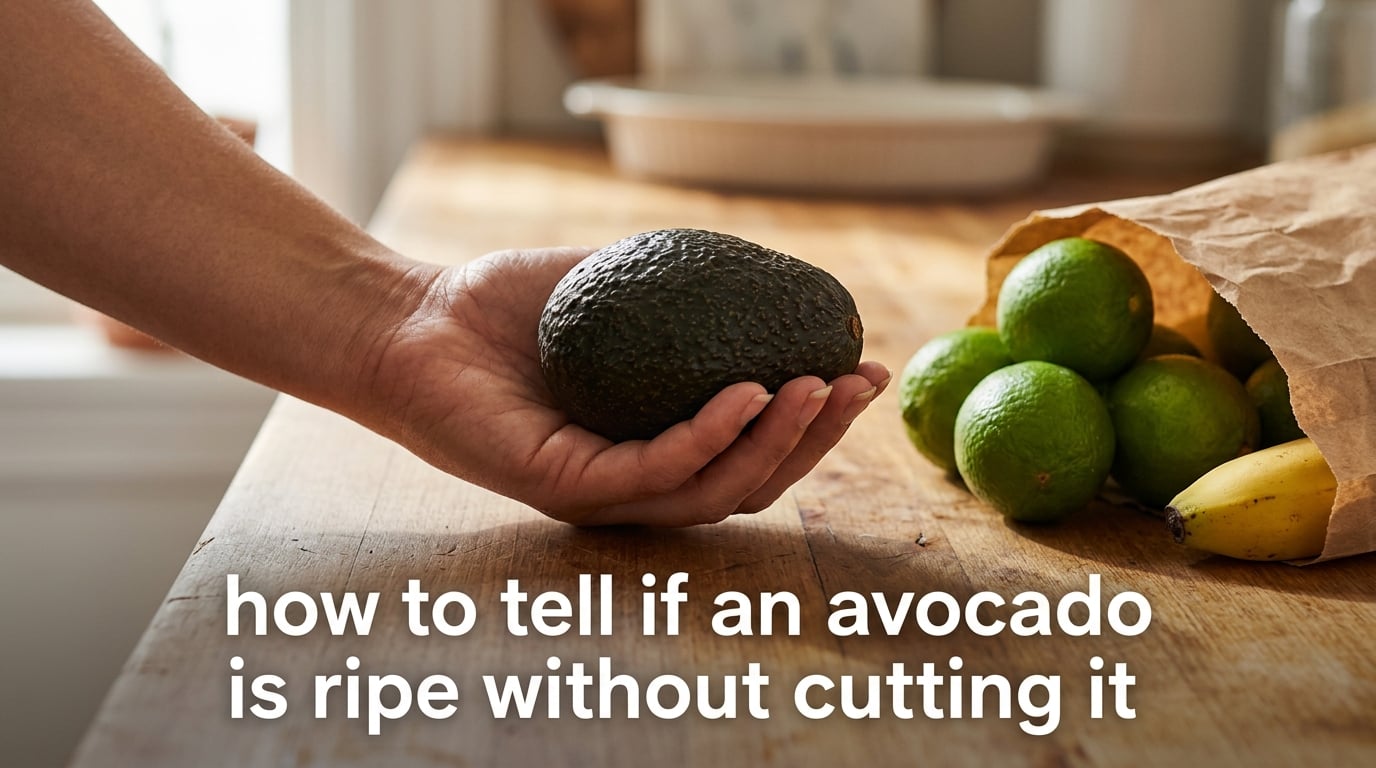
If you have ever cut into an avocado expecting creamy green perfection and found a brown, bruised mess instead, you know the frustration. The good news: you can judge ripeness before you ever touch a knife. Learning how to tell if an avocado is ripe without cutting it saves you from wasted fruit, ruined recipes, and the disappointment of a sour, stringy bite.
In our test kitchen, we have sorted through hundreds of avocados over the years. We have learned that three reliable tests work every time: the color check, the palm squeeze, and the stem test. Together, they give you a near-perfect read on what is inside before you slice anything open. Below, I will walk you through each method, plus how to plan your ripening timeline and what to do when an avocado is slightly underripe.
Table of Contents
How to Tell if an Avocado Is Ripe Without Cutting It: 3 Quick Methods
You can tell if an avocado is ripe without cutting it by combining three quick tests: look at the skin color (dark green to nearly black for Hass), feel for a gentle yield in your palm (not mushy, not rock-hard), and pop off the small stem cap to check the flesh underneath (green = ripe, brown = overripe). If all three checks agree, the avocado is ready to eat right now.
These three methods come straight from how produce buyers and chefs evaluate fruit in restaurants. They work in the grocery aisle, in your fruit bowl, or anywhere you have an avocado in hand.
Quick summary: the three tests at a glance
- Color: Dark green to nearly black skin (for Hass avocados).
- Palm squeeze: Yields gently to pressure, like a ripe peach.
- Stem test: Green flesh under the cap means ready.
The Color Test: What Ripe Avocado Skin Looks Like
Color is your first and fastest clue. For the most common variety, Hass, an unripe avocado starts bright green and darkens as it ripens. A ripe Hass will be a deep forest green, almost black, with a slightly bumpy skin texture. The bumps, called lenticels, also become more pronounced as the fruit softens.
Here is the catch, though. Color can fool you. A dark avocado in the grocery store is not always a ripe avocado. Sometimes the fruit is dark because it was picked late and has already begun breaking down inside. One Reddit user in r/Cooking put it perfectly: “I bought what looked like a perfect dark avocado. It was bruised and brown the entire way through.” Color is a starting point, not a final verdict.
Variety matters too. Hass avocados are the most widely sold in North America, and they follow the green-to-black rule. But other varieties like Fuerte, Reed, and Pinkerton stay green even when fully ripe. If you are shopping at a farmers market or specialty store, ask the seller what variety you are holding. The color test alone will mislead you on anything other than Hass.
Use color as your first filter at the store, then move to the next two tests to confirm.
The Palm Squeeze Test: Gentle Pressure Beats Thumb Pressure
The squeeze test tells you more than color ever will, but only if you do it the right way. Cup the avocado in the palm of your hand and squeeze gently with your whole hand. Do not press with your thumb. A ripe avocado will yield slightly to that pressure, feeling similar to a ripe peach or the heel of a hand that has been soaking in water. It should not feel mushy, and it should not bounce back completely hard.
Underripe avocados feel like a tennis ball: firm, no give at all. Overripe avocados feel like a water balloon: soft, squishy, sometimes with indentations that do not spring back. Both are bad choices.
Why the palm and not the thumb? Because your thumb concentrates pressure into a small spot. Even a soft squeeze with your thumb will leave bruises on the flesh inside, and bruised avocados ripen unevenly and spoil faster. Many reviewers on r/Cooking admit they have bruised fruit this way without realizing it. Chefs and produce managers all use the palm method for that reason.
If you are at the store and want to be polite, you can do a very light palm test without leaving marks. If you cannot resist pressing with your thumb, just plan to eat that avocado within a day.
The Stem Test: The Most Reliable Ripeness Check
The stem test is the closest thing to a peek inside the avocado without cutting it. The little nub at the top of the fruit, where it attached to the tree, is called the stem cap or pedicel. Flick it off with your thumb. If it lifts easily, look at the flesh underneath.
Green flesh under the cap means the avocado is ripe and ready to eat. Yellowish-green means it is almost there, give it another day on the counter. Brown, dark, or stringy flesh means the avocado is overripe or bruised, and you should not buy it. This is the only test that gives you a real look at the inside of the fruit before you cut it.
There is one caveat. Stem caps on very underripe avocados can be hard to remove, and forcing them off may tear the skin. In that case, leave the cap alone and use color and the palm squeeze to judge. But once the cap pops off easily, the color underneath is your most trusted signal. It is the method we trust most in our own kitchen.
The 5-Day Rule: Planning Your Avocado Ripening Timeline
The 5-day rule is a simple planning tool. If you buy a rock-hard avocado today, count on roughly five days before it reaches peak ripeness on your kitchen counter. That gives you a practical window for the week.
Here is how the timeline usually plays out with Hass avocados stored at room temperature:
- Day 1: Bright green, rock-hard. Needs 3 to 5 more days.
- Day 2 to 3: Darkening skin, slightly less firm. Getting closer.
- Day 4: Dark green to almost black, palm yields slightly. Almost there.
- Day 5: Dark, yields to palm, green under stem. Eat today.
- Day 6+: Mushy, dented, dark under stem. Likely overripe.
If you need avocados for different days of the week, buy a mix of ripeness levels at the store. Pick a few dark ones for tomorrow, a few medium ones for the day after, and a few bright green ones for later in the week. This is how restaurants plan their avocado supply, and it works just as well at home.
If your avocado has been on the counter for 5 days and is still hard, your kitchen may be too cool. Avocados ripen best between 65 and 75 degrees Fahrenheit. A warmer spot on top of the fridge or near (not on) a sunny window will speed things up.
How to Speed Up Avocado Ripening (Paper Bag Trick)
Need a ripe avocado today and only have a hard one on hand? The paper bag trick works. Place the unripe avocado in a paper bag with a banana or an apple, fold the top closed, and leave it on the counter. Bananas and apples give off ethylene gas, a natural plant hormone that triggers ripening. Trapping that gas around the avocado speeds the process up significantly.
Here is the step-by-step:
- Place the unripe avocado in a paper bag (not plastic, which traps moisture and can cause rot).
- Add a ripe banana or apple to the bag.
- Fold the top of the bag closed loosely.
- Leave at room temperature for 24 to 48 hours.
- Check daily with the palm squeeze and stem test.
This trick cuts ripening time from 5 days down to 1 to 2 days in most cases. Once the avocado is ripe, move it to the refrigerator. A ripe avocado will hold in the fridge for 3 to 5 more days before it starts to brown inside.
If you want to slow ripening down instead of speeding it up, refrigerate avocados the moment they reach your preferred firmness. Cold temperatures pause the ripening process almost entirely.
Underripe vs Overripe: Reading the Warning Signs
Sometimes you bring an avocado home and it is just not ready. That is fine. Slightly unripe avocados are safe to eat, they just have a firmer, more grassy, slightly bitter taste. Slice them very thin, mash them into guacamole with extra lime and salt, or use them in cooked dishes where the texture difference disappears.
Here is a quick comparison to keep on hand:
- Underripe: Bright green, rock-hard, cap will not pop off. Safe to eat, but bitter and firm.
- Ripe: Dark green to black, gentle palm yield, green under stem. Perfect for slicing and mashing.
- Overripe: Very dark, mushy, brown under stem, sometimes with a fermented smell. Best used for smoothies, dressings, or baking.
If your avocado feels light for its size, that is another warning sign. Ripe avocados are dense and heavy in the hand because the flesh is full of water and healthy fats. A light, hollow feel often means the inside has dried out or shriveled.
And one more tip from the forums: if you cut into an overripe avocado and find a section that is still good, scoop out the dark or bruised parts and use the rest. A little browning around the pit is normal and not harmful, just trim it away.
Frequently Asked Questions
What is the 5 day rule for avocados?
The 5 day rule is a simple ripening timeline. A rock-hard avocado bought today will usually be perfectly ripe in about 5 days on your kitchen counter. Use the palm squeeze and stem test to track its progress each day.
Should you refrigerate avocados?
Only after they are ripe. Refrigeration pauses the ripening process, so unripe avocados will not soften in the fridge. Once an avocado is ripe, refrigeration buys you 3 to 5 extra days before the inside starts browning.
How do I ripen avocados immediately?
You cannot ripen an avocado in minutes, but you can cut the time to 1 to 2 days. Place the unripe avocado in a paper bag with a ripe banana or apple, fold the top closed, and leave at room temperature. The trapped ethylene gas speeds up ripening.
Is it safe to eat slightly unripe avocado?
Yes. Slightly unripe avocados are safe to eat, but they taste firmer, more grassy, and a bit bitter. Slice them thin, mash them with extra lime juice, or cook them into dishes where the texture difference is not noticeable.
How do I know when an avocado is perfectly ripe?
You know an avocado is perfectly ripe when three checks agree: the skin is dark green to nearly black, the fruit yields gently when squeezed in your palm, and the flesh under the popped stem cap is bright green. If all three match, eat it the same day.
Final Thoughts on Picking Perfect Avocados
Learning how to tell if an avocado is ripe without cutting it comes down to three reliable checks you can run in seconds. Look at the color, feel the palm yield, and pop the stem cap for a peek inside. Add the 5-day rule and the paper bag trick, and you will never again open a brown, bruised avocado by accident.
Next time you are at the store, slow down for a minute, pick up a few avocados at different stages of ripeness, and run all three tests. Once you build the habit, picking perfect avocados becomes second nature.