
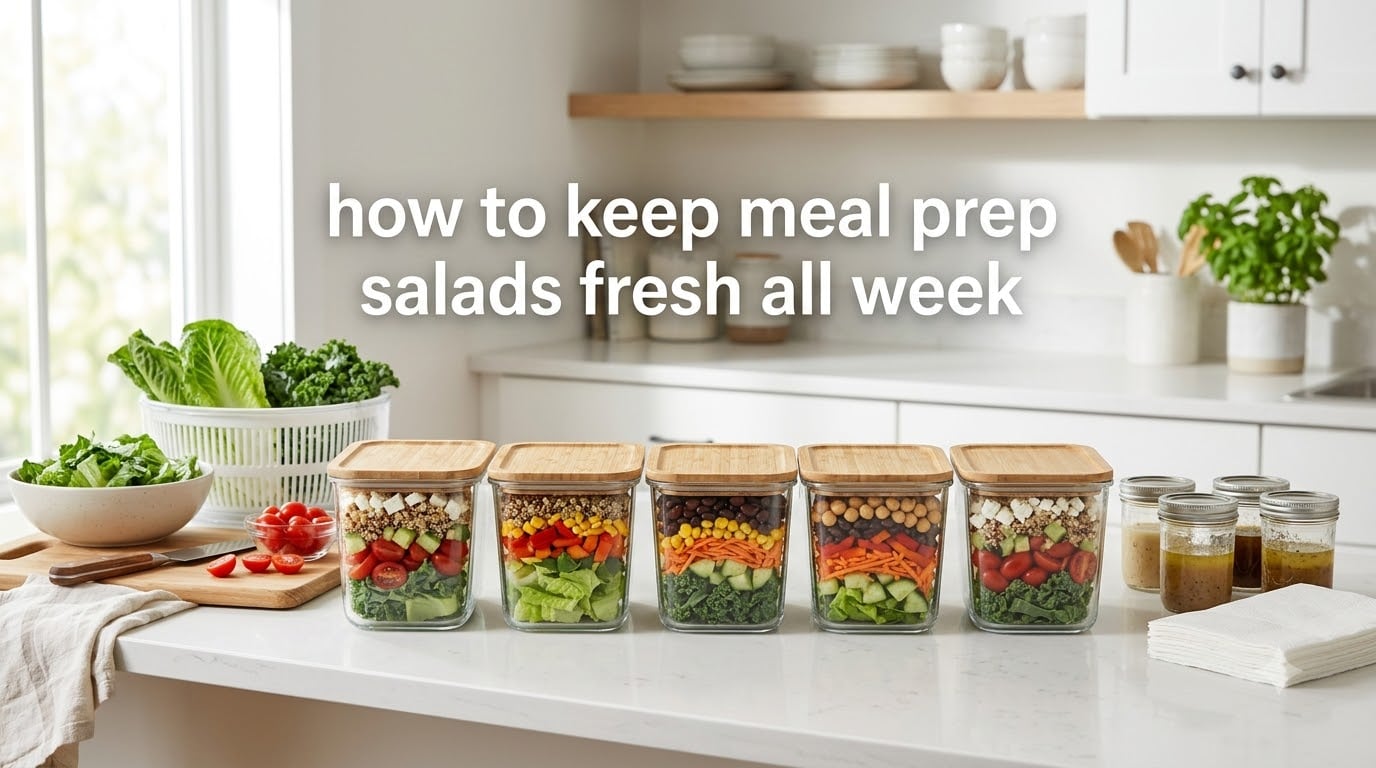
I used to open my fridge on Wednesday and find a wilted, soggy mess where my Sunday-prepped salad used to be. After testing dozens of methods over the past three years, I finally cracked the code for how to keep meal prep salads fresh all week, and I’m sharing every trick that works.
The truth is, most meal prep guides skip the science and jump straight to “just layer it in a jar.” But why your lettuce turns brown and why your tomatoes leak everywhere are different problems with different solutions. In this guide, I’ll walk you through the complete process, from choosing the right greens to reviving slightly wilted leaves on Friday.
Whether you prep on Sunday for a busy work week or batch-make salads for weight loss goals, these methods have been tested in real kitchens with real ingredients. By the end, you’ll know exactly which lettuce holds up longest, how to layer like a pro, and what to do when things go sideways.
Table of Contents
Why Meal Prep Salads Go Soggy (The Science)
Understanding the science behind wilting is the fastest way to fix it. Salads go soggy for three main reasons, and each one needs a different defense.
First, cut lettuce releases moisture through broken cell walls. Every time you tear or chop a leaf, you expose the inside of the plant to air, and water starts leaking out. Within hours, that moisture pools at the bottom of your container and creates the perfect breeding ground for bacteria.
Second, condensation builds up inside sealed containers. Temperature changes, even small ones from opening the fridge door, cause water vapor to form on the lid and drip back down onto your greens. This is why a salad that looked perfect Sunday night looks wet and sad by Tuesday.
Third, acid from dressing breaks down cell structure on contact. Vinegar and citrus start breaking down plant cells within minutes, which is great for tenderizing kale but terrible for keeping romaine crisp.
The fix is straightforward: control moisture, manage temperature, and keep dressing away from greens until you’re ready to eat. Everything else in this guide is just a practical application of these three principles.
The Complete Process: How to Keep Meal Prep Salads Fresh All Week
This six-step process is the foundation of meal prep salad success. Follow it in order, and your salads will stay crisp from Sunday through Friday.
Step 1: Choose the Right Greens
Not all lettuce is created equal when it comes to holding up in the fridge. Sturdy greens like kale and romaine can last 5 to 7 days when prepped correctly. Delicate options like butter lettuce and spring mix start wilting after 2 to 3 days, no matter how carefully you store them.
If you’re new to meal prepping salads, start with kale. It actually gets better after a day or two in the fridge because the leaves soften and absorb dressing more evenly. Romaine is my second pick for meal prep because it stays crunchy and holds its shape well in containers.
Step 2: Wash and Dry Thoroughly
Water is the enemy of fresh greens, but you still need to wash them to remove dirt and bacteria. The key is washing early and drying completely before storage.
I run my greens through a salad spinner twice, then pat them down with paper towels. Any remaining moisture becomes condensation in the container, and condensation becomes soggy lettuce by Wednesday.
For extra insurance, line your storage container with a paper towel. The towel absorbs excess moisture throughout the week and acts as a buffer between your greens and any wet ingredients.
Step 3: Prep Hearty Vegetables and Proteins
Hardy vegetables like carrots, bell peppers, cucumbers, and broccoli can be chopped 5 to 6 days in advance without losing crunch. Softer veggies like tomatoes, mushrooms, and avocados should be added the morning of, not prepped on Sunday.
Proteins need special handling. Cooked chicken, hard-boiled eggs, and beans should be stored separately from your greens until assembly. Cheese also belongs in its own compartment because the salt draws moisture out of everything it touches.
Step 4: Layer the Container Correctly
Layering is the most important skill for meal prep salad success. The rule is simple: heaviest and wettest ingredients go on the bottom, lighter and drier ingredients go on top.
For mason jar salads, this means dressing first, then hearty vegetables, then protein, then cheese, then greens on top. The greens never touch the dressing until you shake the jar or pour it into a bowl.
For compartment containers, put dressing in its own well, hearty veggies in the largest section, protein in another, and greens in the biggest compartment closest to the lid.
Step 5: Seal and Store
Airtight is non-negotiable. Containers with loose lids let moisture in and let oxygen accelerate wilting. Mason jars with two-piece lids work well, as do rectangular containers with snap-lock seals.
Store your prepped salads in the coldest part of the fridge, usually the back of the middle shelf. The door is the warmest spot and experiences the most temperature fluctuation.
Step 6: Pack Dressing Separately
Even with perfect layering, dressing will eventually migrate. Pack it in a small separate container and add it right before eating. Small 2-ounce dressing containers are perfect for this and fit easily in lunch bags.
This single change is the biggest upgrade you can make. I started doing this two years ago and my salads went from lasting 3 days to lasting a full 5 to 6 days.
Best Lettuce Types for Meal Prep Salads (Durability Comparison)
Choosing the right lettuce is half the battle. Here’s how the most common options stack up over a week of fridge storage.
Kale is the most durable option by far. Lacinato and curly kale both hold up for 6 to 7 days, and the texture actually improves after a day or two. The tough leaves stand up to dressing without going limp, and they don’t release much moisture when cut.
Romaine is my second choice for meal prep. Hearts of romaine stay crunchy for 5 to 6 days when stored properly. The core holds moisture well, which keeps the leaves hydrated but not soggy. Just make sure to dry the leaves thoroughly after washing.
Spinach is convenient but tricky. Baby spinach wilts quickly, usually within 2 to 3 days, even with perfect storage. If you love spinach, add it fresh each morning rather than prepping it on Sunday.
Arugula falls in the middle. It lasts about 3 to 4 days and adds a nice peppery flavor, but the delicate leaves bruise easily. Handle it gently and don’t pack it too tightly in containers.
Butter lettuce and spring mix are the most delicate options. They’re best for same-day or next-day eating only. Save these for when you have time to prep fresh, not for a full week of lunches.
The Layering Order That Keeps Salads Crisp
Proper layering is what separates soggy salads from crisp ones. The principle is simple: water flows down, so keep water away from delicate ingredients.
For mason jar salads, layer from bottom to top in this order: dressing, then beans or grains, then chopped hearty vegetables like cucumbers and carrots, then protein, then cheese or seeds, then greens on top. When you’re ready to eat, shake the jar or pour everything into a bowl and the dressing coats everything evenly.
For bento-style containers with compartments, use the sections strategically. Put your dressing in the smallest well. Place wet ingredients like tomatoes or beets in a separate compartment with a paper towel underneath. Keep protein and cheese in their own sections. Give greens the largest compartment so they aren’t crushed.
One mistake I see often is putting tomatoes directly on top of greens. Tomatoes release liquid constantly, and that liquid pools at the bottom of the container, right where your greens are sitting. Always store tomatoes separately, or slice them fresh each morning.
Another tip from r/MealPrepSunday that changed my game: add a thin slice of paper towel between layers if you’re stacking ingredients in a single compartment. It absorbs moisture without affecting flavor.
Container and Storage Strategies
The right container makes a noticeable difference. Mason jars are popular because they’re airtight, portable, and the clear glass lets you see exactly what you’re eating. Wide-mouth pint or quart jars work best because they fit more ingredients and are easier to fill and clean.
Rectangular containers with snap-lock lids are great for layered salads that don’t fit well in jars. Look for ones with separate compartments so wet and dry ingredients stay apart. Glass containers are more durable and don’t absorb odors like plastic can.
Paper towels are your secret weapon. Line the bottom of your container, place a sheet between layers, or tuck a folded towel in the lid compartment. The towels absorb condensation and keep moisture from pooling on your greens.
Avoid containers with vented lids for meal prep. Vents are designed to release moisture from hot food, but for cold salads they do the opposite of what you want. Always go fully sealed.
Temperature matters more than most people realize. Keep your fridge at or below 40°F (4°C). If your fridge runs warm, your salads will wilt faster no matter how well you prep them.
Day-by-Day Freshness Timeline
Here’s a realistic timeline of what to expect from properly prepped meal prep salads.
Sunday (prep day): Salads look perfect. Everything is crisp, colors are bright, and textures are at their peak. This is the ideal time to take prep photos if you like documenting your meals.
Monday and Tuesday: Salads are still excellent. Greens are crisp, vegetables hold their snap, and proteins taste freshly cooked. This is when meal prep feels most rewarding.
Wednesday: Salads are still good but showing slight signs of age. Kale and romaine remain crunchy. Spinach and delicate greens may look slightly limp but are still edible. Tomatoes, if included, will be softer than day one.
Thursday: Hearty prepped salads are still enjoyable. Delicate greens should be eaten today or used in a cooked dish like a stir-fry. Most veggies and proteins are fine. Check for any off smells before eating.
Friday: Only the sturdiest salads survive to day 5. Kale-based salads can still be great. Romaine is usually acceptable but starting to soften. Anything with delicate greens or cut tomatoes should be composted at this point.
Saturday: Most prepped salads are past their prime by day 6. Use leftovers in wraps, smoothies, or cooked dishes rather than eating them plain. Or compost them and start fresh on Sunday.
Emergency Revival Tricks for Wilted Greens
Sometimes you open the fridge on Thursday and your greens look sadder than expected. Before tossing them, try these revival tricks.
The ice water bath works for slightly wilted romaine and iceberg. Fill a bowl with cold water and ice, submerge the greens for 10 to 15 minutes, then dry them thoroughly. The cold water rehydrates the cells and restores crunch.
For kale that’s lost its snap, massage it with a tiny bit of olive oil and lemon juice. The acid and fat soften the leaves and bring back flavor. This works best on Lacinato kale, which is more forgiving than curly varieties.
Wilted spinach can be rescued for cooked dishes. Sauté it with garlic and olive oil, blend it into a green smoothie, or stir it into pasta sauce. The texture issue disappears once it’s cooked.
If the smell is off or there’s visible slime, don’t try to revive the greens. Bacteria have already started breaking down the plant cells, and no trick will make them safe to eat. When in doubt, throw it out.
Common Mistakes That Make Salads Go Bad Fast
After reading countless threads on r/MealPrepSunday and r/EatCheapAndHealthy, I’ve noticed the same mistakes come up again and again. Avoid these and you’ll be ahead of most meal preppers.
Adding dressing too early is the number one mistake. Even with perfect layering, dressing will eventually reach your greens. Always pack it separately and add it at lunch time. This single change can extend your salad’s life by 2 to 3 days.
Storing wet ingredients directly on greens causes sogginess. Tomatoes, cucumbers, and other high-moisture veggies should be in their own compartment or container. A paper towel barrier helps if you must combine them.
Overpacking containers crushes delicate ingredients. Greens bruise under pressure, and bruised spots brown quickly. Leave a little space at the top and don’t press down on the leaves when closing the lid.
Not cooling cooked proteins before adding them to salads creates steam and condensation. Always let chicken, eggs, and grains cool to fridge temperature before assembling. Warm ingredients raise the temperature inside the container and accelerate wilting.
Using the wrong container ruins good prep work. Containers that aren’t truly airtight let moisture in and let ethylene gas out. Invest in quality containers with reliable seals. It’s worth it for the freshness alone.
Cheese stored directly on greens draws out moisture through osmosis. The salt in cheese pulls water from the leaves, leaving them limp and wet. Always keep cheese in its own compartment or on top of a barrier ingredient like grains or beans.
Forgetting to dry greens after washing is a silent killer. Even a little surface moisture becomes significant condensation inside a sealed container. A salad spinner plus paper towels is the gold standard for dryness.
Frequently Asked Questions
Can I meal prep salads for a week?
Yes, you can meal prep salads for a full week, but the type of greens matters. Kale and romaine hold up for 5 to 7 days when prepped correctly with dry greens, separated dressing, and airtight containers. Delicate greens like spinach or spring mix only last 2 to 3 days. For a full week of meal prepped salads, choose sturdy greens and follow the layering, drying, and storage tips in this guide.
What is the best way to store meal prep salads to keep them fresh?
The best way to store meal prep salads is in airtight containers with dressing packed separately. Line the container with paper towels to absorb moisture, layer heavy and wet ingredients on the bottom with greens on top, and keep your fridge at or below 40 degrees F. Mason jars with two-piece lids and rectangular snap-lock containers both work well for keeping salads fresh.
How do I keep meal prep salads from getting soggy?
To keep meal prep salads from getting soggy, wash and thoroughly dry your greens before storing, pack dressing in a separate container, store wet ingredients like tomatoes in their own compartment, and layer ingredients so heavy items are on the bottom and greens are on top. Adding a paper towel to the container absorbs excess moisture throughout the week.
How far in advance can I meal prep a salad?
Salads made with sturdy greens like kale and romaine can be prepped 5 to 6 days in advance. Salads with romaine typically last 4 to 5 days. Spinach and delicate greens should only be prepped 1 to 2 days ahead. For the freshest results, prep the base on Sunday and add delicate toppings like avocado or fresh herbs the morning of eating.
What lettuce holds up best in meal prep?
Kale holds up best in meal prep, lasting 6 to 7 days in the fridge and actually improving in flavor after a day or two. Romaine is the second most durable option, staying crunchy for 5 to 6 days when stored properly. Spinach, arugula, butter lettuce, and spring mix are more delicate and better for shorter-term prep.
Final Thoughts on Meal Prep Salads That Stay Fresh
Learning how to keep meal prep salads fresh all week comes down to three core habits: dry your greens thoroughly, keep dressing separate, and use airtight containers. Everything else, the layering order, the lettuce choice, the paper towel trick, is just fine-tuning.
Start with kale or romaine if you’re new to meal prepping. These forgiving greens give you room to learn the process without losing a week of lunches to soggy lettuce. Once you’ve nailed the basics, experiment with different combinations and find what works for your taste and schedule.
Your future self will thank you on Wednesday morning when lunch is ready to grab and actually tastes fresh.