
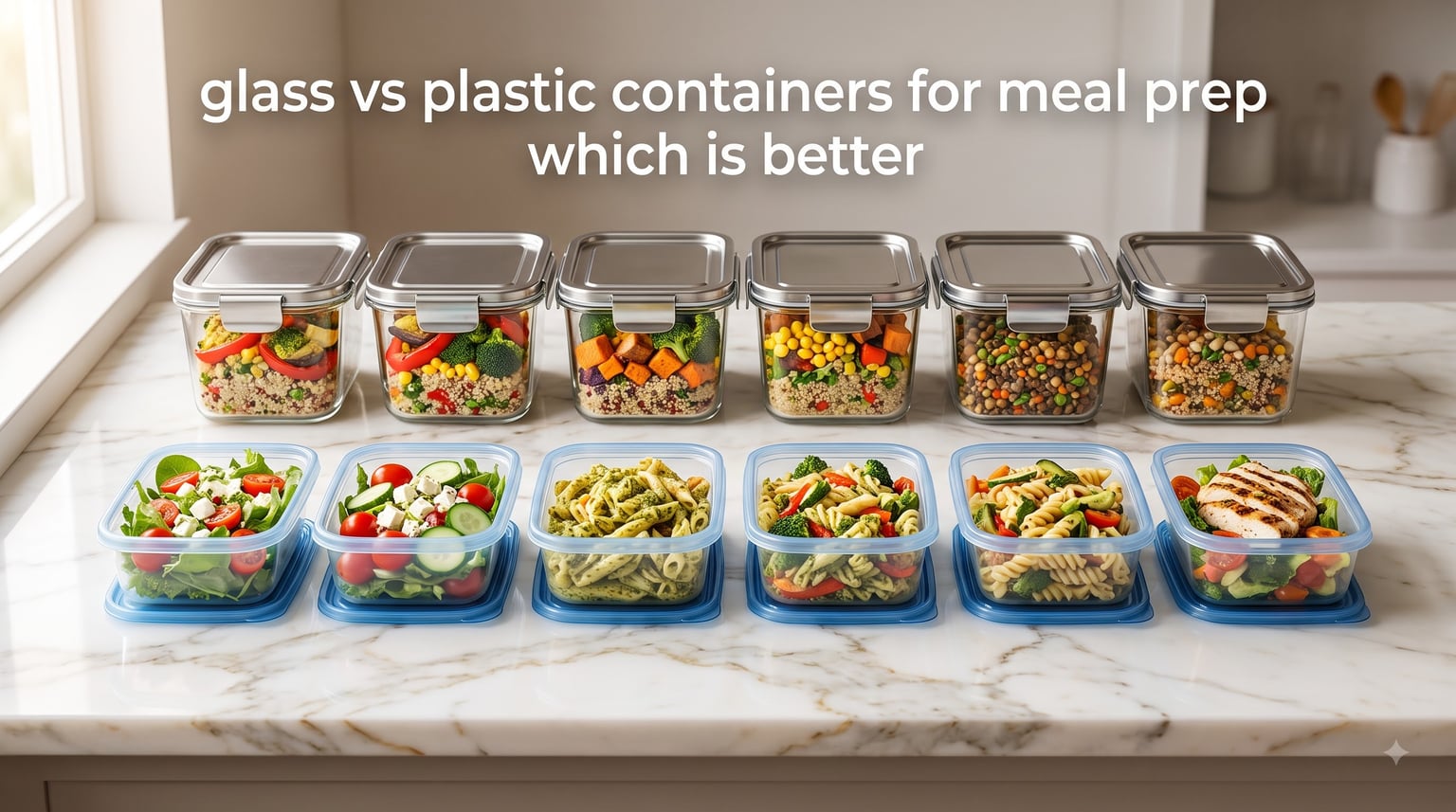
If you batch cook on Sundays or pack lunch four days a week, the container you reach for matters more than most people realize. The average household throws away $1,500 in food each year, and a lot of that waste traces back to containers that warped, stained, or failed to seal.
I’ve tested both materials side by side for meal prep over the past year, and the answer to the glass vs plastic containers for meal prep question is more nuanced than most guides admit. This breakdown covers the real numbers on health, durability, cost, and temperature performance so you can pick the right container for how you actually cook.
Table of Contents
Quick Verdict: Glass vs Plastic Containers for Meal Prep at a Glance
Glass wins for home meal prep if your priority is food safety, long-term value, and reheating. Plastic wins for portability, weight, and budget. Most people who cook in volume end up using both.
Here’s the side-by-side comparison so you can scan the headline differences fast:
| Factor | Glass Containers | Plastic Containers |
|---|---|---|
| Food safety | Inert, no chemical leaching | May leach BPA, phthalates, microplastics when heated |
| Average lifespan | 5 to 10 years | 6 to 12 months of regular use |
| Upfront cost per set | Higher | Lower |
| Cost per use | Lower over time | Higher due to frequent replacement |
| Microwave safe | Yes (remove lid) | Only if labeled BPA-free and microwave safe |
| Oven safe | Yes (borosilicate up to 500 degrees F) | No |
| Freezer safe | Yes (avoid thermal shock) | Yes |
| Stain and odor resistance | Excellent | Prone to staining and odor retention |
| Weight | Heavier | Lightweight |
| Breakage risk | Can shatter if dropped | Resistant to impact |
That table is the 10-second answer. The rest of the guide explains why each row matters and how to use it to make your decision.
Health and Safety: Why Material Choice Matters
Glass is the safer material for storing and reheating food. It is chemically inert, meaning it does not react with acidic tomatoes, spicy curries, or hot soups. Plastic containers, even BPA-free versions, can release trace chemicals into food over time, especially when heated or scratched.
BPA, Phthalates, and Other Chemical Concerns in Plastic
Bisphenol A (BPA) and phthalates are endocrine-disrupting chemicals that have been used in polycarbonate plastics and flexible PVC for decades. The FDA banned BPA from baby bottles and sippy cups more than a decade ago, but the chemicals still appear in many adult food storage products, especially older containers and imported plastics.
When plastic containers are microwaved, placed in a dishwasher on high heat, or filled with hot food, the polymer chains can break down. That process releases small amounts of BPA, phthalates, or replacement chemicals like BPS and BPF, which researchers at Harvard T.H. Chan School of Public Health have flagged for similar hormone-disrupting effects.
Microplastic Generation Through Normal Use
Every time you scrub a plastic container with a rough sponge, twist the lid, or run it through the dishwasher, tiny plastic particles wear off. A recent study published in Environmental Science & Technology found that the average person ingests a credit card’s worth of microplastics every week, and food storage containers are a measurable contributor.
Glass does not shed microplastics. That alone is the main reason health-conscious meal preppers and parents of young children have started moving to glass for everything they heat or store long term.
Why Glass Stays Inert at Any Temperature
Glass containers made from borosilicate or tempered soda-lime are non-porous and chemically stable. They do not absorb tomato stains, do not retain curry odors, and do not release anything into your food at temperatures ranging from the freezer to a 400 degree F oven.
For anyone reheating leftovers straight from the fridge, that stability is the deciding factor. You can microwave a glass container with confidence, then slide it into the oven to brown the top, without worrying about what the plastic is doing to your food.
Durability and Lifespan: How Long Does Each Container Actually Last?
Glass containers last 5 to 10 years with normal use. Plastic containers last 6 to 12 months before the lids stop sealing, the plastic warps, or the staining becomes permanent. That lifespan gap is the single biggest reason glass wins on long-term value.
The math is straightforward. A glass container set that costs roughly three to four times more than a basic plastic set will outlast 8 to 15 plastic replacements. Reddit users in r/mealprep regularly report 7-year-old glass containers still going strong, while their plastic sets have been replaced twice in the same window.
Plastic fails in three predictable ways:
- Lid warping: Repeated dishwasher cycles twist the plastic lid out of shape, and the snap-fit seal stops gripping.
- Staining and clouding: Tomato sauce, turmeric, and beet juice permanently dye the plastic, making it look dirty even after washing.
- Odor retention: Plastic absorbs garlic, onion, and fish smells that never fully come out, even after multiple washes.
Glass containers avoid all three failure modes. The lids on premium glass sets use snap-lock plastic or silicone gaskets, which are usually the first part to wear out, but replacement lids are widely available and far cheaper than replacing the whole container.
Cost Analysis: Upfront Price vs Long-Term Value
Glass costs more upfront. Plastic costs more over time. When you calculate cost per use, a glass container set that lasts a decade comes out cheaper than replacing plastic containers every year.
Here’s the real math, based on a typical 10-container set for a household of two:
- Glass set: Higher initial purchase, replaced once a decade.
- Plastic set: Lower initial purchase, replaced 8 to 15 times over the same 10-year span.
- Replacement plastic lids: Most sets lose at least one lid per year, and orphaned containers become useless without their lid.
That orphan lid problem is something competitors rarely mention. A single lost lid can retire an entire container. Over a decade, you can lose 30 to 50 percent of your original plastic set just to missing lids, which adds to the real cost.
If you cook three to five times a week and reheat leftovers the rest, glass pays for itself within 18 to 24 months, even at premium pricing. Plastic only wins on cost if you barely use your containers, replace them rarely, and don’t mind the wear.
Temperature Performance: From Freezer to Oven
Glass containers handle the full temperature range from freezer to oven. Plastic containers handle cold and room temperature well, but most are not oven safe and only a fraction are truly microwave safe for repeated daily use.
Freezer Storage and Thermal Shock Risk
Both materials handle the freezer, but glass has one rule: never move a glass container straight from freezer to a hot oven. The sudden temperature change (called thermal shock) can crack or shatter the glass, especially with cheaper tempered soda-lime models.
Borosilicate glass is far more thermal-shock resistant than standard tempered glass, and most premium meal prep brands use it. You can pull a borosilicate container from the freezer and place it in a preheated oven up to 400 degrees F without incident, as long as you skip the microwave for that specific transition.
Microwave and Oven Capabilities
Glass is microwave safe (remove the lid to release steam) and oven safe up to the manufacturer’s listed limit, usually 400 to 500 degrees F. That makes glass the most versatile material for batch cooking, because you can marinate, freeze, reheat, and brown in the same container.
Plastic containers labeled microwave safe are designed for short reheating bursts, not repeated daily use at high power. Over time, the heat breaks down the plastic, and the container becomes more prone to leaching. If you microwave plastic more than two or three times a week, the lifespan shortens significantly.
Food Freshness: Which Material Keeps Meals Better?
Glass keeps food fresher longer. The non-porous surface and tighter lid seal on quality glass sets block oxygen exchange better than most plastic containers, which is what causes food to spoil, lose color, and pick up off-flavors in the fridge.
Plastic containers vary widely in seal quality. Cheap deli-style containers leak air constantly, which means your salad wilts faster and your cut fruit browns sooner. Premium plastic with snap-lock lids performs better, but the seal loosens as the plastic warps over time.
For foods that are sensitive to oxidation, think berries, leafy greens, cut avocado, and fresh herbs, glass is the clear winner. Reddit threads in r/MealPrepSunday are full of users who switched to glass specifically because their berries and greens were lasting two to three days longer before going bad.
When to Choose Glass Containers (and When to Pick Plastic)
Choose glass if you cook and reheat at home, want the longest lifespan, or store acidic and aromatic foods. Choose plastic if you need lightweight lunchboxes, transport meals daily, or want a low-cost starter set to test your meal prep routine.
Best Situations for Glass Meal Prep Containers
- Batch cooking on weekends and reheating during the week
- Storing tomato-based sauces, curries, chili, and soups
- Freezer meals you plan to reheat in the oven
- Marinating proteins (glass does not absorb odors or react with acids)
- Foods you want to keep fresh for 4+ days, especially produce
- Families who want to reduce overall microplastic exposure
When Plastic Containers Make More Sense
- Commuters who carry lunch daily and need lightweight options
- Children’s lunchboxes (dropped, thrown, sat on)
- Camping, hiking, and picnic use where weight and breakage matter
- Tight budgets when you are just starting a meal prep routine
- Short-term freezer storage where you will reheat within a week
The honest answer for most households is a hybrid system. Glass at home for cooking, storing, and reheating. Plastic on the go for lunchboxes and transport.
Environmental Impact: Beyond the Recycling Bin
Glass has a higher carbon footprint to manufacture, but it lasts decades and is infinitely recyclable without quality loss. Plastic has a lower manufacturing footprint but generates ongoing waste from frequent replacement and contributes to microplastic pollution.
When you account for the full lifecycle, including the 8 to 15 plastic replacements needed over 10 years, the carbon and waste impact of plastic is significantly higher. A single glass container kept for a decade produces less cumulative waste than the plastic containers that would have been used in its place.
Glass is also fully recyclable at end of life, while most meal prep plastic ends up in landfills because food residue and degraded plastic are rarely accepted by municipal recycling programs.
Building a Hybrid Container System That Works
A hybrid system is what most experienced meal preppers land on, and it works best when you size each material to its actual job. Here is a practical starter breakdown for a household of two to three people:
- 10 to 12 glass containers in a mix of rectangular (3 cup) and square (1.5 cup) sizes for batch cooking, leftovers, and freezer meals.
- 4 to 6 plastic containers with secure snap lids for daily lunch transport, kid lunches, and outdoor use.
- One or two large glass containers (8 cup) for marinating proteins and storing big batches of soup or grains.
Buy your glass set in two or three waves instead of one big purchase. Start with the sizes you use most for batch cooking, then add smaller containers for portion control once you know which shapes fit your fridge and freezer best.
To prevent the orphan lid problem, store lids and containers together in a single bin, label the bin with the lid size, and replace any lid the moment it stops sealing. Buying one extra set of replacement lids when you first buy the containers is a small cost that prevents containers from going to waste.
Special Food Storage: Berries, Herbs, and Fermented Foods
Glass is the right call for most food storage, but a few specific categories are worth calling out. Berries last longer in glass because the airtight seal reduces oxygen exposure, which is the main cause of mold growth.
Fresh herbs stored upright in a glass container with a small amount of water at the bottom (think mini bouquet in the fridge) stay crisp for 7 to 10 days, far longer than the 3 to 4 days you get in plastic bags. The clear glass also lets you see when the water needs changing.
Fermented foods like kimchi, sauerkraut, and homemade yogurt do best in glass because the acidic environment reacts with plastic over time, leaching chemicals and absorbing odors. Most experienced fermenters refuse to use plastic at all for this reason.
For dry goods like rice, flour, and grains, glass jars with clamp lids are the gold standard. They keep out moisture and pests, and you can see exactly how much you have left.
Frequently Asked Questions
Should meal prep be in glass or plastic?
Glass is the better choice for most home meal prep. It is chemically inert, lasts 5 to 10 years, and handles the full range from freezer to oven. Plastic works well for daily transport and lunchboxes where weight and breakage matter.
What is the best material for meal prep containers?
Borosilicate glass with snap-lock lids is the best material for home meal prep. It does not leach chemicals, resists stains and odors, and lasts a decade. For on-the-go use, BPA-free polypropylene with a tight seal is the practical second choice.
Are glass containers healthier than plastic?
Yes. Glass is non-porous and chemically inert, so it does not release BPA, phthalates, or microplastics into food, even when heated. Plastic containers, even BPA-free versions, can shed small particles and absorb into hot or acidic foods over time.
What are the disadvantages of glass containers?
Glass containers are heavier, more expensive upfront, and can shatter if dropped. They also require caution when moving from freezer to oven to avoid thermal shock. Replacement lids are sometimes hard to source for specific brands.
Is it better to store food in glass or plastic containers?
Glass keeps food fresher longer because of its tighter seal and non-reactive surface, especially for produce, leftovers, and acidic foods. Plastic is fine for short-term storage of dry or non-acidic items, but the seal loosens as the plastic warps.
Should I get plastic or glass food containers?
Start with a glass set for cooking, storing, and reheating at home, then add a smaller plastic set for portable lunches. This hybrid approach gives you the safety and durability of glass where it counts, and the lightweight convenience of plastic where you need it.
What is the healthiest container to store food in?
Glass is the healthiest container for food storage. It does not contain BPA, phthalates, or any chemicals that can migrate into food, and it does not shed microplastics. Stainless steel is a close second for non-microwave use.
Final Verdict: Which Material Should You Actually Buy?
For most home cooks serious about meal prep, glass is the right primary container. The health, durability, freshness, and long-term cost advantages are clear, and once you get used to cooking, storing, and reheating in the same container, plastic starts to feel like a downgrade.
If you are just starting out, begin with a mid-sized glass set (around 10 containers in two or three sizes) and add a small plastic set for lunch transport. That combination covers 95 percent of what most households need without overspending. Avoid the cheapest plastic sets, because the lids fail fast and the replacement cost erases the savings within a year.
For anyone comparing glass vs plastic containers for meal prep in 2026, the simple rule is: glass for the kitchen, plastic for the road. That single guideline will save you money, reduce waste, and keep your food safer for the next decade.