
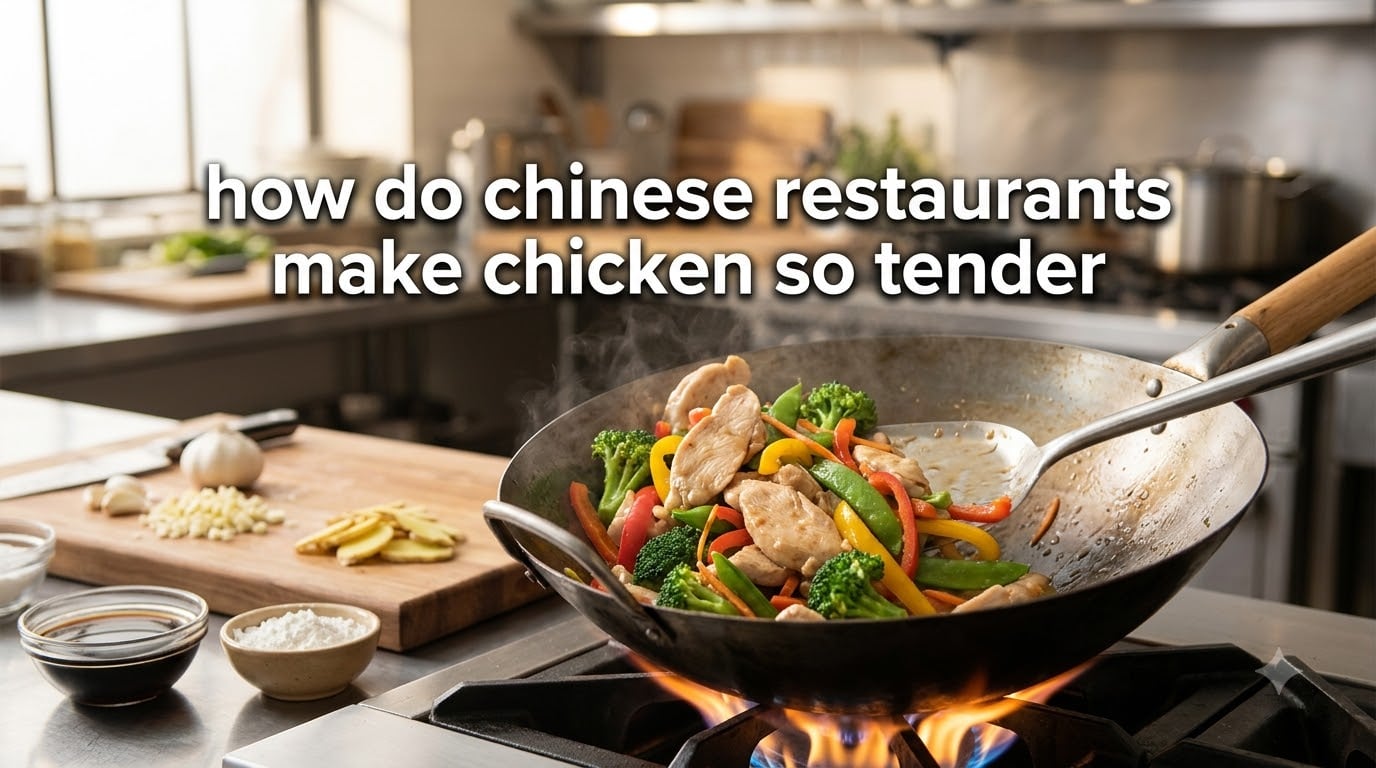
If you have ever wondered how do Chinese restaurants make chicken so tender, the answer is a centuries-old technique called velveting. I spent two years chasing that signature silky, juicy texture at home before a chef friend walked me through the process, and the difference was immediate.
In this guide, I will break down exactly what velveting is, why it works on a scientific level, and how you can replicate restaurant-quality chicken breast in your own kitchen. Whether you want perfect kung pao chicken or a simple chicken and broccoli stir-fry, this is the technique that makes everything taste like it came from a wok at your favorite Chinese restaurant.
Table of Contents
What Is Velveting and Why Does It Work
Velveting is a Chinese cooking technique that tenderizes meat by marinating it in a protective mixture, then briefly pre-cooking it before the final stir-fry. The name comes from the silky, velvety texture the chicken takes on after the process, a finish you simply cannot get by tossing raw chicken into a screaming hot wok.
The science behind it is straightforward but effective. Baking soda (an alkaline) raises the pH of the chicken surface, which breaks down tight protein bonds and helps muscle fibers hold onto moisture during high-heat cooking. Cornstarch and egg white form a thin protective coating that shields the meat from direct heat, locking juices inside while the Maillard reaction creates that golden sear we all crave.
Without velveting, chicken breast dries out almost instantly in a restaurant wok that runs north of 400F. Restaurants cannot slow-cook each piece, so they developed a faster method to guarantee tenderness every single time. That method is what I will teach you below.
Why Chicken Breast Needs Help
Chicken breast is lean, with very little fat or connective tissue to insulate it during cooking. Hit it with high heat for more than 90 seconds and the proteins squeeze out all their moisture, leaving you with rubbery, sad cubes of protein. Velveting fixes this by giving the meat a moisture buffer and a protein shield before it ever touches the wok.
The Baking Soda Method: The Simplest Way to Tenderize Chicken
The baking soda method is the easiest velveting technique and the one most home cooks start with. All you need is baking soda, water, sliced chicken breast, and 20 minutes of patience.
Step-by-Step Baking Soda Velveting
- Slice 250g (about 8 oz) of chicken breast into thin, even strips roughly 1/4 inch thick.
- Sprinkle 3/4 teaspoon of baking soda over the chicken and toss with your fingers until every piece is lightly coated.
- Add 1 tablespoon of cold water and mix again to distribute the soda evenly.
- Let the chicken sit at room temperature for 15 to 20 minutes. Do not exceed 30 minutes or it will turn bouncy and soapy-tasting.
- Rinse the chicken thoroughly under cold running water for at least 30 seconds to wash away the baking soda.
- Pat dry with paper towels and proceed to stir-fry, blanch, or marinate again as your recipe requires.
The rinse step is non-negotiable. I learned this the hard way when I skipped it once and ended up with chicken that tasted faintly of detergent. The baking soda only needs to do its work on the surface of the meat, not accompany it into the final dish.
When to Use the Baking Soda Method
Reach for baking soda when you want minimal ingredients and the shortest prep window. It is ideal for weeknight stir-fries when you do not have time for an egg white marinade. It also works beautifully on lean proteins like turkey breast and pork loin if you ever want to velveting those too.
The Cornstarch and Egg White Marinade
The cornstarch and egg white marinade is the more traditional restaurant approach. It produces a slightly glossier, more slippery texture and is the method I prefer for special-occasion stir-fries like kung pao or cashew chicken.
What Goes In the Marinade
For every 250g of sliced chicken breast, you will need 1 large egg white, 1 tablespoon cornstarch, 1 teaspoon Shaoxing wine, 1 teaspoon soy sauce, and a pinch of white pepper. The egg white proteins coat each piece of meat in a thin protective film, while the cornstarch thickens that film and gives it body. Shaoxing wine adds the classic background aroma you taste in Chinese restaurant chicken.
How to Apply the Marinade
- In a bowl, whisk the egg white until just frothy.
- Add cornstarch, Shaoxing wine, soy sauce, and white pepper, then whisk until smooth.
- Toss in the chicken and massage the marinade into the meat with your hands for one minute.
- Cover and refrigerate for at least 30 minutes, or up to 4 hours.
- Skip the rinse. The marinade stays on the chicken and cooks into the sauce.
Do not use this method the night before and forget about it. Egg white marinated chicken past 8 hours develops a mushy, almost paste-like consistency that is genuinely unpleasant.
Oil Velveting vs Water Velveting: Pre-Cooking Methods
Both the baking soda and cornstarch methods are marinade-only approaches. To finish the velveting process like a true restaurant, you pre-cook the chicken briefly before the final stir-fry. There are two ways to do it.
Oil Velveting (Zou You / Jau Yau)
Heat neutral oil to 275F in a wok or small saucepan. Carefully lower the marinated chicken pieces in a single layer and cook for 60 to 90 seconds, just until they turn pale white and feel firm on the outside. Remove immediately and drain on a plate lined with paper towels. The chicken will look undercooked, and that is exactly right. It finishes in the final stir-fry.
Water Velveting (Blanching)
Bring a pot of water to a gentle simmer with a splash of Shaoxing wine and a few slices of ginger. Slide the chicken in for 45 to 60 seconds, until it just turns opaque, then drain and pat dry. This is the gentler option and the one most Chinese-American restaurants actually use for chicken breast.
Which Method Should You Pick
Oil velveting gives you more flavor and a silkier mouthfeel, but it adds calories and requires careful temperature control. Water velveting is lighter, faster, and nearly foolproof. For most home cooks, water velveting is the practical choice. Save oil velveting for special dishes where you want to wow guests.
How to Slice Chicken for Stir-Fry the Right Way
Slicing technique is the half of velveting nobody talks about, yet it is just as important as the marinade. Even a perfect baking soda treatment will not save chicken that has been chopped haphazardly along the muscle grain.
Always Cut Against the Grain
Look at your chicken breast and identify the direction the muscle fibers run. Position your knife perpendicular to those fibers and slice across them. This shortens each fiber, so the chicken falls apart gently when you bite it instead of sliding off in one rubbery chunk. I always angle my knife at 45 degrees to get wider, prettier pieces.
The Partial Freezing Trick
Pop the chicken breast in the freezer for 20 to 30 minutes before slicing. The meat firms up just enough to cut clean, even slices without tearing. This is the single best tip I learned from a dim sum chef in Hong Kong, and it changed my stir-fry game overnight. Do not freeze solid. Twenty minutes is the sweet spot.
Aim for Uniform Thickness
Try to cut every piece at the same thickness, ideally between 1/8 and 1/4 inch. Uniform slices cook at the same rate, so nothing ends up dry while the rest is still raw. If you have a meat slicer or a sharp Japanese gyuto, even better. A dull knife will tear the meat and ruin the texture.
Common Mistakes That Make Velveted Chicken Turn Out Wrong
I have made every mistake on this list at least twice, so you do not have to. Watch for these four pitfalls when you velvet chicken at home.
Over-velveting with baking soda. Going beyond 30 minutes turns the surface of the chicken chalky and creates an unpleasant bouncy texture that feels almost like a rubber ball. Stick to 20 minutes and rinse thoroughly.
Skipping the rinse. Leaving baking soda on the meat gives the final dish a metallic, bitter aftertaste. Always rinse until the water runs clear.
Slicing with the grain. Cutting along the muscle fibers makes every piece chewy regardless of how well you marinated it. Always check the grain direction before you start chopping.
Velveting dark meat unnecessarily. Chicken thighs are already tender and forgiving. Save your velveting effort for chicken breast and lean pork, and let the thighs do their own thing.
Recipes to Use Your Velveted Chicken In
Once you have mastered the technique, you will want to put it to work in every stir-fry you make. Velveted chicken transforms classic Chinese restaurant dishes and a few American-Chinese favorites.
Try kung pao chicken for a spicy, peanut-forward dish with dried chilies and Sichuan peppercorns. Cashew chicken is the gentler cousin, with a savory brown sauce and roasted cashews. Chicken fried rice benefits from velveted cubes that stay juicy even after the second cook in the wok. And chicken chow mein or lo mein works beautifully when you use sliced breast instead of shredded meat.
Beyond stir-fries, velveted chicken is fantastic in chicken corn soup, hot and sour soup, and even as the protein in cold sesame noodle salads. Once you master the technique, you will find a hundred uses for it.
Frequently Asked Questions
Why is chicken in Chinese restaurants so tender?
Chinese restaurants use a technique called velveting to make chicken tender. It involves marinating the sliced chicken in a mixture of baking soda, cornstarch, or egg white, then briefly pre-cooking it in oil or water before the final stir-fry. This protects the meat from high heat and locks in moisture.
How to make tender Chinese style chicken?
To make tender Chinese style chicken, slice 250g of chicken breast thinly against the grain, then toss with 3/4 teaspoon baking soda and 1 tablespoon water. Let it sit for 20 minutes, rinse thoroughly, and pat dry. Optionally marinate in egg white and cornstarch, then stir-fry on high heat for 60 to 90 seconds.
How to make chicken extremely tender?
Combine two techniques for extremely tender chicken. First, velvet the sliced chicken with baking soda for 20 minutes, rinse, and pat dry. Second, coat it in a cornstarch and egg white marinade for 30 minutes, then oil-velvet at 275F for 90 seconds before the final stir-fry. This double-velvet method is how restaurants achieve that signature silky texture.
How do Chinese restaurants get their meat so tender?
Chinese restaurants get their meat tender through velveting, a technique that raises the pH of the meat with baking soda and coats it in a protective cornstarch layer. The pre-cook step in oil or water finishes the process. Together these steps prevent the protein from seizing up and losing moisture during high-heat wok cooking.
Final Thoughts on Velveting Chicken at Home
The mystery of how Chinese restaurants make chicken so tender comes down to one elegant technique: velveting. From the simple baking soda version to the more layered cornstarch and oil method, every approach gives you chicken breast that stays juicy even after a fierce wok cook. Try the baking soda method first, since it is the most forgiving, and work your way up to the cornstarch and oil velveting as you gain confidence.
Next time you fire up the wok for a stir-fry, give velveting a real shot. I promise you will never look at dry chicken breast the same way again.