
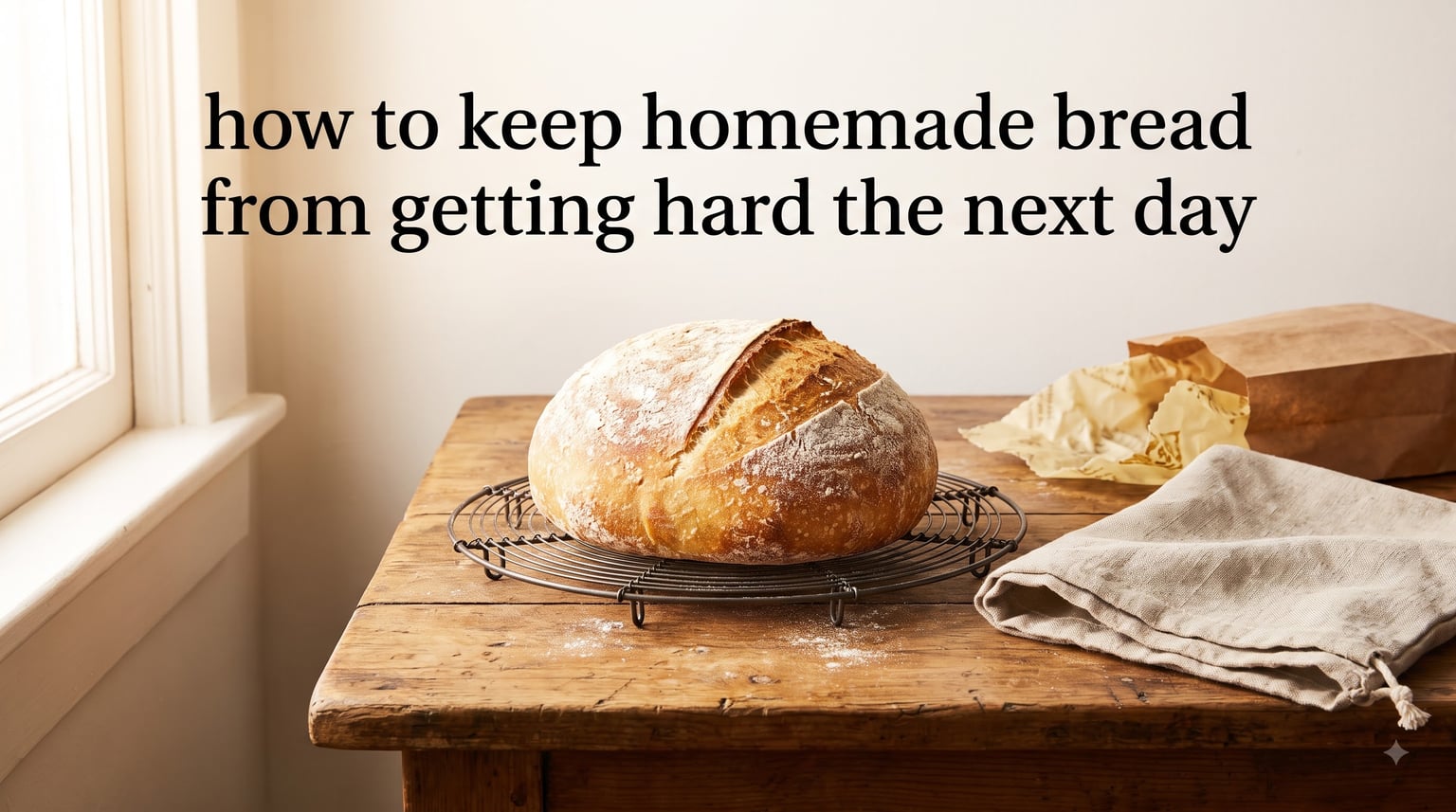
There’s a particular kind of heartbreak that comes from slicing into a beautiful loaf you baked yesterday, only to find a brick by morning. I have been there more times than I care to admit. After a few too many dense, crumbly breakfasts, I started asking the real question: how to keep homemade bread from getting hard the next day so it actually tastes like it did the moment it left the oven.
The good news is that soft, next-day bread is not a mystery. It comes down to three things: how you cool it, how you wrap it, and where you put it. In this guide, I will walk you through the science of why bread goes hard, the six things you can do tonight to keep it soft tomorrow, and the storage methods professional bakers actually use.
Table of Contents
Why Homemade Bread Goes Hard Overnight (The Science)
Homemade bread goes hard because of a process called starch retrogradation. After baking, the starch granules inside the crumb (mostly amylopectin) slowly re-crystallize and squeeze the moisture they absorbed during baking back out. That escaping moisture is what makes your loaf feel dry and firm by morning.
Retrogradation is fastest at refrigerator temperatures and slowest in a freezer, which is why chilling bread actually speeds up staling. Two other things also dry bread out: moisture moving from the crumb to the drier air around it, and light damage (photooxidation) that breaks down flavor compounds in the crust. Staling and drying are different problems, and the best storage method has to fight both at once.
The 6 Things to Do Tonight So Your Bread Stays Soft Tomorrow
If you only have five minutes and a loaf on the counter, here is the exact sequence I follow the night I want soft bread in the morning. These are the steps professional bakers and home cooks on r/Breadit swear by.
- Cool the loaf completely on a wire rack for at least 1 hour, ideally 2, until the bottom feels room temperature.
- Slice from the middle outward instead of cutting the end off. The exposed ends dry out fast, and slicing from the middle keeps both cut faces pressed together longer.
- Push the two cut halves back together and store the loaf cut-side down so the exposed crumb faces the work surface, not the air.
- Wrap it in a material that matches your bread type: plastic or foil for soft sandwich loaves, beeswax wrap or a linen bag for crusty artisan loaves, and a paper bag inside a breadbox for sourdough.
- Press out excess air before sealing, since trapped air carries moisture away and accelerates staling.
- Place the wrapped loaf in a breadbox or on a counter away from sunlight, or freeze it now if you will not eat it within 2 days.
Follow those six steps tonight and your bread will still feel soft, springy, and close to oven-fresh tomorrow.
How to Cool Homemade Bread Properly Before Storing
The most common mistake I see in home kitchens is wrapping bread while it is still warm. Steam trapped inside a warm loaf condenses against the wrapping, wets the crust, and creates a perfect environment for mold within 24 hours.
Always cool bread on a wire rack so air circulates on all sides. A flat cutting board traps steam underneath and gives you a soggy bottom. Wait at least 1 hour for small loaves and rolls, 2 hours for a large boule or batard, and check that the bottom is fully room temperature before wrapping. If you slice into a still-warm loaf, the crumb feels gummy and the slices tear instead of cutting cleanly.
Best Storage Materials Compared: Plastic, Foil, Cloth, Paper, Beeswax, Glass
Choosing the right storage material is the single biggest factor in next-day softness. Here is how the most common options compare for keeping homemade bread soft overnight.
| Material | Days of Freshness | Crust Effect | Mold Risk | Best For |
|---|---|---|---|---|
| Plastic bag (ziplock or bread bag) | 2-3 days | Softens crust | Medium (high in humid kitchens) | Sandwich loaves, soft dinner rolls, milk bread |
| Aluminum foil (double-wrapped) | 2-3 days | Softens crust | Medium | Plaited loaves, stuffed breads, anything going in the oven to reheat |
| Linen bread bag | 2-4 days | Crisp crust preserved | Low | Sourdough, baguettes, artisan boules |
| Paper bag (inside breadbox) | 2-3 days | Crisp crust preserved | Low to medium | Crusty artisan bread in dry climates |
| Beeswax wrap | 2-4 days | Slight softening | Low | Plastic-free storage for soft loaves and rolls |
| Glass container with dry rice | 3-5 days | Softens crust slightly | Very low (rice absorbs moisture) | Humid climates, longer counter storage |
| Breadbox (unwrapped loaf) | 3-5 days | Slight softening | Low | Sourdough, crusty country loaves |
For most home bakers, the practical answer is to use plastic wrap or a ziplock bag for soft sandwich loaves, and a linen or beeswax wrap for crusty artisan loaves. If you bake in a humid climate, skip the plastic and use a glass container with a thin layer of dry rice at the bottom. King Arthur Baking tested this trick and found it keeps bread soft for days without the mold risk plastic creates in sticky kitchens.
The Slice-From-the-Middle Trick and Cut-Side Down Method
Where you make your first cut matters more than most bakers realize. When you cut the end off a loaf and toss the heel, you leave the entire interior exposed to air. Slicing from the middle and pushing the two halves back together keeps the cut faces pressed tightly against each other and dramatically slows moisture loss.
Once you have sliced, store the loaf cut-side down so the exposed crumb sits on a clean surface or cutting board. This prevents the moist interior from sitting in circulating air. Many home bakers on r/Breadit have tested this method side-by-side with end-first slicing, and the cut-side down loaf stays measurably softer after 24 hours.
Why You Should Never Refrigerate Homemade Bread
This is the most counter-intuitive thing about bread storage, and I wish someone had told me years ago: the refrigerator is the worst place to keep homemade bread. Refrigerator temperatures are the exact range where starch retrogradation happens fastest, so a loaf that would stay soft for 3 days on the counter turns hard in 12 hours in the fridge.
The USDA confirms this is true for any bread, but it hits homemade loaves especially hard because they contain no commercial preservatives. The only exception is very humid climates, where a brief stint in the fridge may slow mold growth if you cannot freeze the loaf. If your kitchen regularly hits 75-80% humidity, refrigerate only as a last resort, and freeze as soon as the loaf is fully cooled for the best results.
How to Freeze Homemade Bread for Long-Term Storage
If you bake more than you can eat in 2 days, the freezer is your single best tool for keeping homemade bread soft. Freezing does not reverse retrogradation, but it pauses it almost completely, so a properly frozen and thawed loaf tastes close to fresh-baked.
To freeze a whole loaf:
- Cool the loaf completely on a wire rack.
- Wrap tightly in plastic wrap, pressing out as much air as possible.
- Add a second layer of aluminum foil or place the wrapped loaf in a freezer bag.
- Label with the date and freeze for up to 3 months.
To freeze individual slices: lay slices in a single layer on a baking sheet to flash-freeze for 1 hour, then stack them with parchment between each slice and store in a freezer bag. This lets you pull exactly the number of slices you need without thawing the whole loaf.
To thaw, leave the wrapped loaf on the counter for 2-3 hours, or thaw unwrapped slices directly in the toaster. Avoid microwaving a whole loaf; it gets chewy and tough almost instantly.
How to Revive Day-Old or Stale Homemade Bread
Even with perfect storage, sometimes bread loses a little of its magic. The good news is that stale bread is not dead bread. A few minutes of heat and a small splash of water can bring most loaves back to life.
- Oven refresh (best for crusty loaves): Run the loaf under cold water for 5-10 seconds until the surface is damp, then bake at 300°F for 10-15 minutes. The water turns to steam and re-softens the crumb.
- Toaster or toaster oven (best for slices): Toast slices directly from room temperature or from frozen. The dry heat crisps the surface and warms the crumb through.
- Skillet method (best for rolls and flatbreads): Lightly spritz with water, cover with a lid, and warm in a dry skillet over low heat for 3-5 minutes.
- Skip the microwave for anything you want to eat more than 60 seconds later; it makes crumb tough and chewy.
Adjusting Storage for Your Climate (Humid vs Dry Kitchens)
Where you live changes the right answer. I bake in a dry mountain climate and my bread stays good for 3 days in a paper bag. A friend in Houston fights mold by hour 36 even with the same recipe. Climate is one of the most overlooked factors in bread storage, and a few small adjustments make a big difference.
Humid kitchens (above 65% humidity): Skip plastic unless you plan to freeze. Use a glass container with dry rice at the bottom, or freeze the loaf in portions the day you bake. Refrigeration in this case can slow mold growth but will harden the crumb, so freeze first if you can.
Dry kitchens (below 35% humidity): Counter storage dries out fast. Wrap in plastic, foil, or beeswax to trap moisture, and consider a slice of apple or a damp towel inside the bag to keep the crumb soft. The Perfect Loaf recommends this small adjustment for arid climates like New Mexico, where bread can lose 5-10% of its weight overnight even in a breadbox.
Frequently Asked Questions
How to make homemade bread stay softer longer?
Cool the loaf completely on a wire rack for 1-2 hours, slice from the middle instead of the end, push the cut halves back together cut-side down, wrap tightly in plastic or linen depending on bread type, and store at room temperature or freeze for longer than 2 days. Refrigerating speeds up staling and is not recommended.
What is the best container to store homemade bread to keep it fresh?
The best container depends on bread type. Soft sandwich loaves stay soft longest in a sealed plastic bag or ziplock. Crusty artisan loaves and sourdough do better in a linen bread bag, beeswax wrap, or breadbox. In humid climates, a glass container with dry rice at the bottom prevents mold for up to 5 days.
How do bakeries keep their bread soft?
Commercial bakeries often use emulsifiers, monoglycerides, and a small amount of calcium propionate to slow mold. Many artisan bakeries avoid preservatives and rely instead on tangzhong (a cooked flour paste), longer fermentation, and proper cooling before bagging. They also wrap cooled loaves quickly and store them in breadboxes or on racks with good airflow.
How to store homemade bread so it stays soft without plastic?
Use a beeswax wrap, a linen bread bag, or a breadbox for crusty loaves. For soft sandwich loaves in humid climates, a glass container with a layer of dry rice on the bottom absorbs excess moisture and keeps bread soft for 3-5 days. Paper bags inside a breadbox also work well for sourdough and country loaves.
Should homemade bread be refrigerated to keep it fresh?
No. Refrigeration speeds up starch retrogradation, which is the exact process that makes bread go hard. A loaf that would stay soft for 3 days at room temperature can turn hard in 12 hours in the fridge. The only exception is very humid kitchens where mold is a bigger risk than staling. In that case, freezing is still a better long-term option than refrigerating.
How to freeze homemade bread without ruining it?
Cool the loaf completely, wrap tightly in plastic wrap with air pressed out, then add a second layer of foil or a freezer bag. For slices, flash-freeze on a baking sheet for 1 hour, then stack with parchment between slices in a freezer bag. Thaw wrapped on the counter for 2-3 hours, or toast slices directly from frozen. Properly frozen bread keeps for up to 3 months.
The Bottom Line
Soft, next-day homemade bread comes down to three habits: cool the loaf completely on a wire rack before wrapping, match your storage material to your bread type, and skip the refrigerator. Slice from the middle, push the halves together cut-side down, and freeze anything you will not eat within 2 days.
If your bread does go a little stale, do not throw it out. Run it under water and bake at 300°F for 10 minutes, toast the slices, or turn the loaf into French toast, croutons, or breadcrumbs. With the right routine, your homemade bread can taste close to oven-fresh for days, and that is exactly how to keep homemade bread from getting hard the next day.