
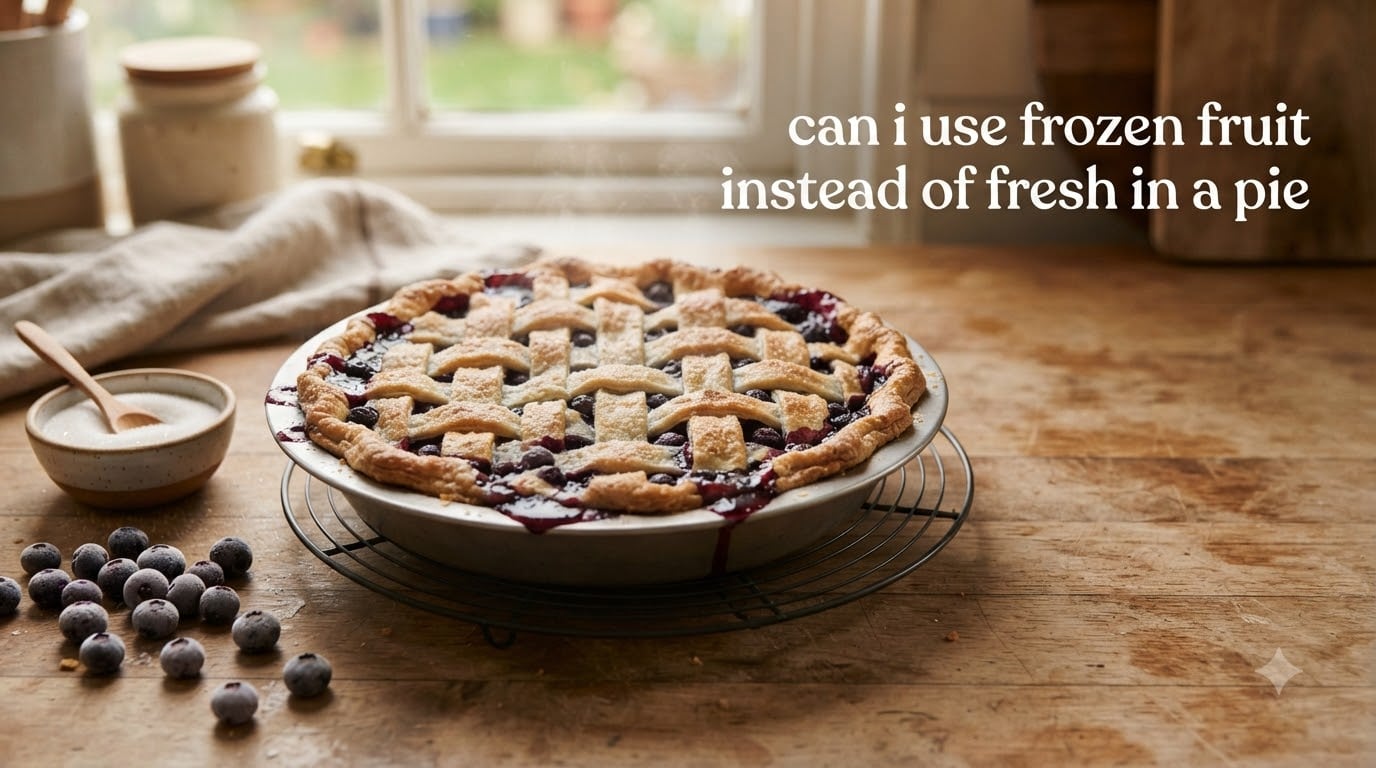
Yes, you can use frozen fruit instead of fresh in a pie, and the swap works in nearly every baked pie recipe. Frozen fruit is picked at peak ripeness and flash-frozen within hours, so it often tastes sweeter and more flavorful than out-of-season fresh fruit. The trade-off is that frozen berries, cherries, and peaches release extra juice during baking, so your filling comes out denser and jammier and you’ll need a few small adjustments to thickener, bake time, and crust to keep the bottom from going soggy.
I bake with frozen fruit most months of the year at our restaurant, and after hundreds of pies I can tell you the swap is worth it. In this guide, I’ll walk you through the science behind frozen fruit pie, the exact thickener ratios, the bake time adjustments, and how to avoid a soggy bottom crust every single time.
Table of Contents
How Frozen Fruit Is Different From Fresh in a Pie
Frozen fruit bakes differently from fresh because ice crystals form inside the cells during freezing and gently break them down. When the fruit hits a hot oven, those damaged cells release their juice faster than intact fresh cells do, which is why a frozen-fruit filling tends to look runnier in the bowl but sets into a thicker, jammier pie after baking.
There is also a ripeness advantage. Commercial frozen fruit is typically harvested at peak ripeness and frozen within hours, locking in sugar and flavor. Fresh berries and peaches sold in winter, by contrast, are often picked under-ripe so they can survive shipping. For a pie made in February, the frozen version usually beats the fresh version in taste.
Expect three real changes in the finished pie:
- Denser, jammier filling that holds its shape when sliced
- Deeper color from fruit that has partly broken down
- Slightly sweeter flavor because frozen fruit is picked ripe
Do You Need to Thaw Frozen Fruit Before Baking a Pie?
No, you do not need to thaw frozen fruit before baking a pie, and for most berries and cherries we actually recommend baking from frozen. Going straight from freezer to oven prevents the fruit from sitting in a pool of released juice, which is the main cause of a watery, runny filling.
There are two exceptions where partial thawing helps. The first is large pieces like frozen peach slices, which cook more evenly if you let them sit at room temperature for 10 to 15 minutes so the edges soften. The second is when you want to drain off extra juice; in that case thaw the fruit in a colander over a bowl for 20 to 30 minutes and reserve the juice for a glaze or stir it into the filling for extra flavor.
If you do thaw, don’t squeeze the fruit. Gently tip the colander and let the juice run off. Pressing the fruit will turn it to mush and you’ll lose the texture that makes a homemade pie feel homemade.
For mixed berries and wild blueberries, bake straight from frozen. For peaches, mango, and large cherry pieces, do a quick 10-minute rest on the counter before tossing with sugar and thickener.
How to Prevent a Runny Filling With Frozen Fruit
Frozen fruit needs slightly more thickener than fresh fruit because of that extra juice release. The exact amount depends on which thickener you use, and after running side-by-side tests in our kitchen the conversion below is what I trust.
Thickener Conversion Per Cup of Frozen Fruit
| Thickener | Per Cup of Frozen Fruit | Notes |
|---|---|---|
| Cornstarch | 1 tablespoon plus 1 teaspoon | Clear finish, easy to find, can break down if overbaked |
| Quick-cooking tapioca | 2 tablespoons | Best for fruit pies, tolerates long bake times, slightly cloudy |
| All-purpose flour | 3 tablespoons | Cloudy finish, can taste pasty if undercooked |
| Arrowroot | 1 tablespoon plus 2 teaspoons | Very clear, do not boil; best for delicate fruits |
Mix the thickener with the sugar before tossing it with the fruit. This prevents clumps of cornstarch or tapioca from landing on a single berry and creating a chalky bite.
If your filling still looks loose when you pull the pie from the oven, resist the urge to bake it longer. Fruit pies set as they cool. A pie that looks jiggly at 400F will firm up to a clean slice after two to three hours on a wire rack.
How to Avoid a Soggy Bottom Crust
A soggy bottom crust is the most common complaint about frozen fruit pies, and it happens because cold fruit lowers the temperature of the dough the moment it touches the pan. Five habits keep the bottom crisp:
- Blind bake the bottom shell for 5 to 7 minutes at 375F before adding the filling. Line the dough with parchment, fill with pie weights or dried beans, and bake just until the surface looks dry.
- Add extra fat to your dough. Replace 1 tablespoon of butter per crust with shortening or leaf lard. The added fat repels moisture better than butter alone.
- Bake on a preheated baking sheet or pizza steel. Slide the pie onto a hot surface and the bottom crust starts cooking before the filling soaks it.
- Use a metal or glass pie plate instead of a dark non-stick one. Metal conducts heat faster and gives a crisper base.
- Vent the top crust. Cut generous slits in a full top crust or use a lattice so steam escapes instead of turning back into liquid under the dough.
One extra tip from our kitchen: brush the blind-baked shell with a thin layer of egg white and return it to the oven for 1 minute. The egg white forms a moisture barrier that protects against soggy bottoms even with very juicy berries.
Baking Time and Temperature for Frozen Fruit Pie
Bake a frozen-fruit pie at 375F to 400F for 45 to 65 minutes. The exact time depends on the fruit, the depth of the dish, and whether you went straight from freezer to oven or thawed first.
Here is the baseline I use at the restaurant:
- Berry pies (blueberry, mixed berry, strawberry): 375F for 50 to 55 minutes
- Cherry pie: 400F for 55 to 65 minutes
- Peach pie: 400F for 55 to 60 minutes
- Deep-dish frozen-fruit pies: 375F for 65 to 75 minutes
Start checking doneness at the low end of the range. The pie is ready when the crust is deep golden brown and the filling bubbles thickly through the vents or lattice. If the edges brown too fast, tent them with a ring of foil for the last 15 minutes. The internal temperature of the filling should reach about 200F on an instant-read thermometer if you want to be precise.
Best Frozen Fruits for Pie
Not every frozen fruit behaves the same way in the oven. After baking with all of them, here is how the most common options stack up.
| Frozen Fruit | Best For | Thickener Tip | Tasting Note |
|---|---|---|---|
| Wild blueberries | Double-crust and lattice pies | Use 1 tbsp plus 1 tsp cornstarch per cup | Intense flavor, classic pie berry |
| Cultivated blueberries | Open-face pies and galettes | Standard ratio works | Mild, sweet, holds shape well |
| Pitted sour cherries | Traditional cherry pie | Use tapioca, 2 tbsp per cup | Tart, jammy, iconic flavor |
| Sweet cherries | Lattice pies | Reduce sugar by 2 tbsp | Sweeter, less pie character |
| Peach slices | Double-crust and crumble pies | Use tapioca, rest fruit 10 min first | Soft, sweet, summer flavor any month |
| Mixed berries | Triple-berry pie | Use flour or cornstarch, 1 tbsp plus 1 tsp per cup | Balanced sweet-tart, beautiful color |
| Strawberries | Strawberry-rhubarb only | Use arrowroot, 1 tbsp plus 2 tsp per cup | Soft, very sweet, needs acid from rhubarb |
| Raspberries | Open-face and galettes | Use tapioca, 2 tbsp per cup | Fragile, lots of seeds, intense flavor |
Skip frozen mango, frozen pineapple, and frozen kiwi for traditional pies. They have enzymes or acid levels that interfere with thickeners and break down into a watery filling no matter how much cornstarch you add.
When NOT to Use Frozen Fruit in a Pie
Frozen fruit is perfect for baked pies but a poor choice in three situations.
Fresh fruit tarts. A classic French fruit tart depends on clean, intact berry shapes sitting on a pastry cream base. Thawed berries slump and leak color. Use fresh fruit only for these.
No-bake icebox pies. If the recipe sets in the fridge without baking, frozen berries will release juice as they thaw and turn the filling into soup. Save those recipes for fresh fruit in season.
Recipes where freezer flavor matters. Some frozen fruit, especially fruit packed without sugar, develops off-flavors after long freezer storage. If your bag is older than 9 months or has visible freezer burn, use it for jam or smoothies instead of pie.
For everything else, a baked pie is the best place for frozen fruit. The heat masks any subtle freezer notes and the long bake concentrates the fruit’s natural sweetness.
Step-by-Step: How to Bake a Pie With Frozen Fruit
Here is the exact method we use at the restaurant for a 9-inch double-crust frozen-fruit pie. It works with blueberries, cherries, peaches, or mixed berries.
- Position a rack in the lower third of the oven and place a rimmed baking sheet on it. Preheat to 400F.
- Roll out your bottom crust and line a 9-inch metal pie plate. Trim to a 1-inch overhang.
- Blind bake the shell for 7 minutes with pie weights, then remove the weights and bake 3 minutes more until the surface looks dry.
- Brush the warm shell with beaten egg white and return to the oven for 1 minute to seal it.
- Toss 6 cups of frozen fruit with 3/4 cup sugar, 1 tablespoon plus 1 teaspoon cornstarch (or 2 tablespoons quick tapioca), 1 tablespoon lemon juice, 1/4 teaspoon salt, and 1/2 teaspoon cinnamon if you like.
- Mound the filling in the warm shell. Frozen fruit will look like too much; it cooks down by about a third.
- Top with the second crust, cut vents, and crimp the edges.
- Brush the top with egg wash and sprinkle with coarse sugar.
- Bake at 400F for 20 minutes, then reduce to 375F and bake another 35 to 40 minutes until the crust is deep golden and the filling bubbles thickly.
- Cool on a wire rack for at least 3 hours before slicing so the filling sets.
Frequently Asked Questions
Can you use frozen fruit instead of fresh in a pie?
Yes. Frozen fruit works in nearly every baked pie recipe and is often picked at peak ripeness, so it can taste sweeter than fresh off-season fruit. Expect a denser, jammier filling and plan to add a little more thickener than the recipe calls for.
Do you need to thaw frozen fruit before baking a pie?
No. For most berries and cherries, bake straight from frozen to avoid a pool of released juice in the bowl. For larger fruit like peach slices, let the fruit rest at room temperature for 10 to 15 minutes so the pieces soften and bake evenly.
Do you need more thickener with frozen fruit?
Yes. Frozen fruit releases extra juice during baking, so increase the thickener by about 25 percent. A reliable baseline is 1 tablespoon plus 1 teaspoon of cornstarch, or 2 tablespoons of quick-cooking tapioca, per cup of frozen fruit.
How do you keep the bottom crust from getting soggy with frozen fruit?
Blind bake the bottom shell for 7 to 10 minutes, brush it with egg white, bake the pie on a preheated baking sheet, use a metal pie plate, and vent the top crust so steam can escape. Adding 1 tablespoon of shortening or lard per crust also helps repel moisture.
Which frozen fruits are best for pie?
Wild blueberries, pitted sour cherries, peach slices, and mixed berries are the most reliable choices. They all bake into a clean slice, hold their flavor through a long bake, and pair well with the standard thickener ratios.
How much longer does a frozen fruit pie take to bake?
Most frozen-fruit pies take 50 to 65 minutes at 375F to 400F, roughly 10 to 15 minutes longer than a fresh-fruit pie at the same temperature. Start checking at the 45-minute mark and bake until the filling bubbles thickly through the vents.
Should I rinse frozen fruit before baking?
Rinsing frozen berries under cold water can wash away surface sugars and ice glaze, so I skip it for most pies. The exception is wild blueberries packed in syrup: a quick rinse in a colander prevents the filling from turning purple and bleeding color into the top crust.
Final Verdict
Frozen fruit is one of the best tools a home baker has for making great pies year-round. Yes, you can use frozen fruit instead of fresh in a pie without sacrificing flavor, and the result is often sweeter and more colorful than anything you can buy in winter.
Remember the three adjustments that matter most: increase the thickener by about 25 percent, blind bake the bottom shell, and bake at 375F to 400F until the filling bubbles thickly. If you do those three things, frozen fruit pies come out of your kitchen looking and tasting like they came out of a professional bakery. Pick up a bag of wild blueberries or pitted sour cherries on your next grocery run and try one this weekend.