
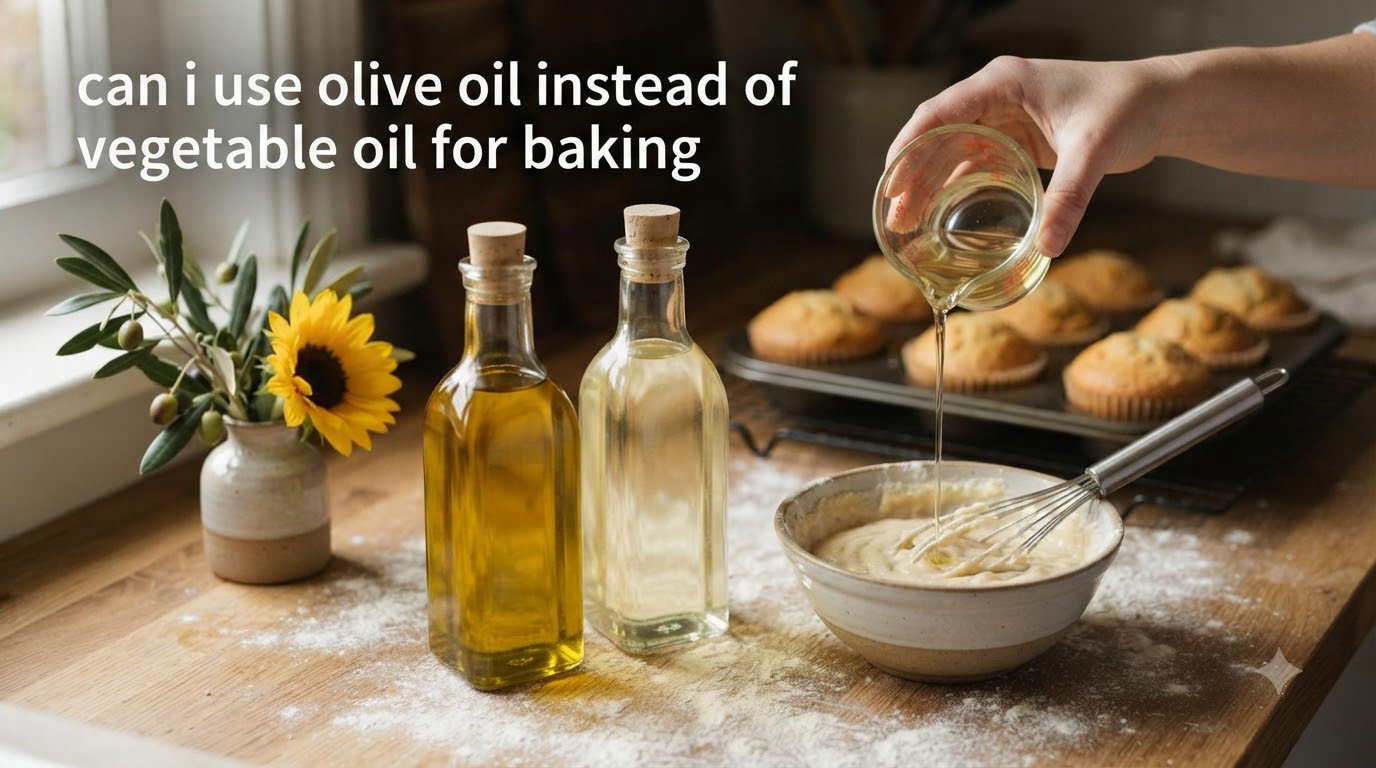
Yes, you can substitute olive oil for vegetable oil in baking using a simple 1:1 ratio. If a recipe calls for 1 cup of vegetable oil, swap it directly with 1 cup of olive oil. Light olive oil works best for most baked goods because of its mild, neutral flavor, while extra virgin olive oil adds a fruity richness that pairs beautifully with chocolate, citrus, and nutty recipes.
This substitution works because both oils serve the same structural role in baking: they coat flour proteins to limit gluten development, trap moisture for tenderness, and carry fat-soluble flavors. The swap requires no adjustments to eggs, flour, leavening, or baking time. Whether you’ve run out of vegetable oil mid-recipe or you want a heart-healthy alternative, olive oil is a reliable one-to-one replacement that most bakers won’t even notice in the finished product.
Table of Contents
Can I Use Olive Oil Instead of Vegetable Oil for Baking?
The short answer is yes. Olive oil replaces vegetable oil in virtually every baking recipe at a 1:1 ratio with zero ingredient adjustments. You use the exact same measurement—whether that’s ¼ cup, ½ cup, or a full cup—and your baked goods will turn out moist, tender, and structurally sound.
The only variable you need to manage is flavor. Light or “classic” olive oil has been refined to taste neutral, almost indistinguishable from vegetable oil in cakes, muffins, and cookies. Extra virgin olive oil (EVOO) retains its fruity, peppery character, which works brilliantly in brownies, olive oil cakes, and citrus-flavored bakes but can taste out of place in a delicate vanilla sponge.
From a health standpoint, the swap is an upgrade. Olive oil delivers roughly 73% monounsaturated fat (primarily oleic acid) compared to vegetable oil’s polyunsaturated-heavy profile. It also contains polyphenols and tocopherols—antioxidants that refined vegetable oils lose during processing. If you’re following a Mediterranean diet or simply want better fat quality in your baking, this substitution is one of the easiest changes you can make.
Olive Oil vs Vegetable Oil: What’s the Difference?
Source and Processing
Vegetable oil is typically a refined blend of soybean, canola, corn, and sunflower oils. It undergoes extensive processing—degumming, bleaching, and deodorizing—which strips away most flavor compounds and nutrients. The result is a shelf-stable, ultra-neutral oil.
Olive oil, by contrast, is pressed directly from olives. Light olive oil is refined to remove strong flavors while retaining more of the original fat composition. Extra virgin olive oil is cold-pressed and minimally processed, preserving the most antioxidants and the boldest flavor.
Flavor Profile
Vegetable oil tastes like essentially nothing. That neutrality is its main advantage in baking: it adds moisture and fat without competing with vanilla, chocolate, butter, or fruit flavors.
Light olive oil is nearly as neutral. In blind taste tests, most people can’t tell the difference between a cake made with light olive oil and one made with vegetable oil. Extra virgin olive oil, on the other hand, brings grassy, fruity, and sometimes peppery notes that can enhance or overpower a recipe depending on what you’re making.
Smoke Point
Vegetable oil has a smoke point around 400–450°F (204–232°C), which comfortably covers standard baking temperatures of 325–375°F. Light olive oil sits in a similar range at approximately 390–470°F (199–243°C). Extra virgin olive oil has a lower smoke point of 350–410°F (177–210°C), but since most baking happens at 350°F or below, it’s rarely an issue.
The smoke point concern is mostly relevant for broiling or very high-temperature roasting—not for the cakes, muffins, and brownies most home bakers are making.
Nutrition Comparison
Per tablespoon, both oils contain roughly 120 calories and 14 grams of total fat. The key difference lies in fat composition. Olive oil provides about 10g of monounsaturated fat per tablespoon versus vegetable oil’s 3–4g. Monounsaturated fats are associated with improved heart health, lower LDL cholesterol, and reduced inflammation.
Extra virgin olive oil also delivers polyphenols—plant compounds with antioxidant activity—that are absent from refined vegetable oil. Research published in the Journal of the American College of Cardiology links regular olive oil consumption to lower cardiovascular risk. For bakers who make treats regularly, switching to olive oil is a small change with real long-term benefits.
Light Olive Oil vs Extra Virgin Olive Oil: Which Is Better for Baking?
Light olive oil is the safest all-purpose choice for baking. “Light” refers to its color and flavor, not its calorie content—it has the same fat and calories as regular olive oil. It’s been refined to remove the strong olive taste, making it ideal for vanilla cakes, sugar cookies, white cupcakes, and any recipe where you want the oil to disappear into the background.
Extra virgin olive oil shines in recipes that complement its fruity character. Chocolate brownies, olive oil cake, citrus pound cake, banana bread, and rosemary shortbread all benefit from EVOO’s complexity. The cocoa, citrus, or herbs create a natural pairing that makes the olive flavor feel intentional rather than intrusive.
If you only have extra virgin olive oil on hand and need to bake something delicate, you can still use it. Some bakers report that the olive flavor mellows significantly after baking and becomes undetectable in strongly flavored batters. But if you bake frequently and want a dedicated baking oil, keeping a bottle of light olive oil in your pantry eliminates the guesswork entirely.
How Olive Oil Affects Your Baked Goods
Flavor Impact
With light olive oil, the flavor impact is minimal to nonexistent. In chocolate, spice, and nut-based recipes, even extra virgin olive oil blends seamlessly. The fats in olive oil carry and amplify other flavors similarly to how butter does.
Where you’ll notice the difference is in plain or lightly flavored bakes. A vanilla cupcake made with EVOO might have a slightly grassy or fruity undertone that some tasters enjoy and others find unexpected. Lemon zest, orange zest, almond extract, and warm spices like cinnamon all harmonize with olive oil’s natural profile, making them ideal flavor partners.
Texture and Crumb
Olive oil produces a tender, moist crumb that’s very similar to vegetable oil. Both are liquid fats that coat flour particles efficiently, limiting gluten formation for a soft texture. Some bakers report that olive oil brownies and cakes feel slightly more “fudgy” or dense compared to their vegetable oil counterparts, but the difference is subtle.
In cookies, olive oil can produce a slightly chewier result. If you prefer a crispier cookie, you might need to bake an extra minute or two, though many bakers find the chewiness preferable.
Moisture Level
Olive oil retains moisture at least as well as vegetable oil—arguably better. Baked goods made with olive oil tend to stay moist for an extra day or two on the counter. This makes olive oil an especially good choice for muffins, quick breads, and cakes that you plan to store at room temperature rather than eating immediately.
The improved moisture retention comes from olive oil’s slightly different molecular structure. Its higher proportion of oleic acid means it oxidizes more slowly than the polyunsaturated fats in vegetable oil, helping baked goods maintain their texture longer.
Recipe-by-Recipe Guide: When to Use Olive Oil
Cakes
Olive oil works beautifully in most cakes. Chocolate cake, carrot cake, spice cake, and lemon cake all respond well to the swap. For vanilla or white cake, stick with light olive oil to avoid any flavor interference. An olive oil cake—made deliberately with EVOO and often citrus zest—is a classic Mediterranean dessert that showcases just how good this fat can be in baking.
Muffins and Quick Breads
This is where olive oil really excels. Banana bread, zucchini bread, pumpkin muffins, and blueberry muffins all benefit from the moisture retention olive oil provides. The fruity notes of EVOO complement banana and pumpkin especially well. Many professional bakers prefer olive oil specifically for quick breads because the results stay tender for days.
Brownies
Brownies are one of the best applications for olive oil in baking. The intense cocoa flavor masks any olive taste completely, and the high fat content produces an incredibly fudgy, rich result. Home bakers on forums frequently recommend this swap, noting that brownies made with olive oil often taste more decadent than their vegetable oil counterparts.
Cookies
Olive oil works in cookies, though the results differ slightly from vegetable oil or butter. Because olive oil is 100% fat (butter is about 80% fat and 20% water), cookies may spread less and have a chewier texture. Chocolate chip cookies, oatmeal cookies, and peanut butter cookies all handle the swap well. Delicate sugar cookies or shortbread are better candidates for light olive oil.
When to Stick with Vegetable Oil
There are a few cases where vegetable oil might be the better choice. Very delicate bakes like angel food cake, white wedding cake, or meringue-based recipes benefit from absolute neutrality. If you’re baking for someone who is sensitive to olive flavors or working with a recipe that relies on a pristine, butter-like backdrop, vegetable oil (or melted butter) keeps things safe. For everything else, olive oil is a perfectly suitable replacement.
Tips for Baking with Olive Oil Successfully
Choose the right type. Light olive oil for neutral-flavored bakes, extra virgin for recipes where you want a fruity note. When in doubt, start with light olive oil.
Measure the same way. Use the exact amount the recipe calls for. No need to reduce or increase—1 cup vegetable oil equals 1 cup olive oil.
Don’t overmix. Olive oil has a slightly different viscosity than vegetable oil, but it incorporates into batters just as easily. Mix until just combined, same as you would with any other oil.
Store baked goods properly. Olive oil-baked muffins and breads actually stay moist longer than their vegetable oil counterparts. Wrap them in plastic or store in an airtight container at room temperature for up to three days.
Experiment with flavor pairings. Lemon, orange, almond, rosemary, vanilla, and chocolate all pair naturally with olive oil. If you’re nervous about the swap, start with a chocolate or citrus recipe where the flavors complement each other.
Frequently Asked Questions
Can you substitute olive oil for vegetable oil in baking?
Yes, you can substitute olive oil for vegetable oil in baking using a 1:1 ratio. Use the exact same measurement the recipe calls for. Light olive oil has the most neutral flavor, while extra virgin olive oil adds fruity notes that work well in chocolate, citrus, and nut-based recipes.
What is the ratio of olive oil to vegetable oil in baking?
The ratio is 1:1. One cup of vegetable oil equals one cup of olive oil. The same applies to all measurements: half a cup, a quarter cup, or any amount. No adjustments to other ingredients are necessary.
Does olive oil change the taste of baked goods?
Light olive oil is nearly flavorless and won’t change the taste of your baked goods. Extra virgin olive oil can add a subtle fruity or grassy flavor, which is noticeable in delicate vanilla or white cakes but virtually undetectable in chocolate, spice, and citrus recipes.
Is extra virgin olive oil good for baking?
Extra virgin olive oil is excellent for baking in recipes that complement its flavor. Chocolate brownies, olive oil cake, citrus pound cake, and banana bread all benefit from EVOO’s fruity complexity. For delicate vanilla or white cakes, light olive oil is a safer choice.
What type of olive oil is best for baking?
Light olive oil is the best all-purpose choice for baking. It has been refined to remove strong olive flavors, making it suitable for any recipe where you want neutral-tasting fat. Extra virgin olive oil is best for recipes where its fruity flavor adds value, like chocolate bakes or citrus desserts.
Is it healthier to bake with olive oil instead of vegetable oil?
Yes, olive oil is generally considered healthier than vegetable oil for baking. It contains about 73% monounsaturated fat compared to vegetable oil’s polyunsaturated-heavy profile. Olive oil also provides polyphenols and antioxidants that refined vegetable oils lose during processing. Research links regular olive oil consumption to improved heart health.
Can I use olive oil in cake mix?
Yes, you can use olive oil in boxed cake mix. Replace the vegetable oil called for on the box with an equal amount of light olive oil. The cake will taste virtually identical and may even stay moist longer. For a more flavorful twist, try extra virgin olive oil in a chocolate or lemon cake mix.
Can olive oil be used in cookies?
Olive oil works well in cookies. Chocolate chip cookies, oatmeal cookies, and peanut butter cookies all handle the swap. Because olive oil is 100% fat, cookies may spread slightly less and have a chewier texture than those made with butter or vegetable oil. Use light olive oil for neutral-flavored cookies.
Does olive oil work for brownies?
Olive oil works exceptionally well for brownies. The intense cocoa flavor completely masks any olive taste, and the high fat content produces an incredibly fudgy, rich result. Many home bakers prefer olive oil brownies over vegetable oil brownies for their superior moisture and texture.
Why do bakers use vegetable oil instead of olive oil?
Vegetable oil has long been the default baking oil because it’s inexpensive, widely available, and completely neutral in flavor. Many traditional recipes were developed with vegetable oil, so it’s simply what most home bakers reach for. The neutral flavor makes it a safe choice for any recipe, though olive oil offers comparable results with better nutritional value.
Conclusion
So, can you use olive oil instead of vegetable oil for baking? Absolutely. The 1:1 swap requires no recipe adjustments, and light olive oil produces results nearly identical to vegetable oil in taste and texture. You’ll get the same tender crumb and moist texture, plus a meaningful nutritional boost from monounsaturated fats and antioxidants. Whether you’re out of vegetable oil or intentionally choosing a healthier fat, olive oil is a reliable, versatile baking swap that works across cakes, muffins, brownies, cookies, and quick breads.