
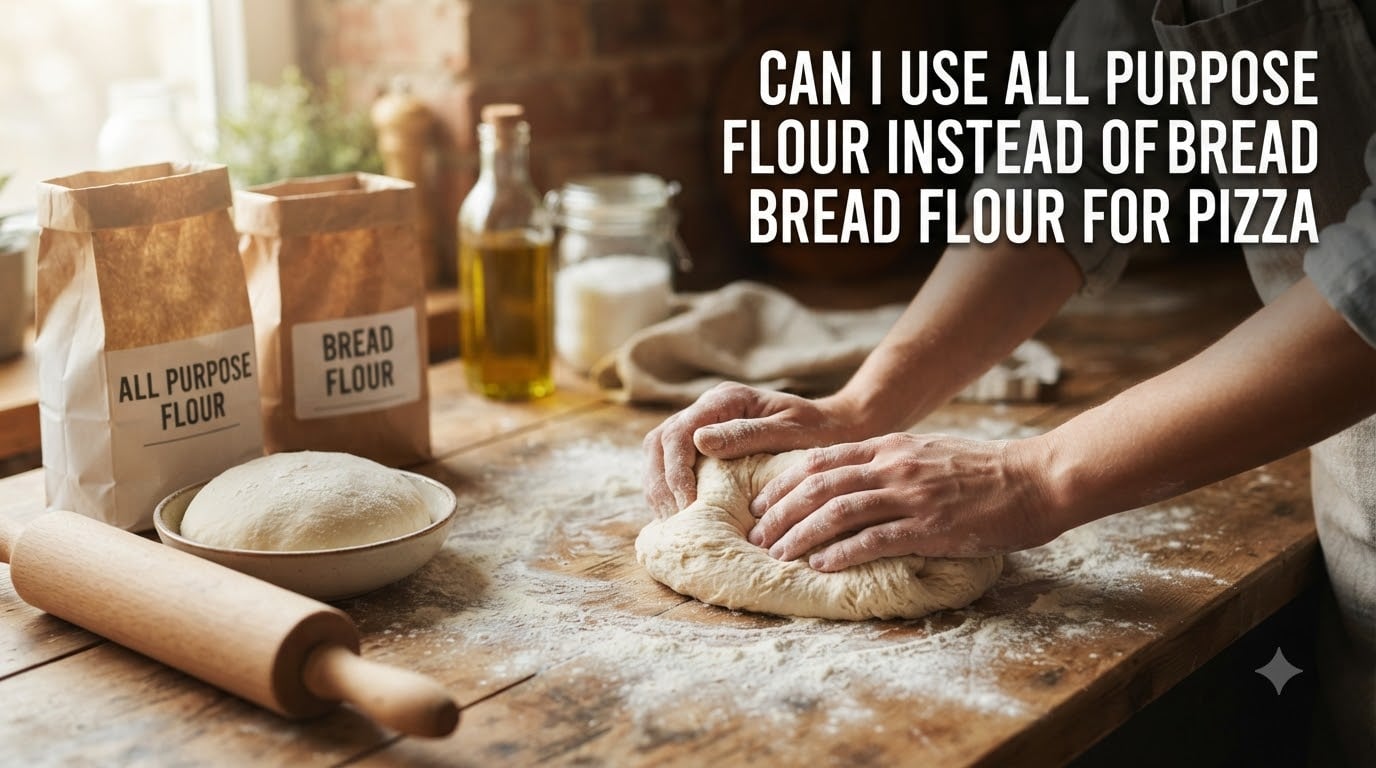
Yes, you can use all-purpose flour instead of bread flour for pizza dough. All-purpose flour contains 9–11% protein compared to bread flour’s 12–14%, so your crust will be slightly less chewy with a more tender, cakey texture. For most home ovens and thin to medium crusts, the difference is subtle — and there are easy fixes if you want to close the gap.
I’ve baked hundreds of pizza doughs with both flours over the past few years, and the short answer is this: AP flour works. It just behaves differently. Below, I’ll walk you through exactly what changes, how to compensate, and which pizza styles actually benefit from each flour type.
Table of Contents
What Is the Difference Between Bread Flour and All-Purpose Flour?
The core difference comes down to protein content. Protein determines how much gluten forms when flour meets water and gets kneaded — and gluten is what gives pizza dough its stretch, chew, and structure.
| Property | All-Purpose Flour | Bread Flour |
|---|---|---|
| Protein content | 9–11% | 12–14% |
| Gluten strength | Moderate | High |
| Dough texture | Softer, less elastic | Stiffer, more elastic |
| Crust outcome | Tender, slightly crisp | Chewy, airy |
| Best for | Thin crust, pan pizza, beginners | Neapolitan, NY style, Detroit |
| Absorbs water | Less | More |
That 2–4% protein gap sounds small, but it compounds through kneading and fermentation. Bread flour develops a stronger gluten network, which traps more CO₂ from the yeast and creates bigger air pockets. All-purpose flour produces a more tender dough that’s easier to stretch thin but doesn’t hold its structure as well under heavy toppings.
Bleached vs Unbleached: Does It Matter?
Yes, it does — and most competitors skip this detail. Bleached all-purpose flour has been chemically treated to whiten it, which strips away some protein and weakens gluten formation. If you’re using AP flour for pizza, always reach for unbleached. The difference in dough strength is noticeable, especially during longer ferments. Sally’s Baking Addiction specifically calls this out: bleaching the flour affects how much water the flour absorbs, which changes the entire dough behavior.
What Happens to Your Pizza Crust When You Use All-Purpose Flour
When you swap bread flour for all-purpose, here’s what you’ll actually notice in your finished pizza:
Less chew, more tenderness. The crust will be softer and more cracker-like rather than that classic New York fold-and-pull. Think of the difference between a bagel and a biscuit — same ingredients, different protein, completely different bite.
Reduced oven spring. Your dough won’t puff up as dramatically in the oven. The weaker gluten network can’t trap gas as efficiently, so you’ll get a thinner, denser rim (cornicione) rather than those big, airy bubbles.
Easier to stretch — but more prone to tearing. AP dough is more extensible, meaning it stretches out easily. The trade-off is that it tears more readily, especially if you’re aggressive with it. This is the number one complaint from home bakers making the switch.
Faster browning. All-purpose flour tends to brown quicker due to its slightly different starch composition. Keep an eye on your pizza in the last few minutes — especially above 475°F.
How to Make All-Purpose Flour Work Better for Pizza
If you only have AP flour on hand, these adjustments will get you much closer to a bread-flour result:
Add Vital Wheat Gluten (The Cheat Code)
This is the single most effective fix. Add 1 tablespoon (about 8 grams) of vital wheat gluten per cup of all-purpose flour. This boosts the protein content by roughly 2%, bringing your AP flour much closer to bread flour territory. You can find vital wheat gluten in most grocery store baking aisles or online.
Mix the vital wheat gluten into your dry flour before adding water. Don’t skip this step — if you add it after the dough is formed, it won’t distribute evenly.
Knead Longer
AP flour needs more kneading time to develop what gluten it has. If you normally knead bread flour dough for 8 minutes, give your AP dough 10–12 minutes. You’re looking for a smooth, slightly tacky dough that passes the windowpane test — when you can stretch a small piece thin enough to see light through it without it tearing.
Increase Hydration Slightly
Because AP flour absorbs less water than bread flour, you may need to reduce your recipe’s liquid by 5–8%. Start with the original recipe’s water amount and add flour as needed. The dough should be tacky but not sticky — if it’s clinging to everything, it’s too wet.
Use a Stand Mixer If You Have One
The dough hook on a stand mixer is more efficient at developing gluten than hand-kneading, and AP flour benefits from that extra mechanical work. Run it on medium-low for 6–8 minutes rather than kneading by hand for 12.
When to Use Bread Flour vs All-Purpose Flour by Pizza Style
Not every pizza needs the same flour. Here’s a quick decision guide:
Use bread flour for: New York style (that fold needs structure), Neapolitan (high-heat, fast bakes demand strong gluten), Detroit style (thick, airy, and needs to hold oil and cheese), and any pizza you plan to cold-ferment for 48+ hours.
All-purpose flour works great for: Thin crust and cracker-style pizza, pan pizza (like grandma or focaccia-style), quick same-day doughs with no long ferment, and casual weeknight pizza where convenience matters more than perfection.
Either flour works for: Standard homemade pizza night, sheet pan pizza, pizza rolls, and calzones. The differences are subtle enough that most people won’t notice.
Can You Mix Bread Flour and All-Purpose Flour for Pizza?
Absolutely — and many experienced home bakers prefer this approach. A blend gives you some of bread flour’s chew without the full density. The most popular ratios are:
50/50 blend: A solid middle ground. You get noticeably more chew than pure AP flour but the dough stays manageable and easy to stretch. Great for beginners.
2/3 bread flour + 1/3 AP flour: This ratio was specifically recommended by a Reddit user on r/AskCulinary who called it “exactly the type of chew I was looking for.” It’s close enough to full bread flour for NY-style pizza but slightly more forgiving.
Mixing flours is also practical if you have half a bag of each and don’t want to buy more. Just combine them in your mixing bowl before adding any other ingredients.
All-Purpose Flour vs 00 Flour vs Bread Flour: A Three-Way Comparison
Home bakers often ask about 00 flour alongside the AP vs bread flour debate. Here’s how all three stack up:
| Property | All-Purpose | Bread Flour | 00 Flour |
|---|---|---|---|
| Protein | 9–11% | 12–14% | 11–13% (varies by brand) |
| Grind | Medium | Medium | Extra fine |
| Best for | Versatile, thin crust | NY, Detroit, chewy crusts | Neapolitan, high-heat ovens |
| Gluten type | Moderate | Strong | Extensible (stretches far) |
| Availability | Everywhere | Most stores | Specialty or online |
00 flour is ground ultra-fine, which creates a silkier dough that bakes into a delicate, slightly charred crust — exactly what you want in a 900°F Neapolitan oven. But in a standard home oven at 475–550°F, 00 flour doesn’t behave dramatically differently from bread flour. If your home oven maxes out at 500°F, bread flour or AP flour will give you comparable results.
How All-Purpose Flour Behaves in Cold-Fermented Pizza Dough
Cold fermentation — resting your dough in the fridge for 24 to 72 hours — develops flavor and improves texture. But AP flour and bread flour respond differently to long, cold rests.
AP flour dough tends to over-ferment faster. Because the gluten network is weaker, the dough can become slack and sticky after 48 hours in the fridge. If you’re planning a 72-hour cold ferment, bread flour is the better choice — its stronger gluten holds up longer.
For a 24-hour cold ferment (which is the sweet spot for most home bakers), AP flour works perfectly. The flavor development from even a short cold rest makes a bigger difference than flour choice alone. Just bring the dough to room temperature for 1–2 hours before shaping — cold AP dough tears more easily than cold bread flour dough.
Store your dough in a lightly oiled, sealed container. AP flour dough absorbs less oil, so use a thin coating rather than a heavy pour.
Frequently Asked Questions
Can you substitute all-purpose flour for bread flour in pizza dough?
Yes, you can use all-purpose flour instead of bread flour for pizza dough. The crust will be slightly less chewy and more tender because AP flour has 9-11% protein vs bread flour’s 12-14%. For most home pizza makers, the difference is minor and the results are still delicious.
What happens if you use all-purpose flour instead of bread flour for pizza?
Your pizza crust will be softer and less chewy, with reduced oven spring and a thinner rim. The dough is easier to stretch but tears more easily. Browning may happen faster. Adding 1 tablespoon of vital wheat gluten per cup of AP flour largely fixes these differences.
Is bread flour better for pizza than all-purpose flour?
Bread flour is better for styles that need strong chew and structure, like New York, Neapolitan, and Detroit pizza. All-purpose flour works well for thin crust, pan pizza, and casual weeknight pies. Neither is universally better — it depends on the pizza style you’re making.
How do you make all-purpose flour pizza dough chewier?
Add 1 tablespoon (8 grams) of vital wheat gluten per cup of AP flour before mixing. Knead the dough 2-3 minutes longer than you would bread flour dough. Use unbleached AP flour for stronger gluten formation. These three steps close most of the chew gap between AP and bread flour.
Can you mix bread flour and all-purpose flour for pizza?
Yes, mixing the two flours is a popular approach. A 50/50 blend gives a solid middle ground with more chew than pure AP flour. A 2/3 bread flour to 1/3 AP flour ratio produces results close to full bread flour but with easier handling and stretching.
Does pizza dough need bread flour to rise properly?
No, pizza dough rises perfectly well with all-purpose flour. Yeast feeds on sugars in the flour regardless of protein content. The rise itself isn’t affected much — what changes is how well the dough holds that gas during baking. AP flour dough produces a slightly denser crumb but still rises normally.
Final Verdict
Can you use all-purpose flour instead of bread flour for pizza? Absolutely. The crust will be a touch less chewy and the dough slightly more fragile, but for most home bakers the difference won’t ruin pizza night. If chew is important to you, add a tablespoon of vital wheat gluten per cup of AP flour and knead a couple of extra minutes — you’ll close 80% of the gap.
Pick bread flour when you’re chasing that classic New York fold or a blistered Neapolitan char. Pick all-purpose when you want an easy, forgiving dough for thin crust, pan pizza, or a quick weeknight bake. And if you’ve got both in the pantry, mix them — a 50/50 blend is the sweet spot many home bakers swear by.