
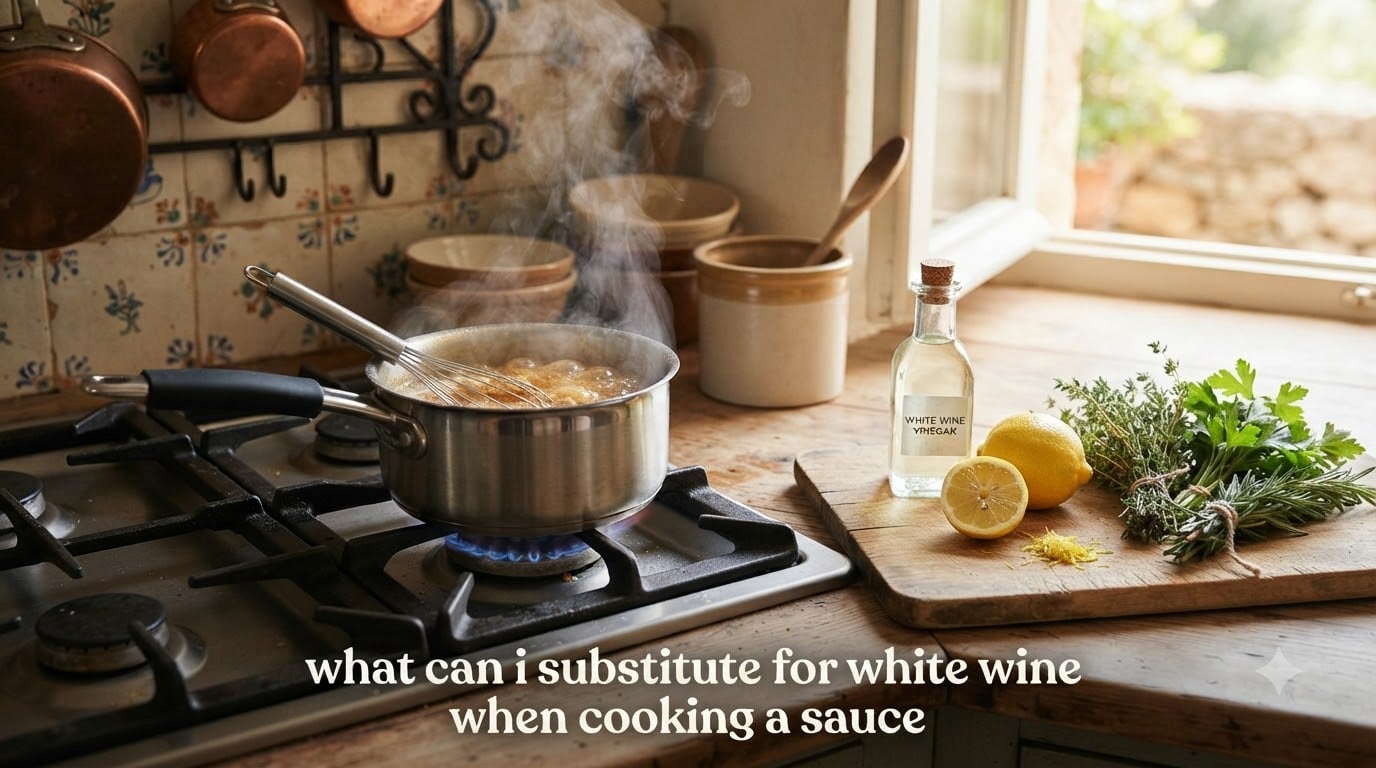
You’re mid-recipe, the pan is hot, and the recipe calls for white wine — but the bottle is empty. Before you panic, know this: white wine in a sauce does just three jobs, and plenty of pantry staples can cover at least two of them.
White wine adds acidity to brighten flavors, provides liquid to deglaze the pan and lift the fond, and contributes a subtle fruity sweetness. A good substitute for white wine in cooking needs to deliver those same qualities — or at least the most important ones for your specific dish.
Below you’ll find seven reliable swaps, complete with exact ratios, best-for notes, and the “skip if” warnings that keep you from ruining dinner. Whether you need a non-alcoholic option for guests or just ran out mid-cook, this guide has you covered.
Table of Contents
What Can I Substitute for White Wine When Cooking a Sauce?
If you need a fast answer, here are the best white wine substitutes ranked by versatility:
- Chicken or vegetable broth + lemon juice — the most universal swap; adds body and brightness
- White wine vinegar (diluted) — best for deglazing and French-style pan sauces
- Apple cider vinegar (diluted) — warmer acidity that works in heartier dishes
- Lemon juice (diluted) — the simplest pantry option for light sauces and seafood
- White grape juice + a splash of vinegar — best non-alcoholic option for fruity notes
- Dry vermouth — closest flavor match; contains alcohol but keeps for months
- Sparkling citrus water or herb-infused water — last resort for poaching and steaming
Each of these covers at least two of the three roles white wine plays. Read on for exact ratios and when to reach for each one.
Chicken or Vegetable Broth + Lemon
This is the substitute I reach for most often because it covers all three jobs: broth brings body and liquid for deglazing, while lemon juice adds the acid lift and brightness that wine normally provides.
Ratio: Use ¾ cup broth plus ¼ cup fresh lemon juice for every 1 cup of white wine your recipe calls for.
Best for: Pan sauces, risotto, pasta sauces, and braising liquids. If you’re making a classic chicken piccata or a creamy mushroom sauce, this combo handles it beautifully.
Skip if: You’re watching sodium intake. Standard broth can push the salt level too high, especially in a reduction. Use low-sodium broth and adjust salt at the end instead.
One thing to keep in mind: broth alone gives you body but loses the citrusy “lift” that wine contributes. That lemon juice is not optional — it’s what makes this swap actually taste like the dish is supposed to.
White Wine Vinegar (Diluted)
White wine vinegar is literally made from white wine, so it carries the right flavor profile. The catch is concentration — straight vinegar is far too sharp for most sauces.
Ratio: Use 1 tablespoon white wine vinegar combined with enough broth or water to equal 1 cup total liquid. For lighter sauces, go with 2 teaspoons vinegar per cup of liquid.
Best for: Deglazing pans for French-style pan sauces, vinaigrette-based sauces, and any dish where you want a clean acidic note without added sweetness.
Skip if: You’re cooking delicate fish or a butter-heavy cream sauce. The vinegar’s sharpness can overpower subtle flavors. Reach for lemon juice instead in those cases.
For those wondering — yes, you can substitute white wine vinegar for white wine in cooking, but only in small amounts and always diluted. A tablespoon or two goes a long way.
Apple Cider Vinegar (Diluted)
Apple cider vinegar works similarly to white wine vinegar but brings a warmer, slightly sweeter character. It’s a solid choice when you want acidity with a hint of fruit.
Ratio: Same as white wine vinegar — 1 tablespoon apple cider vinegar plus broth or water to make 1 cup. For a gentler flavor, start with 2 teaspoons.
Best for: Heartier pan sauces, pork dishes, autumn-inspired recipes, and anything with apples or root vegetables. It also works well in marinades.
Skip if: You’re making a delicate cream sauce or a light seafood dish. The apple notes can clash with butter- or cream-based sauces. Save this one for bolder flavors.
Lemon Juice (Diluted)
When you have a lemon in the fridge and nothing else on hand, this is the simplest white wine substitute in a sauce. Lemon juice delivers clean acidity without any competing flavors.
Ratio: Use 2 tablespoons fresh lemon juice mixed with water or broth to equal 1 cup. For a stronger citrus note, bump it to 3 tablespoons.
Best for: Light pan sauces, seafood dishes, chicken piccata, and any recipe where the wine was there mainly for acidity rather than deglazing power.
Skip if: Your sauce needs body and liquid volume, not just acid. Lemon juice alone won’t deglaze a pan the way wine or broth does. Pair it with broth if you need both qualities.
White Grape Juice + a Splash of Vinegar
This is the go-to non-alcoholic white wine substitute when you want fruity sweetness without any alcohol — perfect when cooking for kids, guests in recovery, or anyone who avoids alcohol entirely.
Ratio: Use ¾ cup white grape juice plus ¼ cup white wine vinegar or apple cider vinegar. The vinegar balances the sweetness so it doesn’t taste like juice in your sauce.
Best for: Sauces where you want a fruity, slightly sweet character — think creamy pasta sauces, lighter pan sauces, and dishes served to non-drinkers.
Skip if: You’re making a savory, bone-dry sauce. Grape juice adds sweetness that can throw off the balance in dishes meant to be purely savory or acidic.
Home cooks on Reddit have confirmed that diluted white grape juice works well for pan sauces when you want those fruity notes that white wine normally brings. Just don’t skip the vinegar — on its own, grape juice is too sweet.
Dry Vermouth
If you want the closest flavor match and don’t mind alcohol in the dish, dry vermouth is the answer. It’s a fortified wine that tastes remarkably similar to white wine in cooking.
Ratio: Use a 1:1 substitution — 1 cup dry vermouth for every 1 cup white wine.
Best for: Pan sauces, risotto, cream sauces, and any dish where you want that authentic wine flavor. It’s also the best option for deglazing because it behaves almost identically to white wine.
Skip if: You’re cooking for guests who avoid alcohol. Vermouth is 18% ABV. While most of the alcohol cooks off, trace amounts remain. If you need a fully non-alcoholic option, stick with broth + lemon or grape juice + vinegar.
A practical bonus: an opened bottle of dry vermouth keeps in the fridge for months, far longer than an opened bottle of white wine. Many professional cooks keep a bottle on hand specifically for cooking.
Sparkling Citrus Water or Herb-Infused Water
When the pantry is truly bare, water can work — but only if you dress it up. Plain water is the weakest substitute because it adds nothing but volume.
Ratio: Use 1 cup sparkling water or still water infused with citrus zest and fresh herbs. Add a squeeze of lemon or a splash of vinegar to compensate for the missing acidity.
Best for: Steaming shellfish, poaching fish, and light braising liquids where the sauce is built from other ingredients and the wine was a minor player.
Skip if: The recipe builds its primary flavor from the wine (like a classic beurre blanc). Water-based substitutes fall flat in rich sauces that depend on wine for body and complexity.
One useful trick: bring the water to a simmer with a few sprigs of thyme or rosemary, then strain. That herb infusion gives you some of the aromatic complexity that wine provides — a tip The Pioneer Woman swears by for last-minute cooking.
Quick-Reference Substitution Table
Here’s a one-glance comparison of every substitute. Bookmark this for when you’re standing at the stove with an empty wine bottle.
| Substitute | Ratio (per 1 cup wine) | Best For | Skip If | Alcohol-Free? |
|---|---|---|---|---|
| Broth + Lemon Juice | ¾ cup broth + ¼ cup lemon | Pan sauces, risotto, pasta | Low-sodium diet (use low-sodium broth) | Yes |
| White Wine Vinegar | 1 tbsp + liquid to 1 cup | Deglazing, French sauces | Delicate fish, cream sauces | Yes |
| Apple Cider Vinegar | 1 tbsp + liquid to 1 cup | Hearty sauces, pork dishes | Light cream sauces | Yes |
| Lemon Juice | 2-3 tbsp + liquid to 1 cup | Seafood, light pan sauces | Rich sauces needing body | Yes |
| White Grape Juice + Vinegar | ¾ cup juice + ¼ cup vinegar | Kids, non-alcoholic guests | Savory-only sauces | Yes |
| Dry Vermouth | 1 cup (1:1) | Closest match, deglazing | Guests avoiding alcohol | No (18% ABV) |
| Herb-Infused Water | 1 cup + citrus/vinegar | Poaching, steaming | Wine-forward sauces | Yes |
Can I Use Red Wine Instead of White Wine?
Red wine works as a substitute for white wine in a sauce — but only in the right context. The deep color and bolder tannins of red wine will change both the appearance and flavor of your dish.
Use red wine when: You’re making a hearty tomato sauce, a beef or pork braise, or any dish where the sauce is already dark in color. A splash of red wine in a marinara or a ragù can actually improve the depth of flavor.
Avoid red wine when: The dish relies on a light, pale sauce — cream sauces, butter sauces, white wine pan sauces, and risotto. Red wine will turn your cream sauce an unappetizing grayish-purple and overpower the delicate flavors you’re building.
Cooking for Guests Who Avoid Alcohol
One of the most common reasons people search for a white wine substitute is cooking for guests who refuse alcohol — whether they’re in recovery, pregnant, or simply don’t drink. This is a real constraint that many recipe sites overlook.
For fully non-alcoholic dishes, your best bets are broth + lemon juice and white grape juice + vinegar. Both deliver the brightness and acidity that white wine provides without any alcohol content.
Keep in mind that some substitutes marketed as “cooking wine” still contain alcohol. Dry vermouth, while excellent for cooking, is roughly 18% ABV and not appropriate for guests who need a strictly alcohol-free meal. Always check labels if you’re serving someone with a medical or personal reason to avoid alcohol entirely.
How to Deglaze a Pan Without Wine
Deglazing is one of the key jobs white wine performs in a pan sauce. Here’s how to do it with any substitute:
- Build your fond. Sear your protein or aromatics in the pan until browned bits stick to the bottom. Those brown bits — the fond — are concentrated flavor.
- Reduce heat slightly. If using vinegar or lemon juice, lower the heat so the acid doesn’t scorch.
- Add your substitute. Pour in about ½ cup of your chosen substitute. It should sizzle immediately on contact with the hot pan.
- Scrape the pan. Use a wooden spoon to scrape up every bit of fond from the bottom of the pan. This is where the flavor lives.
- Reduce by half. Let the liquid simmer until it concentrates. This step intensifies the flavors and creates the sauce body.
- Finish the sauce. Add butter, cream, or stock to build out the sauce to your desired consistency.
The technique is identical whether you’re using wine, broth, or vinegar. The only difference is the flavor profile you end up with.
Tips for Making Substitutes Work in Any Sauce
A few general principles will help you get the best results from any white wine substitute:
Adjust salt at the end. Broth-based substitutes add sodium that wine doesn’t. Taste before seasoning, especially if you’re reducing the sauce — the salt concentrates as liquid evaporates.
Add acid in stages. If using vinegar or lemon juice, start with less than the recipe calls for. You can always add more acid, but you can’t remove it. A squeeze of lemon at the end of cooking can brighten a sauce more effectively than adding it all at the beginning.
Let the sauce reduce longer. Wine is more concentrated than most substitutes, so you may need a few extra minutes of simmering to reach the right consistency. Watch the sauce rather than the clock.
Taste, taste, taste. Every substitute shifts the flavor balance differently. The best cooks taste constantly and adjust. If the sauce tastes flat, it probably needs more acid. If it’s too sharp, a pat of butter or splash of cream will round it out.
Frequently Asked Questions
What is the best non-alcoholic substitute for white wine in a sauce?
The best non-alcoholic substitute for white wine in a sauce is chicken or vegetable broth combined with fresh lemon juice. Use ¾ cup broth plus ¼ cup lemon juice for every 1 cup of wine. This combination provides the body, liquid, and acidity that white wine contributes, without any alcohol.
Is chicken broth a good substitute for white wine?
Chicken broth is a good substitute for white wine when you add an acid like lemon juice or a splash of vinegar. Broth alone provides liquid and savory body but lacks the citrusy brightness that wine contributes. The combination of broth and lemon juice is one of the most versatile white wine substitutes available.
Can I use red wine instead of white wine in a sauce?
You can use red wine instead of white wine in hearty tomato sauces, beef braises, and dark-colored dishes. However, avoid red wine in cream sauces, butter sauces, and risotto — the deep color and tannins will overpower delicate flavors and turn light sauces an unappealing shade.
What is the best substitute for white wine in risotto?
For risotto, use chicken broth plus a tablespoon of lemon juice or white wine vinegar. This combination mimics the acidity and body that white wine provides during the gradual liquid additions. Dry vermouth at a 1:1 ratio also works beautifully if alcohol is acceptable.
Can I skip the white wine and just use water?
Plain water works as a last resort, but it adds no flavor, acidity, or complexity. If you must use water, infuse it with citrus zest and fresh herbs, then add a squeeze of lemon or splash of vinegar. This makes water a passable substitute for poaching and steaming, though it falls short in rich sauces.
Can you substitute white wine vinegar for white wine in cooking?
You can substitute white wine vinegar for white wine in cooking, but always dilute it. Use 1 tablespoon white wine vinegar combined with enough broth or water to make 1 cup of total liquid. Undiluted vinegar is far too sharp for most sauces and will overwhelm the other flavors.
Do white wine substitutes work in baking?
White wine substitutes work in baking, though the results vary by recipe. Lemon juice diluted with water works well in cakes and breads where wine adds moisture and a subtle tang. For savory baked dishes like coq au vin blanc, broth plus lemon juice is the best option. Avoid vinegar-based substitutes in baking, as the flavor can be too assertive.
How do I adjust cooking times when using a substitute?
Most substitutes do not require significant cooking time adjustments. However, vinegar and lemon juice concentrates may need an extra minute or two of reduction to reach the right consistency. Broth-based substitutes sometimes need slightly longer simmering because they are less concentrated than wine. Watch the sauce thickness rather than relying on exact timing.
Final Thoughts
So what can you substitute for white wine when cooking a sauce? The answer depends on your pantry and your audience. For most situations, chicken or vegetable broth with a generous squeeze of lemon juice is the safest, most versatile swap. For guests who avoid alcohol, white grape juice mixed with a splash of vinegar delivers fruity brightness without any alcohol content.
The key is understanding what the wine was doing in the original recipe — adding acid, providing liquid for deglazing, or contributing subtle sweetness — and choosing a substitute that covers those same roles. With the ratios and tips in this guide, you can confidently finish any sauce recipe even when the wine bottle is empty.