
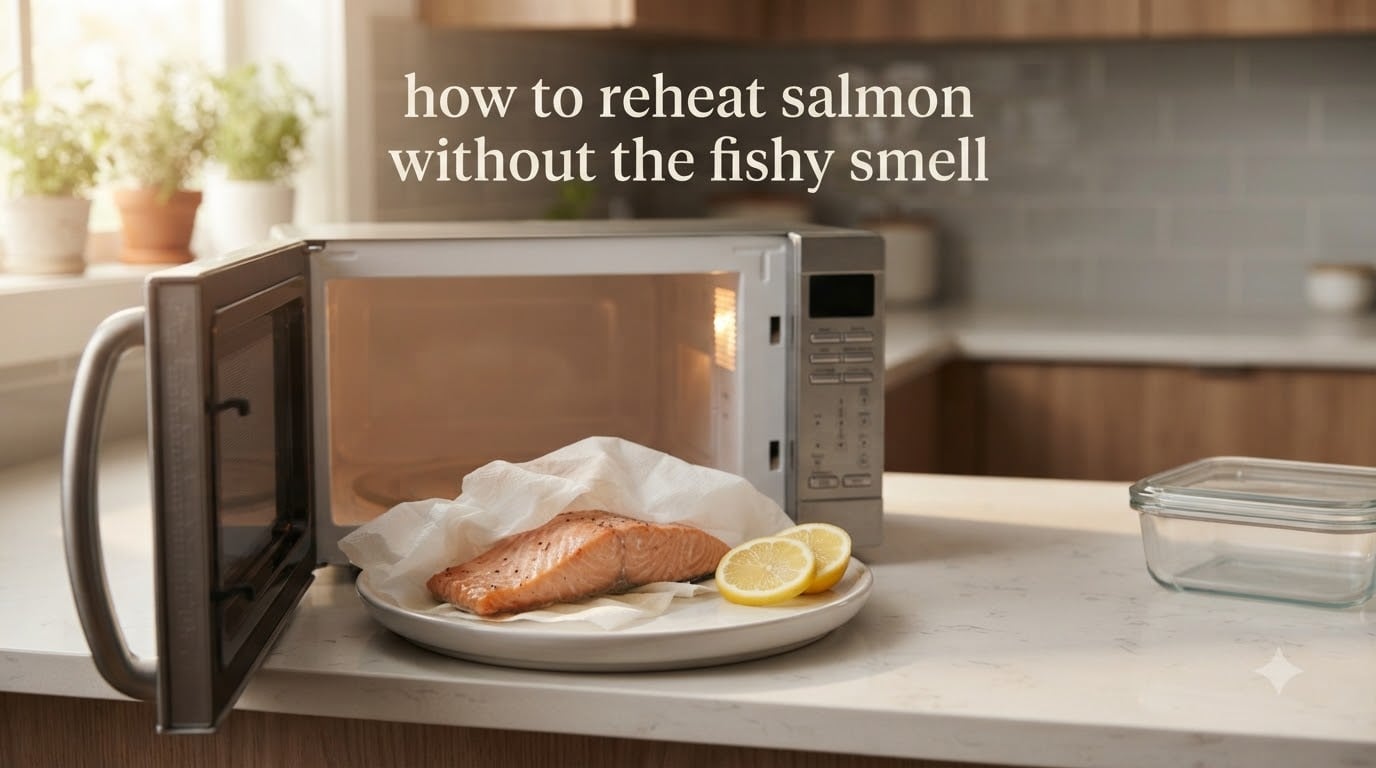
We’ve all been there. You bring leftover salmon to work, pop it in the microwave, and suddenly the entire office knows what you’re eating. The good news is that reheating salmon without that embarrassing fishy smell is completely possible. In this guide, I’ll show you exactly how to reheat salmon without the fishy smell using methods our team has tested over dozens of leftover salmon portions. The secret comes down to three things: low heat, moisture control, and the right container.
Table of Contents
Why Does Reheated Salmon Smell Fishy?
Reheated salmon smells fishy because of a chemical process called lipid oxidation. When omega-3 fatty acids in salmon are exposed to high heat, they break down and release volatile compounds called aldehydes. These compounds are what create that strong, fishy odor that fills a room.
Salmon is packed with omega-3 fatty acids (EPA and DHA), which are fantastic for your health but chemically unstable when overheated. The protein structure also changes during reheating — a process called protein denaturation — which can squeeze out moisture and intensify the smell even further.
The key insight is that smell intensifies with temperature. When you blast salmon at full microwave power or reheat it at high oven temperatures, you’re accelerating lipid oxidation dramatically. Keep the temperature low, and you keep the smell contained. That’s why the methods below all emphasize gentle, controlled heat rather than speed.
How to Reheat Salmon Without the Fishy Smell
The microwave method is the fastest and most practical way to reheat salmon without the fishy smell. Here’s the exact process that works every time:
Step 1: Prepare your salmon. Place the leftover salmon on a microwave-safe plate. Glass containers work better than plastic because they heat more evenly and don’t absorb odors.
Step 2: Add moisture. Drizzle a teaspoon of water or lemon juice over the salmon. This creates a steam barrier that prevents the fish from drying out and helps neutralize odor compounds.
Step 3: Cover with a damp paper towel. This is the most important step. The damp paper towel traps steam around the salmon, keeping it moist while also containing any smell that develops. It acts as both a moisture shield and an odor barrier.
Step 4: Set microwave to 50% power. Never use full power. Lower power settings heat the salmon gently, reducing the temperature spike that causes lipid oxidation. If your microwave has a “reheat” or “defrost” setting, those work well too.
Step 5: Heat in 30-second intervals. Start with 30 seconds, check the salmon, then continue in 15-30 second bursts until it’s warmed through. The total time depends on the thickness of your fillet and the amount of salmon, but most portions need 60-90 seconds total at 50% power.
Step 6: Check the internal temperature. The salmon is ready when it reaches 125°F for optimal taste and texture. The FDA recommends 145°F for food safety, but most chefs agree that 125-130°F preserves the best flavor and moisture without overcooking. Use an instant-read thermometer if you have one.
Step 7: Let it rest for 30 seconds. The salmon continues to warm slightly after you remove it from the microwave. Resting also allows the heat to distribute evenly throughout the fillet.
Alternative Methods to Reheat Salmon
Oven Method
The oven method takes longer but produces excellent results, especially for larger portions or when you’re reheating salmon for multiple people. Preheat your oven to 275°F — that’s intentionally low. Place the salmon on a baking sheet lined with parchment paper, cover it loosely with aluminum foil, and heat for 12-15 minutes. The low temperature prevents the omega-3 fats from breaking down while gently warming the fish through. This method is ideal when you have 15-20 minutes to spare and want the salmon to taste almost as good as when it was first cooked.
Stovetop Skillet Method
For a slightly crispy exterior, the stovetop method works surprisingly well. Heat a non-stick or cast-iron skillet over medium-low heat with a small drizzle of olive oil or butter. Place the salmon skin-side down (if it has skin) and heat for 3-4 minutes per side. The gentle heat and the fat in the pan help prevent moisture loss. Cover the pan with a lid for the first minute to create steam, which keeps the interior moist. This method gives you the best texture of all the reheating options.
Steaming Method
Steaming is one of the gentlest ways to reheat salmon and produces virtually no fishy smell. Set up a steamer basket over simmering water, place the salmon inside, cover, and steam for 4-6 minutes depending on thickness. The moist heat environment prevents the omega-3 fats from oxidizing aggressively. If you don’t have a steamer basket, you can create a makeshift one by placing a heat-safe plate on top of a pot of simmering water with the lid on.
Air Fryer Method (Use With Caution)
I’ll be honest — the air fryer isn’t my first choice for reheating salmon, and here’s why. Air fryers use rapid hot air circulation, which can dry out salmon quickly and intensify the fishy smell. If you must use an air fryer, set it to 275°F, wrap the salmon in foil with a splash of water inside, and heat for only 4-5 minutes. Check frequently. The foil wrapping is essential — without it, the circulating air will dry out the salmon in minutes.
Quick Method Comparison
| Method | Time | Temperature | Smell Risk | Moisture Retention |
|---|---|---|---|---|
| Microwave (50% power) | 60-90 seconds | Medium-low | Low (with cover) | Good |
| Oven | 12-15 minutes | 275°F | Very Low | Excellent |
| Stovetop Skillet | 6-8 minutes | Medium-low | Low | Good |
| Steaming | 4-6 minutes | 212°F (steam) | Very Low | Excellent |
| Air Fryer | 4-5 minutes | 275°F (in foil) | Medium | Fair |
Reheating Different Types of Salmon
Not all salmon is the same, and the reheating method should match how the fish was originally prepared.
Grilled salmon reheats best in a skillet or oven. The existing grill marks and slightly charred exterior hold up well to gentle reheating. Avoid the microwave, which can make the smoky flavor taste off.
Baked salmon is the most forgiving. Any method works, but the oven at 275°F or the microwave at 50% power are your best bets. Since baked salmon is already cooked with gentle heat, it responds well to the same approach.
Poached salmon has the most delicate texture and needs the gentlest treatment. Steaming is the ideal method because it mimics the original moist-heat cooking environment. If using the microwave, add extra water and use the damp paper towel method described above.
Smoked salmon is typically eaten cold or at room temperature and doesn’t need reheating. If you prefer it warm, heat it very gently — 10-15 seconds in the microwave at 50% power is plenty. Overheating smoked salmon makes it rubbery and intensifies the smoky flavor to an unpleasant degree.
Skin-on vs. skin-off: If your salmon has skin, reheat it skin-side down in a skillet to re-crisp the skin while warming the flesh. For skinless salmon, any method works, but the oven and steaming methods give the most consistent results since there’s no skin to protect the surface.
Common Reheating Mistakes to Avoid
Using full microwave power. This is the number one mistake. Full power creates hot spots that trigger rapid lipid oxidation, producing that strong fishy smell. Always use 50% power or lower.
Skipping the moisture cover. Reheating salmon uncovered lets moisture escape and odors spread. The damp paper towel takes five seconds to prepare and makes a massive difference.
Overheating. Salmon doesn’t need to be piping hot. Warming it to 125-130°F is ideal for taste and texture. Going above 145°F dries it out and intensifies the smell.
Using the wrong container. Plastic containers can absorb and release fishy odors, and some aren’t microwave-safe at higher temperatures. Glass containers like Pyrex are the better choice for both safety and odor control.
Reheating straight from the fridge. Let the salmon sit at room temperature for 5-10 minutes before reheating. This helps it heat more evenly and reduces the total time needed in the microwave or oven.
How to Store Leftover Salmon
Proper storage makes reheating much easier and reduces the fishy smell from the start. Store leftover salmon in an airtight glass container within two hours of cooking. Place it in the coldest part of your refrigerator — usually the back of the bottom shelf.
Leftover salmon keeps well for 3-4 days in the fridge. If you won’t eat it within that window, freeze it. Wrap individual portions tightly in plastic wrap, then place them in a freezer bag. Frozen salmon keeps for 2-3 months. Thaw it overnight in the refrigerator before reheating — never thaw at room temperature, as this promotes bacterial growth.
One trick I use: add a squeeze of lemon juice to the container before storing. The citric acid helps neutralize odor compounds before they develop, making the reheating process even smoother.
Frequently Asked Questions
How do you reheat salmon without the smell?
Reheat salmon at 50% microwave power with a damp paper towel cover and a splash of water or lemon juice. Heat in 30-second intervals until the internal temperature reaches 125-130°F. The low power setting prevents omega-3 fats from breaking down and releasing fishy odor compounds.
What is the best way to reheat leftover salmon?
The best way is the low-power microwave method: place salmon on a microwave-safe plate, add a teaspoon of water, cover with a damp paper towel, and heat at 50% power in 30-second intervals. For larger portions, the oven at 275°F for 12-15 minutes produces excellent results.
Why does reheated salmon smell fishy?
Salmon smells fishy when reheated because omega-3 fatty acids break down through a process called lipid oxidation. High heat accelerates this breakdown, releasing volatile aldehyde compounds that produce the characteristic fishy odor. Lower temperatures prevent this chemical reaction.
Can you reheat salmon in the microwave without it smelling?
Yes. Use 50% power, cover the salmon with a damp paper towel, add a splash of water, and heat in 30-second intervals. The moisture barrier and lower power setting significantly reduce odor. Glass containers also help because they don’t absorb fish smells like plastic can.
Is it safe to reheat salmon?
Yes, reheating salmon is safe as long as it was stored properly in the refrigerator within two hours of cooking and is reheated to an internal temperature of at least 125°F. The FDA recommends 145°F for maximum food safety, but 125-130°F is widely accepted for leftover fish.
What temperature should reheated salmon be?
For the best balance of safety and taste, reheat salmon to 125-130°F internally. The FDA minimum is 145°F, but most chefs and food experts agree that slightly lower temperatures preserve moisture and flavor without compromising safety when the fish was properly stored and cooked initially.
Can you reheat salmon from frozen?
Yes, but thaw it first for best results. Place frozen salmon in the refrigerator overnight, then reheat using any of the methods described in this guide. If you must reheat from frozen, use the oven at 275°F wrapped in foil with a splash of water, and add 5-7 extra minutes to the heating time.
Final Thoughts
Learning how to reheat salmon without the fishy smell comes down to controlling temperature and moisture. The low-power microwave method with a damp paper towel cover is the fastest and most reliable approach for everyday use. When you have more time, the oven at 275°F or steaming method produce the best texture and virtually no smell.
Start with proper storage in airtight glass containers, add a squeeze of lemon before storing, and always reheat gently at 50% power or below. Follow these steps and you’ll never have to worry about that office microwave situation again. Your salmon will taste almost as good as when it was freshly cooked — and nobody will know what you’re having for lunch.