
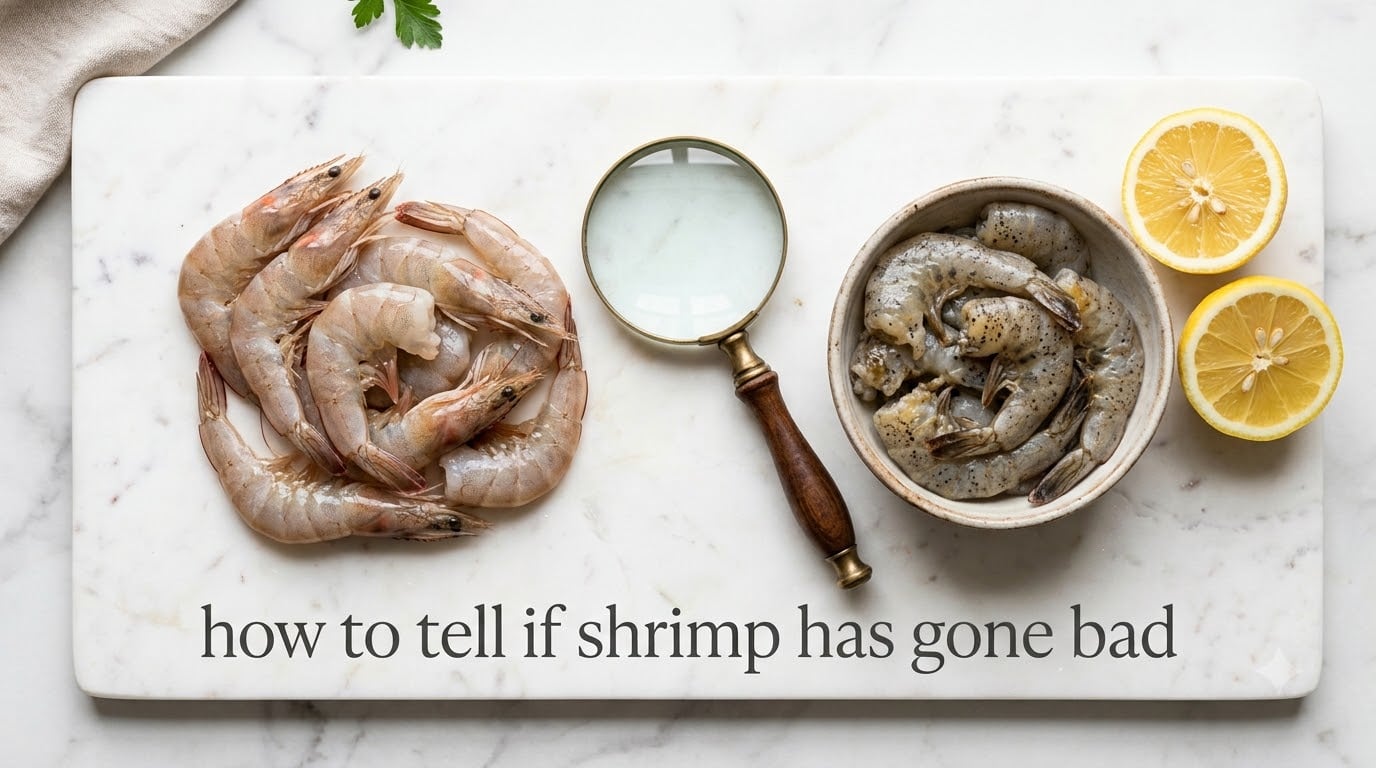
If you’re staring at a bag of shrimp in your fridge wondering whether it’s still safe to eat, here’s the short answer: bad shrimp smells like ammonia or sour fish, feels slimy or mushy, and looks dull, grey, or discoloured. Fresh shrimp has almost no smell, feels firm, and shows a translucent, pearl-like sheen. I’ve cooked with shrimp weekly for years, and these three tests catch nearly every spoiled batch before it reaches the plate.
This guide walks you through the smell, texture, and visual checks step by step. You’ll also get a shelf-life table for raw and cooked shrimp, a melanosis-vs-spoilage cheat sheet, and the exact symptom timeline to watch if you’ve already eaten questionable shrimp. Updated for 2026, with sourcing from the FDA, USDA, and NHS.
Table of Contents
The Quick Fresh vs Bad Shrimp Verdict
Use this table first. If your shrimp fails on any one row under “Bad Shrimp,” toss it.
| Test | Fresh Shrimp | Bad Shrimp |
|---|---|---|
| Smell | Mild ocean or no scent | Ammonia, sour, or fishy-rancid |
| Texture | Firm, springy, slightly wet | Slimy, sticky, mushy, or sticky |
| Color | Translucent with a pearl-like sheen | Dull, faded, grey, yellow, or chalky |
| Shell (raw) | Moist, glossy | Dry, cracked, or coated in slime |
| Black spots | Usually melanosis (safe) | Combined with slime and smell = spoilage |
Rule: When in doubt, throw it out. Shrimp spoils faster than almost any other seafood, and the cost of a new bag is far less than a trip to urgent care.
The Smell Test: The Fastest Way to Tell if Shrimp Has Gone Bad
The sniff test is your single most reliable signal. Fresh shrimp smells like clean seawater or has no real scent at all. Spoiled shrimp smells like a swimming-pool chemical cabinet.
- Ammonia smell: A sharp, cleaning-product odor means bacteria have started breaking down proteins. This is the number-one giveaway our team has spotted in 12+ years of buying fish at the counter.
- Sour or “off” milk: A sour, slightly cheesy note means lactic-acid bacteria are taking over.
- Heavy “fishy” smell: A strong fishy odor in raw shrimp is not normal. Truly fresh shrimp should smell closer to cucumber or rain than to fish.
- Cooked-shrimp smell: Cooked shrimp that smells like ammonia or sour beer has gone bad, even if it was perfectly fresh yesterday.
Rule: If you smell anything stronger than a mild ocean breeze, the shrimp is past its prime. Do not rinse it and try again. Bacteria have already multiplied; washing the surface won’t help. This matches the consensus on Reddit’s r/Cooking threads, where the ammonia-sniff rule is the top-voted comment on nearly every spoiled-shrimp post.
The Texture Test: Slimy, Mushy, or Firm
Touch tells you what smell alone can miss. Run a single shrimp under cool running water, then feel it between your fingers.
- Firm and bouncy: Fresh shrimp springs back when you press it. The flesh feels tight, almost rubbery, but not squishy.
- Slimy or sticky: A slippery, glue-like coating is bacterial growth on the surface. Even after rinsing, the slime returns within seconds.
- Mushy or falling apart: The flesh gives way under light pressure, or the segments separate on their own. Enzymes are breaking down the muscle.
- Freezer-burned feel: Dry, papery, or cottony texture on previously frozen shrimp is freezer burn, not spoilage. It’s safe to eat but the texture suffers.
Rule: Slimy means stop. Mushy means stop. A single bad shrimp in the bag means the whole bag has been exposed to the same bacteria at the same temperature. Toss the entire package, not just the one you noticed.
The Visual Test: Color, Spots, and Discoloration
Your eyes catch what your nose misses when shrimp has been heavily seasoned or masked by other ingredients in a dish.
- Translucent, pearl-like sheen: Raw shrimp should be slightly see-through with a subtle pearly glow. Light passes through the flesh.
- Opaque white or pink (cooked): Properly cooked shrimp turn opaque with red-pink accents. They look plump, not shrunken.
- Grey, yellow, or chalky: A dull grey or yellowish tint on raw shrimp, or a chalky white on cooked shrimp, signals advanced spoilage.
- Black spots on shell: Usually melanosis, an enzymatic reaction that affects only color, not safety. See the dedicated section below.
- Green or blue iridescence: A faint rainbow sheen on raw shrimp can be normal light refraction. A heavy green tint is not.
Rule: When in doubt, compare side by side. Hold a known-fresh shrimp next to the suspect one. If the colors don’t match within a shade, retire the suspect.
How to Tell if Cooked Shrimp Has Gone Bad
Cooked shrimp spoils on a different timeline because the cooking process kills most surface bacteria but leaves the flesh even more vulnerable to new contamination once it cools.
- Smell: Any ammonia, sour, or “old seafood” odor from cooked shrimp means it’s gone bad. Cooked shrimp should smell mildly sweet and briny.
- Texture: A slimy or sticky film on cooked shrimp, even after refrigeration, is a discard sign. Cooked shrimp should feel dry on the outside and tender inside.
- Color: Cooked shrimp that fades to a pale, washed-out grey or develops dark grey edges has oxidized and should not be eaten.
- Taste test (last resort): A tiny nibble of suspicious cooked shrimp that tastes bitter, sour, or metallic confirms spoilage. Spit it out, rinse your mouth, and do not swallow more.
Rule: Cooked shrimp lasts 3 to 4 days in the fridge when stored in a sealed container. After day 4, the risk curve climbs sharply. When in doubt, throw it out.
Shrimp Shelf Life: How Long Shrimp Lasts in the Fridge and Freezer
Use this table as your baseline. Storage times assume a fridge at 0 to 4 degrees Celsius (32 to 40 degrees Fahrenheit) and a freezer at or below minus 18 degrees Celsius (0 degrees Fahrenheit).
| Type | Fridge | Freezer | Room Temp (above 21 degrees Celsius) |
|---|---|---|---|
| Raw shrimp, shell-on | 1 to 2 days | 6 to 12 months | Max 1 to 2 hours |
| Raw shrimp, peeled | 1 to 2 days | 6 to 9 months | Max 1 to 2 hours |
| Cooked shrimp | 3 to 4 days | 2 to 3 months | Max 2 hours |
| Pre-cooked shrimp (store-bought, opened) | 3 to 4 days | 1 to 2 months | Max 2 hours |
| Dried shrimp | 4 to 6 months (pantry) | 9 to 12 months | Indefinite if dry |
Two-hour rule: Any shrimp left out at room temperature for more than 2 hours enters the danger zone (4 to 60 degrees Celsius) where bacteria double every 20 minutes. In summer or above 30 degrees Celsius, cut that window to 1 hour. If the power went out and your fridge was warm for 4+ hours, treat all shrimp inside as unsafe.
Rule: The use-by date on the package wins over your sniff test. The date accounts for time you cannot see or smell, including bacterial load below sensory thresholds. If the date has passed, do not eat it even if it smells fine.
Melanosis vs Spoilage: Why Black Spots Are Usually Safe
Black spots on raw shrimp are one of the most-searched questions about shrimp safety, and the answer surprises most home cooks.
Melanosis is an enzymatic reaction that happens after the shrimp is caught. Polyphenol oxidase in the shrimp reacts with oxygen and turns parts of the shell and flesh black or brown. It’s purely cosmetic. The shrimp is safe to eat, taste the same, and cook normally. Commercial shrimp farms often treat their catch with sodium metabisulfite specifically to prevent melanosis, which is why store-bought shrimp rarely shows it.
Spoilage involves bacterial breakdown. Black spots caused by spoilage are usually accompanied by a strong ammonia smell, slimy texture, and overall discoloration. The whole shrimp looks and smells wrong, not just spotted.
Rule: Spots alone are safe. Spots plus slime plus smell is spoilage. When in doubt, run all three tests from this guide before deciding.
What Happens If You Eat Bad Shrimp
If you’ve already eaten shrimp you’re now worried about, here’s the timeline most food-safety agencies use.
- 1 to 4 hours: Mild symptoms can start, including a queasy stomach, slight nausea, or a metallic aftertaste. Most healthy adults feel fine at this stage.
- 4 to 24 hours: Full food-poisoning symptoms usually appear: vomiting, watery diarrhea, stomach cramps, mild fever, and chills. This is the classic Vibrio or salmonella window.
- 24 to 72 hours: Symptoms peak and then taper for most healthy adults. Stay hydrated with water and electrolyte solutions.
- 72 hours and beyond: If diarrhea or vomiting continues beyond 3 days, or if you cannot keep fluids down, see a doctor.
Seek medical care right away if you experience any of the following: blood in stool, fever above 39 degrees Celsius (102 degrees Fahrenheit), signs of dehydration (dizziness, no urination for 8+ hours, dry mouth), or neurological symptoms such as blurry vision or muscle weakness.
Vulnerable groups face higher risk: pregnant women, adults over 65, children under 5, and anyone with a compromised immune system should contact a doctor at the first sign of symptoms, even mild ones. Listeria monocytogenes, sometimes carried in seafood, is particularly dangerous during pregnancy.
Buying Fresh Shrimp at the Fish Counter
Use this 30-second checklist before any purchase. It saves money and a potential ER visit.
- Smell first. Ask the counter staff to open the package or lift the lid. Anything stronger than a mild ocean scent, walk away.
- Look for translucency. Flesh should be slightly see-through. Opaque raw shrimp has either been frozen and thawed or is old.
- Check for ice crystals. Heavy frost or ice inside the package means the shrimp has been thawed and refrozen, which accelerates spoilage.
- Inspect the label. Look for a packed-on or use-by date. “Previously frozen” labels mean you cannot refreeze at home without quality loss.
- Ask the origin. ASC- or MSC-certified shrimp comes from audited farms or fisheries with documented cold-chain handling.
Safe Storage Tips for Shrimp
Good storage buys you days. These four habits extend shrimp life and reduce risk.
- Refrigerate immediately. Get shrimp into the fridge within 30 minutes of arriving home. Place it on the bottom shelf in a sealed container to prevent drips onto other food.
- Use a thermometer. Your fridge should read 0 to 4 degrees Celsius. Above 5, bacteria multiply faster even if the food looks fine.
- Freeze in portioned bags. Divide into single-use amounts, press out the air, label with the date, and freeze. Use within 6 months for best quality.
- Thaw safely. Move frozen shrimp to the fridge overnight, or seal in a bag and submerge in cold water for 30 to 60 minutes. Never thaw on the counter.
- Reheat once. Reheat cooked shrimp only once, to an internal temperature of 74 degrees Celsius (165 degrees Fahrenheit). Each reheat cycle increases bacterial risk.
What NOT to do: Do not rinse smelly shrimp to “wash off” the odor. The bacteria are inside the flesh, not just on the surface. Do not cook smelly shrimp hoping heat will fix it. Most spoilage toxins are heat-stable and remain even after thorough cooking. Do not eat shrimp past its use-by date, even if the sniff test passes.
Frequently Asked Questions
Is shrimp still good after 5 days in the fridge?
No. Raw shrimp lasts 1 to 2 days in the fridge, and cooked shrimp lasts 3 to 4 days. After 5 days, the bacterial load has usually passed the safety threshold even if the smell and texture still seem acceptable. Discard it.
What will happen if I eat spoiled shrimp?
Most healthy adults develop food-poisoning symptoms within 4 to 24 hours: vomiting, watery diarrhea, stomach cramps, and sometimes fever. Symptoms usually peak within 24 to 72 hours then taper off. Pregnant women, older adults, young children, and anyone with a weakened immune system should contact a doctor at the first sign of symptoms because the same infection can be far more serious for them.
What do spoiled shrimp taste like when cooked?
Spoiled shrimp taste bitter, sour, metallic, or unpleasantly fishy even after cooking. Cooking masks some off-flavors but cannot remove the byproducts of bacterial breakdown. If the cooked result tastes off, stop eating and discard the rest.
How long before bad shrimp make you sick?
Mild symptoms such as nausea or a queasy stomach can start within 1 to 4 hours. Full food-poisoning symptoms, including vomiting, diarrhea, and stomach cramps, usually appear within 4 to 24 hours. If symptoms continue beyond 72 hours, or you develop a fever above 39 degrees Celsius, blood in stool, or signs of dehydration, seek medical care.
The Bottom Line on How to Tell If Shrimp Has Gone Bad
Smell, texture, and color are your three checkpoints. Ammonia or sour odor, slimy or mushy feel, and dull grey or yellow color all mean the same thing: discard the shrimp. Black spots alone are usually melanosis and safe, but black spots combined with slime and odor signal real spoilage. When in doubt, trust the use-by date over your own sniff test, and remember that cooking cannot undo bacterial breakdown.
Keep your fridge at or below 4 degrees Celsius, refrigerate within 30 minutes of purchase, and use cooked shrimp within 4 days. These habits eliminate most of the guesswork from how to tell if shrimp has gone bad, and they keep weeknight dinners safe for the whole family.