
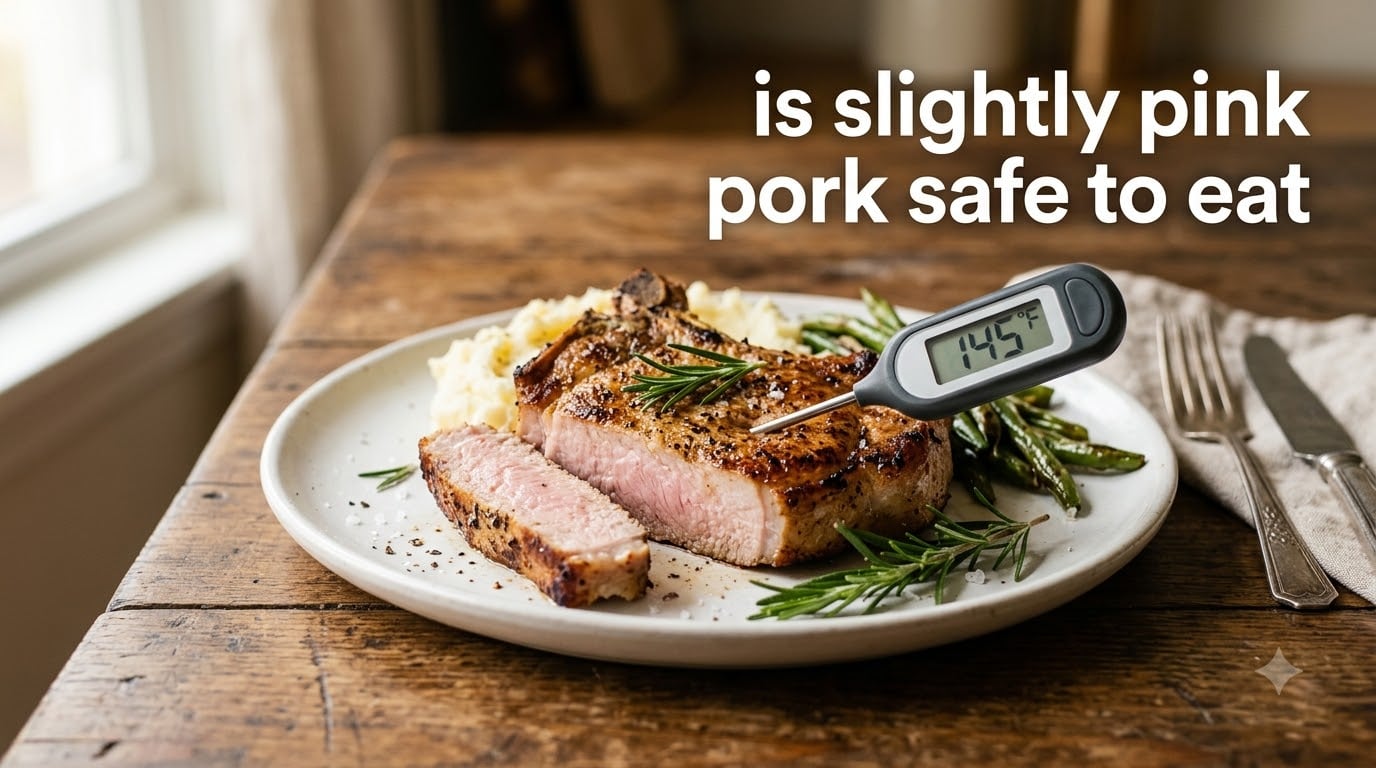
Yes, slightly pink pork is safe to eat when the internal temperature reaches 145°F (63°C) followed by a three-minute rest, per current USDA guidelines. The pink color comes from myoglobin, a protein in the muscle, not blood, and it does not mean the meat is undercooked. This guide breaks down the science, the history, and the exact temperatures you need for every cut of pork.
I grew up watching my grandmother blast pork chops until they turned chalk white and tough enough to bounce off the counter. She was following the cooking advice of her era, advice that was correct at the time but is now outdated. Today, the rules around pork safety have changed, and a juicy, faintly pink pork chop is exactly what food safety experts recommend.
Table of Contents
Quick Answer: Yes, Pink Pork Is Safe at 145°F
Slightly pink pork is safe to eat as long as it has reached an internal temperature of 145°F (63°C) and rested for at least three minutes. The USDA updated its official guideline from 160°F to 145°F in 2011, and the change has been endorsed by food scientists, chefs, and the CDC ever since.
Color is not a reliable indicator of doneness. A pork chop can look pale white and still be undercooked, or stay rosy pink in the middle and be perfectly safe. The only dependable test is a meat thermometer reading.
Here is the short version:
- Whole cuts (chops, tenderloin, loin, shoulder, ribs): 145°F (63°C) with a 3-minute rest
- Ground pork: 165°F (74°C)
- Pork sausage (raw): 160°F (71°C) or per package instructions
- Pink color after cooking: normal and safe when temperature is met
What the USDA Says About Pink Pork
The USDA Food Safety and Inspection Service sets the official food safety standards for pork in the United States. In 2011, the agency lowered the recommended safe cooking temperature for whole cuts of pork from 160°F to 145°F (63°C), with a mandatory three-minute rest time before serving.
This was a significant shift. For decades, home cooks had been taught to cook pork until the juices ran clear and the meat was completely white. The new guideline recognized two things: modern pork production has nearly eliminated trichinosis, and overcooking ruins the quality of the meat.
The three-minute rest matters. When you pull pork off the heat at 145°F, the residual heat continues killing any remaining pathogens during the rest period. Skipping the rest compromises the safety margin built into the recommendation.
Why Your Grandparents Overcooked Pork (The Trichinosis Story)
Trichinosis is a parasitic infection caused by the roundworm Trichinella spiralis. People can get it by eating raw or undercooked meat from infected animals, especially pork. Symptoms include nausea, diarrhea, abdominal pain, muscle aches, and fever, and severe cases can involve the heart and central nervous system.
In the early 20th century, trichinosis was a real and present danger. Pigs were routinely fed raw meat scraps and garbage, which created a cycle of infection. CDC estimates from that era put the prevalence of Trichinella in U.S. pork at around 1 in every 6 pigs.
That is no longer the case. Modern pork production follows strict feed regulations. Pigs are no longer fed raw meat, indoor housing reduces exposure to rodents and wildlife, and inspection programs catch contamination. Between 2008 and 2012, the CDC confirmed just 84 cases of trichinosis in the entire United States, and the majority were linked to wild game, not commercial pork.
So when your grandmother cooked pork to 160°F or higher, she was protecting her family from a genuine threat. Times have changed, and the threat has essentially vanished from commercial pork supplies.
Why Color Is Not a Reliable Indicator of Doneness
The pink or red tint in pork comes from myoglobin, a protein in muscle tissue that stores oxygen. Myoglobin is completely unrelated to blood. As meat cooks, myoglobin denatures and turns brown, but the speed of that color change depends on pH, fat content, curing salts, and cooking method.
This is why a cured ham stays pink even when fully cooked. It is also why a pork chop brined in salt and sugar can stay rosy through the center at safe temperatures. Conversely, a lean pork tenderloin can turn pale and grayish-white well before reaching 145°F.
Reddit cooking threads confirm this routinely. One user on r/Cooking noted: “I’ve seen pork stay pink well past done, especially if it’s a sausage of some kind.” Another on r/AskCulinary observed that a tenderloin cooked sous vide at 140°F for hours still looked pale pink but was perfectly safe. Color simply does not tell you what you need to know.
Pork Temperature Guide: Whole Cuts vs Ground vs Sausage
Different pork products have different safety requirements. Here is the breakdown:
- Whole cuts (chops, tenderloin, loin, shoulder, ribs): 145°F (63°C) with a 3-minute rest. Pink in the middle is fine.
- Ground pork: 165°F (74°C). The grinding process spreads any surface bacteria throughout the meat, so a higher temperature is required.
- Pork sausage (raw, fresh): 160°F (71°C) per USDA, or follow the package instructions for specific brands.
- Cured pork (ham, bacon, prosciutto): Ready to eat as purchased; cooking is optional and for texture only.
- Pre-cooked pork products: Heat to 165°F if reheating from refrigerated state.
The ground pork rule is the one most often missed. Because bacteria from the surface gets mixed into the interior during grinding, a pink center in ground pork or meatballs is not safe. Always cook ground pork until there is no pink and the juices run clear, confirmed with a thermometer reading of 165°F.
How to Tell When Pork Is Done Using a Thermometer
A meat thermometer is the only way to know for certain that pork has reached a safe temperature. Visual cues like color, firmness, and juice clarity can all mislead you.
For whole cuts, insert the thermometer into the thickest part of the meat, avoiding bone and fat pockets. The reading should hit 145°F, then rest the meat for three minutes before slicing or serving. Carryover cooking will push the internal temperature a few degrees higher during the rest.
For ground pork, insert the thermometer into multiple spots, especially in patties or meatballs where the thickness varies. The reading should hit 165°F across all tested areas.
An instant-read digital thermometer gives the fastest results. Leave-in probe thermometers are great for larger cuts like roasts and shoulders, alerting you when the target temperature is reached without opening the oven.
What If You Accidentally Ate Undercooked Pork?
First, do not panic. A single bite of slightly undercooked pork is unlikely to cause serious illness, especially with modern commercial pork. Trichinosis from U.S. pork is exceedingly rare, and most foodborne illness from pork involves bacteria like Salmonella, which need significant contamination levels to cause symptoms.
Watch for symptoms over the next 24 to 72 hours. Common signs of foodborne illness include:
- Nausea, vomiting, or stomach cramps within 6 hours
- Diarrhea that may begin 12 to 72 hours after eating
- Fever, headache, or muscle aches (especially with trichinosis)
- Symptoms that last more than 48 hours or get progressively worse
Stay hydrated and rest. Most mild cases resolve on their own within a day or two. See a doctor if you experience high fever (over 102°F), blood in stool, persistent vomiting, signs of dehydration, or symptoms lasting longer than three days. Pregnant women, young children, older adults, and anyone with a compromised immune system should contact a healthcare provider sooner rather than later.
Is Pink Pork Safe During Pregnancy?
The same 145°F rule applies during pregnancy. Properly cooked pork with a faint pink center is safe for expectant mothers, because the relevant pathogens are killed at that temperature regardless of who is eating the food.
The bigger concern during pregnancy is listeria, a bacterium that can cause miscarriage, stillbirth, or severe illness in newborns. Pork is not a common listeria carrier, but deli meats, soft cheeses, and unpasteurized dairy products are. Cooking pork to 145°F eliminates listeria along with other bacteria.
If you are pregnant and unsure about a piece of pork, use a thermometer. When in doubt, cook to a slightly higher target (150°F to 155°F) to give yourself extra margin. The meat will still be juicy and tender, well within the range of proper doneness.
Different Pork Cuts and Their Safe Cooking Temperatures
All whole cuts of pork share the same 145°F target, but they behave differently during cooking. Here is a quick guide:
- Pork chops (bone-in or boneless): 145°F; ideal for pan-searing, grilling, or baking. Pull at 142°F to account for carryover cooking.
- Pork tenderloin: 145°F; lean and fast-cooking, often done in 20 to 25 minutes in a hot oven.
- Pork loin roast: 145°F; best roasted low and slow, then rested for at least 10 minutes before slicing.
- Pork shoulder (Boston butt): 145°F minimum for safety, but traditionally cooked to 195°F to 205°F for shredding. Pink is irrelevant at that point.
- Pork ribs: 145°F for safety; most pitmasters pull ribs at 195°F to 203°F for tender, fall-off-the-bone texture.
Thicker cuts benefit from carryover cooking calculations. Pull a roast or chop from the heat 3 to 5°F before the target temperature, and the internal temp will climb during the rest.
Frequently Asked Questions
Is it okay to eat pork with a little pink in the middle?
Yes, pork with a little pink in the middle is safe as long as it has reached an internal temperature of 145°F (63°C) and rested for three minutes. The pink color comes from myoglobin, not blood, and does not indicate undercooking.
What happens if I ate slightly undercooked pork?
Most cases resolve without symptoms, but watch for nausea, vomiting, diarrhea, or stomach cramps over the next 24 to 72 hours. See a doctor if you develop high fever, blood in stool, persistent vomiting, or symptoms lasting more than three days.
Is eating medium-rare pork ok?
Medium-rare pork is safe when cooked to 145°F (63°C) with a three-minute rest. Many chefs serve pork at this doneness for maximum juiciness, though it will look pink in the center.
How can you tell if pork is undercooked?
Color is not reliable. Use an instant-read meat thermometer inserted into the thickest part of the meat. Whole cuts need to reach 145°F, ground pork needs 165°F, and raw pork sausage needs 160°F or per package directions.
Can you eat slightly pink pork when pregnant?
Yes, pregnant women can eat slightly pink pork cooked to 145°F (63°C) with a three-minute rest. Cooking kills listeria and other pathogens regardless of color. If unsure, cook to 150°F to 155°F for extra margin.
Is pink pork sausage safe to eat?
Raw pork sausage should be cooked to 160°F (71°C) or per package directions until no pink remains and juices run clear. Pre-cooked or cured sausages like hot dogs and kielbasa are ready to eat, though heating improves texture.
Final Verdict on Pink Pork Safety
Slightly pink pork is safe to eat when it has reached 145°F (63°C) with a three-minute rest, per current USDA guidelines. The pink color is myoglobin, not blood, and it has nothing to do with whether the meat is cooked. Use a meat thermometer, follow the rest time, and enjoy juicy, flavorful pork without the fear that drove a generation of home cooks to overcook every chop.
If you have been serving dry, white pork out of habit, this is your permission slip to stop. Pull the meat at 145°F, rest it for three minutes, and trust the thermometer over the color.