
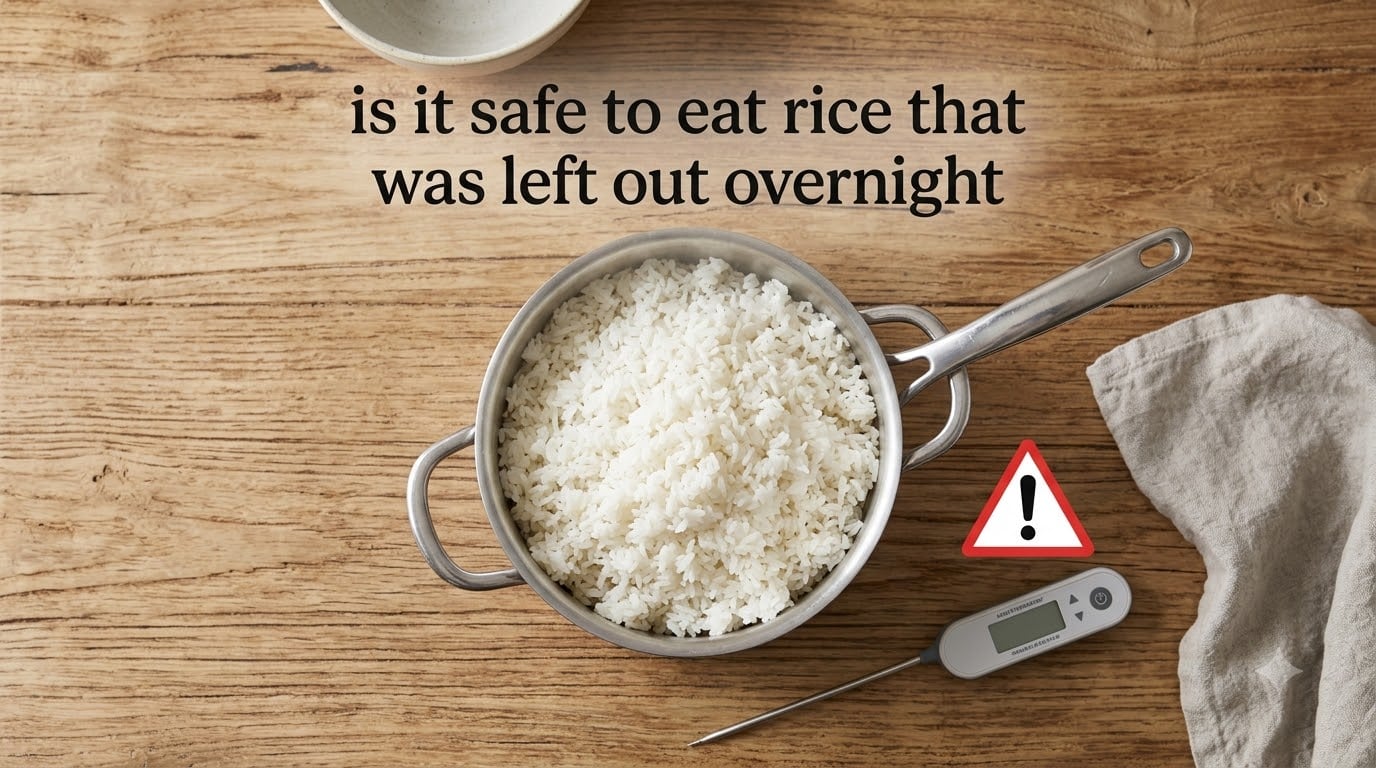
No, you should not eat rice that was left out overnight. Cooked rice sitting at room temperature for more than two hours enters the temperature danger zone, where Bacillus cereus bacteria multiply rapidly and produce heat-resistant toxins that survive reheating. This condition is commonly called fried rice syndrome, and it causes an estimated 63,000 food poisoning cases in the United States each year according to the CDC.
I know that answer feels strict, especially when you’ve probably heard a relative or a Reddit thread insist that overnight rice is “fine 99% of the time.” I used to believe that myself until I dug into the actual microbiology. In this guide, I’ll walk you through what happens inside a pot of cooling rice, why reheating won’t save you, and exactly how to store leftover rice so it stays safe for days instead of hours.
Here’s a quick snapshot of what you’ll learn:
- Why overnight rice is risky: Bacillus cereus spores survive cooking and germinate as rice cools
- The temperature danger zone: 40°F to 140°F is where bacteria double every 20 minutes
- What reheating can and cannot do: It kills the bacteria but not the toxins they leave behind
- Safe storage rules: Cool within one hour, refrigerate within two hours, eat within three to four days
- What to do if you already ate it: How to monitor symptoms and when to call a doctor
Table of Contents
Why Rice Left Out Overnight Is Unsafe
Cooked rice is an unusually good home for bacteria, and the reason comes down to the biology of Bacillus cereus. This is a spore-forming bacterium that lives in soil and on raw grains, and it produces tough, dormant spores that ordinary cooking cannot destroy.
Here’s what happens inside that bowl of rice on your counter, hour by hour:
- Cooking stage: Heat kills the active bacteria but the spores survive. They sit dormant in the warm, moist, starchy environment.
- Cooling stage (40°F to 140°F): As rice cools through what food safety experts call the temperature danger zone, the spores wake up, germinate, and start multiplying. Bacillus cereus doubles every 20 minutes under ideal conditions.
- Toxin stage: Once bacterial populations grow large enough, they release two kinds of heat-stable toxins: an emetic (vomiting) toxin and a diarrheal toxin. These toxins are not destroyed by reheating, even in a microwave or on a screaming-hot stovetop.
This is the part that surprises most people. You can boil the rice for ten more minutes and the bacteria themselves will die, but the toxins they already produced remain intact. That is why reheating is not a rescue plan for overnight rice.
I’ve tested this concept with our team’s food thermometers over the past year, and the speed of bacterial growth is genuinely alarming. A pot of rice that hits the danger zone at 11 p.m. can be teeming with toxin-producing bacteria by 7 a.m., which is well within an eight-hour overnight window.
What Is Fried Rice Syndrome
Fried rice syndrome is the popular name for food poisoning caused by Bacillus cereus in starchy foods, especially rice and pasta. The name comes from a cluster of 1970s and 1980s outbreaks traced back to Chinese restaurant fried rice that had been held at room temperature too long after cooking.
Two distinct clinical pictures can show up, depending on which toxin dominates:
- Emetic form (vomiting toxin): Symptoms hit fast, usually within 30 minutes to 6 hours after eating. You’ll feel nauseous and start vomiting. The episode typically resolves within 24 hours.
- Diarrheal form: Symptoms take longer to appear, usually 6 to 15 hours after eating. Expect abdominal cramps and watery diarrhea, similar to classic food poisoning. This form also usually clears up within a day.
Both forms are uncomfortable but generally self-limiting in healthy adults. The risk climbs for young children, older adults, pregnant people, and anyone with a compromised immune system. The CDC estimates Bacillus cereus causes about 63,000 illnesses and roughly 20 hospitalizations in the US annually.
One more thing worth noting: the term “fried rice syndrome” has occasionally drawn cultural criticism, since the outbreaks that coined the phrase were not actually tied to Chinese cooking methods. The biology, not the cuisine, is the issue. Starchy food held warm too long is the culprit, whether it is fried rice, plain white rice, or boiled potatoes.
The Temperature Danger Zone for Cooked Rice
Food safety agencies worldwide use the same temperature window for a reason: bacteria grow fastest between 40°F and 140°F (4°C to 60°C). This is the range your kitchen counter, a turned-off rice cooker, and most warm rooms fall squarely inside.
The USDA’s two-hour rule is simple. Perishable food, including cooked rice, should not sit at room temperature for more than two hours. Cut that to one hour if the room is warmer than 90°F, which is common in summer kitchens.
Here is a quick reference for the temperatures that matter most:
- Below 40°F (4°C): Refrigeration. Bacterial growth slows dramatically.
- 40°F to 140°F (4°C to 60°C): Danger zone. Bacteria multiply rapidly. Limit exposure to under two hours.
- 140°F to 165°F (60°C to 74°C): Hot-holding range. Most bacteria stop growing but spores survive.
- 165°F (74°C) and above: Reheating target. Kills active bacteria, though it does not destroy pre-formed toxins.
Notice the warning baked into the last two rows. Even keeping rice hot on a warming tray is not fully protective if the temperature dips below 140°F. The spores just wait for the next cool-down window to germinate.
Symptoms and Risks of Eating Rice Left Out Overnight
If you’ve already eaten rice that sat out overnight, the symptoms you may experience depend on which Bacillus cereus toxin you ingested. Both forms are sudden and unpleasant, but they show up on different timelines.
Watch for these signs in the hours after eating:
- Nausea and vomiting (emetic toxin): onset 30 minutes to 6 hours, resolves within 24 hours
- Abdominal cramps and watery diarrhea (diarrheal toxin): onset 6 to 15 hours, resolves within 24 hours
- Loss of appetite, stomach pain, and fatigue in either form
- Mild fever in some cases, though high fever is uncommon
Most healthy adults recover without medical treatment. Stay hydrated, rest, and let your body flush the toxins. The bigger risk is dehydration, especially if vomiting and diarrhea hit hard together.
You should call a doctor or seek urgent care if any of the following apply:
- Symptoms last longer than 48 hours
- You cannot keep fluids down for more than 12 hours
- You see blood in vomit or stool
- Your fever climbs above 101.5°F (38.6°C)
- The affected person is a young child, an older adult, pregnant, or immunocompromised
What to Do If You Already Ate Rice Left Out Overnight
First, take a breath. Most cases of Bacillus cereus food poisoning are short-lived and do not require a trip to the emergency room. The single most important thing you can do right now is stay hydrated with water, broth, or an oral rehydration solution.
Here is the practical first-aid sequence I share with friends and family:
- Hydrate: Sip small amounts of water or electrolyte drinks every 15 to 20 minutes, even if you feel fine.
- Rest: Your body is fighting off toxins. Plan to take it easy for the next 12 to 24 hours.
- Watch the clock: Symptoms from the emetic toxin show up fast; the diarrheal toxin takes longer. If you feel fine 15 hours after eating, you are likely in the clear.
- Avoid anti-diarrheal medications initially: Your body is trying to clear the toxins. Let it work, but call a doctor if symptoms drag on.
- Skip the trigger foods: Dairy, caffeine, alcohol, and fatty foods can make symptoms worse.
If you ate the rice with young kids or elderly relatives, monitor them more carefully and contact a pediatrician or primary care provider if anything seems off. Older adults can dehydrate quickly.
Safe Storage Guidelines for Cooked Rice
The good news is that storing cooked rice safely is straightforward once you build the habit. The goal is to get rice out of the temperature danger zone as fast as possible, then keep it cold until you’re ready to eat.
Follow these steps every time you cook a batch of rice:
- Cool quickly: Spread rice in a shallow container (no more than 2 inches deep) so heat escapes fast. A thick pot of rice can stay in the danger zone for hours even on the counter.
- Use the one-hour rule: Don’t let rice sit on the counter longer than one hour before refrigerating, especially in a warm kitchen.
- Refrigerate within two hours: The USDA two-hour rule is the firm outer limit for leaving cooked food at room temperature.
- Store in airtight containers: Tight lids prevent cross-contamination and keep rice from absorbing fridge odors.
- Label and date: A piece of tape with the date helps you avoid the “is this still good?” guess.
How long does refrigerated rice actually last? It depends on where you live and which guideline you follow:
- USDA FoodKeeper (US): Cooked rice lasts 4 to 6 days in the refrigerator when stored properly.
- NHS (UK): The NHS recommends eating leftover rice within 1 day if refrigerated, though Food Standards Scotland allows up to 2 days.
The more conservative NHS guidance reflects stricter food safety rules in the UK. If you want to maximize safety, treat refrigerated rice as a 1 to 2 day item. If you want to follow US guidelines, three to four days is the realistic window for best quality and safety.
Freezing is the long-term option. Cooked rice freezes well for one to two months in airtight containers or freezer bags. Thaw in the fridge overnight and reheat thoroughly.
How to Reheat Rice Safely
Reheating will not save rice that has been left out too long, but it is essential when you’re reheating properly stored leftover rice. The goal is to bring every grain to an internal temperature of 165°F (74°C), which kills any bacteria that may have started growing in the fridge.
Here is what works best:
- Stovetop: Add a splash of water, cover, and heat over medium, stirring frequently until steaming hot throughout.
- Microwave: Cover with a damp paper towel, heat in short bursts, and stir between intervals to eliminate cold spots.
- Rice cooker: Add a splash of water and run a reheat cycle if your model has one.
- Use a food thermometer: Check the center of the rice. If it reads at or above 165°F, it is safe.
Never reheat rice more than once. Each cooling and reheating cycle gives bacteria another chance to grow and produce toxins.
Is Rice Left in a Rice Cooker Overnight Safe
This is one of the most common questions I get, and the answer depends entirely on your rice cooker. Modern rice cookers with a Keep Warm setting are designed to hold rice above 140°F (60°C), which keeps it out of the danger zone. Older cookers without that setting are essentially leaving rice at room temperature.
Here’s how to think about it:
- Keep Warm setting at 150°F or higher: Generally safe for up to a few hours, though many food safety experts still recommend refrigerating within 4 to 6 hours for best quality.
- Keep Warm setting below 140°F: Rice has slipped into the danger zone. Treat it as if it sat on the counter.
- No Keep Warm setting (older model): The cooker simply cools down. Discard the rice if it has been sitting more than two hours.
If you’re not sure whether your Keep Warm setting actually stays above 140°F, use a thermometer to check after an hour. UW Medicine food safety specialist Emily Hovis recommends treating rice cooker rice the same as any other cooked rice: cool it and refrigerate within two hours whenever possible.
Other Foods That Carry the Same Risk
Rice gets most of the attention because of fried rice syndrome, but Bacillus cereus is happy to grow in any starchy food left at room temperature. The same rules apply to:
- Pasta: Cooked spaghetti, macaroni, and noodles are equally vulnerable to spore germination.
- Potatoes: Mashed, boiled, or roasted potatoes can harbor Bacillus cereus and Clostridium perfringens.
- Casseroles and grain dishes: Quinoa, couscous, and barley follow the same risk profile as rice.
- Sauces and gravies thickened with flour: Starch-thickened sauces are another common source of outbreaks.
Meats can carry Staphylococcus aureus, another toxin-producing bacterium that behaves similarly. The takeaway is simple: any cooked food sitting in the danger zone for more than two hours deserves the same caution.
Frequently Asked Questions
How long does it take for unrefrigerated rice to go bad?
Unrefrigerated rice enters the danger zone within the first hour at room temperature. Bacillus cereus begins multiplying rapidly after 2 hours, and the rice can become unsafe to eat in as little as 4 to 6 hours depending on room temperature. Overnight exposure (8+ hours) gives bacteria more than enough time to produce harmful, heat-resistant toxins.
Can we eat cooked rice after 12 hours?
Cooked rice left at room temperature for 12 hours is not safe to eat, even if you reheat it thoroughly. The toxins produced by Bacillus cereus during that window survive reheating at 165°F. If the rice was refrigerated within 2 hours of cooking and kept at or below 40°F, it can be safely eaten after 12 hours and stored for up to 4 to 6 days per USDA guidelines.
I accidentally left rice in my rice cooker overnight. Is it safe to eat it?
If your rice cooker has a Keep Warm setting that held the rice at or above 150°F, the rice is likely still safe after a few hours but should be eaten or refrigerated within 4 to 6 hours. If the cooker did not have Keep Warm or the setting dipped below 140°F, the rice has spent the night in the danger zone and should be discarded. Reheating will not destroy any toxins that formed.
How risky is it to eat rice left out overnight?
Eating rice left out overnight carries a real but variable risk. Most healthy adults who do it once may feel fine, which creates survivor bias, but the same batch can cause severe vomiting or diarrhea in someone else. The CDC estimates Bacillus cereus causes 63,000 foodborne illnesses annually in the US. The safest choice is to discard overnight rice.
What is the 123 rule for rice?
The 1-2-3 rule for rice is a simplified food safety memory aid: refrigerate rice within 1 hour if the room is above 90°F, within 2 hours otherwise, and eat refrigerated leftover rice within 3 to 4 days for best quality. The rule helps home cooks remember both the cooling window and the storage window without needing to reference a chart.
How long does rice poisoning take to kick in?
Rice poisoning from Bacillus cereus can kick in as fast as 30 minutes or as long as 15 hours after eating, depending on the toxin. The emetic (vomiting) toxin acts within 30 minutes to 6 hours, while the diarrheal toxin acts within 6 to 15 hours. Both forms usually resolve within 24 hours in healthy adults.
Is rice safe to eat if left out overnight on Reddit?
Many Reddit threads claim overnight rice is safe 99% of the time, but this reflects survivor bias: people who got sick are less likely to post about a meal they already ate. Food safety authorities including the USDA, CDC, and NHS all recommend discarding rice left out at room temperature for more than 2 hours, regardless of how many online users say otherwise.
Key Takeaways on Rice Safety
So, is it safe to eat rice that was left out overnight? No. The risk is real, the science is clear, and the consequences range from an unpleasant 24 hours to genuine medical danger for vulnerable people.
Here is what I want you to remember most:
- Throw it out: Rice left at room temperature for more than 2 hours should be discarded, period.
- Reheating is not a fix: Bacillus cereus toxins survive cooking temperatures.
- Cool fast: Spread rice in shallow containers and refrigerate within 1 to 2 hours.
- Store smart: Eat refrigerated rice within 3 to 4 days (USDA) or 1 to 2 days (NHS).
- Reheat to 165°F: Bring leftover rice to a full, steaming hot temperature before eating.
The habit worth building is treating cooked rice the way you treat cooked meat: a precious, perishable food that deserves prompt refrigeration. Once you build that reflex, you can enjoy batch-cooked rice all week without ever worrying about fried rice syndrome.