
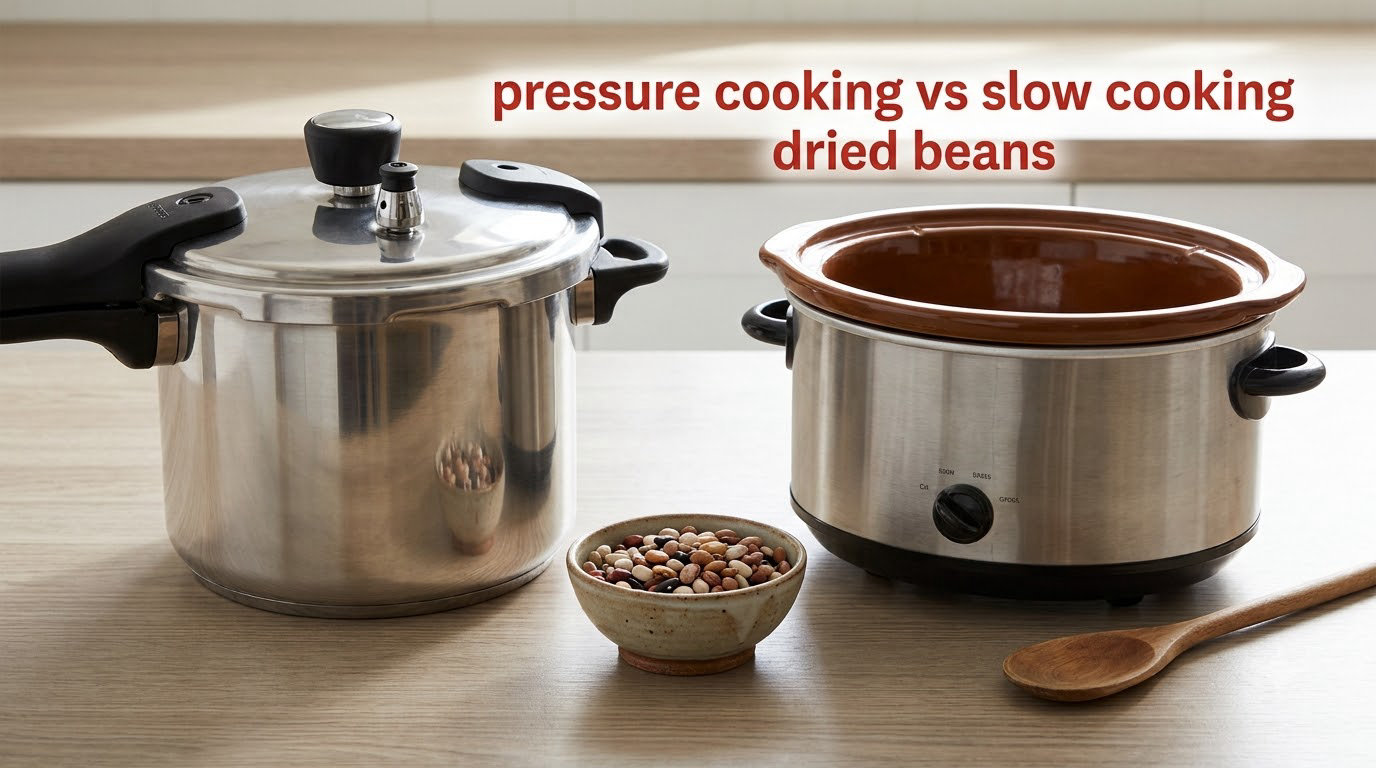
If you’ve ever stood in your kitchen staring at a bag of dried beans wondering whether to grab the pressure cooker or let the slow cooker do its thing, you’re not alone. The pressure cooking vs slow cooking dried beans debate comes up in every cooking forum, and for good reason—each method produces noticeably different results in texture, flavor, and cooking time. I’ve tested both extensively, and the answer genuinely depends on what you’re making and how much time you have.
Here’s what you’ll learn: exactly how each method works, a side-by-side comparison of time and results, which beans suit which technique, the critical safety issue with kidney beans, and a clear decision framework so you always pick the right tool.
Table of Contents
The Quick Verdict: Pressure Cooker or Slow Cooker for Dried Beans?
Pressure cooking wins for speed and safety—it cooks dried beans in 20-45 minutes with no pre-soaking required, and it reliably destroys the toxin in kidney beans. Slow cooking wins for depth of flavor and hands-off convenience, producing beans with a richer broth after 6-8 hours unattended. If you forgot to soak beans or need kidney beans done safely, choose the pressure cooker. If you want maximum flavor development for a weekend batch, the slow cooker is your friend.
How a Pressure Cooker Cooks Dried Beans
A pressure cooker seals steam inside a locked vessel, raising the internal pressure to about 15 psi above atmospheric pressure. This pushes the boiling point of water up to roughly 250°F (121°C), which dramatically accelerates the breakdown of starches and cell walls in dried beans.
The result is speed that seems almost impossible—chickpeas go from rock-hard to tender in 35 minutes, black beans in 20. The intense heat and pressure also break down lectins and other antinutrients more thoroughly than lower-temperature methods. Modern electric pressure cookers like the Instant Pot add programmable convenience with preset bean functions and natural pressure release cycles.
One thing to watch: the rapid cooking can sometimes burst bean skins or produce a slightly mushier texture if you overdo the time by even a few minutes. Starting with 1-2 minutes less than you think you need and doing a quick release to check is a smart habit.
How a Slow Cooker Cooks Dried Beans
A slow cooker works at the opposite end of the temperature spectrum. It maintains a steady 195-205°F (90-96°C) on low setting, gently coaxing dried beans to soften over 6-8 hours. There’s no pressure involved—just consistent, low heat applied over a long period.
This gradual approach produces beans with intact skins, a creamy interior, and a deeply flavorful cooking liquid. Because the beans release their starches slowly, the broth develops a richness that pressure-cooked beans rarely match. It’s the reason many cooks swear by slow-cooked beans for soups, stews, and refried beans.
The trade-off is obvious: you need to plan ahead. And there’s a real safety concern with certain bean varieties—more on that below.
Pressure Cooking vs Slow Cooking: Side-by-Side Comparison
| Factor | Pressure Cooker | Slow Cooker |
|---|---|---|
| Cooking Time | 20-45 minutes (no soak) | 6-8 hours (no soak) |
| Pre-Soaking | Not required | Not required but recommended |
| Texture | Tender, sometimes mushy if overcooked | Creamy with intact skins |
| Flavor Depth | Good, lighter broth | Excellent, rich broth |
| Hands-On Time | 5-10 minutes active | 5-10 minutes active |
| Hands-Off Time | 20-45 minutes | 6-8 hours |
| Energy Use | Lower (shorter cook time) | Higher (extended heating) |
| Kidney Bean Safety | Safe—reaches 250°F | Risky—may not reach 212°F |
Bean-by-Bean Cooking Times
Different bean varieties have different densities and cook times. Here’s a practical guide for both methods using unsoaked beans:
| Bean Type | Pressure Cooker (minutes) | Slow Cooker on Low (hours) |
|---|---|---|
| Black beans | 20-25 | 5-6 |
| Pinto beans | 25-30 | 6-8 |
| Navy beans | 25-30 | 6-8 |
| Great Northern | 25-30 | 6-7 |
| Chickpeas (garbanzo) | 35-40 | 7-8 |
| Kidney beans | 25-30 | 8+ (not recommended) |
| Cannellini | 25-30 | 6-8 |
| Lima beans | 15-20 | 5-6 |
These times assume natural pressure release for the pressure cooker method. Quick release can leave the centers underdone, especially for larger beans like chickpeas and kidney beans.
Kidney Bean Safety: What You Need to Know
This is the single most important safety issue in the pressure cooking vs slow cooking dried beans conversation, and it’s the reason I always recommend the pressure cooker for kidney beans.
Raw and undercooked red kidney beans contain phytohaemagglutinin (PHA), a naturally occurring lectin that can cause severe nausea, vomiting, and diarrhea. As few as four or five undercooked beans can trigger symptoms. The toxin is only fully destroyed at 212°F (100°C) sustained for at least 10 minutes.
Here’s the problem: most slow cookers on the low setting never actually reach 212°F. They hover around 195-205°F, which is hot enough to cook most foods but not hot enough to reliably destroy PHA. In fact, cooking kidney beans at below-boiling temperatures can actually increase toxin concentration by up to five times compared to raw beans.
A pressure cooker solves this completely. At 15 psi, the internal temperature reaches 250°F—well above the threshold needed to destroy PHA. If you want kidney beans in your slow cooker, the workaround is simple: boil them on the stovetop for at least 10 minutes first, then transfer to the slow cooker to finish. Never put raw kidney beans directly into a slow cooker.
To Soak or Not to Soak
Soaking dried beans before cooking is traditional, but it’s not always necessary—especially with a pressure cooker. Here are your options:
Traditional overnight soak: Cover beans with 3 inches of water and let them sit 8-12 hours. This reduces cooking time by about 20% and can improve digestibility by breaking down some of the oligosaccharides that cause gas.
Hot soak method: Bring beans to a boil for 2-3 minutes, then cover and let sit for 4 hours. This is faster than a cold soak and produces more consistent results.
Quick soak: Boil for 2 minutes, let sit for 1 hour. It’s the fastest soaking option if you’re in a rush but still want some of the texture benefits.
No soak at all: Perfectly viable in a pressure cooker—just add 5-10 minutes to the cooking time. For slow cooking, you can skip soaking too, but expect longer cook times and slightly more split skins.
How to Cook Dried Beans in a Pressure Cooker
Follow these steps for consistently good results:
Step 1: Rinse and sort. Spread your dried beans on a sheet pan and pick out any stones, debris, or shriveled beans. Rinse under cold water in a colander.
Step 2: Add beans and liquid. Place beans in the pressure cooker with enough water or broth to cover by 2 inches. A general ratio is 3 cups liquid per 1 cup dried beans. Add a tablespoon of oil to reduce foaming—this prevents the steam vent from clogging.
Step 3: Season after cooking. Wait to add acidic ingredients like tomatoes, vinegar, or citrus until after the beans are done. Acid toughens bean skins during cooking. Salt can go in at the start if you prefer—contrary to old myths, salting early doesn’t prevent beans from softening in a pressure cooker.
Step 4: Cook at high pressure. Lock the lid, set to high pressure, and cook for the time indicated in the chart above. Use natural pressure release for 15 minutes, then quick-release any remaining pressure.
Step 5: Check and adjust. Open the lid away from your face. Test a few beans—they should be creamy throughout with no chalky center. If they’re still firm, reseal and cook for another 3-5 minutes.
How to Cook Dried Beans in a Slow Cooker
Slow cooking beans requires almost no supervision, but a few details matter:
Step 1: Rinse and optionally soak. Sort and rinse your beans. If you have time, soak them overnight—this reduces cooking time and helps beans cook more evenly. Drain the soaking water before cooking.
Step 2: Add beans and liquid. Place beans in the slow cooker with enough liquid to cover by 2 inches. Use water, broth, or a combination. For 1 pound of dried beans, plan on about 8 cups of liquid.
Step 3: Add aromatics, skip the acid. Toss in a bay leaf, garlic cloves, onion halves, or a ham hock for flavor. Hold back tomatoes, vinegar, and citrus until the beans are tender.
Step 4: Cook on low. Cover and cook on low for 6-8 hours, or on high for 3-4 hours. Low and slow produces better texture—high setting can sometimes result in uneven cooking with mushy exteriors and firm centers.
Step 5: Season and serve. Once beans are tender, add salt, acid components, and any finishing ingredients. Taste the cooking liquid—it should be rich and flavorful. If it’s too thin, remove the lid and cook on high for 30 minutes to reduce.
When to Choose Each Method
After years of cooking beans both ways, here’s my practical decision framework:
Choose the pressure cooker when: You need beans fast (weeknight dinner, last-minute chili). You forgot to soak. You’re cooking kidney beans or other red beans. You want to reduce antinutrients and improve digestibility. You’re batch-cooking multiple types of beans in one session.
Choose the slow cooker when: You want the richest possible flavor and broth. You’re making bean soup, stew, or refried beans where the cooking liquid matters. You want true set-and-forget convenience—start in the morning, eat in the evening. You’re cooking a large batch and don’t need them until tomorrow. You prefer intact, creamy bean texture.
A hybrid approach that some cooks use: pressure cook the beans until just barely tender, then transfer to a slow cooker with aromatics and liquid for 1-2 hours. You get the speed of pressure cooking with the flavor development of slow cooking.
Frequently Asked Questions
Is it better to pressure cook or slow cook beans?
Pressure cooking is better for speed and safety—it cooks dried beans in 20-45 minutes and reliably destroys toxins in kidney beans. Slow cooking is better for flavor depth and hands-off convenience, producing richer broth over 6-8 hours. The best method depends on your priorities: choose a pressure cooker for weeknight speed and kidney bean safety, or a slow cooker for maximum flavor when you have time.
How long should you pressure cook dried beans?
Most dried beans cook at high pressure in 20-40 minutes with natural pressure release. Black beans take 20-25 minutes, pinto and navy beans 25-30 minutes, chickpeas 35-40 minutes, and kidney beans 25-30 minutes. These times assume unsoaked beans—soaked beans cook about 20% faster.
Which beans should not be cooked in a slow cooker?
Red kidney beans should not be cooked from raw in a slow cooker. They contain phytohaemagglutinin, a toxin that requires sustained boiling at 212°F or higher to destroy. Most slow cookers on low only reach 195-205°F, which can actually increase toxin levels. If you want kidney beans in a slow cooker, boil them on the stovetop for at least 10 minutes first, then transfer.
Is it healthier to pressure cook or slow cook?
Pressure cooking may have a slight health edge. The higher temperatures break down more lectins and antinutrients, potentially improving digestibility and reducing gas. Both methods preserve most nutrients well since beans cook in water rather than being exposed to extreme dry heat. The difference is modest—choose based on taste and convenience preferences.
Can you overcook beans in a pressure cooker?
Yes, and it happens faster than you’d expect. Overcooked pressure cooker beans become mushy with burst skins, which is fine for refried beans or hummus but not ideal for salads or dishes where you want intact beans. Start with 1-2 minutes less than the recommended time, do a quick release to check, and add more time if needed.
What is the toxin in kidney beans?
The toxin is phytohaemagglutinin (PHA), a type of lectin found naturally in many beans but concentrated at dangerous levels in red kidney beans. Symptoms of PHA poisoning include severe nausea, vomiting, and diarrhea within 1-3 hours of eating undercooked beans. PHA is completely destroyed by boiling at 212°F for at least 10 minutes, which is why pressure cooking is the safest method for kidney beans.
Final Thoughts
The pressure cooking vs slow cooking dried beans question doesn’t have a single right answer—both methods make excellent beans, just with different strengths. Pressure cooking is the clear winner when speed and kidney bean safety matter most. Slow cooking earns its place when you have time to let flavors develop and want that rich, silky broth. Many home cooks end up using both methods depending on the day and the dish.
If you’re choosing one appliance to start with, a modern electric pressure cooker (like an Instant Pot) gives you the most versatility since many models include both pressure and slow-cook functions. Try both methods with a simple pinto bean recipe and see which texture and flavor profile you prefer—your taste buds will make the final call.