
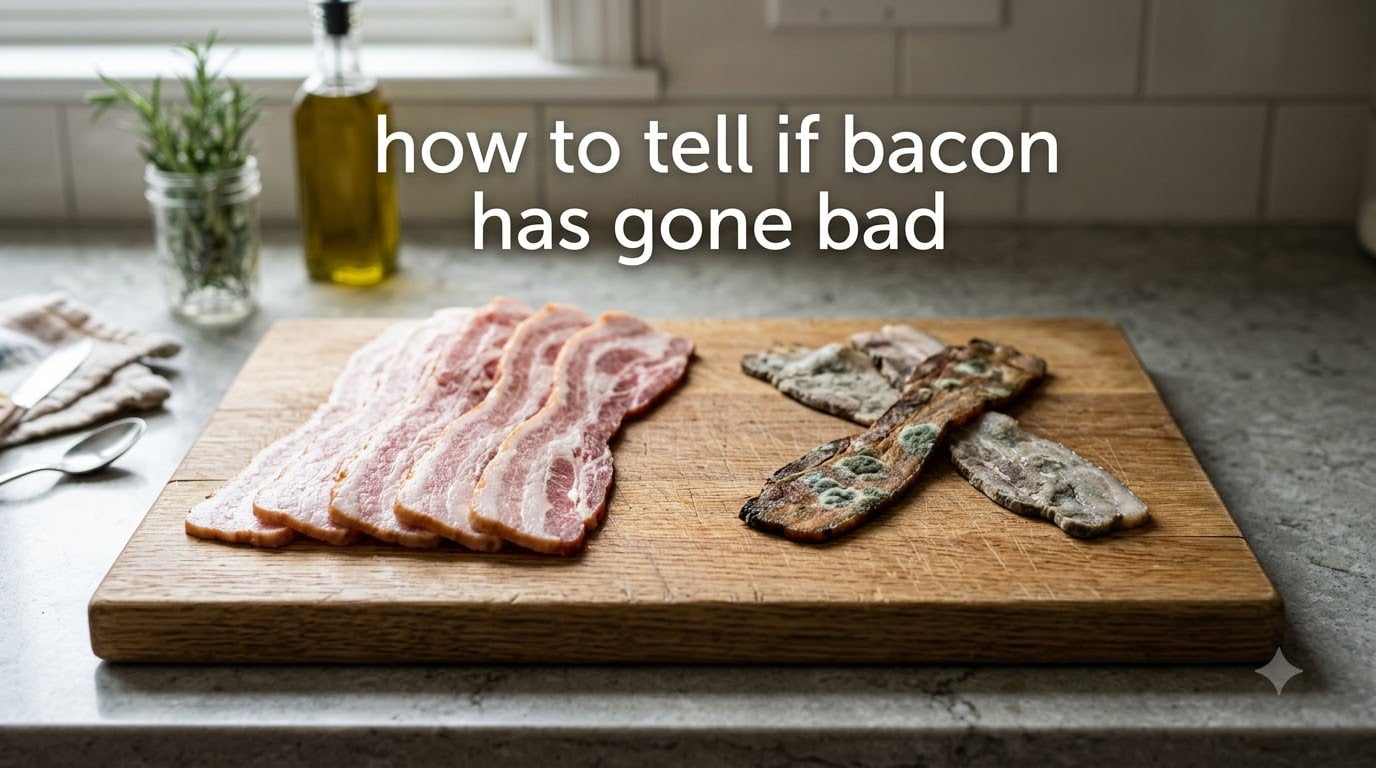
You can tell if bacon has gone bad by checking for a sour or sulfuric smell, a slimy or sticky texture, and discoloration such as gray, green, or brown spots. If you notice any of these signs, throw the bacon away immediately. When in doubt, trust your nose and your hands — they are the most reliable tools for detecting spoilage.
I have gone through dozens of packs of bacon over the years, and the sensory check method has never failed me. This guide walks you through exactly what to look for, how to read date labels, and what happens if you accidentally eat bacon that has turned. Let me break it down step by step so you never second-guess yourself again.
Table of Contents
How to Tell If Bacon Has Gone Bad
The fastest way to tell if bacon has gone bad is to use your senses in order: smell, touch, then sight. Fresh bacon has a subtle, meaty aroma. Bad bacon smells sour, sulfuric, or rancid. If the surface feels slimy or sticky, that is bacteria at work. Any gray, green, or brown discoloration beyond normal oxidation means the bacon should go in the trash.
Below are the four main spoilage signals I check every time I open a pack.
1. Smell Test
Fresh raw bacon has a mild, meaty, slightly salty aroma. If you detect a sour, sweet, or sulfuric odor, the bacon has spoiled. Some bacon brands have a stronger smoky scent that can mask early spoilage — so if the smell seems “off” even slightly, compare it to what you remember from when the package was first opened.
For cooked bacon, a rancid or sour smell means it is past safe. Cooked bacon that has gone bad often smells sharper than raw spoiled bacon because the fats have already been rendered and oxidized.
2. Texture Test
Touch the bacon. Fresh bacon feels firm, slightly moist, and pliable. Spoiled bacon feels slimy, sticky, or slippery — especially on the lean parts. That slimy film is caused by bacterial colonies producing waste on the surface.
A common mistake is confusing normal moisture from vacuum-sealed packaging with actual slime. Pat the bacon dry with a paper towel and touch it again. If it still feels slick or sticky, it has gone bad.
3. Color and Discoloration
Raw bacon should be pink to reddish-pink with white or cream-colored fat. If you see gray, green, brown, or orangish patches, those are warning signs. Gray and green discoloration typically means bacterial growth. Brown can mean either oxidation or spoilage — we will cover that difference below.
For cooked bacon, look for shriveled, leathery, or unusually dark patches. Cooked bacon that has turned a dull gray-brown and feels rubbery has likely spoiled.
4. Mold
Mold appears as fuzzy spots in white, green, blue, or black. If you see any mold on bacon, throw the entire package away. Do not try to cut off the moldy part and eat the rest. Mold sends invisible roots deep into the meat, and those roots carry mycotoxins that are not destroyed by cooking.
Check the Date First
Before you do anything else, look at the date printed on the package. But do not treat it as gospel — it is a guideline, not a guarantee.
Use-By vs Sell-By Dates
A “use-by” date is the manufacturer’s recommendation for peak quality. A “sell-by” date tells the store when to rotate stock. Bacon is generally safe for about one week past a sell-by date if it has been stored at or below 40°F and the package is sealed. Once opened, use bacon within 5 to 7 days regardless of the date on the package.
Julian Date Codes
Some manufacturers use Julian date codes in the format XX-XXX (for example, 26-135). The first two digits are the year, and the last three are the day of the year. So 26-135 means the 135th day of 2026, which is May 15. If you cannot find a readable date, look for this code near the lot or packaging stamp.
Inspect the Packaging
Check the seal before you open the package. If the vacuum seal is broken, puffed up, or leaking, do not use the bacon. A broken seal lets air and bacteria in, which accelerates spoilage even before the printed date. Bloated or ballooned packaging is a sign of gas-producing bacteria and should be tossed immediately.
Once you open the package, transfer unused bacon to an airtight container or a resealable plastic bag with the air squeezed out. Exposure to air is the fastest way to speed up oxidation and bacterial growth.
Oxidation vs True Spoilage
This is where most people get confused. Bacon that has turned brown but smells fine may just be oxidized — not spoiled. Oxidation happens when the myoglobin in the meat reacts with oxygen. It is the same process that turns an apple brown after you slice it.
Here is how to tell the difference. If the bacon is brown or slightly darker than usual but still smells normal and feels firm, it is likely safe to cook and eat. If the bacon is brown AND smells sour or feels slimy, it has gone bad. Oxidation alone does not make bacon unsafe — but it is often a sign that the bacon is getting old, so use it soon or freeze it.
What About That Iridescent Green Sheen?
If your cooked bacon has a rainbow or greenish sheen, do not panic. This iridescence is caused by light diffracting off the muscle fibers — it is a natural optical effect, not a sign of spoilage. It is more common in bacon that has been sliced very thinly.
However, if the greenish tint comes with a sour smell or slimy feel, that is a different story. Trust the texture and smell tests to make the final call.
How Long Does Bacon Last?
Knowing the shelf life of bacon in different storage conditions helps you plan and avoid waste.
Raw Bacon in the Fridge
Unopened raw bacon stored at or below 40°F lasts until the use-by or sell-by date on the package — usually about two weeks from purchase. Once opened, use it within 5 to 7 days.
Cooked Bacon in the Fridge
Cooked bacon stays safe in the refrigerator for 4 to 5 days when stored in an airtight container. After that, the risk of bacterial growth increases even if it looks and smells fine.
Freezer Storage
Both raw and cooked bacon can be frozen for up to one month without significant quality loss. Wrap individual portions in plastic wrap or foil, then place them in a freezer bag with the air squeezed out. Label with the date so you know how long it has been in there. Thawed bacon should be used within a few days and never refrozen.
What Happens If You Eat Bad Bacon?
Eating spoiled bacon can cause foodborne illness. The main pathogens found in bad bacon are Salmonella, E. coli, Listeria, and Staphylococcus. Some of these bacteria produce toxins that are heat-resistant — meaning cooking the bacon thoroughly does not guarantee safety.
Symptoms of food poisoning from bad bacon typically appear within 1 to 6 hours and may include nausea, vomiting, stomach cramps, diarrhea, and fever. Most cases resolve on their own within 24 to 48 hours. Seek medical attention if you experience bloody stools, a fever above 101.5°F, or symptoms that last more than three days.
How to Store Bacon to Prevent Spoilage
Proper storage is your best defense against spoilage. Here are the key rules to follow.
Keep your refrigerator at or below 40°F. Store unopened bacon in its original packaging until you are ready to use it. Once opened, wrap the bacon tightly in plastic wrap or place it in a resealable bag with all the air removed.
For cooked bacon, let it cool completely before storing it in an airtight container in the fridge. If you have more bacon than you can use in a week, freeze it immediately in individual portions.
Never leave bacon sitting out at room temperature for more than two hours. Bacteria multiply rapidly between 40°F and 140°F — the “danger zone” identified by the USDA.
Frequently Asked Questions
Can you eat slightly spoiled bacon?
No. Even slightly spoiled bacon can contain harmful bacteria and toxins that cause food poisoning. Some pathogens like Staphylococcus produce heat-resistant toxins that survive cooking. When in doubt, throw it out.
What does unsafe bacon look like?
Unsafe bacon may have gray, green, brown, or orange discoloration. It often looks dull instead of vibrant pink. You may also see fuzzy mold spots in white, green, blue, or black. If the bacon is discolored or has visible mold, discard it immediately.
How long after eating bad bacon will I get sick?
Symptoms of food poisoning from bad bacon typically appear within 1 to 6 hours after eating. Nausea, vomiting, stomach cramps, and diarrhea are the most common symptoms. Most cases resolve within 24 to 48 hours without medical treatment.
Can you eat bacon after 7 days of opening?
It is not recommended. The USDA advises using opened bacon within 5 to 7 days. After 7 days, even bacon that looks and smells normal may harbor harmful bacteria. If your bacon has been open for a week or more, it is safer to discard it.
How to visually tell if bacon is bad?
Look for gray, green, brown, or orange discoloration on the meat. Fresh bacon is pink to reddish-pink with white fat. Also check for fuzzy mold spots, which can be white, green, blue, or black. If the bacon looks dull, slimy, or discolored, it has gone bad.
Is 2 week old bacon ok?
Unopened bacon stored in the fridge can be safe up to the sell-by or use-by date, which may extend to two weeks from purchase. However, once bacon has been opened, it should be used within 5 to 7 days. If your bacon has been open for two weeks, throw it away regardless of how it looks or smells.
What happens if you eat bad bacon?
Eating bad bacon can cause foodborne illness from bacteria like Salmonella, E. coli, Listeria, or Staphylococcus. Symptoms include nausea, vomiting, diarrhea, stomach cramps, and fever. Most cases are mild and resolve within one to two days, but severe cases may require medical attention.
Conclusion
Knowing how to tell if bacon has gone bad is a simple skill that saves you from a miserable bout of food poisoning. Trust your nose first, your hands second, and your eyes third. Check the date labels, inspect the packaging, and store your bacon properly. When in doubt, throw it out — no strip of bacon is worth the risk.