
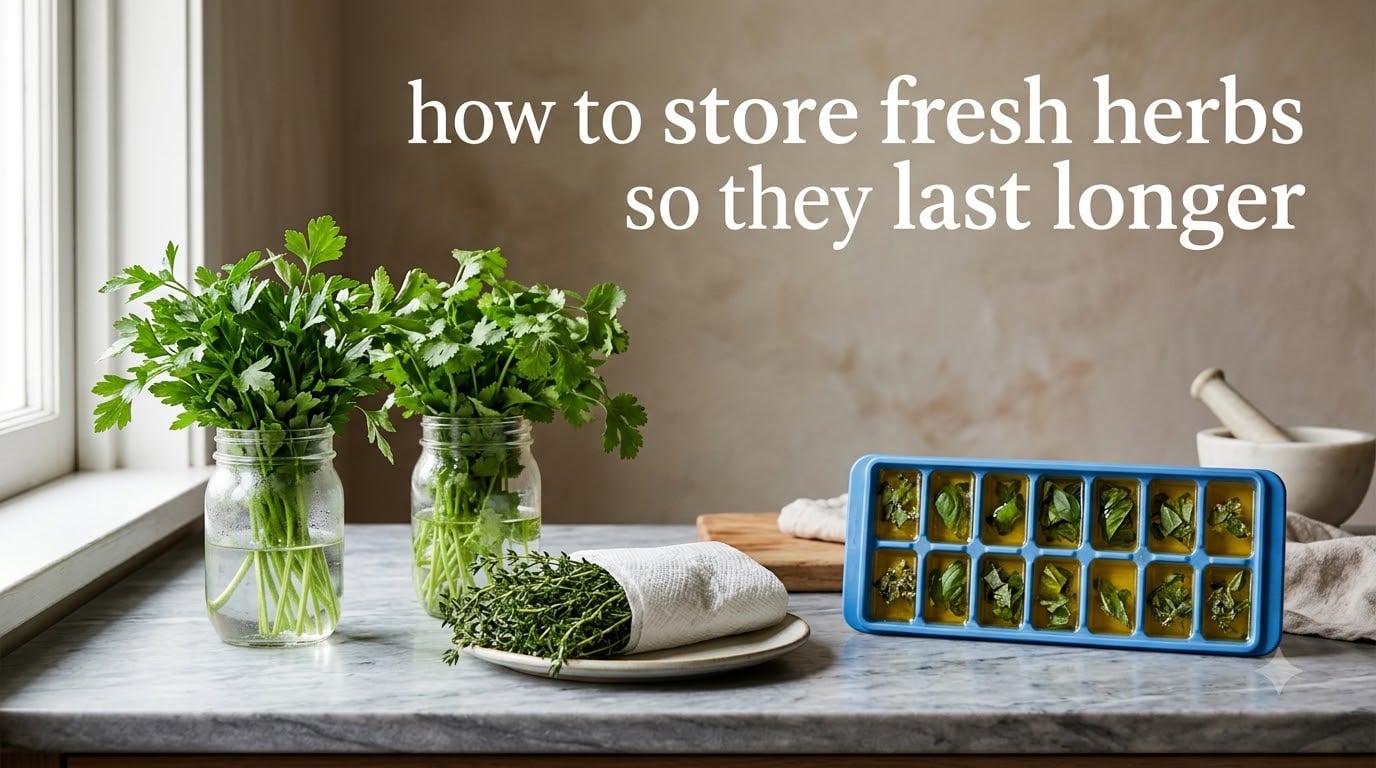
We’ve all been there — you buy a gorgeous bunch of cilantro for taco night, use a handful, and three days later find a slimy green mess in the back of your fridge. Learning how to store fresh herbs so they last longer is one of the simplest kitchen skills that saves real money and eliminates that frustrating cycle of waste.
I tested every major herb storage method across three months of home cooking, tracking how long parsley, cilantro, basil, rosemary, and six other herbs survived. The difference between the worst and best methods? Nearly three weeks of extra shelf life.
In this guide, I’ll walk you through exactly which methods work for which herbs, why basil breaks all the rules, and how to freeze herbs so they’re ready for weeknight cooking months later.
Table of Contents
Quick Answer: How to Store Fresh Herbs So They Last Longer
Wrap hardy herbs (rosemary, thyme, sage) in a barely damp paper towel, place them in a loose zip-top bag, and store in the crisper drawer — they’ll last up to three weeks. For tender herbs (parsley, cilantro, dill, mint), trim the stems and stand them upright in a jar with one to two inches of water, cover loosely with a plastic bag, and refrigerate — they’ll last two weeks or more. Basil is the exception: never refrigerate it. Instead, keep it in water on the kitchen counter at room temperature.
Why Fresh Herbs Wilt So Fast
Fresh herbs start deteriorating the moment they’re harvested. Four enemies work against them simultaneously, and understanding each one helps you choose the right storage strategy.
Light breaks down chlorophyll, the pigment that gives herbs their vibrant green color. Leave parsley on a sunny counter and it yellows within days.
Oxygen causes oxidation — the same browning reaction you see on a cut apple. Exposed herb leaves turn dark and develop off-flavors.
Excess moisture is the biggest killer. Wet leaves in a sealed bag create the perfect environment for bacterial growth, which is why herbs turn slimy so quickly in their original supermarket packaging.
Cold damage affects certain herbs more than others. Basil’s cell walls rupture below 50°F (10°C), causing those telltale black spots. This is why the refrigerator is not always the answer.
Tender vs. Hardy Herbs: Know What You’re Working With
The single most important thing to understand about storing fresh herbs is that they fall into two categories, and each requires a completely different approach.
Tender herbs have soft, flexible stems and delicate leaves with high moisture content. They bruise easily and wilt quickly. This group includes parsley, cilantro, dill, mint, tarragon, chervil, and basil (though basil has its own special rules).
Hardy herbs have woody, stiff stems and lower moisture content. They’re more forgiving and tolerate refrigeration well. This group includes rosemary, thyme, sage, oregano, marjoram, and savory.
Think of it this way: if you can snap the stem easily and it feels juicy, it’s tender. If the stem is stiff and woody, it’s hardy. Getting this classification right is the foundation of proper herb storage.
The Paper Towel Method (Best for Hardy Herbs)
This is the go-to method for rosemary, thyme, sage, oregano, and other woody-stemmed herbs. It controls moisture without trapping it, which prevents both drying out and slimy decay.
Step 1: Lightly dampen a paper towel — it should feel moist but not drip when you squeeze it. If water comes out, wring it harder. This “damp, not wet” distinction is critical.
Step 2: Arrange the herb sprigs in a single layer on the damp towel. Don’t pile them on top of each other.
Step 3: Roll the paper towel around the herbs like a jelly roll, creating a loose bundle.
Step 4: Place the bundle inside a zip-top bag or wrap it loosely in plastic wrap. Don’t seal it airtight — a little airflow prevents condensation buildup.
Step 5: Store in the crisper drawer of your refrigerator. Check every few days and re-dampen the towel if it’s dried out.
Hardy herbs stored this way typically last two to three weeks. The paper towel wicks away excess moisture while maintaining just enough humidity to keep the leaves from crisping up.
The Bouquet Method (Best for Tender Herbs)
Treat soft-stemmed herbs like a bouquet of flowers and they’ll reward you with an extra week or more of freshness. This method works beautifully for parsley, cilantro, dill, mint, and tarragon.
Step 1: Trim about half an inch off the bottom of the stems at a sharp angle. Cutting at an angle increases the surface area for water uptake — the same reason florists always trim stems.
Step 2: Fill a glass jar or Mason jar with one to two inches of room-temperature water.
Step 3: Stand the herbs upright in the jar, stems down, just like a flower arrangement.
Step 4: Loosely drape a plastic bag over the top of the herbs. This creates a mini greenhouse that maintains humidity while still allowing some air exchange. Don’t wrap it tightly.
Step 5: Place the jar in the refrigerator. Change the water every two to three days to prevent bacterial growth.
A spill-proof upgrade from Serious Eats testing: place the whole jar-and-herb setup inside a deli container with a lid. It catches any spills and keeps the bag in place.
One common mistake from forum discussions is letting leaves sit below the water line. Pull off any lower leaves that would be submerged — those are the ones that go slimy first.
The Basil Exception: Never Refrigerate It
Basil is the rebel of the herb world. Every other tender herb does better in the fridge, but basil hates the cold. Refrigerating basil causes rapid chlorophyll breakdown — the cell walls rupture below 50°F (10°C), releasing enzymes that turn the leaves black and mushy within hours.
Instead, treat basil like a houseplant. Trim the stems, place them in a jar of water on your kitchen counter, and keep them out of direct sunlight. At room temperature, basil stays fresh and aromatic for up to two weeks. Some people report their basil actually continues growing roots in the water and lasts even longer.
If you buy a rooted basil plant from the grocery store, you can replant it directly into a pot of soil for an ongoing supply. Several Reddit users in r/AskCulinary recommend this as the ultimate long-term strategy — one plant can provide fresh basil for months.
Long-Term Storage: Freezing Fresh Herbs
When you have more herbs than you can use in two weeks, freezing preserves their flavor for soups, stews, braises, and pan sauces for up to a year. The texture changes, so frozen herbs work best in cooked dishes rather than as fresh garnishes.
Ice Cube Tray Method
This is the most popular long-term method, and it’s recommended repeatedly across cooking forums and culinary schools alike.
Step 1: Finely chop your herbs — any variety works.
Step 2: Pack the chopped herbs into the compartments of an ice cube tray, filling each about two-thirds full.
Step 3: Cover the herbs with olive oil, melted butter, or water. Oil works best for herbs destined for sautés and roasting; water is fine for soups and stews.
Step 4: Freeze until solid, then pop the cubes out and transfer them to a labeled freezer bag. They’ll keep for up to six months.
Each cube equals roughly one tablespoon of fresh herbs — perfect for tossing directly into a hot pan for weeknight cooking.
Flash-Freezing Whole Sprigs
Step 1: Spread whole herb sprigs in a single layer on a sheet pan lined with parchment paper.
Step 2: Freeze for one to two hours until the sprigs are firm.
Step 3: Transfer the frozen sprigs to a freezer bag, pressing out as much air as possible. Label and date the bag.
This method preserves the herbs in their whole form, so you can pull out individual sprigs as needed. It works particularly well for rosemary, thyme, and sage.
Herb Butter and Pesto
Mixing chopped herbs into softened butter and then freezing it in logs is a brilliant way to have compound butter ready for steak, fish, or roasted vegetables. Pesto freezes equally well in ice cube trays — basil pesto cubes are a summer garden staple for winter pasta dinners.
Common Herb Storage Mistakes to Avoid
After reading through hundreds of forum posts and testing methods myself, these are the mistakes that cause herbs to spoil prematurely:
Washing before storage. Serious Eats found that washing herbs before refrigerating adds surface moisture that accelerates decay. Unless the herbs are visibly dirty, skip the wash and store them dry — wash right before use instead.
Storing in the original supermarket packaging. Those plastic clamshells and sealed bags trap moisture and ethylene gas, creating a humid environment where bacteria thrive. Transfer your herbs to a proper storage method as soon as you get home.
Using a soaking-wet paper towel. There’s a critical difference between damp and wet. A paper towel that drips water promotes mold. Wring it out until it’s just moist to the touch.
Keeping herbs near ethylene-producing fruits. Bananas, apples, and tomatoes release ethylene gas, which accelerates ripening and decay in nearby produce. Store herbs away from the fruit bowl.
Sealing bags airtight. Herbs need some airflow. A completely sealed bag traps moisture and creates the slimy conditions you’re trying to avoid.
How Long Do Fresh Herbs Last?
Here’s a quick-reference chart showing how long each common herb lasts when stored properly:
| Herb | Type | Fridge (Proper Method) | Counter (Room Temp) | Frozen |
|---|---|---|---|---|
| Parsley | Tender | 2-3 weeks | 3-5 days | Up to 6 months |
| Cilantro | Tender | 2-3 weeks | 2-3 days | Up to 6 months |
| Dill | Tender | 2 weeks | 2-3 days | Up to 6 months |
| Mint | Tender | 2-3 weeks | 3-5 days | Up to 6 months |
| Basil | Tender | Not recommended | 1-2 weeks | Up to 6 months |
| Tarragon | Tender | 2 weeks | 2-3 days | Up to 6 months |
| Chervil | Tender | 1-2 weeks | 1-2 days | Up to 3 months |
| Rosemary | Hardy | 2-3 weeks | 1 week | Up to 12 months |
| Thyme | Hardy | 2-3 weeks | 1 week | Up to 12 months |
| Sage | Hardy | 2-3 weeks | 1 week | Up to 12 months |
| Oregano | Hardy | 2-3 weeks | 1 week | Up to 12 months |
| Chives | Hardy | 1-2 weeks | 2-3 days | Up to 6 months |
These timelines assume you’re using the correct method for each herb type. Hardy herbs with woody stems consistently outlast tender herbs, and freezing extends usable life dramatically for cooked dishes.
How to Salvage Wilted Herbs
Don’t toss herbs just because they look a little sad. Wilted herbs that haven’t gone slimy still have plenty of flavor — they just won’t look pretty as a garnish.
Submerge wilted herbs in a bowl of ice water for 10 to 15 minutes. This rehydrates the cells and can bring back some crispness, especially for parsley and cilantro. It won’t restore them to fresh-from-the-garden condition, but it buys you another day or two.
For herbs that have passed the point of reviving, chop them and freeze them in olive oil using the ice cube tray method. Cooking doesn’t care about texture — wilted herbs frozen in oil deliver almost as much flavor as fresh ones in soups, sauces, and braises. You can also blend them into pesto or herb butter before they turn slimy.
Frequently Asked Questions
What is the best way to store fresh herbs to keep them fresh for longer?
The best method depends on the herb type. For hardy herbs like rosemary and thyme, wrap them in a damp paper towel and store in a loose bag in the crisper drawer for up to three weeks. For tender herbs like parsley and cilantro, trim the stems and place them in a jar of water in the fridge, covered loosely with a plastic bag, for two to three weeks.
What herbs should not be refrigerated?
Basil is the main herb that should never be refrigerated. Cold temperatures below 50°F (10°C) cause the cell walls to rupture, turning the leaves black and mushy within hours. Store basil in a jar of water on your kitchen counter at room temperature instead.
How can I store leftover fresh herbs to keep them fresh?
For leftover herbs from a recipe, choose the paper towel method for hardy herbs or the bouquet method for tender herbs. If you won’t use them within a week, chop them and freeze them in ice cube trays with olive oil — each cube equals about one tablespoon and is perfect for tossing into a hot pan.
What herbs last the longest in the fridge?
Hardy herbs last the longest in the refrigerator. Rosemary, thyme, sage, and oregano can each last two to three weeks when wrapped in a damp paper towel and stored in the crisper drawer. Among tender herbs, parsley and mint hold up best, lasting two to three weeks with the bouquet method.
What are common herb storage mistakes?
The most common mistakes are washing herbs before storing (the extra moisture causes sliminess), leaving herbs in the original supermarket packaging (traps moisture and ethylene gas), using a soaking-wet paper towel instead of a damp one, and refrigerating basil. Storing herbs near ethylene-producing fruits like bananas and apples also accelerates decay.
How to keep parsley fresh for 3 months?
Fresh parsley lasts two to three weeks in the fridge with the bouquet method. To keep it for three months, chop the parsley and freeze it in ice cube trays filled with olive oil or water. Frozen parsley cubes retain their flavor for up to six months and are ready to drop directly into soups, sauces, and stews.
How to make herbs stay fresh longer?
Separate your herbs by type as soon as you get home. Store hardy herbs in a damp paper towel inside a loose bag in the crisper drawer. Place tender herbs in a jar of water in the fridge. Keep basil on the counter at room temperature. Avoid washing until ready to use, and keep herbs away from ethylene-producing fruits.
Conclusion
Learning how to store fresh herbs so they last longer comes down to one simple principle: match the storage method to the herb type. Use the paper towel method for hardy herbs, the bouquet method for tender herbs, and always keep basil on the counter at room temperature. For herbs you can’t use in time, freezing in olive oil locks in their flavor for months. Pick one method and try it tonight — you’ll notice the difference by your next grocery run.