
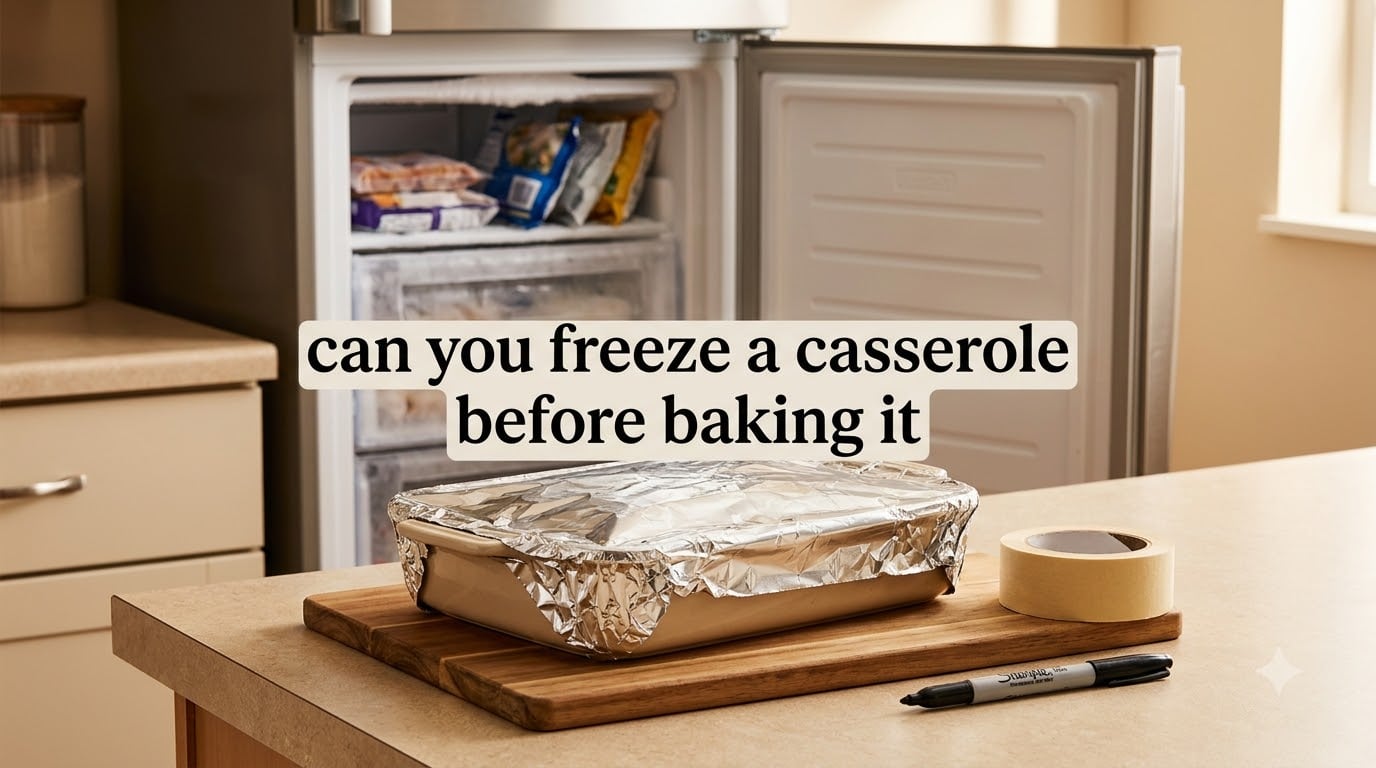
Yes, you can freeze a casserole before baking it — and in most cases, that’s the best approach. Freezing an assembled but unbaked casserole lets you prep meals days or weeks ahead, then pop it straight into the oven when you’re ready. The key is knowing which ingredients handle the freezer, which containers work best, and how to adjust your baking time for a frozen dish.
In this guide, I’ll walk you through everything you need to know about how to freeze a casserole before baking it, including which types freeze best, common mistakes to avoid, and how to get perfect results every time.
Table of Contents
Can You Freeze a Casserole Before Baking It?
Absolutely. Freezing a casserole before baking is a popular meal-prep strategy used by home cooks, new parents, and anyone cooking for a crowd. You assemble the casserole with raw or pre-cooked ingredients, wrap it tightly, and store it in the freezer until you’re ready to bake.
This works especially well for casseroles with fully cooked ingredients like rotisserie chicken, pre-sauteed vegetables, or cooked pasta. Raw meat casseroles also freeze safely — the USDA confirms that cooking from frozen is safe as long as the internal temperature reaches 165°F.
The one rule: don’t thaw a frozen casserole on the counter before baking. That’s a food safety risk and the most common mistake home cooks make with frozen casseroles.
Freeze Before or After Baking: How to Decide
Most casseroles are better frozen before baking, but there are exceptions. Here’s a simple decision framework to help you choose:
Freeze before baking when:
- All ingredients are already cooked (rotisserie chicken, pre-cooked rice, sauteed vegetables)
- You want a fresh-baked taste and texture when you serve it
- The casserole contains pasta or rice that would turn mushy if baked twice
- You’re prepping meals in advance for busy weeknights or a meal train
Freeze after baking when:
- The casserole contains raw meat and you want to eliminate food safety concerns entirely
- You have a liquid-heavy dish (like a soup casserole) that needs to set before freezing
- You’re using ingredients that benefit from an initial bake, like uncooked rice or raw root vegetables
- You want to simply reheat, not bake from scratch
One tip from experienced home cooks on Reddit: bake the casserole until it’s cooked through but not yet golden on top, then freeze. When you reheat, it just needs to warm through and brown — saving time without sacrificing quality.
Which Casseroles Freeze Best Before Baking
Not all casseroles freeze equally. Here’s how common types hold up when frozen unbaked:
Lasagna and pasta bakes: Excellent results. The layers hold together well, and freezing before baking prevents the pasta from getting mushy. Assemble with slightly undercooked noodles for the best texture.
Broccoli rice casserole: Freezes well. The rice absorbs some moisture during freezing, so add a splash of broth before baking to compensate.
Mac and cheese: Good results with a few adjustments. Use a cheese sauce that’s slightly thinner than usual — it thickens in the freezer. Avoid soft cheeses like brie or fresh mozzarella; stick with cheddar or gruyere.
Tuna noodle casserole: Freezes well. The creamy base and sturdy noodles hold up to freezing. Add crunchy toppings like breadcrumbs or fried onions after baking, not before freezing.
Potato casseroles: Variable. Shredded potato casseroles freeze reasonably well, but sliced potatoes can turn watery. Par-cook potato slices before assembling for better results.
Green bean casserole: Good for freezing. Keep the fried onion topping separate and add it during the last 10 minutes of baking for crunch.
Ingredients That Don’t Freeze Well in Casseroles
Some ingredients break down in the freezer, creating grainy, watery, or mushy textures. Avoid freezing casseroles that rely heavily on these:
Soft cheeses: Ricotta, cottage cheese, and cream cheese tend to separate and become grainy after freezing. They’re fine in small amounts mixed into a larger sauce, but avoid them as the primary cheese layer.
Sour cream and mayonnaise: Both curdle and weep liquid when frozen and reheated. If a recipe calls for sour cream, substitute with Greek yogurt or a bechamel-based sauce that freezes more reliably.
Watery vegetables: Zucchini, eggplant, cucumbers, and lettuce release excess water after thawing, making the casserole soggy. Salt and drain watery veggies before adding, or swap for firmer options.
Hard-boiled eggs: The whites become rubbery and the yolks turn chalky. Egg-heavy casseroles (like breakfast strata) are better baked first, then frozen in portions.
Crunchy toppings: Breadcrumbs, cracker toppings, and fried onions lose their crunch in the freezer. Store them separately and add after baking.
How to Freeze a Casserole Before Baking: Step by Step
Follow these steps for a freezer-ready casserole that bakes up perfectly:
Step 1: Choose the right dish. Use a freezer-safe container — either a glass baking dish rated for freezer-to-oven use, a disposable aluminum pan, or a foil-lined metal pan. If using glass, check that it’s tempered and rated for extreme temperature changes.
Step 2: Line with heavy-duty aluminum foil. Cut a piece of foil long enough to extend 2-3 inches past the edges on each side. Press it into the dish, leaving the overhang. This “foil sling” lets you lift the frozen casserole out later for wrapping.
Step 3: Assemble the casserole. Layer ingredients as the recipe directs. If using pasta, cook it 1-2 minutes less than al dente — it finishes cooking during baking. Leave about half an inch of headspace at the top for expansion.
Step 4: Cool completely. If any ingredients are warm, let the assembled casserole cool to room temperature, then refrigerate for 1-2 hours. Putting a warm casserole directly in the freezer creates ice crystals that cause freezer burn.
Step 5: Wrap tightly. Press a layer of plastic wrap directly onto the surface of the casserole to prevent freezer burn. Then fold the foil overhang over the top. For extra protection, wrap the entire dish in another layer of heavy-duty foil.
Step 6: Label and date. Write the casserole name, date frozen, baking temperature, and estimated bake time on a piece of masking tape. Stick it on the foil. You won’t remember what it is in two months — trust me.
Step 7: Freeze flat. Place the casserole on a level surface in the freezer. If stacking, put a rimmed baking sheet between casseroles for stability. Once frozen solid (after 24 hours), you can reposition it.
How to Bake a Frozen Casserole
You have two options: bake from frozen or thaw first.
Baking from frozen (recommended): Preheat oven to 350°F. Remove all plastic wrap, re-cover with foil, and place on a rimmed baking sheet to catch drips. Bake covered for 1.5 to 2 times the original recipe’s cook time. Remove foil during the last 15-20 minutes to brown the top. The casserole is done when an instant-read thermometer reads 165°F in the center.
Thawing first: Transfer the casserole from freezer to fridge 24-48 hours before baking. Once thawed, bake at the original temperature and time. This method uses less energy but requires planning ahead.
The tradeoff: baking from frozen takes longer but produces better texture because the casserole doesn’t sit in thawed liquid. Thawing first can lead to soggier results, especially with pasta-based casseroles.
Best Containers for Freezing Casseroles
Your container choice affects both convenience and results:
Disposable aluminum pans: The most popular choice for freezing casseroles, especially if you’re gifting them. They’re inexpensive, lightweight, and you don’t tie up your good baking dishes. Use heavy-duty pans — the flimsy ones bend during transport.
Glass baking dishes: Great for oven-to-freezer-to-table convenience, but they tie up your dish until you use the casserole. Always use tempered glass (like Pyrex) and never transfer a glass dish directly from freezer to a hot oven — let it sit at room temperature for 30 minutes first to prevent cracking.
Foil pans with lids: A solid middle ground. They come with snap-on lids that eliminate the need for foil and plastic wrap. Perfect for meal trains and gifting.
Freezer bags: Best for casseroles with a pourable consistency, like enchilada casserole or lasagna soup. Lay flat to freeze for easy stacking, then transfer to a baking dish when ready to cook.
How Long Does a Frozen Casserole Last?
A properly wrapped casserole stays at peak quality for 2-3 months in the freezer. It remains safe to eat for up to 6 months, but the texture and flavor begin to decline after the three-month mark.
Signs of freezer burn include ice crystals on the surface, discoloration, and a stale smell. Freezer-burned casseroles are safe to eat but won’t taste as good. Prevent it by wrapping tightly and using the foil-plastic-foil method described above.
Troubleshooting: Texture Problems After Freezing
If your frozen casserole didn’t turn out right, here’s what likely went wrong:
Soggy bottom: The casserole was thawed on the counter, allowing moisture to pool at the bottom. Fix: always bake from frozen or thaw in the fridge. Placing the casserole on a preheated baking sheet also helps crisp the bottom.
Mushy pasta: The pasta was fully cooked before freezing. Fix: undercook pasta by 1-2 minutes before assembling. It finishes cooking during the bake.
Grainy cheese sauce: The sauce broke during freezing. Fix: use a bechamel-based cheese sauce (roux + milk + cheese) instead of straight melted cheese. The flour stabilizes the sauce against temperature changes.
Dry top layer: The casserole wasn’t wrapped tightly enough, causing freezer burn. Fix: press plastic wrap directly against the surface before covering with foil.
Freezing Casseroles for Gifting
Frozen casseroles make thoughtful gifts for new parents, grieving families, or anyone recovering from surgery. Here’s how to do it right:
Use a disposable aluminum pan so the recipient doesn’t need to return your dish. Label the top with the casserole name, date frozen, and simple reheating instructions — include the oven temperature, whether to keep it covered, and the target internal temperature of 165°F.
Transport the casserole in a cooler with ice packs to keep it frozen during delivery. If it arrives partially thawed, the recipient can still freeze it again safely as long as it still has ice crystals visible.
One Reddit user shared a smart approach: they prep casseroles in 8×8 dishes for easier transport to family members who live 1-2 hours away. The smaller size means it fits in a standard cooler and bakes faster for the recipient.
Frequently Asked Questions
Is it better to freeze a casserole before or after baking?
Freezing before baking generally produces better texture and fresher flavor, especially for pasta and rice casseroles. Freeze after baking when the casserole contains raw meat you want fully cooked first, or when the dish has ingredients that need an initial bake to set properly.
What casseroles can I freeze before baking?
Lasagna, pasta bakes, broccoli rice casserole, mac and cheese, tuna noodle casserole, and green bean casserole all freeze well before baking. Casseroles with sturdy noodles, pre-cooked proteins, and cheese sauces that use a roux base give the best results.
What casseroles do not freeze well?
Casseroles heavy in soft cheeses (ricotta, cottage cheese), sour cream, mayonnaise, watery vegetables like zucchini, and egg-based dishes don’t freeze well. These ingredients separate, curdle, or release excess moisture when frozen and reheated.
Can I freeze casseroles in aluminum pans?
Yes, disposable aluminum pans are one of the best containers for freezing casseroles. Use heavy-duty pans to prevent bending. Cover tightly with foil and plastic wrap, or use a pan with a snap-on lid. They’re ideal for gifting since you don’t need the pan back.
Should I thaw frozen casserole before baking?
You don’t need to thaw. Baking from frozen at 350°F for 1.5 to 2 times the original cook time gives the best texture. If you prefer to thaw, refrigerate for 24-48 hours, then bake at the original temperature and time. Never thaw on the counter.
How long can you freeze a casserole?
A properly wrapped casserole stays at peak quality for 2-3 months in the freezer. It remains safe for up to 6 months, but flavor and texture decline after three months. Always label with the date frozen.
Final Thoughts
Freezing a casserole before baking is one of the smartest meal-prep moves you can make. With the right container, proper wrapping, and an understanding of which ingredients freeze well, you can stock your freezer with ready-to-bake meals that taste homemade — because they are. Whether you’re prepping for a busy week, a new baby, or a friend in need, knowing how to freeze a casserole before baking it gives you a head start on dinner whenever you need it.