
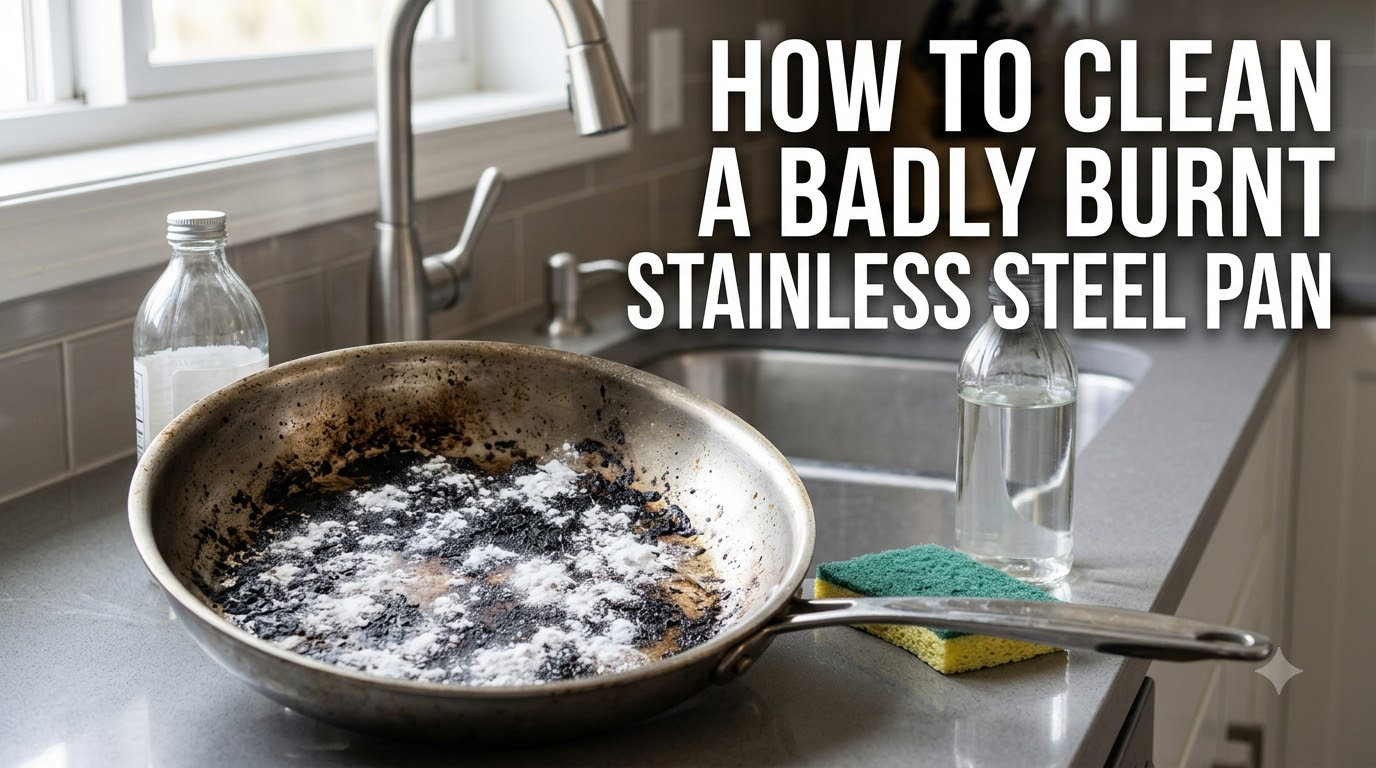
If you’ve just pulled a blackened, smoking pan off the stove and you’re asking how to clean a badly burnt stainless steel pan, take a breath. Your pan is almost certainly salvageable. Stainless steel is one of the toughest cookware surfaces out there, and the carbonized gunk stuck to it is burnt food polymers and overheated oil – not damage to the metal itself.
I’ve rescued pans that looked like they belonged in a scrapyard. The trick is matching the right method to the severity of the burn and giving the chemistry time to work. Below, I’ll walk you through five methods I’ve used on everything from scorched caramel to years of built-up grime, plus what to do when the first method fails and how to tell when it’s time to give up on the pan entirely.
Table of Contents
Quick Answer: How to Clean a Badly Burnt Stainless Steel Pan
Step 1. Cover the burnt area with 1 inch of water and 2 tablespoons of baking soda. Step 2. Bring to a boil and simmer 10 minutes. Step 3. Let it cool slightly, then scrub with a non-metal scouring pad. Step 4. For stubborn spots, make a paste of baking soda and water, apply, and rest overnight. Step 5. Repeat or escalate to Bar Keepers Friend or aluminum foil scrub.
Why Stainless Steel Pans Burn and What’s Actually Happening
When food burns onto a stainless steel pan, three things are happening at once. First, sugars and starches carbonize into a hard black layer that’s chemically bonded to the surface. Second, oils polymerize into a varnish-like film. Third, the chromium oxide layer on the steel itself can oxidize into a rainbow heat tint – that purple-bronze discoloration you sometimes see.
Stainless steel cookware has a brushed grain – those faint polish lines you see when you look closely. You’re always scrubbing with the grain, never across it, because scrubbing against the grain leaves visible scratches that catch food in future cooks. Knowing this helps you pick the right scrubber: a non-scratch Scotch-Brite pad or a balled-up sheet of aluminum foil, never a steel wool pad on a polished interior.
The good news? Burnt food sits on top of the steel. It doesn’t penetrate the metal. That’s why even pans with thick black carbon on the bottom come back to almost-new with the right combination of heat, alkalinity, acid, and mechanical scrubbing.
Supplies You’ll Need
For most methods, you only need pantry staples.
- Baking soda (sodium bicarbonate)
- White vinegar or lemon juice
- Water
- A wooden spoon or non-metal spatula
- A non-scratch scouring pad (Scotch-Brite or similar)
- Optional: aluminum foil, Bar Keepers Friend, dish soap
Skip steel wool on polished stainless interiors. It scratches badly and may leave metal fragments that rust later.
Pick Your Method: 5-Minute Fix vs 25-Minute Deep Clean vs Overnight Soak
Match the method to how bad the burn is. Light scorching and burnt oil need 5 minutes. Heavy carbon buildup needs 25 minutes plus scrubbing. Thick black residue that’s been there for days needs an overnight soak.
- 5-minute fix: Vinegar boil then quick scrub – best for burnt milk, scorched butter, fresh starchy residue.
- 25-minute deep clean: Baking soda + vinegar boil then aluminum foil scrub – best for burnt sugar, caramel, jam, and most everyday disasters.
- Overnight soak: Baking soda paste then morning scrub – best for thick carbon buildup and old burns that survived a previous cleaning.
If your pan has rainbow heat tint rather than black residue, jump to the discoloration section – that’s a different problem with a faster solution.
Method 1: Baking Soda and Water Paste (Overnight Option)
This is the gentlest method and the one I start with when I’m not sure how bad the burn is. The alkaline baking soda softens acidic burnt food overnight without any elbow grease on your part.
Step 1. Mix 3 parts baking soda with 1 part water to form a thick paste. It should look like wet frosting.
Step 2. Spread the paste generously over the burnt area, making sure to cover every black spot.
Step 3. Rest 8-12 hours, ideally overnight.
Step 4. In the morning, scrub with a non-scratch pad along the grain of the steel. Most residue will wipe away easily.
Step 5. Rinse, wash with dish soap, and dry thoroughly.
This method works best on thin layers of burnt food. For thick, almost-glass-like carbon buildup, you’ll need to escalate to Method 3.
Method 2: Baking Soda and Vinegar Boil (The Classic 25-Minute Method)
This is the method every cooking blog recommends, and there’s a good reason: it works on most everyday burns. It also doesn’t always work as well as people expect, and that’s worth understanding.
The chemistry: vinegar is acetic acid, baking soda is sodium bicarbonate. When they meet, they fizz violently. That fizz looks dramatic but it’s mostly carbon dioxide escaping – the acid and base are neutralizing each other and losing their cleaning power in the process. By the time you add the baking soda to boiling vinegar, the acid is already weakened.
What still works is the heat. A 10-minute boil softens carbonized layers whether or not the chemical reaction is impressive. The baking soda adds mild abrasive power once the fizz dies down.
Step 1. Pour enough white vinegar into the pan to cover the burnt area by about 1 inch.
Step 2. Bring the vinegar to a boil over medium-high heat, then reduce to a simmer for 5 minutes.
Step 3. Turn off the heat. Carefully add 2 tablespoons of baking soda – it will fizz.
Step 4. Let the pan sit 10-15 minutes as the fizzing subsides.
Step 5. Empty the pan, scrub with a non-scratch pad along the grain, rinse, and wash with dish soap.
Open a window or turn on your range hood. Boiling vinegar produces a strong smell that’s unpleasant in a closed kitchen.
Method 3: Baking Soda and Aluminum Foil Scrub (The Heavy-Duty Winner)
When I tested this method against four others on a badly burnt stainless pan, the aluminum foil scrub came out on top every time. The aluminum is softer than stainless steel but harder than burnt carbon, so it shears off the residue without scratching the pan. Bonus: you probably already have aluminum foil in a drawer.
Step 1. First, soften the burn. Cover the burnt area with 1 inch of water and 2 tablespoons of baking soda. Boil 10 minutes, then pour out most of the water, leaving the pan hot and wet.
Step 2. Tear off a sheet of aluminum foil, roughly 12 inches long, and crumple it into a loose ball. The more crinkles, the better – they create scrubbing edges.
Step 3. Dip the foil ball in the remaining hot water and a sprinkle of baking soda. Use the ball as a scrubber, working with the grain of the steel in firm circular motions.
Step 4. Apply steady pressure. You’ll feel the carbon give way – it’s noticeably easier to scrub than with a sponge alone.
Step 5. Rinse the pan, then wash with dish soap to remove any leftover aluminum residue. Dry immediately to prevent water spots.
For stubborn spots that survive the foil scrub, repeat the boil-and-scrub cycle. Most pans come clean within two passes.
Method 4: Boiled Lemons (Natural Degreaser)
Lemon juice contains citric acid, which is gentler than vinegar but works well on burnt dairy and egg residue. Two cut lemons and a 15-minute boil is enough to lift most fresh burns.
Step 1. Cut two lemons in half and squeeze the juice into the pan. Drop the squeezed halves in too.
Step 2. Add enough water to cover the burnt area by 1 inch.
Step 3. Bring to a boil and simmer 15 minutes. The citrus oils will soften grease and the acid will loosen residue.
Step 4. Use a wooden spoon to gently scrape the bottom while it’s hot. Most burnt bits will release.
Step 5. Discard the lemons, let the pan cool slightly, then scrub with a non-scratch pad and dish soap.
This method is gentle enough for routine cleaning and works well on pans you use daily. For truly heavy buildup, skip ahead to Method 5.
Method 5: Bar Keepers Friend for Stubborn Stains and Carbon Buildup
Bar Keepers Friend uses oxalic acid, which chemically dissolves iron-based stains and carbon deposits that other methods can’t touch. It’s the nuclear option for stainless steel and almost always works when nothing else does.
Step 1. Wet the pan with warm water.
Step 2. Sprinkle a generous layer of Bar Keepers Friend over the burnt area – about 2 tablespoons.
Step 3. Add enough water to make a thick paste. Let it sit 1-2 minutes so the oxalic acid can start working.
Step 4. Scrub with a non-scratch pad along the grain of the steel. Apply firm pressure but don’t bear down hard enough to dent the pan.
Step 5. Rinse thoroughly, wash with dish soap, and dry. Repeat for any remaining stains.
A few safety notes: Bar Keepers Friend is mild by industrial standards but it’s still an acid. Wear gloves if you have sensitive skin, rinse the pan thoroughly before cooking in it, and don’t let it sit more than 5 minutes – extended contact can etch the surface.
Sometimes even Bar Keepers Friend doesn’t get everything off. If that’s you, you’re not alone – one r/StainlessSteelCooking user reported trying BKF multiple times alongside vinegar and baking soda with no luck, then finally resorting to steel wool with BKF and two people scrubbing. The escalation section below covers this scenario.
How to Remove Rainbow Heat Tint and Discoloration
Rainbow discoloration – the purple, bronze, or blue tint you see after high heat – isn’t burnt food. It’s a thin layer of oxidized chromium on the steel surface. It looks dramatic but it’s purely cosmetic and doesn’t affect cooking performance. Most home cooks leave it alone once they realize this.
If the rainbow tint bothers you, a quick vinegar wipe removes it. Soak a paper towel in white vinegar, lay it on the discolored area, and rest 5 minutes. Wipe away, then wash with dish soap. For heavier discoloration, repeat the Bar Keepers Friend routine from Method 5 – the oxalic acid removes the oxidized layer without harming the steel underneath.
To prevent rainbow tint in the future, don’t preheat an empty stainless pan on high heat. Add oil first, then heat – the oil buffers the steel from direct flame contact.
How to Clean the Outside and Bottom of the Pan
Most burnt-pan guides only cover the inside. The outside gets just as dirty – dripped sauce, oil splatter, and soot from gas burners all build up. The good news is the outside is more forgiving since you can’t see scratches as easily.
Step 1. Wipe the outside with a damp cloth to remove loose grease.
Step 2. Make a baking soda paste (3:1 ratio) and apply to the bottom and sides.
Step 3. Rest 15 minutes, then scrub with a Scotch-Brite pad. The outside can take a more aggressive scrubber than the polished interior.
Step 4. For burnt-on residue on the bottom, flip the pan over and apply the same aluminum foil scrub method from Method 3 to the underside.
Step 5. Rinse, dry, and you’re done.
For discolored stainless steel bottoms, a stainless steel polish like Weiman or a paste of Bar Keepers Friend brings back the shine in seconds.
What NOT to Do: Mistakes That Ruin Stainless Steel
A few common mistakes cause real damage to stainless pans. Skip these entirely.
- Don’t pour cold water into a hot pan. The thermal shock can warp the base permanently, leaving the pan wobbling on a flat burner. Let it cool naturally first.
- Don’t use steel wool on a polished interior. Steel wool scratches the surface and leaves tiny metal fragments that can rust and embed in future food.
- Don’t scrub against the grain. Always scrub with the polish lines, never across them. Cross-grain scrubbing creates visible scratches that catch food.
- Don’t use the dishwasher regularly. Dishwasher detergent is harsh and can dull the finish over time. Hand-wash stainless pans.
- Don’t leave a burnt pan to soak in water for days. Extended water exposure can cause rust spots, especially at the rivets where handles attach.
If you’ve already scratched your pan with steel wool, the pan isn’t ruined – the scratches are cosmetic and the cookware still works fine. But now you know.
When the First Method Fails: An Escalation Path
This is the part most guides skip, and it’s the part Reddit users complain about the most. Sometimes you try the baking soda paste, you try the vinegar boil, you try Bar Keepers Friend, and the burnt stuff is still there. Here’s what to do next.
Step 1. Repeat the boil-scrub cycle with stronger concentration. Use 1 cup of vinegar and 4 tablespoons of baking soda, and boil for 15 minutes instead of 10. The extra chemistry often softens residue that resisted the lighter pass.
Step 2. Try the aluminum foil scrub immediately after the boil while the pan is still hot. The combination of softened carbon and aggressive mechanical scrubbing gets most stubborn spots.
Step 3. If Bar Keepers Friend didn’t work alone, combine it with the foil scrub. Apply the paste, rest 2 minutes, then scrub with a foil ball. The acid softens the stain and the foil shears it off.
Step 4. As a last resort, use steel wool with Bar Keepers Friend. This will scratch the polished interior, so reserve it for pans you’ve accepted are already damaged or for the outside of the pan. One r/cookware user reported that steel wool plus BKF took two people scrubbing for a long time but finally cleared a stubborn burn.
Step 5. If none of these work, the residue might not be burnt food. It could be pitting – tiny corrosion pits in the steel that catch food and look black. That’s not cleanable, and it’s covered in the next section.
When to Replace the Pan Instead
A burnt stainless steel pan is almost never ruined. There are a few exceptions.
- Warping: If the base wobbles on a flat surface or rocks on a glass cooktop, the pan won’t heat evenly. This is usually from thermal shock and can’t be fixed.
- Pitting: Tiny rust-colored pits in the cooking surface mean the steel has corroded. These pits trap food and can’t be cleaned out. Stop using the pan for food contact.
- Flaking or peeling: If your pan has a clad or layered construction and you see metal flaking off, the layers have separated. Replace it.
- Rust that won’t scrub off: Surface rust wipes away easily. Rust that’s pitted in needs replacement.
A warped or pitted pan isn’t dangerous, but it cooks unevenly and frustrates every future meal. Replacement is the practical choice.
Preventing Future Burnt Pans
Once you’ve cleaned your pan back to life, a few habits keep it that way.
- Preheat properly. Heat the pan on medium for 2 minutes before adding oil. Test with a few drops of water – if they dance across the surface, the pan is ready.
- Use enough fat. A teaspoon of oil or butter in a 12-inch pan is a starting point. Too little fat means direct food-to-steel contact, which guarantees sticking.
- Deglaze promptly. After cooking, while the pan is still hot, add a splash of water or wine and scrape up the fond with a wooden spoon. This prevents residue from hardening into tomorrow’s burnt-pan project.
- Match heat to food. Sugars and dairy scorch fast. Use medium-low heat for milk-based sauces and caramels.
Frequently Asked Questions
How to clean an extremely burnt stainless steel pan?
Cover the burnt area with 1 inch of water and 2 tablespoons of baking soda. Bring to a boil and simmer for 10 minutes. Pour out most of the water, then scrub with a crumpled aluminum foil ball dipped in baking soda. Work with the grain of the steel. For carbon buildup that survives, apply Bar Keepers Friend paste and scrub with a non-scratch pad. Repeat the cycle if needed.
Will baking soda and vinegar clean a stainless steel pan?
Yes – but the fizz is mostly cosmetic. The acid and base neutralize each other quickly, so most of the cleaning power comes from the boiling water softening burnt food. Baking soda adds mild abrasive action after the fizz dies down. For best results, boil the vinegar first, then add the baking soda after turning off the heat.
Can I clean a burnt pan with vinegar and baking soda?
Yes. Pour 1 cup of white vinegar into the pan and bring to a boil. Simmer 5 minutes, turn off the heat, then add 2 tablespoons of baking soda. Let it sit 10 to 15 minutes, then scrub with a non-scratch pad along the grain of the steel. Open a window – boiling vinegar produces strong fumes.
How do I get the black stuff off my burnt pan?
The black stuff is carbonized food bonded to the steel. Soften it first by boiling water and baking soda in the pan for 10 minutes. Then scrub with a crumpled aluminum foil ball dipped in baking soda. For truly stubborn spots, apply Bar Keepers Friend paste and let it sit 2 minutes before scrubbing. Repeat the cycle if any residue survives.
How to get black burnt stuff off a stainless steel pan?
Boil 1 inch of water with 2 tablespoons of baking soda in the pan for 10 minutes. Pour out most of the water, then scrub with an aluminum foil ball while the pan is still hot. The aluminum is softer than steel but harder than burnt carbon, so it shears off the residue without scratching. Finish by washing with dish soap and drying immediately.
How do I remove black residue from a stainless steel pan?
Start with a baking soda and vinegar boil: 1 cup vinegar, boiled 5 minutes, then 2 tablespoons of baking soda added off heat. After 15 minutes, scrub with a non-scratch pad. If residue remains, apply Bar Keepers Friend paste and scrub with a foil ball. For burnt residue that’s been there for days, apply a thick baking soda paste and let it soak overnight before scrubbing.
How to remove black spots from stainless steel cookware?
Black spots are usually carbonized food, not damage to the steel. Apply a paste of baking soda and water (3:1 ratio) directly to the spots and rest 15 minutes. Scrub with a non-scratch pad along the grain of the steel. For persistent spots, use Bar Keepers Friend – its oxalic acid chemically dissolves carbon that other cleaners can’t touch.
How to clean stainless steel that has turned black?
If the entire surface has turned black, that’s heavy carbon buildup from repeated overheating. Boil vinegar in the pan for 10 minutes, then add baking soda and let it cool. Scrub with aluminum foil and baking soda. For severe cases, apply Bar Keepers Friend paste and let it sit 2 to 3 minutes before scrubbing. Repeat until the steel returns to its original finish.
Will Bar Keepers Friend damage stainless steel pans?
Bar Keepers Friend is safe for stainless steel when used as directed. Its oxalic acid dissolves carbon and iron-based stains without harming the chromium oxide layer that protects the steel. Don’t let it sit longer than 5 minutes, and rinse thoroughly before cooking. Avoid using it on polished mirrors or decorative finishes – it’s meant for working cookware surfaces.
Can I use Bar Keepers Friend to clean a stainless steel pan?
Yes. Wet the pan, sprinkle 2 tablespoons of Bar Keepers Friend over the burnt area, and add enough water to form a paste. Let it sit 1 to 2 minutes, then scrub with a non-scratch pad along the grain. Rinse thoroughly, wash with dish soap, and dry. For especially stubborn residue, repeat or combine with an aluminum foil scrub.
Is a burnt stainless steel pan ruined?
Almost never. Burnt food sits on top of the steel – it doesn’t damage the metal. Even pans with thick black carbon come back to nearly new with the right method: boiling water and baking soda to soften, aluminum foil or Bar Keepers Friend to scrub, then dish soap and a thorough rinse. Replace only if the pan is warped, pitted, or flaking.
How to clean a burnt pan in 5 minutes?
Pour enough white vinegar into the pan to cover the burnt area by 1 inch. Boil 5 minutes. Turn off the heat, add 2 tablespoons of baking soda, and let it sit 5 more minutes. Pour out the liquid and scrub with a non-scratch pad while the pan is still warm. Most fresh burns lift in this timeframe. For older or thicker burns, expect 25 minutes or an overnight soak.
Final Thoughts
Learning how to clean a badly burnt stainless steel pan is mostly about patience and matching the right method to the severity of the burn. Start gentle with the baking soda paste overnight. Escalate to the vinegar boil and aluminum foil scrub for stubborn spots. Reach for Bar Keepers Friend when nothing else works.
And remember – the pan is almost certainly not ruined. The carbon sitting on the surface looks dramatic but it’s just burnt food waiting to be lifted off with the right combination of heat, alkalinity, and scrubbing. Give it 25 minutes, work with the grain, and you’ll have your pan back.