
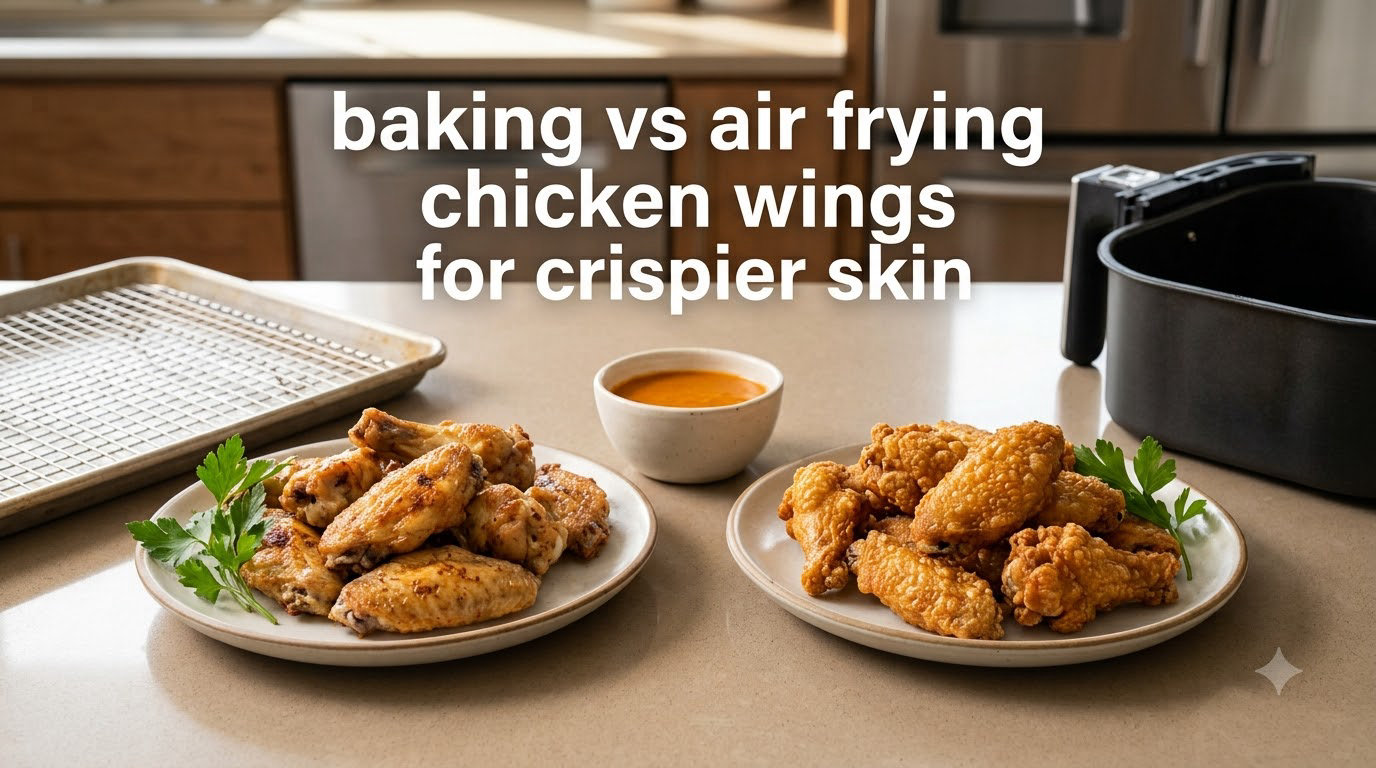
If you’ve ever pulled a tray of oven-baked chicken wings out of the oven only to find soft, flabby skin, you’re not alone. The debate between baking vs air frying chicken wings for crispier skin has been raging across kitchens, Reddit threads, and food blogs for years — and the answer isn’t as simple as “just use an air fryer.” I’ve spent weeks testing both methods side by side, tweaking temperatures, trying baking powder tricks, and even combining the two techniques. Here’s everything I’ve learned so you can get shatteringly crispy wings every single time.
This guide breaks down the science behind crispy chicken skin, walks you through each cooking method step by step, and helps you decide which approach fits your kitchen and your schedule. Whether you’re cooking for a weeknight dinner or a game-day crowd, you’ll know exactly which method to reach for.
Table of Contents
Baking vs Air Frying: The Quick Verdict
Air-fried wings are crispier and faster; oven-baked wings with baking powder match that crispiness with less mess and bigger batches. Both methods can deliver restaurant-quality crunch when done right — the difference comes down to time, batch size, and how much kitchen cleanup you’re willing to handle.
| Factor | Oven-Baked (with baking powder) | Air-Fried |
|---|---|---|
| Temperature | 425–450°F | 380–400°F |
| Cook Time | 35–45 minutes | 20–30 minutes |
| Crispiness Rating | 9/10 (with baking powder) | 9.5/10 |
| Batch Size | 2–3 lbs on a sheet pan | 1–1.5 lbs per basket |
| Cleanup | Sheet pan + wire rack + foil | Air fryer basket |
| Best For | Big batches, meal prep, parties | Quick weeknights, small batches |
The real winner? It depends on what you’re optimizing for. If speed matters most, the air fryer wins. If you’re feeding a crowd, the oven takes it. And if you want the absolute crispiest skin possible regardless of method, add baking powder to your dry brine — it’s the single biggest upgrade you can make to either technique.
Why Chicken Skin Gets Crispy (The Science)
Crispy chicken skin is all about moisture removal and browning. Understanding these two principles will make you a better wing cook no matter which appliance you use.
The Maillard Reaction
The Maillard reaction is the chemical browning that happens when amino acids and sugars in food are exposed to high heat. It kicks in around 280–330°F and creates the golden-brown color, complex flavors, and audible crunch we associate with perfectly cooked wings. Both oven baking and air frying rely on this reaction — the key is getting the skin hot and dry enough for it to run.
Moisture Is the Enemy
Chicken skin is roughly 30% water. Until most of that water evaporates, the skin can’t get above 212°F (the boiling point of water), which means the Maillard reaction never starts. This is why wings that are crowded on a pan or not patted dry steam instead of crisp. The surface moisture keeps the temperature trapped at boiling, and you end up with rubbery, pale skin instead of golden crunch.
How Air Frying Differs from Oven Baking
An air fryer is essentially a compact convection oven. A heating element warms the air while a fan blasts it directly onto the food in a small chamber. This concentrated airflow strips moisture from the skin’s surface faster than a conventional oven can. The result: air-fried wings hit the crispy stage in roughly 20–25 minutes versus 35–45 minutes in a full-size oven.
A conventional oven relies on radiant heat from the walls and heating elements. Convection ovens add a fan to circulate air, which helps — but the larger chamber means the airflow is less concentrated. Adding a wire rack elevates the wings off the pan so hot air circulates underneath, which dramatically improves the crispiness of oven-baked wings.
How to Bake Wings for Crispy Skin
Oven-baked wings can absolutely rival air-fried wings — you just need the right setup. Here’s the method that consistently produces blistered, shatteringly crispy skin.
Step 1: Pat the Wings Dry
This is the single most important step. Use paper towels to blot every wing until the surface feels dry to the touch. If you have time, place the wings uncovered on a wire rack in the fridge for 4–12 hours. This overnight air-dry dehydrates the skin even further and is a trick that real barbecue pitmasters have used for decades.
Step 2: Apply the Baking Powder Dry Brine
For every pound of wings, toss with 1 tablespoon of aluminum-free baking powder and 1 teaspoon of kosher salt. Make sure it’s baking powder, not baking soda — baking soda will leave a bitter, metallic taste. The baking powder raises the skin’s pH, which accelerates the Maillard reaction and helps the skin crisp at a lower temperature.
Step 3: Arrange on a Wire Rack
Line a sheet pan with foil and place a wire rack on top. Arrange the wings in a single layer with space between each piece. Crowding is the enemy — if the wings are touching, they’ll steam instead of roast. For 2 pounds of wings, you’ll need a standard half-sheet pan.
Step 4: Bake at 450°F
Place the pan on the middle rack of a preheated 450°F oven. Bake for 20 minutes, then flip each wing and rotate the pan 180 degrees. Continue baking for another 15–20 minutes until the skin is deeply golden and blistered. For extra-crispy results, hit them with the broiler for the final 2–3 minutes — but watch them like a hawk.
Step 5: Check Internal Temperature
The USDA minimum safe temperature for chicken is 165°F, but for wings specifically, I aim for 175°F. At this temperature, the collagen in the joints has fully rendered, the meat is juicier, and the skin pulls away from the bone slightly — all signs of a perfectly cooked wing. Use an instant-read thermometer in the thickest part of the drumette without touching bone.
How to Air-Fry Wings for Crispy Skin
Air frying is the fastest path to crispy wings, and the method is dead simple. Here’s how to get them right.
Step 1: Pat Dry and Season
Just like oven baking, pat the wings thoroughly dry with paper towels. You can use the same baking powder dry brine (1 tablespoon per pound plus salt), or go with just salt and pepper — air fryers are efficient enough that they can crisp skin without the baking powder boost, though adding it still helps.
Step 2: Preheat the Air Fryer
Preheat your air fryer to 400°F for 3–5 minutes. This step matters. Dropping wings into a cold basket means the first few minutes are spent heating the chamber instead of crisping the skin. A preheated air fryer hits the ground running and shaves 3–5 minutes off your total cook time.
Step 3: Cook in a Single Layer
Arrange the wings in a single layer in the basket with space between each piece. Most basket-style air fryers comfortably hold 1 to 1.5 pounds of wings. If you’re cooking more, work in batches — overcrowding traps steam and defeats the purpose of using an air fryer. A light spray of cooking oil is optional but helps with browning.
Step 4: Air Fry at 400°F for 20–25 Minutes
Cook for 10 minutes, then shake the basket or flip the wings. Continue cooking for another 10–15 minutes until the skin is golden and blistered. Some cooks swear by the two-temperature method: start at 360°F for 15 minutes to render the fat, then crank to 400°F for the final 8–10 minutes for maximum crunch. This lower-then-higher approach is especially effective for larger wings.
Step 5: Let Them Rest Briefly
Remove the wings and let them rest on a wire rack for 2–3 minutes. The skin continues to crisp as residual moisture evaporates. This short rest also prevents the sauce from sliding off if you’re tossing in buffalo or another wet sauce.
The Baking Powder Dry Brine: Why It Works for Both Methods
If there’s one technique that separates good wings from great wings, it’s the baking powder dry brine. This isn’t a gimmick — it’s food science that works equally well in an oven or an air fryer.
What Baking Powder Does
Standard baking powder contains sodium bicarbonate (a base) and cream of tartar or sodium aluminum sulfate (acids). When you coat chicken skin with it, two things happen. First, the alkaline powder raises the skin’s pH level, which weakens the protein bonds in the skin and lets moisture escape more easily. Second, the increased pH accelerates the Maillard browning reaction, so the skin turns golden and crispy at lower temperatures and shorter cook times.
Aluminum-Free vs Regular Baking Powder
Always reach for aluminum-free baking powder. Brands like Rumford or Bob’s Red Mill are widely available. Regular baking powder with sodium aluminum sulfate can leave a faint metallic aftertaste on the wings, especially if you’re using a generous coating. The aluminum-free version works identically for crisping without any off-flavors.
What About Cornstarch or Potato Starch?
Cornstarch and potato starch are viable alternatives that some cooks prefer. They work by absorbing surface moisture and creating a thin, crispy shell on the skin. The downside is that they don’t alter the pH the way baking powder does, so they rely entirely on heat-driven moisture removal. If you’re air frying, cornstarch alone can deliver excellent results because the airflow is so concentrated. For oven baking, baking powder still has the edge.
Which Method Should You Use?
The best method depends on your situation. Here’s a quick decision guide based on the most common cooking scenarios.
Choose the air fryer if:
- You’re cooking for 1–2 people (up to 1.5 lbs of wings)
- You want wings on the table in under 30 minutes
- You don’t want to heat up your kitchen with a full-size oven
- You prefer easy cleanup (one basket, no sheet pan)
Choose the oven if:
- You’re cooking for a crowd (2+ lbs of wings at once)
- You’re making game-day or party wings where batch size matters
- You want to use the baking powder wire-rack method for maximum surface area
- You’re already using the oven for other dishes
Choose the hybrid method if:
- You want the absolute crispiest skin possible
- You have both appliances available
- Start by baking the wings on a wire rack at 425°F for 25 minutes, then transfer them to the air fryer at 400°F for 5–8 minutes to finish. This method gives you the large-batch convenience of the oven with the intense crispy finish of the air fryer. Reddit’s r/Wings community has been championing this technique, and after testing it myself, I understand why.
Troubleshooting: Why Your Wings Turn Out Rubbery or Soggy
Rubbery, flabby wings are one of the most common cooking frustrations. Here are the usual suspects and how to fix them.
You Didn’t Pat the Wings Dry Enough
This is the number one culprit. If the skin surface is wet when it goes into the oven or air fryer, the water has to evaporate before any browning can happen. That means the first 10–15 minutes of cook time are wasted on steaming instead of crisping. Blot aggressively with paper towels, or better yet, air-dry the wings uncovered in the fridge overnight.
You Overcrowded the Pan or Basket
When wings are packed too tightly, the steam from each piece gets trapped against its neighbors. Instead of hot, dry air reaching the skin, you get a mini steam chamber. In the oven, use a wire rack and leave at least an inch between wings. In the air fryer, cook in batches if needed — the extra 10 minutes is worth it for properly crispy results.
You Skipped the Baking Powder
Oven-baked wings without baking powder almost always come out softer than their air-fried counterparts. The baking powder isn’t optional for oven baking — it’s the secret weapon that lets your full-size oven compete with an air fryer’s concentrated airflow. For air frying, baking powder is helpful but not as critical since the airflow does most of the heavy lifting.
You Didn’t Cook Them Long Enough
Wings need to reach at least 165°F internally, but the skin doesn’t truly crisp until 175°F or higher. If you’re pulling them at the minimum safe temperature, the meat is done but the skin hasn’t fully rendered. Let them go until an instant-read thermometer reads 175°F in the thickest part of the drumette. The visual cue: the skin should look blistered and slightly pulled away from the bone.
You Sauced Them Too Early
Tossing wings in sauce before cooking is a recipe for soggy skin. The sugars in most sauces (buffalo, BBQ, teriyaki) burn at high temperatures and create a sticky, steamed layer instead of a crispy one. Always cook the wings plain with just the dry brine, then toss them in sauce immediately after they come out of the heat. The residual warmth will thin the sauce just enough to coat evenly without softening the skin.
You’re Using Frozen Wings Without Thawing
Frozen wings release a tremendous amount of moisture as they thaw during cooking. If you throw frozen wings directly into an air fryer or oven, the melting ice creates steam that prevents crisping. Thaw wings in the fridge overnight, then pat them dry before seasoning. If you’re in a pinch, air-frying from frozen is possible but plan on adding 10–15 extra minutes and accepting slightly less crispy results.
Frequently Asked Questions
Is it better to air fry chicken wings or bake them?
Air frying is better for speed and small batches — wings come out crispier in 20–25 minutes. Oven baking with baking powder matches that crispiness but takes 35–45 minutes and handles 2–3 lbs at once. Choose the air fryer for weeknight dinners and the oven for parties.
Does an air fryer make things crispier than an oven?
Yes, in most cases. The air fryer’s compact chamber and concentrated fan airflow strip moisture from the skin faster than a conventional oven. However, oven-baked wings with a baking powder dry brine on a wire rack can match air-fried crispiness — it just takes longer.
What is the secret to crispy wings in the air fryer?
Three things: pat the wings completely dry, preheat the air fryer to 400°F, and cook in a single layer without overcrowding. Adding a tablespoon of aluminum-free baking powder per pound of wings gives an extra crispy boost by raising the skin’s pH and accelerating browning.
What is the best way to cook chicken wings to make them crispy?
The single biggest upgrade is using a baking powder dry brine (1 tablespoon per pound plus kosher salt). Pair that with a wire rack in a 450°F oven or a preheated air fryer at 400°F, cook to 175°F internal temperature, and you’ll get crispy skin every time.
Are oven baked wings healthier than air fried?
Both methods are healthier than deep frying since they use no submerging oil. Air-fried wings may have a slight edge because the rendered fat drips through the basket, while oven-baked wings sit in their rendered fat on the pan unless you use a wire rack. The nutritional difference is minimal.
Can you cook frozen chicken wings in an air fryer?
Yes, but results are better if you thaw first. Cook frozen wings at 380°F for 25–30 minutes, shaking the basket halfway through. Expect slightly less crispy skin than with thawed wings because the melting ice creates extra steam. Thawing overnight in the fridge and patting dry gives far crispier results.
Why are my air fryer wings not crispy?
The most common reasons are overcrowding the basket, not patting the wings dry, or skipping the preheat. Wings need space for hot air to circulate on all sides. Also make sure you’re cooking to at least 175°F internal temperature — pulling them at 165°F means the skin hasn’t fully rendered.
Can you bake wings and finish them in an air fryer?
Yes — this hybrid method produces some of the crispiest wings possible. Bake on a wire rack at 425°F for 25 minutes to render fat and cook through, then transfer to a preheated air fryer at 400°F for 5–8 minutes to blast the skin with concentrated airflow for a shatteringly crispy finish.
Final Thoughts
When it comes to baking vs air frying chicken wings for crispier skin, there’s no single right answer — only the right answer for your situation. The air fryer delivers speed and intensity for small batches. The oven handles big crowds and matches that crispiness when you use the baking powder dry brine. And for those who want the best of both worlds, the hybrid bake-then-air-fry technique is the ultimate move.
The one non-negotiable across every method: pat your wings dry, use aluminum-free baking powder in your dry brine, and cook to 175°F internal temperature. Nail those three things and you’ll get crispy, golden, shatteringly crunchy wings whether you’re using a countertop air fryer or a full-size oven. Now get cooking.