
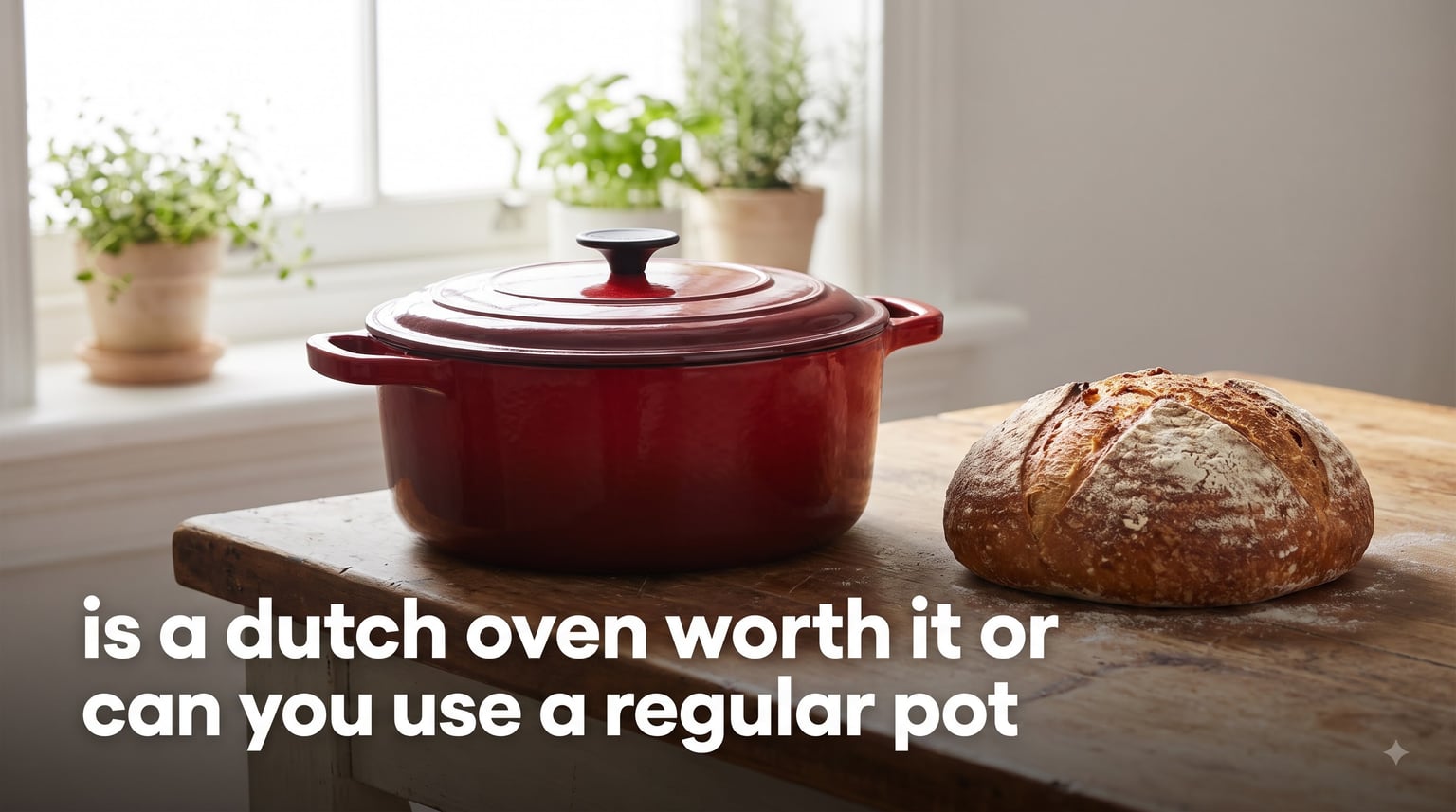
A Dutch oven is worth it if you regularly bake bread, braise meats, or make slow-cooked stews. For boiling pasta, steaming vegetables, or quick weeknight meals, a regular pot works just fine. The real answer depends on what you cook, how often, and whether you want one pot that can move from stovetop to oven.
I’ve been testing cookware in home kitchens for years, and the Dutch oven question comes up constantly. Some cooks swear by their Le Creuset as the most-used pot in their kitchen. Others say their stock pot does everything they need. Both camps are right, because they’re cooking different things.
In this guide, I’ll walk you through exactly what makes a Dutch oven different, when it outperforms a regular pot, and when you’d be just as happy saving the money. You’ll get a decision framework at the end so you can stop second-guessing.
Table of Contents
What Is a Dutch Oven and How Does It Work?
A Dutch oven is a heavy, thick-walled cooking pot, usually made of cast iron and often coated with enamel, designed to hold and distribute heat evenly. The tight-fitting lid traps steam and moisture, creating a self-basting environment inside the pot.
The name is a bit misleading. Dutch ovens didn’t actually originate in the Netherlands. The term comes from “Dutch casting,” a sand-molding technique developed in 17th-century Europe. In France, the same pot is called a cocotte, and high-end enameled versions are sometimes called French ovens.
What makes these pots special comes down to three things:
- Mass: A 5.5-quart Dutch oven weighs 12-15 pounds. That weight stores heat and prevents temperature drops when you add cold ingredients.
- Material: Cast iron (bare or enameled) heats slowly but holds heat longer than aluminum or thin stainless steel. Enamel adds a non-reactive, easy-to-clean surface.
- lid design: The heavy, tight-fitting lid traps moisture. Many enameled models have small spikes on the underside that continuously drip condensation back onto the food.
Together, these features create a cooking environment that mimics a traditional wood-fired oven. That’s why Dutch ovens became the gold standard for no-knead bread and long braises.
Cast Iron vs Enameled: What’s the Difference?
Bare cast iron Dutch ovens (like Lodge) are cheaper and develop a natural non-stick patina over time through seasoning. They require hand washing and oiling but can last generations.
Enameled cast iron (like Le Creuset or Staub) costs more but doesn’t need seasoning, won’t react with acidic foods like tomato sauce, and cleans easily with soap. The tradeoff is the enamel can chip if dropped or thermally shocked.
Both types cook identically. The choice comes down to budget and how much maintenance you want to handle.
Dutch Oven vs Regular Pot: What’s the Real Difference?
The biggest difference between a Dutch oven and a regular pot is heat retention and moisture management. A regular pot heats quickly and cools quickly. A Dutch oven takes longer to heat but holds a steady temperature far better.
Here’s how they compare on the factors that actually affect your cooking:
Heat Retention: Dutch oven holds steady temperature; regular pot fluctuates more.
Heat-up Time: Dutch oven is slower (5-10 minutes); regular pot is faster (2-3 minutes).
Weight (5.5 qt): Dutch oven is 12-15 lbs; regular pot is 3-6 lbs.
Stovetop Use: Both work well on the stovetop.
Oven Safe: Dutch oven is safe up to 500F; regular pot only if marked oven-safe.
Moisture Retention: Dutch oven has excellent retention with tight lid; regular pot is moderate with looser fit.
Best For: Dutch oven excels at braising, bread baking, slow cooking; regular pot excels at boiling pasta, stocks, soups, steaming.
Price Range: Both vary widely depending on brand and material.
A regular pot (including your standard stock pot) is lighter, cheaper, and perfectly fine for anything that involves boiling liquid. A Dutch oven earns its premium by doing things a regular pot can’t replicate as well, particularly anything that benefits from enclosed, even heat for long periods.
Can You Use a Stock Pot Instead of a Dutch Oven?
For boiling, simmering stocks, or making large batches of soup, yes. A stainless steel stock pot handles these jobs well, and its tall sides actually make skimming and reducing easier.
For braising a 4-pound chuck roast for 3 hours or baking bread that needs a steam-filled environment, a stock pot won’t deliver the same results. The lid doesn’t seal as tightly, the walls are too thin to retain heat, and most stock pot lids aren’t oven-safe.
Why a Dutch Oven Is Worth It: Key Advantages
A Dutch oven delivers three things a regular pot struggles with: consistent low heat, a sealed moist environment, and the ability to move from burner to oven without switching vessels.
These advantages show up most clearly in specific techniques:
- Braising: The steady, gentle heat breaks down tough cuts of meat into tender, pull-apart results. Reviewers on r/Cooking consistently report that braised short ribs and pot roasts come out noticeably better in a Dutch oven than in a thin pot.
- Bread baking: A preheated Dutch oven traps steam released by the dough. That steam keeps the crust soft long enough for the bread to fully expand, then the lid comes off for a crackling crust. It’s the closest home bakers get to a professional bakery oven.
- One-pot meals: You can sear meat on the stovetop, then slide the whole pot into the oven to finish. Fewer dishes, better flavor development.
- Deep frying: The thick walls stabilize oil temperature, so fried chicken comes out less greasy and more evenly cooked.
- Slow-simmered sauces and stews: Tomato sauce, chili, and coq au vin hold a gentle bubble for hours without scorching.
The moisture-cycling lid is the secret weapon. As food cooks, steam rises, hits the lid, condenses, and drips back down. This self-basting effect keeps roasts moist and prevents the surface from drying out during long cooks.
When a Regular Pot Works Just Fine
A Dutch oven is overkill for many everyday cooking tasks. Here’s when you can skip it:
- Boiling water for pasta, potatoes, or eggs: A regular pot boils faster and weighs less. Nothing about pasta benefits from cast iron heat retention.
- Steaming vegetables or seafood: Any pot with a steamer basket or insert works. The enclosed, moist environment a Dutch oven creates doesn’t add value here.
- Quick weeknight sautés: If you’re cooking a 20-minute stir-fry, the slow heat-up of a Dutch oven works against you. A stainless steel or nonstick skillet is faster and more responsive.
- Cooking acidic foods for short periods: If you’re simmering tomato sauce for 30 minutes, any pot works. Bare cast iron can react with long-cooked acidic dishes, but enameled versions handle them fine.
- Making large-batch stocks: A tall stock pot is actually better. More surface area means faster reduction and easier skimming.
If your cooking routine is mostly boiling, steaming, and quick sautéing, a regular pot covers your needs. The Dutch oven’s strengths only activate during low-and-slow cooking or bread baking.
What Can You Cook in a Dutch Oven?
Dutch ovens shine with anything that needs long, gentle, enclosed heat. Some of the most popular dishes include:
- No-knead artisan bread
- Beef stew and pot roast
- Coq au vin and other wine-braised dishes
- Chili and bean soups
- Whole roasted chicken
- Braised short ribs
- Bolognese and other long-simmered sauces
- Deep-fried chicken
- Chicken and dumplings
- Sourdough boules
Outside this list, a Dutch oven works like any other pot. It’s versatile, but not magic. It won’t make your scrambled eggs better or your weeknight rice faster.
Choosing the Right Size and Material
For most home cooks, a 5.5-quart Dutch oven hits the sweet spot. It’s large enough for a 4-pound chicken, a loaf of bread, or a family-sized stew, but not so heavy that you dread lifting it.
A 7-quart model makes sense if you regularly cook for 6+ people or want to make extra for leftovers. Anything larger gets unwieldy, especially when full.
For couples or small households, a 3.5-quart works for side dishes and smaller braises, but you’ll outgrow it quickly if you host often.
Material Considerations
Bare cast iron (Lodge): Lowest cost, lasts forever, requires seasoning and hand-drying. Best if you want one pot to pass down to your kids.
Enameled cast iron (Le Creuset, Staub, Tramontina): Higher cost, no seasoning needed, won’t react with acidic foods. Best if you want low-maintenance, beautiful cookware you can bring straight to the table.
Aluminum-core with ceramic coating: Lighter and cheaper than cast iron, but doesn’t retain heat as well. Fine for occasional use, not ideal if you bake bread weekly.
The Real Cost of a Dutch Oven: Is It Worth the Money?
The sticker price on a premium Dutch oven makes a lot of home cooks hesitate. But cost-per-use tells a different story.
A 5.5-quart enameled Dutch oven from a premium brand can last 30+ years with reasonable care. If you use it twice a month, that’s roughly 720 uses over its lifetime. Even at a premium price, that works out to pennies per meal.
Bare cast iron Dutch ovens cost less and last even longer. Many cooks report using the same Lodge Dutch oven their parents bought in the 1970s.
The math flips if the pot sits in your cabinet. A Dutch oven you use twice a year is not a good deal at any price. Storage space and weight are real costs too, especially if you live in a small kitchen.
For cooks who bake bread weekly or braise regularly, the value is clear. For everyone else, it’s a luxury that needs to fit your cooking habits.
Your Decision Framework: Should You Buy One?
Skip the Dutch oven if:
- You cook mostly quick weeknight meals under 30 minutes
- You rarely bake bread or braise meat
- You have limited cabinet space or can’t lift 12+ pounds comfortably
- Your current pot handles everything you make
Get a Dutch oven if:
- You bake bread weekly and want better crust and oven spring
- You cook tough, inexpensive cuts of meat and want them tender
- You want one pot that goes from stovetop sear to oven braise without dirtying another dish
- You host dinner parties and want a pot that doubles as a serving dish
- You already have a decent skillet and stock pot and want to fill a real gap
If you’re still on the fence, start with a bare cast iron Dutch oven. It costs less, teaches you the technique, and if you don’t end up using it, you haven’t wasted a fortune.
Frequently Asked Questions
Can I just use a regular pot instead of a Dutch oven?
Yes, for boiling, simmering, and steaming, a regular pot works fine. For braising, bread baking, and slow cooking, a Dutch oven delivers better results because of its heat retention and tight-fitting lid.
When should you not use a Dutch oven?
Skip the Dutch oven for quick stovetop tasks like boiling pasta, steaming vegetables, or weeknight sautés. A regular pot heats faster and is easier to handle for these jobs.
Can I use my Dutch oven like a regular pot?
Yes, a Dutch oven works for everyday cooking like boiling water or simmering soup. Just know it heats slower and weighs more than a standard pot, so it’s less convenient for quick tasks.
Is a Dutch oven better than a regular pot?
A Dutch oven is better for techniques that need steady, enclosed heat: braising, bread baking, and slow cooking. A regular pot is better for boiling, steaming, and quick meals. Neither is universally superior.
Final Verdict
A Dutch oven is worth it if you regularly bake bread, braise meats, or cook long-simmered stews. For these techniques, it produces results a regular pot genuinely can’t match. If your cooking stays mostly in the quick-meal lane, a good stock pot and skillet will serve you just as well and leave you with more cabinet space and less weight to lift.
The honest answer is that whether a Dutch oven is worth it depends entirely on what you cook and how often. Match the pot to your habits, not to someone else’s kitchen, and you’ll make the right call.