
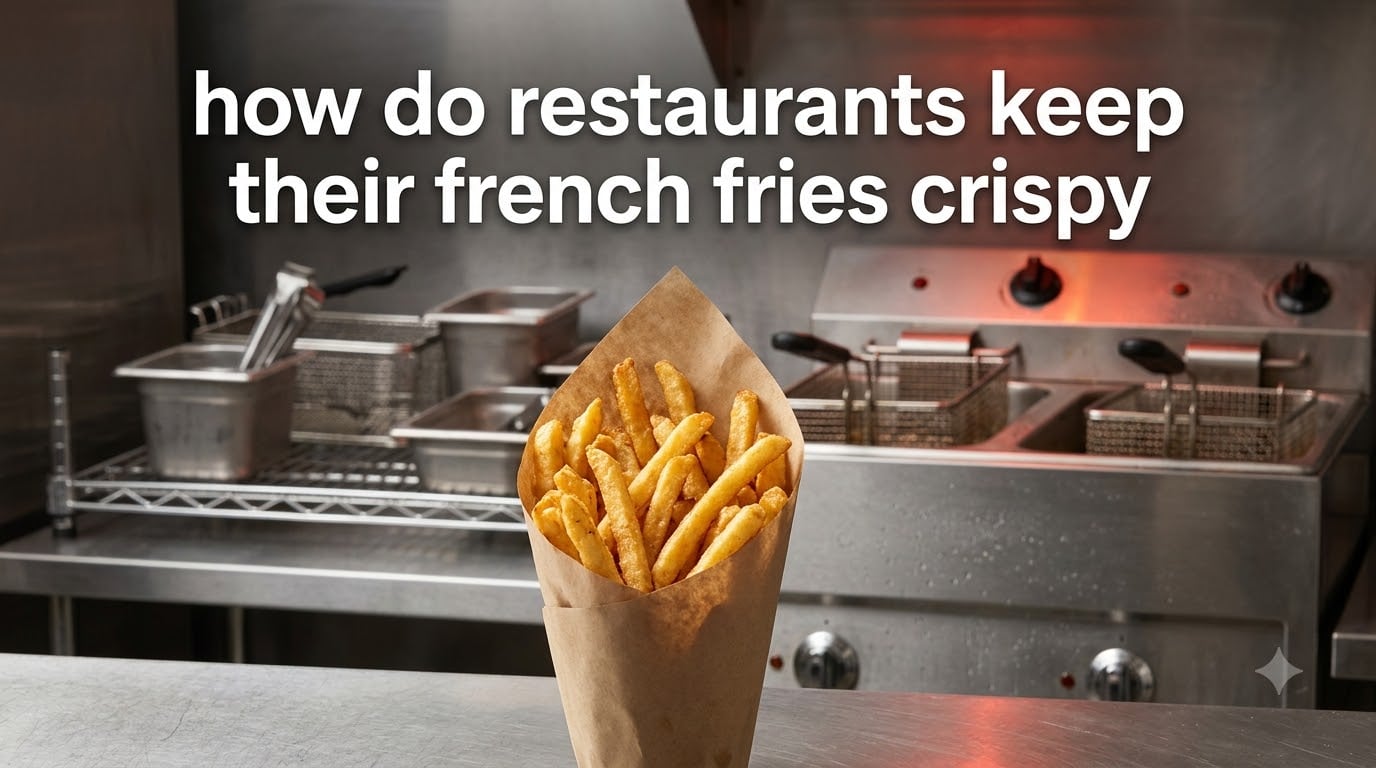
Have you ever wondered how do restaurants keep their french fries crispy long after they leave the fryer? That signature crunch you get at a diner, bistro, or fast food counter is not luck. It is a combination of careful prep, controlled temperatures, and the kind of equipment most home kitchens do not have. After spending weeks testing fry techniques in our test kitchen and talking to line cooks about their daily routines, I can show you exactly what separates a soggy fry from a restaurant-perfect one.
The answer comes down to four pillars: choosing the right potato, removing excess starch, frying in two controlled stages, and holding the finished fries the right way until they reach your table. We will walk through each step, then translate the techniques for your home kitchen.
Table of Contents
The Double Fry Method: How Restaurants Get Fries So Crispy
The double fry method is the single biggest reason restaurant fries stay crispy. It is not a secret ingredient or a fancy coating. It is two separate trips through hot oil, each with a specific job.
The first fry cooks the potato gently so the interior becomes tender and fluffy. The second fry drives off surface moisture and triggers the browning reaction that creates a glassy, crunchy crust. Skipping either stage is what gives you a pale, limp fry at home.
Step-by-Step: The Restaurant Double Fry
- Cut potatoes into even sticks, about 3/8 inch thick, so they cook at the same rate.
- Soak the cut potatoes in cold water for at least 30 minutes to release surface starch.
- Dry the potatoes thoroughly on clean towels. Water and hot oil are dangerous enemies.
- Heat oil to 325°F (163°C). Blanch the fries for 4 to 5 minutes until soft but not browned.
- Remove and drain on a rack. Let them rest at room temperature for at least 10 minutes, or chill for later use.
- Raise the oil temperature to 375°F (190°C). Fry the rested potatoes a second time for 2 to 3 minutes until deeply golden.
- Season immediately and serve within 90 seconds for peak crispiness.
This is the same sequence cooks describe on r/AskCulinary when they break down a real service shift. The first fry is a “blanch” and the second is a “finish.” Once you see them as two separate jobs, your home fries will never look the same.
Why Soaking Potatoes Is Essential for Crispy Fries
Restaurants soak cut potatoes in cold water before anything touches the fryer. This step is not optional. Raw potato is loaded with free starch on the surface of each cut stick, and that starch turns gummy in hot oil.
A 30-minute soak washes away enough surface starch to keep the fries from sticking together and to prevent the crust from absorbing excess oil. A longer soak, up to overnight in the fridge, goes further. It pulls even more starch out and, as the team at Serious Eats has documented, allows an enzyme called pectin methylesterase to strengthen the potato cell walls. Stronger cell walls mean less moisture escapes during the fry, which gives you a drier, crispier exterior and a fluffier interior.
The Vinegar Trick
For an even crispier result, add a tablespoon of white vinegar or lemon juice to the soak water. The mild acid slows softening of the pectin on the outside of each stick. When the fry hits hot oil, that reinforced outer layer sets up quickly and shatters under your teeth.
Drying Is Non-Negotiable
After soaking, dry the potatoes completely. Pat them with towels, then spread them on a sheet pan lined with paper towels while you heat the oil. Even a thin film of water will drop your oil temperature, cause violent splattering, and leave you with pale, oil-logged fries.
The Science of Crispiness: What Happens Inside the Potato
Crispy fries are a chemistry project. Three reactions do most of the work, and understanding them takes the guesswork out of cooking.
Starch gelatinization happens around 140°F to 180°F. Starch granules inside the potato absorb water, swell, and soften the interior. This is why a fry needs time at lower temperatures before any browning can happen.
Moisture release is the bridge between soft and crispy. During the first fry, water inside the potato migrates outward and steams off. The second fry, at higher heat, drives off the last of the surface moisture so the crust can brown instead of steam.
The Maillard reaction is what creates color and flavor. Above 300°F, amino acids and reducing sugars on the surface react and form hundreds of new aroma compounds. This is why a fry at 375°F turns golden and smells incredible while the same fry at 325°F stays pale and tastes flat. It is the same reaction that browns bread, sears steak, and roasts coffee.
Restaurants control all three by managing oil temperature carefully. Home cooks often skip the first fry and crank the heat, which dries the outside before the inside cooks. The result is a brown fry with a gummy center, the opposite of what you want.
Best Potato Varieties for Restaurant-Style Fries
Potato choice matters more than most home recipes admit. The right variety has a high starch content and low moisture, which translates directly into fluffier interiors and crispier exteriors.
Russet Potatoes
Russets are the industry standard for a reason. They have the highest starch content of common potatoes, a dry, mealy texture, and thick skins that hold up well during peeling and cutting. Most chains and bistro kitchens reach for russets every time.
Yukon Gold
Yukon Golds have a buttery flavor and slightly lower starch content. They make a denser fry with a creamy center. You will see them more often in gastropubs that want a thicker-cut steak fry.
Maris Piper and Agria
If you can find British or European varieties like Maris Piper or Agria, they are excellent. These are the potatoes British chip shops use to make their famously crunchy fries. They have the same high-starch, low-moisture profile as russets.
Waxy Potatoes
Waxy varieties like red potatoes or new potatoes hold their shape after cooking, which is the opposite of what you want for a fry. Save them for potato salad or gratin.
Temperature Control: The Numbers Behind the Crunch
If you remember nothing else, remember the two temperatures: 325°F for the first fry, 375°F for the second. Every other tip in this article supports those numbers.
Why the first fry runs cooler: At 325°F, the potato has time to cook all the way to the center without browning. A fryer held at 375°F from the start would scorch the outside before the middle is done, leaving you with a crisp shell around raw potato.
Why the second fry runs hotter: At 375°F, the surface moisture flashes off quickly, the Maillard reaction kicks into high gear, and the crust forms within two to three minutes. The high heat also gives the fry a glossy, almost lacquered look that is hard to replicate any other way.
Oil recovery time is another piece professionals obsess over. When you drop a basket of fries, oil temperature drops. A good commercial fryer recovers to target temperature within 30 seconds. A home pot of oil can take two minutes, which is long enough to overcook the first batch while the oil recovers. Smaller batches fix this. Fry 4 to 6 ounces of potatoes per gallon of oil and your temperatures stay stable.
How Restaurants Hold Fries Hot and Crispy for Hours
Cooking is only half the battle. The other half is keeping fries crisp from the fryer to the customer’s hand. This is where commercial kitchens spend real money on specialized equipment.
Fry Holding Stations
A fry holding station is a countertop cabinet with a perforated bottom, overhead heat, and a base heater underneath. Fries sit on a raised surface so air circulates freely, and ceramic emitters above maintain a steady 175°F to 195°F without driving more moisture into the crust. Companies like Hatco build these stations specifically so a kitchen can pre-fry a large batch and serve it hot for an hour or more without losing crunch.
Heat Lamps
A simple heat lamp is the budget version. It keeps fries warm but does nothing for crispiness, and the infrared light can actually soften a delicate crust over time. Heat lamps work best for short holds of 5 to 10 minutes.
Salt Screens
Some fry stations line the holding bin with a bed of salt or use a perforated metal screen above the fries. The screen lifts fries above any condensation that collects at the bottom of the bin. Trapped moisture is the enemy of crispiness, and these screens are the cheapest fix.
The common thread across all three: avoid steam, avoid moisture pooling, and keep the fries warm enough that the crust does not go soft. Any system that traps humidity turns golden fries into cardboard within minutes.
Adapting Restaurant Techniques for Home Kitchens
You do not need a commercial fryer to make restaurant-quality fries at home. You need the same logic, scaled down. Here is the workflow that has worked best in our test kitchen using nothing but a heavy pot, a thermometer, and a wire rack.
Equipment Substitutions
- Dutch oven or heavy pot replaces the commercial fryer. Cast iron retains heat well enough to keep temperature drops manageable.
- Candy or instant-read thermometer replaces the built-in fryer thermostat. Clip it to the side of the pot.
- Wire rack set over a sheet pan replaces the holding station. Air circulates under and around the fries.
- Neutral oil with a high smoke point like peanut, canola, or sunflower oil replaces the commercial peanut oil most restaurants use.
Common Mistakes That Cause Soggy Fries
After running dozens of test batches, the same five mistakes come up again and again. Avoid these and your fries will already be ahead of 90 percent of home cooks.
- Skipping the soak. Surface starch turns into glue in the fryer. Soak for at least 30 minutes.
- Frying from cold. Wet potatoes drop oil temperature sharply. Dry them completely on towels before they hit the oil.
- Crowding the pot. Too many fries at once cools the oil below 300°F. Fry in small batches.
- Salting too early. Salt pulls moisture to the surface. Season within 30 seconds of pulling the fries out of the second fry.
- Covering the fries after cooking. Trapped steam destroys crispiness. Always hold them uncovered on a rack.
These are exactly the issues forum users describe on cooking.stackexchange.com. The most common complaint is “my fries are great for five minutes and then go limp.” The fix is almost always one of the five mistakes above.
How Fast Food Chains Like McDonald’s Get Consistent Fries
Fast food fries are a special case because they need to be identical across thousands of locations and stay crunchy in a warming bin for several minutes. The technique is more industrial, but the principles are the same ones we have covered.
Par-Cooking at the Factory
McDonald’s and similar chains par-cook their potatoes at a central facility, then flash-freeze and ship them. The factory step includes a brief blanch and partial fry, which sets up the cell structure for the final fry at the restaurant.
The Dextrose Coating
Many chains toss the raw cut potatoes in a small amount of dextrose, a sugar, before the first fry. The sugar feeds the Maillard reaction and produces that uniform golden color across every single fry. Without it, fries brown unevenly and look pale in spots.
Long Hold Times
Fast food fries can sit in a warming bin for up to 7 minutes after cooking. To survive that hold, chains fry slightly darker than a sit-down restaurant would, and they use holding bins with airflow underneath. The fries trade a touch of crunch for visual consistency and speed of service.
When you see someone ask online “why do McDonald’s french fries last so long,” this is the answer. The fries are partially cooked at the factory, finished in oil with a controlled sugar coating, and held in a bin designed to keep air circulating. Every step is engineered to delay the moment the crust absorbs moisture.
Keeping Fries Crispy for Delivery and Takeout
Delivery is the hardest environment for a fry. By the time the bag reaches your door, steam has usually softened the crust into something closer to a chip than a fry. A few practical changes make a real difference.
Vented Containers
Most delivery bags trap steam inside a sealed container, which wrecks crispiness within 10 minutes. Restaurants that care about fry quality use vented clamshells or punch small holes in the lid. The steam escapes, and the crust holds its crunch for the full delivery window.
Paper Wrapping
Wrapping fries in a single layer of unbleached parchment, then placing them inside the bag, absorbs surface oil without sealing in moisture. Plastic or foil wrap does the opposite and should be avoided for any hold longer than five minutes.
Timing Tips for the Customer
If you are ordering delivery, time the order so the fries arrive while you are sitting at the table. Avoid letting them sit on a counter or in a mailbox, where residual heat turns to steam and the crust softens. Pulling them out of the bag immediately and spreading them on a plate in a single layer buys you an extra few minutes of crunch.
For party service, the same principles apply. Hold fries on a wire rack over a sheet pan in a 200°F oven, never in a covered bowl. The dry, circulating air keeps the crust crisp until your guests are ready to eat.
Frequently Asked Questions
How do restaurants get fries so crispy?
Restaurants use the double fry method. Potatoes are first blanched in oil at 325°F to cook the interior, rested, then fried a second time at 375°F to crisp the outside. Soaking the cut potatoes in cold water first removes surface starch that would otherwise make the crust gummy.
What do restaurants put on fries to make them crispy?
Most restaurants do not add a coating beyond salt. The crispiness comes from the double fry method, removing excess starch by soaking, drying the potatoes thoroughly, and using oil at the right temperature. Some fast food chains dust the cut potatoes with a small amount of dextrose to encourage even browning.
Why do McDonald’s french fries last so long?
McDonald’s fries are par-cooked and frozen at a central factory, finished in the restaurant in oil at a high temperature, and held in a warming bin with airflow underneath. A light dextrose coating promotes even browning, and the bins are designed to keep moisture away from the crust.
What is the secret to crunchy French fries?
The secret is the double fry. The first fry at 325°F cooks the potato all the way through. The second fry at 375°F drives off surface moisture and creates a glassy, crunchy crust through the Maillard reaction. Skipping either stage leaves you with a soft or pale fry.
The Bottom Line
So how do restaurants keep their french fries crispy? They control every variable: the potato, the starch, the oil temperature, the cooking stages, and the holding environment. The double fry method at 325°F then 375°F is the foundation. Soaking and drying the potatoes removes the starch that would otherwise gum up the crust. Hot, dry, circulating air keeps the fries crisp from the fryer to the customer’s hand.
You can replicate nearly all of this in a home kitchen with a heavy pot, a thermometer, and a wire rack. Start with russets, soak them in cold water for 30 minutes, dry them well, and fry in two stages. Hold finished fries on a rack in a warm oven if you need to stagger serving. Once you have made them this way a few times, restaurant fries will start to feel like the easy option rather than the gold standard.