
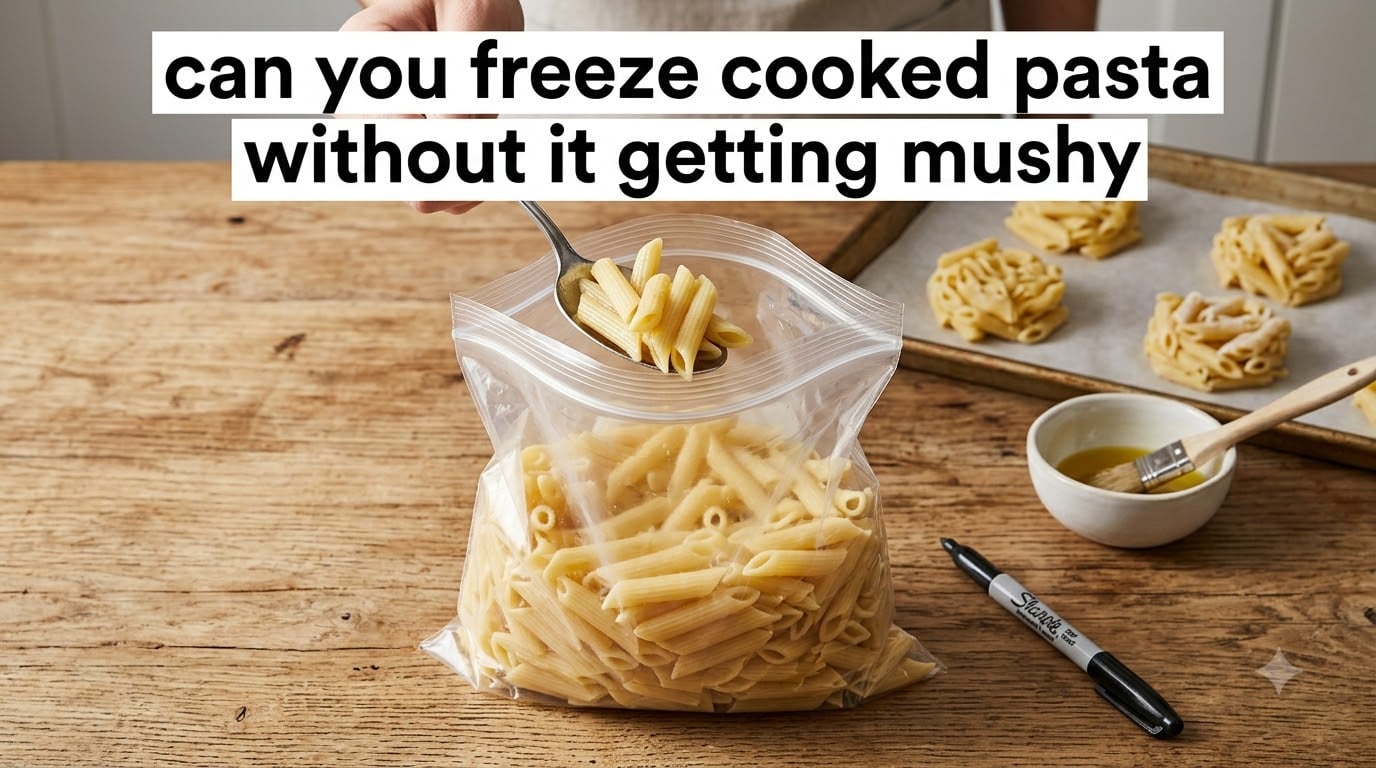
Can you freeze cooked pasta without it getting mushy? Yes — if you undercook it slightly, cool it fast, and store it in an airtight container. I’ve been freezing pasta for years, and the technique works every time when you follow a few simple rules. In this guide, I’ll walk you through exactly how to freeze cooked pasta so it tastes just as good when you reheat it.
Table of Contents
Quick Answer: How to Freeze Cooked Pasta
Here’s the short version if you need to get pasta in the freezer right now:
Cook to 70-80% doneness — the pasta should still have a firm bite in the center (al dente).
Rinse with cold water immediately after draining to stop carryover cooking.
Toss with 1-2 teaspoons of olive oil per 2 cups of cooked pasta to prevent sticking.
Spread in a single layer on a parchment-lined baking sheet and freeze for 1-2 hours.
Transfer to freezer bags or airtight containers, squeeze out excess air, and label with the date.
Store for up to 3 months at 0°F (-18°C) for best quality.
Why Does Pasta Get Mushy After Freezing?
Understanding the science helps you avoid the most common failure. When you cook pasta, the starch granules absorb water and swell — a process called starch gelatinization. This is what gives properly cooked pasta its tender texture.
When you freeze that cooked pasta, ice crystals form inside the noodles. If the pasta was already overcooked, those crystals break down the weakened starch structure even further. When you thaw and reheat, the starch collapses and releases all that absorbed water. The result? A mushy, waterlogged mess.
There’s also carryover cooking to worry about. Even after you drain pasta, residual heat continues cooking it. If you skip the cold-water rinse, that extra cooking pushes the noodles past the point of no return before they even hit the freezer.
How to Freeze Cooked Pasta Step by Step
This is the method I use every week for meal prep. It takes about 20 minutes of active work and saves me hours on busy weeknights.
Step 1: Cook It Al Dente (70-80% Doneness)
Bring a large pot of heavily salted water to a rolling boil. Add your pasta and cook it for about 2 minutes less than the package directions suggest. The noodles should still have a visible white core when you bite into one. This undercook rule is the single most important step — you cannot fix overcooked pasta once it’s frozen.
Step 2: Rinse with Cold Water
Drain the pasta and immediately run it under cold water for 30-60 seconds. This halts carryover cooking and removes surface starch that would otherwise make the noodles clump together. Don’t skip this step even if you plan to use the pasta with sauce later.
Step 3: Toss with Olive Oil
While the pasta is still slightly warm, toss it with 1-2 teaspoons of olive oil per 2 cups of cooked noodles. The oil creates a thin barrier that prevents the pasta from sticking into a solid brick in the freezer. Some cooks debate whether oil prevents sauce from sticking later — in my experience, a quick rinse in warm water before saucing solves that problem completely.
Step 4: Pre-Freeze in a Single Layer
Line a baking sheet with parchment paper and spread the pasta in a single layer with pieces not touching each other. For spaghetti or long noodles, twirl portions into small nests using a fork — about the size of a tennis ball. Place the baking sheet in the freezer for 1-2 hours until the pasta is firm to the touch.
Step 5: Transfer to Freezer-Safe Containers
Once the pasta is individually frozen, transfer it to freezer bags or airtight containers. Press out as much air as possible from freezer bags before sealing — trapped air causes freezer burn, which dries out the pasta and creates that unpleasant chewy texture. If you’re using containers, leave about half an inch of headspace for expansion.
Step 6: Label and Date Everything
Use a permanent marker to write the contents and freeze date on each bag or container. Frozen pasta maintains its best quality for up to 3 months, though it remains safe to eat indefinitely if kept at 0°F. I also write the portion size — it saves guesswork when I’m pulling dinner together on a weeknight.
Best and Worst Pasta Shapes for Freezing
Not all pasta shapes freeze equally. Thicker, sturdier shapes with ridges or tubes hold up best because they have more structural integrity to survive ice crystal formation.
Shapes that freeze well: Penne, rotini, fusilli, rigatoni, shells (conchiglie), farfalle (bow ties), and ziti. These shapes have walls or ridges that maintain their texture through the freeze-thaw cycle. Spaghetti and linguine also work well when formed into nests before pre-freezing.
Shapes to avoid: Angel hair, fresh pasta, and delicate filled pastas like ravioli or tortellini tend to fall apart or turn gummy. Gnocchi also doesn’t freeze well after cooking — the potato starch becomes unpleasantly dense. If you want to freeze ravioli, freeze it uncooked on a baking sheet first, then boil from frozen when ready to serve.
How to Reheat Frozen Pasta Without Making It Mushy
The reheating method matters just as much as the freezing technique. Here are four methods I’ve tested, ranked by how well they preserve texture.
Boiling Water (Best Method)
Bring a pot of water to a rolling boil. Drop the frozen pasta directly into the water — no thawing needed — and cook for 30-60 seconds. The brief exposure to boiling water warms the noodles through without making them soggy. Drain immediately and toss with your sauce.
Skillet with Oil or Sauce
Heat a tablespoon of olive oil or your sauce in a skillet over medium heat. Add the frozen pasta and toss frequently for 2-3 minutes until heated through. This method works especially well for pasta that’s already mixed with sauce, as it helps re-emulsify any separated fats.
Microwave with Splash of Water
Place frozen pasta in a microwave-safe bowl and add 1-2 tablespoons of water per cup of pasta. Cover with a damp paper towel or microwave-safe lid and heat on medium power for 1-2 minutes, stirring halfway through. The steam from the water prevents the pasta from drying out. This is the best method when reheating for someone who can only use a microwave.
Oven (Best for Baked Dishes)
For pasta bakes, lasagna, or baked ziti, preheat your oven to 350°F (175°C). Place the frozen pasta in an oven-safe dish, cover tightly with aluminum foil, and bake for 25-35 minutes until heated through. Remove the foil for the last 5-10 minutes if you want a crispy top.
Common Mistakes to Avoid When Freezing Pasta
After years of freezing pasta and reading countless forum discussions, these are the mistakes I see most often:
Overcooking before freezing. This is the number one reason frozen pasta turns mushy. If the noodles are soft before they go in the freezer, they’ll be inedible after thawing. Always cook to 70-80% doneness.
Skipping the cold-water rinse. Carryover cooking continues for 1-2 minutes after draining. Without the rinse, your pasta keeps cooking and crosses into overcooked territory before it even reaches the freezer.
Freezing in one big clump. Tossing hot pasta straight into a container without pre-freezing creates a solid block that’s impossible to portion. The single-layer pre-freeze step takes 1-2 hours but saves you from chiseling apart frozen pasta later.
Leaving air in the bag. Air exposure causes freezer burn — the dehydrated, oxidized surface that makes pasta taste stale and chewy. Squeeze out every bit of air before sealing, or use a straw to suck out the last pockets.
Not labeling the date. Frozen pasta is safe indefinitely, but quality drops after 3 months. Without a date, you’ll never know if that mystery bag in the back of the freezer is 2 weeks or 8 months old.
Freezing cream-based sauces. Cream and cheese sauces tend to separate when frozen and reheated, resulting in a grainy, oily texture. Tomato-based sauces freeze much better. If you must freeze a cream sauce, reheat it gently in a skillet and whisk vigorously to re-emulsify.
Freezing pasta while it’s still hot. Hot food raises the temperature inside your freezer, which can partially thaw surrounding items and create food safety concerns. Always cool pasta to room temperature before freezing — though don’t leave it out for more than 2 hours per USDA guidelines.
Freezing Pasta with Sauce: What Works Best
You can freeze pasta with sauce or without — each approach has advantages depending on your plans.
Tomato-based sauces (marinara, bolognese, arrabbiata) freeze beautifully. The acidity in tomatoes actually helps preserve the pasta’s texture. This is the best option for freezer meals.
Oil-based sauces (aglio e olio, pesto) also freeze well. The oil coating provides extra protection against freezer burn. Pesto may darken slightly but the flavor stays intact.
Cream-based sauces (alfredo, carbonara, vodka sauce) are the riskiest. The dairy fats separate during freezing, creating an oily, grainy texture when reheated. If you need to freeze a cream sauce dish, undercook the pasta even more (closer to 60% doneness) and reheat very gently.
Combined vs. separate: For maximum flexibility, freeze pasta and sauce in separate containers. This lets you mix and match portions and control the pasta-to-sauce ratio when reheating. If you’re freezing for someone who primarily uses a microwave, pre-portioning pasta and sauce together in microwave-safe containers is the most convenient option.
Food Safety: How Long Does Frozen Pasta Last?
Frozen pasta is safe to eat indefinitely when kept at 0°F (-18°C) or below — freezing stops bacterial growth entirely. However, quality degrades over time.
For the best texture and flavor, use frozen pasta within 1-3 months. After 3 months, you’ll notice increasing freezer burn and a gradual decline in texture. It’s still safe to eat, but it won’t taste as good.
One important food safety note: cool your pasta quickly before freezing. The USDA identifies 40°F to 140°F as the “danger zone” where bacteria multiply rapidly. Don’t leave cooked pasta sitting at room temperature for more than 2 hours. Spread it on a baking sheet or rinse with cold water to bring the temperature down fast.
As for the common question about freezing old pasta — can you freeze 5-day-old spaghetti? If the pasta has been refrigerated at 40°F or below the entire time and shows no signs of spoilage, it’s technically safe to freeze. But the texture will already be compromised from days in the fridge, and freezing won’t improve it. I’d recommend freezing pasta within 1-2 days of cooking for the best results.
Frequently Asked Questions
Can you freeze and then reheat cooked pasta?
Yes, you can freeze and reheat cooked pasta successfully. The key is cooking it to 70-80% doneness (al dente), rinsing with cold water, tossing with olive oil, and storing in airtight containers. Reheat in boiling water for 30-60 seconds or in a skillet with sauce for best results.
Why does pasta get mushy after freezing?
Pasta gets mushy because ice crystals form inside the cooked noodles during freezing. When thawed, these crystals break down the starch structure, releasing absorbed water and creating a soft, waterlogged texture. Overcooking before freezing makes this problem much worse since the starch is already weakened.
Can you freeze cooked pasta in a Ziploc bag?
Yes, Ziploc freezer bags are one of the best containers for freezing pasta. Squeeze out as much air as possible before sealing to prevent freezer burn. You can lay the bag flat in the freezer for easy stacking and faster thawing.
Can I freeze 5-day-old spaghetti?
If the spaghetti has been refrigerated at 40°F or below the entire time, it is technically safe to freeze. However, the texture will already be compromised from several days in the fridge. For best results, freeze pasta within 1-2 days of cooking.
Can you freeze cooked pasta with sauce?
Yes, you can freeze pasta with sauce. Tomato-based and oil-based sauces freeze best. Cream-based sauces tend to separate when frozen and reheated, resulting in a grainy texture. For maximum flexibility, freeze pasta and sauce in separate containers so you can control portions later.
What is the best way to reheat frozen pasta?
The best method is to drop frozen pasta directly into boiling water for 30-60 seconds. No thawing is needed. Drain immediately and toss with sauce. For a hands-off approach, microwave with a splash of water, covered, on medium power for 1-2 minutes.
How long does frozen cooked pasta last?
Frozen cooked pasta maintains its best quality for 1-3 months when stored in airtight containers at 0°F. It remains safe to eat indefinitely, but texture and flavor gradually decline after the 3-month mark due to freezer burn.
Can you freeze gluten-free pasta?
Yes, you can freeze gluten-free pasta using the same method, but results vary by brand and ingredient. Rice-based and corn-based gluten-free pastas tend to hold up better than lentil or chickpea varieties, which can become crumbly or gummy. Undercook even more aggressively — aim for 60-70% doneness.
Conclusion
Freezing cooked pasta is one of the easiest meal prep strategies once you know the technique. Cook it al dente, cool it fast, toss with oil, pre-freeze in a single layer, and store airtight. Follow these steps and you’ll have ready-to-go pasta portions that taste freshly made — not mushy — whenever you need a quick dinner. If you’re looking for more cooking guides and kitchen tips, check out our other resources on restaurant-rotonde.com.