
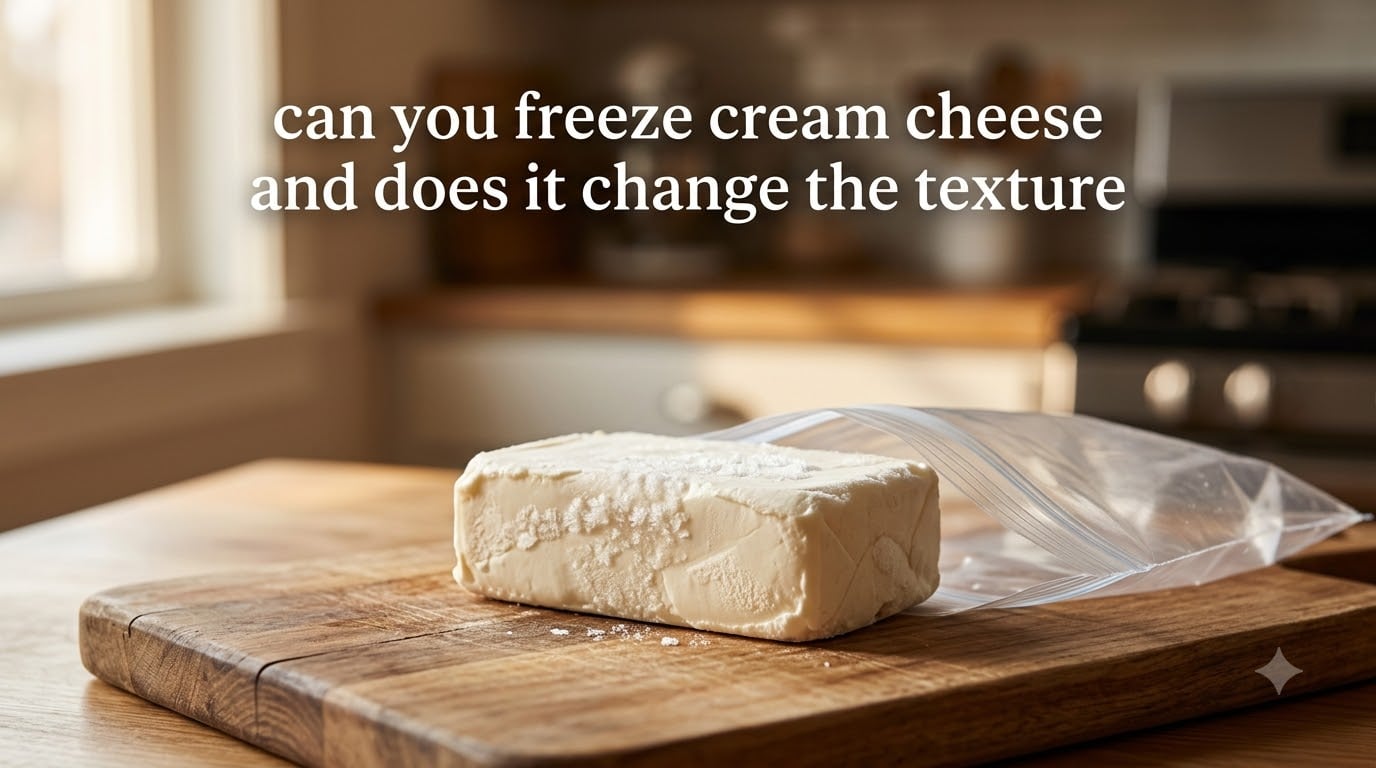
Yes, you can freeze cream cheese. But here’s the catch — the texture will change when you thaw it. Frozen cream cheese becomes grainy, crumbly, and loses its signature smooth spreadability. That doesn’t mean it’s ruined. It means you need to know how to freeze it properly, how to thaw it, and what to use it for afterward.
We’ve tested this across multiple brands and cream cheese types over the past few months. The good news: frozen cream cheese works beautifully in cooked dishes, baked goods, and dips. The not-so-good news: it will never be the same on your morning bagel. This guide covers exactly what happens when you freeze cream cheese, the best methods to preserve quality, and how to get the most out of every block you freeze.
Table of Contents
What Happens to Cream Cheese When You Freeze It
Understanding the science behind freezing cream cheese helps set realistic expectations. Cream cheese is an emulsion — a stable mixture of fat, water, protein, and milk solids held together in a smooth, creamy matrix. When you freeze it, that carefully balanced structure breaks down.
Water inside the cream cheese forms ice crystals as the temperature drops. These crystals expand and physically disrupt the protein network that keeps the emulsion stable. When you thaw the cream cheese, the water separates from the fat and proteins. The result is a grainy, crumbly texture that feels nothing like the original product.
According to food science principles, this process is called emulsion break. It’s the same reason frozen milk or sour cream changes texture after thawing. The fat globules clump together instead of staying evenly distributed. You’ll notice the thawed cream cheese looks watery on top with dense, lumpy curds below.
The taste, however, remains largely unchanged. Frozen and thawed cream cheese still tastes like cream cheese. The flavor compounds survive freezing intact. So if you can get past the texture — or restore it — the taste will be there.
How to Freeze Cream Cheese Properly
The freezing method you use directly affects how much the texture degrades. Proper wrapping prevents freezer burn, which causes additional quality loss beyond the natural emulsion break. Here’s how to freeze cream cheese depending on its form.
Freezing Unopened Blocks
Unopened blocks are the easiest to freeze. The factory packaging provides a decent barrier, but it’s not airtight enough for long-term freezer storage. Wrap the entire package in a layer of plastic wrap, then place it inside a freezer-safe zip-top bag. Press out as much air as possible before sealing.
Label the bag with the date. Cream cheese blocks freeze best when they go into the freezer at peak freshness — don’t wait until the expiration date is looming.
Freezing Opened Cream Cheese
For opened blocks, cut the cream cheese into portions you’ll use at one time. There’s no point in thawing an entire block if you only need a few ounces for a recipe. Wrap each portion tightly in plastic wrap, making sure no surface is exposed to air.
Place the wrapped portions inside a freezer bag or airtight container. Double-wrapping is key here — opened cream cheese is more vulnerable to freezer burn and odor absorption from other foods.
Freezing Cream Cheese Tubs
Tub-style cream cheese (whipped or spreadable varieties) presents a challenge because it’s harder to portion and wrap. Transfer the cream cheese to a freezer-safe container with minimal headspace. Press a piece of plastic wrap directly onto the surface before sealing the lid.
This direct contact prevents ice crystals from forming on the surface, which is where freezer burn starts. Tub-style cream cheese tends to suffer more texture degradation than blocks due to its higher air content.
How to Thaw Frozen Cream Cheese
Thawing is just as important as freezing when it comes to preserving quality. The wrong thawing method can make the texture problem worse. Here are three methods, ranked from best to acceptable.
Refrigerator Method (Recommended)
Transfer the frozen cream cheese from the freezer to the refrigerator. Let it thaw slowly for 24 hours. This gradual temperature change minimizes additional moisture separation and gives the proteins the best chance of maintaining some structure.
This is the method most food safety experts recommend. The USDA guidelines for dairy safety apply here — keep the cream cheese below 40°F throughout the thawing process.
Running Water Method (Faster)
If you need thawed cream cheese sooner, keep it in its sealed packaging and run cold water over it. This can thaw a block in 1-2 hours. Don’t use warm or hot water — uneven thawing creates more texture damage and can push the cream cheese into the temperature danger zone (40-140°F).
Microwave Method (Emergency Only)
Use the defrost setting in short 15-second bursts, checking between each cycle. This method is the least ideal because microwave heating is uneven and can partially cook the cream cheese, further disrupting the emulsion. Only use this if you’re in a time crunch.
How to Restore the Texture of Thawed Cream Cheese
Here’s where most guides stop short. They tell you the texture changes and leave you with a grainy lump. But there are real techniques to improve the texture of thawed cream cheese. You won’t get it back to factory-fresh, but you can get it much closer to usable.
Beat It with a Mixer
Place the thawed cream cheese in a bowl and beat it with an electric mixer on medium speed for 2-3 minutes. This re-emulsifies some of the separated fat and water, smoothing out the grainy texture. Add a tablespoon of milk or cream while beating to help restore moisture balance.
Use a Food Processor or Blender
A food processor works even better than a mixer for texture restoration. The high-speed blade breaks down the clumps more thoroughly. Process the thawed cream cheese for 60-90 seconds, scraping down the sides as needed. This method is particularly effective for cream cheese destined for dips or frostings.
Many Reddit users in r/AskBaking swear by this approach. One common tip: add a splash of heavy cream while processing to help the emulsion reform more completely.
Add Liquid and Whisk
If you don’t have a mixer or food processor, whisking by hand with a small amount of liquid works too. Add one teaspoon of milk per ounce of cream cheese and whisk vigorously. The texture won’t be as smooth as the machine methods, but it will be noticeably better than straight-from-the-thaw.
Best Uses for Frozen and Thawed Cream Cheese
Frozen cream cheese shines in cooked and baked applications where the texture change is either masked or actually beneficial. Here are the best ways to use it.
Cheesecake
This is the number one use for frozen cream cheese in our experience. The baking process re-emulsifies the fats, and the sugar and eggs mask any remaining texture issues. Many home bakers freeze cream cheese specifically for cheesecake batches. The slightly grainier texture actually helps the cheesecake set with a denser, New York-style consistency.
Frosting and Icing
Cream cheese frosting is very forgiving of texture changes. The powdered sugar and butter in the recipe smooth everything out. Beat the thawed cream cheese with butter and sugar, and nobody will know it was frozen.
Dips and Spreads
Spinach artichoke dip, jalapeño popper dip, buffalo chicken dip — all work great with thawed cream cheese. The other ingredients (vegetables, spices, other cheeses) mask the texture. Use the food processor restoration method first for the smoothest result.
Casseroles and Baked Dishes
Cream cheese-based casserole sauces, stuffed chicken, pasta bakes — the heat re-melts the fats and the texture becomes indistinguishable from fresh. This is where frozen cream cheese performs at its best.
Sauces and Soups
Cream cheese adds body to tomato soup, creates creamy pasta sauces, and thickens white chili. In these applications, the cream cheese melts completely and any texture issues vanish.
What NOT to Use It For
Don’t use thawed cream cheese as a spread on bagels, toast, or crackers. The grainy, crumbly texture is most noticeable when you’re eating it in its pure form. If spreading is your goal, buy fresh cream cheese. Save the frozen stock for cooking and baking.
How Long Does Frozen Cream Cheese Last
Frozen cream cheese stays safe indefinitely in the freezer — freezing stops bacterial growth entirely. But quality degrades over time. For the best results, use frozen cream cheese within two months.
After two months, freezer burn becomes more likely even with good wrapping. The texture deteriorates further, and you’ll notice ice crystals forming inside the packaging. Technically safe to eat at six months, but the quality drop is significant.
Once thawed, use the cream cheese within one week. Keep it refrigerated at all times. Don’t refreeze thawed cream cheese — each freeze-thaw cycle compounds the texture damage.
Common Mistakes to Avoid When Freezing Cream Cheese
Our team has frozen dozens of cream cheese packages testing different methods. Here are the mistakes we see most often.
Freezing in the original packaging only. The cardboard box and foil wrapper don’t provide enough air protection. Always add a layer of plastic wrap and a freezer bag on top.
Thawing on the counter. Room temperature thawing puts cream cheese in the danger zone for too long. Always thaw in the refrigerator or under cold running water.
Expecting identical spreadability. This sets you up for disappointment. Accept that frozen cream cheese is a cooking ingredient, not a spread.
Freezing near the expiration date. Freeze cream cheese when it’s fresh for the best results. Cream cheese that’s already starting to decline will have worse texture after thawing.
Thawing and refreezing. Each cycle breaks the emulsion further. Portion before freezing so you only thaw what you need.
Can You Freeze Different Types of Cream Cheese
Not all cream cheese freezes the same way. The form and added ingredients affect the outcome.
Block Cream Cheese
Blocks freeze the best of any form. The dense, compact structure holds up better against ice crystal formation. Unopened blocks wrapped properly yield the most consistent results after thawing.
Whipped Cream Cheese
Whipped cream cheese contains more air, which makes it more susceptible to texture changes. The extra air creates more space for ice crystals to form. It thaws to a noticeably grainier texture than blocks. Best reserved for dips and cooking rather than spreading.
Flavored Cream Cheese
Flavored varieties (garden vegetable, strawberry, chive) freeze reasonably well. The added ingredients actually help mask some of the texture changes. However, some herbs and vegetable pieces may darken slightly or change color after freezing.
Neufchatel Cheese
Neufchatel — the lower-fat cousin of cream cheese — freezes similarly to regular cream cheese but with slightly more pronounced texture changes. The lower fat content means there’s less fat matrix to buffer against ice crystal damage.
Cream Cheese Frosting
Already-made cream cheese frosting freezes well for up to three months. Store it in an airtight container and thaw in the refrigerator. Re-whip briefly after thawing to restore smoothness. This is a great way to save leftover frosting from cake projects.
Cream Cheese Dip
Pre-made cream cheese dips (like store-bought spinach artichoke or jalapeño dip) freeze well because the other ingredients provide structure. Thaw in the refrigerator and stir well before serving. Texture changes are minimal in blended dips.
Frequently Asked Questions
Why are you not supposed to freeze cream cheese?
Cream cheese is an emulsion of fat, water, and proteins. Freezing breaks this emulsion as ice crystals form and expand, separating the components. When thawed, the texture becomes grainy and crumbly. While safe to eat, the changed texture makes it unsuitable for spreading but still fine for cooking and baking.
How to make cream cheese creamy again after freezing?
Beat the thawed cream cheese with an electric mixer for 2-3 minutes, adding a tablespoon of milk or cream. For better results, process it in a food processor for 60-90 seconds. These methods re-emulsify the separated fats and proteins, restoring much of the smooth texture.
Can I freeze a box of cream cheese?
Yes, you can freeze cream cheese in its original box, but add extra protection. Wrap the box in plastic wrap and place it in a freezer-safe bag with the air pressed out. The cardboard box alone does not provide enough barrier against freezer burn and air exposure.
What happens to cream cheese when you freeze it?
When cream cheese freezes, water molecules form ice crystals that break the protein network holding the emulsion together. Upon thawing, the water separates from fat and proteins, creating a grainy, crumbly texture with visible moisture. The flavor remains intact, but the texture is permanently altered.
Is frozen cream cheese safe to eat?
Yes, frozen cream cheese is completely safe to eat. Freezing prevents bacterial growth, so the cream cheese remains food-safe as long as it was frozen before its expiration date and kept at 0°F or below. Use thawed cream cheese within one week and never refreeze it.
Conclusion
So, can you freeze cream cheese and does it change the texture? Absolutely — you can freeze it, and yes, the texture will change. But that’s not the end of the story. With the right freezing technique, proper thawing, and a few texture-restoration tricks, frozen cream cheese becomes a versatile kitchen staple. Use it for cheesecakes, frostings, dips, and cooked dishes. Save the fresh blocks for spreading. Now you know exactly how to freeze cream cheese without wasting a single block.