
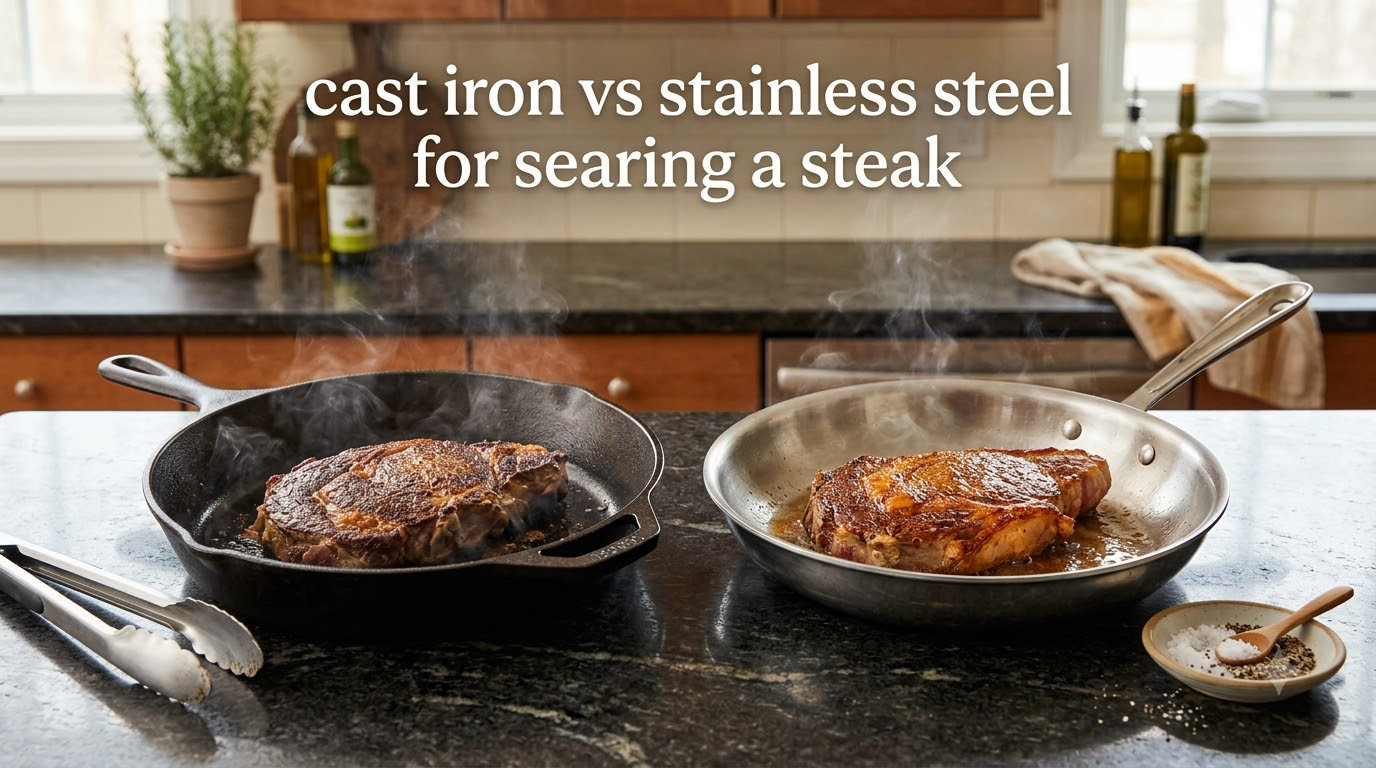
Cast iron is generally the better choice for searing a steak because its higher thermal mass delivers a deeper, more even Maillard crust when cold meat hits the pan. Stainless steel cooks a respectable steak too, and it pulls ahead when you want to finish with a pan sauce or you value quick cleanup. If you cook steak often, owning both pans gives you the best of each material; if you only buy one, a 10 to 12 inch cast iron skillet is the closer match to steakhouse results at home.
Table of Contents
Why Pan Choice Matters for Steak
The difference between a gray, steamed steak and a deeply browned steakhouse cut is the pan. Searing is a chemistry trick: when the surface of the meat crosses roughly 285°F (140°C), amino acids and sugars start reacting in something called the Maillard reaction, producing hundreds of new flavor and aroma compounds.
That reaction needs a hot surface that stays hot when cold protein lands on it. A well-seasoned cast iron skillet stores about three times as much heat as a same-size stainless steel pan by weight, so the temperature of the cooking surface drops only 150°F or so when a thick steak is added. A thinner stainless pan can fall 200 to 300°F in the same moment, and that drop is the difference between crust and steam.
Steak is mostly water. Until the surface moisture escapes, the pan temperature stalls near 212°F even on a screaming-hot burner. The skill of a good steak is pushing past that stall fast enough that browning starts before the interior overcooks, which is why a pan with more thermal mass wins for thick cuts.
Cast Iron for Searing Steak: Pros and Cons
Cast iron’s defining trait is heat retention. Once it is up to temperature, it wants to stay there. That makes it the most forgiving material for a thick ribeye, a bone-in strip, or a reverse-seared tomahawk, because the pan has the heat budget to keep searing even as moisture leaves the meat.
The seasoning that builds up on a well-used cast iron skillet also acts like a natural release layer. Reddit’s r/Cooking community regularly notes that “seasoned cast iron will release the meat easier than stainless,” and that release is what lets a thick cut slide without tearing the crust when you flip it.
On the downside, cast iron is heavy, especially in the 10 to 12 inch sizes you want for steak. A full-size skillet can run 7 to 9 lb, which is a real barrier for cooks with wrist or shoulder issues. Cast iron also holds onto seasoning, which means no soap, no long soaks, and no dishwasher. Indoor kitchens without strong ventilation will fill with smoke during a real sear, since cast iron wants to be hotter than most stove hoods can clear.
Cast iron also reacts with strongly acidic ingredients, so you generally do not deglaze a cast iron pan with wine, tomatoes, or citrus for a long simmer. That is a real limitation for pan-sauce finishing, and it is one of the core reasons stainless steel hangs around in restaurant kitchens.
Stainless Steel for Searing Steak: Pros and Cons
Stainless steel heats up faster than cast iron, weighs about a third as much, and goes in the dishwasher. For everyday cooking, weeknight steaks, and thinner cuts like flank or skirt, a clad stainless steel pan is genuinely excellent.
The construction matters more than the label. A clad (or tri-ply) stainless pan has layers of aluminum or copper sandwiched between steel, which spreads heat evenly across the base. A cheap disc-bottom pan has a thin steel plate over an aluminum disk, and it will hot-spot and warp over high heat. If you choose stainless steel for steak, choose clad.
Stainless steel’s biggest win is the fond, the browned bits left in the pan after searing. Deglaze with wine, butter, and stock and you have the base for a restaurant-style pan sauce in about three minutes. That is something cast iron cannot match, because the seasoning on cast iron dissolves into acidic liquids.
The trade-offs are real too. A naked stainless surface has no release layer, so the steak will stick if the pan is not properly preheated. Once a thin film of oil is shimmering and just starting to smoke, the steak should release on its own after 60 to 90 seconds. Done right, the crust is excellent. Done cold, the meat tears and gray steaks are guaranteed.
Stainless steel also loses heat faster than cast iron. For a 1.5 inch ribeye that means preheating longer and being patient with recovery time between flips.
Cast Iron vs Stainless Steel Comparison Table
This is the at-a-glance comparison most home cooks are looking for. The columns that matter most for steak are heat retention, oven-safe behavior, weight, and whether you can build a pan sauce in the same pan.
| Attribute | Cast Iron | Stainless Steel (Clad) |
|---|---|---|
| Heat retention | Excellent, roughly 3x stainless by weight | Good, loses heat faster per ounce |
| Oven safe | Yes, up to 500°F and beyond | Yes, typically 500 to 600°F |
| Weight (12 inch skillet) | 7 to 9 lb | 2 to 3 lb |
| Pan sauce / fond | Limited, not for acidic liquids | Excellent, ideal for deglazing |
| Cleanup | Hand wash, dry immediately, oil lightly | Dishwasher safe |
| Best cuts | Thick ribeye, strip, tomahawk, porterhouse | Skirt, flank, thin strip, weeknight cuts |
| Smoke production | High indoors | Moderate |
| Maintenance | Seasoning care required | None |
Carbon Steel: The Middle Option Worth Considering
If the cast iron versus stainless steel choice feels limiting, carbon steel is the third path. It is the same material restaurants use for woks and crepe pans, and it has about twice the heat retention of stainless at about half the weight of cast iron.
Carbon steel builds a seasoning like cast iron, releases food like cast iron once it is well used, and it heats up much faster. For a one-pan kitchen, it is closer to the best of both worlds than either material alone. The trade is that it is less forgiving of neglect, needs regular seasoning, and is rarely nonstick out of the box. For cooks who already have a stainless pan and do not want the heft of cast iron, a 12 inch carbon steel skillet is the swing many of our test cooks ended up keeping.
Which Pan Should You Use? Verdict by Cut and Goal
The honest answer is that the right pan depends on the steak in front of you. Here is how our team breaks it down.
For thick cuts, anything 1.5 inches and heavier, cast iron wins. Ribeye, bone-in strip, cowboy cut, tomahawk, and porterhouse all reward the highest possible crust temperature, and cast iron’s heat budget keeps the sear going even as the steak releases its moisture.
For thin cuts and weeknight steaks, clad stainless steel is the better tool. A skirt or flank steak cooked in cast iron is overkill, and pan sauce finishing is much easier in stainless.
For beginners buying one pan, we lean toward cast iron. The margin for error is wider because the heat is more forgiving, and a quality 12 inch skillet costs less than a serious clad stainless pan. A Lodge cast iron skillet is the typical entry pick, while Demeyere or All-Clad are the clad stainless benchmarks.
For indoor kitchens with weak ventilation, stainless steel avoids the smoke. Cast iron searing in a small apartment is genuinely unpleasant without a powerful hood.
How to Sear a Steak: Step-by-Step Method
The method works in either material. The point where the pan matters is step 3, where you want to see real heat recovery.
Step 1: Pat the steak dry and salt it 45 to 60 minutes before cooking. Surface moisture is the enemy of browning.
Step 2: Preheat the pan over medium-high heat for at least 5 minutes. For cast iron, this can run to 8 minutes. The pan should be hot enough that a drop of water beads and skitters.
Step 3: Add a high smoke-point oil, like avocado, canola, or grapeseed, just enough to coat the surface. The oil should shimmer and the first wisp of smoke means the pan is ready.
Step 4: Lay the steak away from you and do not move it. Wait 90 seconds to 3 minutes depending on thickness and desired crust. In cast iron, the sear is faster because the heat floor is higher.
Step 5: Flip, sear the second side, then either move to a 400°F oven to finish (the reverse sear finish) or baste with butter, garlic, and thyme directly in the pan. A cast iron skillet is the easier transition to the oven because it tolerates the temperature jump.
Step 6: Rest 5 to 8 minutes before slicing. If you used stainless steel, you have about 3 minutes of leftover fond to deglaze with stock or wine for a quick pan sauce.
Stovetop Matters: Gas vs Induction vs Electric
The same steak in the same cast iron pan can cook differently depending on the burner. Gas gives an instant heat response that pairs naturally with both materials. Induction is even more powerful on a per-square-inch basis, and it is where clad stainless steel really starts to rival cast iron, since the iron content in stainless is what couples with the magnetic field.
Electric coil is where cast iron can actually be a liability. A thin coil cannot pour heat into a 9 lb skillet fast enough to recover between flips, which means long cook times and uneven browning. On electric, a lighter clad pan often outperforms cast iron pound for pound.
Health Considerations: Iron and Nickel
Cooking in cast iron does leach a small amount of dietary iron into food, which is a quiet benefit for most adults and a meaningful reason some cooks choose cast iron specifically. Stainless steel is non-reactive and does not add anything to food, but it does contain nickel, which is a concern for people with a confirmed nickel allergy who eat a lot of acidic food off stainless pans.
For a typical home cook, neither material is a health problem. Both are safer at high heat than nonstick pans, which can off-gas above 500°F.
Frequently Asked Questions
Do chefs prefer stainless steel or cast iron?
Professional chefs typically keep both on the line. Cast iron is the high-heat workhorse for thick steaks and seared proteins, while clad stainless steel is the everyday tool for saute, pan sauces, and quick cleanups. Most chefs would pick cast iron for a pure steakhouse sear and stainless steel for everything else.
Can I use stainless steel to sear steak?
Yes. A clad stainless steel pan with a heavy bottom will deliver an excellent crust on a steak as long as the pan is preheated for several minutes and a high smoke-point oil is used. Stainless sears cook slightly faster and lose more heat than cast iron but the crust is genuinely comparable on thinner cuts.
Is it better to cook steak in a pan or cast iron skillet?
A cast iron skillet is usually the better choice for thick steaks because of its heat retention, while a stainless pan is better for thin cuts or when you want to make a pan sauce. If you only want one pan and you cook thick cuts more often than thin, cast iron is the higher-value pick.
Which pan is better for searing steak, stainless steel or cast iron?
Cast iron is generally better for searing steak because its higher thermal mass keeps the cooking surface hot when cold meat lands on it, producing a deeper Maillard crust. Stainless steel is better when you want lighter weight, faster cleanup, or to deglaze the pan for sauce.
What should never be cooked in a cast iron pan?
Long-simmered acidic dishes like tomato sauce, wine reductions, and citrus glazes should not be cooked in cast iron because the acid strips the seasoning and can leave a metallic taste. Cast iron is best for high-heat dry cooking, shallow frying, and short deglazes with stocks.
What is the 3-3-3 rule for steaks?
The 3-3-3 rule is a steak cooking mnemonic: sear each side for 3 minutes on high heat, then rest the steak for 3 minutes before slicing. It is a starting point for a 1 inch thick steak cooked over medium-high and is easy to remember for new cooks.
Conclusion: Choosing Between Cast Iron and Stainless Steel
The cast iron vs stainless steel for searing a steak decision comes down to cut, kitchen, and how you like to finish the dish. For thick steaks, cast iron wins on heat retention and crust depth. For weeknight steaks, pan sauces, and lighter kitchens, clad stainless steel is the right tool. And if you want to split the difference, carbon steel is a quietly excellent third option that we lean toward more the more we cook in it.
Whichever pan you choose, the bigger payoff usually comes from technique: drying the steak, preheating long enough, using a high smoke-point oil, and resting before slicing. A patient cook in a stainless pan will outperform a hurried cook in cast iron every time. Start with whichever pan matches your most common cut, master the basics, and add the other later if you find yourself reaching for what it does best.