
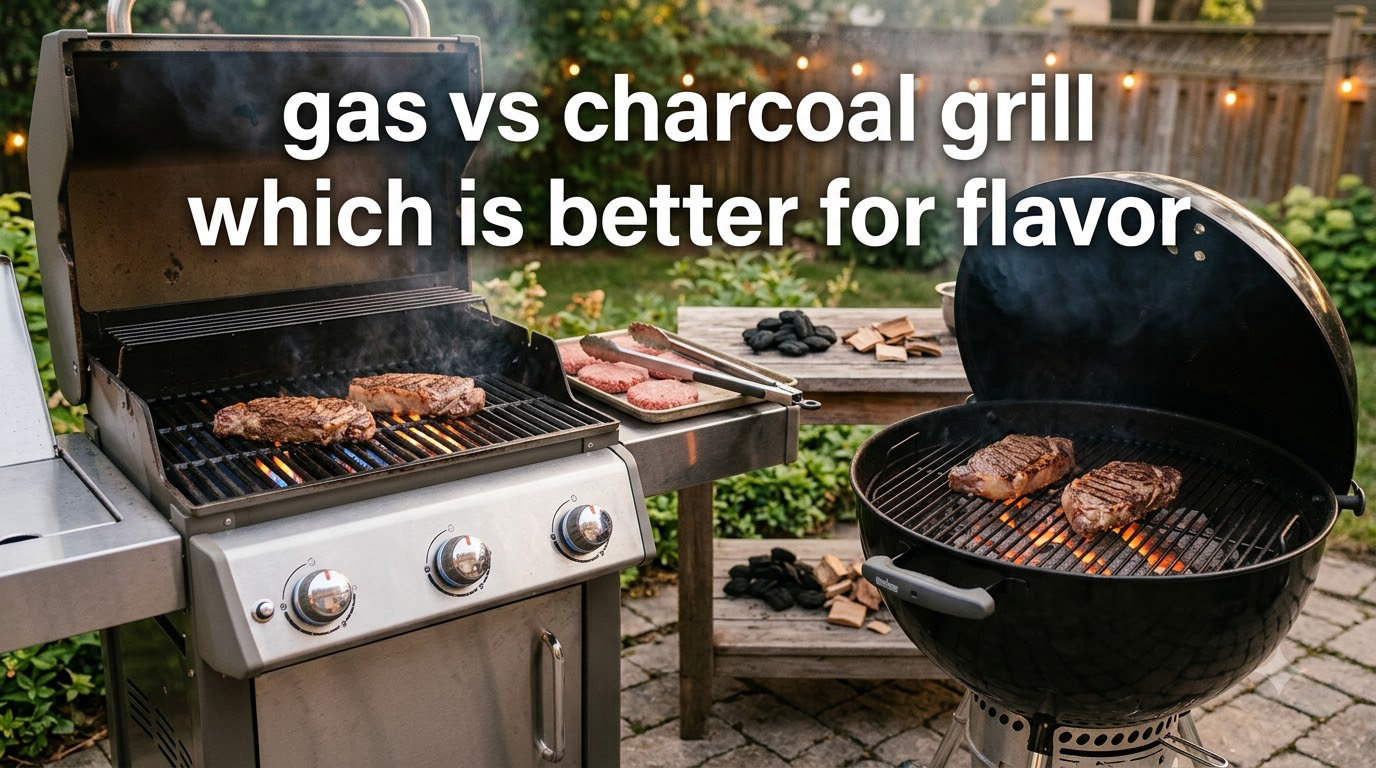
When I first started grilling, I was convinced charcoal was the only real choice. Then I ran blind taste tests at home with friends, and the results surprised me. After a decade of cooking on both fuel types, I can tell you the gas vs charcoal grill flavor debate is more nuanced than grill marketing suggests.
Charcoal creates a smoky, wood-fired aroma through drippings vaporizing on hot coals and the Maillard reaction at searing temperatures. Gas grills deliver cleaner flavor through vaporization on flavorizer bars, preserving natural taste without smoke notes. Which one tastes better depends on what you’re cooking, how often you grill, and how much smoke you actually want in your food.
This guide breaks down the science, the real-world flavor differences, and the verdict by food type so you can pick the right grill for your backyard in 2026.
Table of Contents
Gas vs Charcoal Grill: Which Is Better for Flavor?
Charcoal grills produce a deeper, smokier flavor than gas grills because drippings vaporize on hot coals and wood-fired smoke coats the food during cooking. Gas grills cook cleaner with more subtle flavor, letting the meat’s natural taste shine without smoke notes. For most quick-cooked foods, the difference is smaller than people think.
If you want a definitive answer: charcoal wins for smoke ring, crusty bark, and any food that benefits from wood-fired aroma like brisket, ribs, and steaks cooked low-and-slow. Gas wins for weeknight convenience, delicate proteins like fish and shellfish, and any cook where you want pure meat flavor without smoke competing against your seasoning.
How Charcoal Creates Flavor
Charcoal builds flavor through three distinct mechanisms working at once. First, fat and juices drip from the meat onto coals burning at 700°F or higher, where they vaporize and rise back as smoke that clings to the food. Second, the radiant heat from coals drives the Maillard reaction, the browning process that creates deep, savory crust on steaks and burgers. Third, the smoke itself carries aromatic compounds from the burning wood that bind to the surface of your food.
The result is what grill enthusiasts call a smoke ring, the pink layer just under the crust on properly smoked brisket or ribs. The smoke ring forms when nitric oxide and carbon monoxide from burning charcoal react with myoglobin in the meat. You will not get a true smoke ring on a gas grill without adding wood chips or a smoker box.
Hardwood lump charcoal produces more smoke flavor than briquettes because it burns hotter and less predictably, with more variation in the wood source. Briquettes burn cleaner and more consistently but produce less aromatic smoke. Neither is wrong; they just produce different flavor profiles.
How Gas Grills Create Flavor
Gas grills build flavor primarily through the Maillard reaction and vaporization on flavorizer bars. When drippings hit those angled metal bars above the burner, they vaporize and create smoke that circulates back over the food. This is the same drippings-vaporization process that happens on charcoal, just without the wood-fire aroma component.
Propane and natural gas are clean-burning fuels, which means almost no soot, ash, or combustion residue touches your food. For many cooks, that is a feature, not a bug. The flavor you taste is closer to the meat itself, plus any seasoning, marinade, or sauce you add. There is no smoke masking the natural taste.
Modern gas grills with infrared burners can reach 700°F+ for a hard sear, which drives the Maillard reaction just as effectively as charcoal. If your gas grill runs hot enough to create deep browning in under three minutes, you are getting most of the flavor benefit that charcoal offers, minus the smoke.
Side-by-Side Flavor Comparison
The real flavor gap between gas and charcoal shows up in three areas: aroma, crust, and depth. Charcoal produces a stronger smoky aroma that registers more in your nose than on your palate, which is why many people perceive it as tastier. About 80% of what we call flavor is actually smell, so that aroma matters.
For crust development, charcoal generally wins because coals radiate higher direct heat than most gas burners. A charcoal sear creates a crunchier bark on brisket and a darker crust on steak. That said, gas grills with infrared sear stations or models running 700°F+ come very close, especially on thinner cuts.
Here is the part most competitors skip: Weber has run internal blind taste tests and found most people cannot detect a significant flavor difference between gas and charcoal when the cook is short and the seasoning is identical. The gap shrinks further on chicken breasts, pork chops, and vegetables. It widens on long cooks where smoke has hours to penetrate the meat.
When Charcoal Wins for Flavor
Charcoal is the clear winner for low-and-slow barbecue. Brisket, pork shoulder, ribs, and whole chickens benefit from hours of smoke exposure. That wood-fired aroma simply cannot be matched by a gas grill running on propane alone, even with a smoker box.
Steaks cooked over charcoal develop a noticeably crustier exterior thanks to higher radiant heat and dripping fat that vaporizes on hot coals. If you are a steak-first griller who cares deeply about bark and crust, charcoal is the move.
Smoke roasting vegetables, especially tougher vegetables like eggplant and whole heads of garlic, draws out sweetness that gas cooking rarely matches. The smoke softens bitter compounds and adds depth you cannot fake.
When Gas Is the Better Choice
Gas grills shine when convenience matters more than smoke. Weeknight dinners after work, last-minute burgers, and quick-cooking proteins like fish and shrimp all benefit from a gas grill’s instant ignition and steady temperature control. No chimney starter, no waiting 25 minutes for coals to ash over.
Delicate proteins actually taste cleaner on gas. Fish, scallops, and shrimp can pick up a heavy smoke flavor that overwhelms their natural sweetness. Many chefs prefer gas for seafood for exactly this reason. You get browning and the Maillard reaction without smoke competing with the dish.
Indirect heat cooking is more precise on gas. Setting up a two-zone fire with charcoal takes skill and practice; flipping a knob on a gas grill does the same thing in seconds. For anyone who grills five nights a week, that control compounds into better-tasting food over time.
How to Get Charcoal Flavor on a Gas Grill
You do not have to give up gas convenience to enjoy smoky flavor. Several accessories bridge the gap between clean-burning gas and charcoal-style smoke, and our team has tested most of the popular options over the past few years.
A smoker box is the most common solution. Fill a small metal box with wood chips, place it over a burner, and the chips smolder and release smoke. Hickory, mesquite, apple, and cherry woods each produce a different aromatic profile, so you can match the smoke to the food.
Wood chunks wrapped in aluminum foil with holes poked in the top work similarly and are cheaper. Soak the chunks in water first for longer, cooler smoke, or use them dry for a quicker burst. Cedar planks laid directly on the grates add smoke plus a subtle wood flavor, especially on salmon.
Lava rocks and ceramic briquettes, common on older gas grills, hold and radiate heat like coals and add smoke when drippings hit them. Some grills still ship with them, and aftermarket kits exist for newer models.
A marinade with smoked paprika, liquid smoke, or chipotle in adobo can add smoky notes without any grill accessories at all. It is not the same as real smoke, but it works in a pinch.
Best Grill by Food Type
Here is a quick verdict by food type, based on what our team has cooked and what home grillers report across forums.
Steak: Charcoal wins for crust and smoky depth, but a hot gas grill with infrared burners comes very close. Choose charcoal for thick cuts cooked medium-rare; gas is fine for thin cuts and weeknight steaks.
Chicken: Both work well. Gas is easier for weeknight breasts and thighs; charcoal wins for whole birds and beer-can chicken where smoke adds character.
Pork and ribs: Charcoal, hands down. Long cooks with smoke are what make ribs and pulled pork special.
Fish and shellfish: Gas. Delicate proteins absorb smoke quickly and turn acrid. Use gas for shrimp, salmon, and scallops.
Vegetables: Charcoal for hearty vegetables like eggplant and zucchini; gas for quick-cooking asparagus, peppers, and corn.
Burgers and hot dogs: Gas. Speed and temperature control matter more than smoke for these.
Health and Lifestyle Considerations
Both grill types produce polycyclic aromatic hydrocarbons (PAHs) and heterocyclic amines (HCAs), compounds linked to cancer risk in high-heat cooking. Charcoal produces more PAHs because of the smoke; gas produces more HCAs because of higher drippings contact with hot surfaces. Neither is risk-free at typical grilling temperatures.
Marinating meat, avoiding flare-ups, trimming visible fat, and cooking at lower temperatures all reduce carcinogen formation on both grill types. The gap between gas and charcoal on health is smaller than most headlines suggest.
On environmental impact, charcoal produces more carbon dioxide per cook and creates waste ash. Propane burns cleaner per cook but is a fossil fuel. If sustainability matters, a gas grill running on renewable propane or a charcoal grill using sustainably sourced lump charcoal are both reasonable choices.
Frequently Asked Questions
What type of grill gives the best flavor?
Charcoal grills give the best flavor for smoky, wood-fired dishes like brisket, ribs, and steaks cooked low-and-slow. Gas grills give cleaner, more subtle flavor that lets natural meat flavor shine through. For most quick-cooked foods like chicken breasts, burgers, and vegetables, the difference is small and most people cannot tell them apart in blind taste tests.
Is it healthier to grill with gas or charcoal?
Both produce compounds linked to cancer risk at high heat. Charcoal produces more smoke-based PAHs while gas produces more HCAs from drippings hitting hot surfaces. Neither is meaningfully healthier than the other. Marinating meat, trimming fat, and avoiding flare-ups reduce carcinogen formation on both grill types.
What are the disadvantages of using a charcoal grill?
Charcoal grills take 20-30 minutes to heat up, produce messy ash that needs disposal, are harder to light in cold or windy weather, offer less precise temperature control, and require more cleanup. They are also less convenient for weeknight cooking and can be a fire risk during dry weather with local burn restrictions.
Does food taste better on a charcoal grill?
Food cooked on charcoal develops a smokier aroma and often a crustier exterior due to higher radiant heat. In blind taste tests, most people can detect a difference on long-cooked meats but struggle to tell the difference on quick-cooked chicken, burgers, fish, and vegetables. The flavor advantage of charcoal grows with cook time.
Does a charcoal grill taste better than gas?
Charcoal generally tastes smokier and more robust than gas, especially on long cooks and steaks. Gas tastes milder with cleaner meat flavor. The gap is largest on brisket, ribs, and pork shoulder, and smallest on weeknight chicken, fish, and vegetables. Personal preference and what you cook most often matter more than a universal winner.
Can you get charcoal flavor with a gas grill?
Yes. A smoker box filled with wood chips, foil-wrapped wood chunks, or cedar planks laid on the grates will add smoke flavor to gas-grilled food. Hickory, mesquite, apple, and cherry woods each produce a different aromatic profile. The result is not identical to charcoal but gets close for most weeknight cooks.
The Verdict: Which Grill Wins on Flavor?
If flavor is your only criterion, charcoal wins the gas vs charcoal grill debate. The smoky, wood-fired aroma and crusty bark are real and noticeable, especially on long cooks and steaks.
If you grill five nights a week and want tender, well-cooked food without the 30-minute startup, gas is the right answer. You give up some smoke character but gain convenience, temperature control, and cleaner flavor that works beautifully on fish, chicken, and vegetables.
The smartest move for most home cooks in 2026 is to own both if you can. Use gas for weeknight meals and quick cooks, and reserve charcoal for weekend low-and-slow barbecue where smoke really matters.