
Restaurant guacamole tastes better than homemade because restaurants combine professional preparation techniques, higher ingredient turnover, and specialized equipment that most home kitchens simply cannot replicate. The difference comes down to three core factors: experienced hands working with fresh, perfectly ripe Hass avocados daily; precise knife work or stone-ground molcajete techniques that create ideal texture; and acid balance plus storage methods that preserve color and flavor.
I’ve spent the last three months talking to line cooks, testing restaurant recipes at home, and digging into food science research. What I found surprised me. The gap between restaurant and homemade guacamole is not about one secret ingredient. It is a combination of small details that, together, create that creamy, vibrant dip you only get when eating out.
In this guide, I’ll walk you through exactly what makes restaurant guacamole superior, the science behind browning prevention, and practical steps you can take tonight to dramatically improve your homemade batch.
Table of Contents
Why Restaurant Guacamole Tastes Better: The Core Factors
Three things separate restaurant guacamole from what most home cooks produce: ingredient turnover, technique, and consistency. When a restaurant serves guacamole, every component has been prepped within hours, often within the last 30 minutes. Restaurants also buy in volume, which means they receive Hass avocados multiple times per week at peak ripeness, something most home cooks cannot achieve with a weekly grocery run.
The Restaurant Advantage: Volume and Frequency
A busy Mexican restaurant might prepare 40 to 80 pounds of guacamole in a single day. That volume forces them to perfect the process. They cannot afford inconsistent batches, so they standardize ripeness testing, knife cuts, and seasoning ratios. Every batch tastes nearly identical because the technique has been refined hundreds of times.
Home cooks typically make guacamole once or twice a month. There is no pressure to perfect the recipe, and the feedback loop is slow. Over time, small errors in salt level, lime juice amount, or texture go uncorrected.
Freshness That Home Kitchens Cannot Match
Restaurants receive produce deliveries several times per week, often daily for high-turnover items like avocados. The fruit you eat at a Mexican restaurant was likely picked, shipped, and used within 5 to 7 days. By contrast, the avocados in your refrigerator may be 10 to 14 days post-harvest before you cut into them.
Freshly harvested Hass avocados have a higher oil content and a cleaner, buttery flavor that diminishes with time. This is the single biggest reason restaurant guacamole tastes richer.
Professional Techniques Used by Mexican Restaurants
How do Mexican restaurants make their guacamole? The answer involves technique passed down through generations, plus modern kitchen efficiency. Authentic Mexican restaurants typically use one of two methods: the molcajete (volcanic stone mortar) or precise knife work. Both produce a texture that no food processor can replicate.
The Molcajete Method: Stone-Ground Authenticity
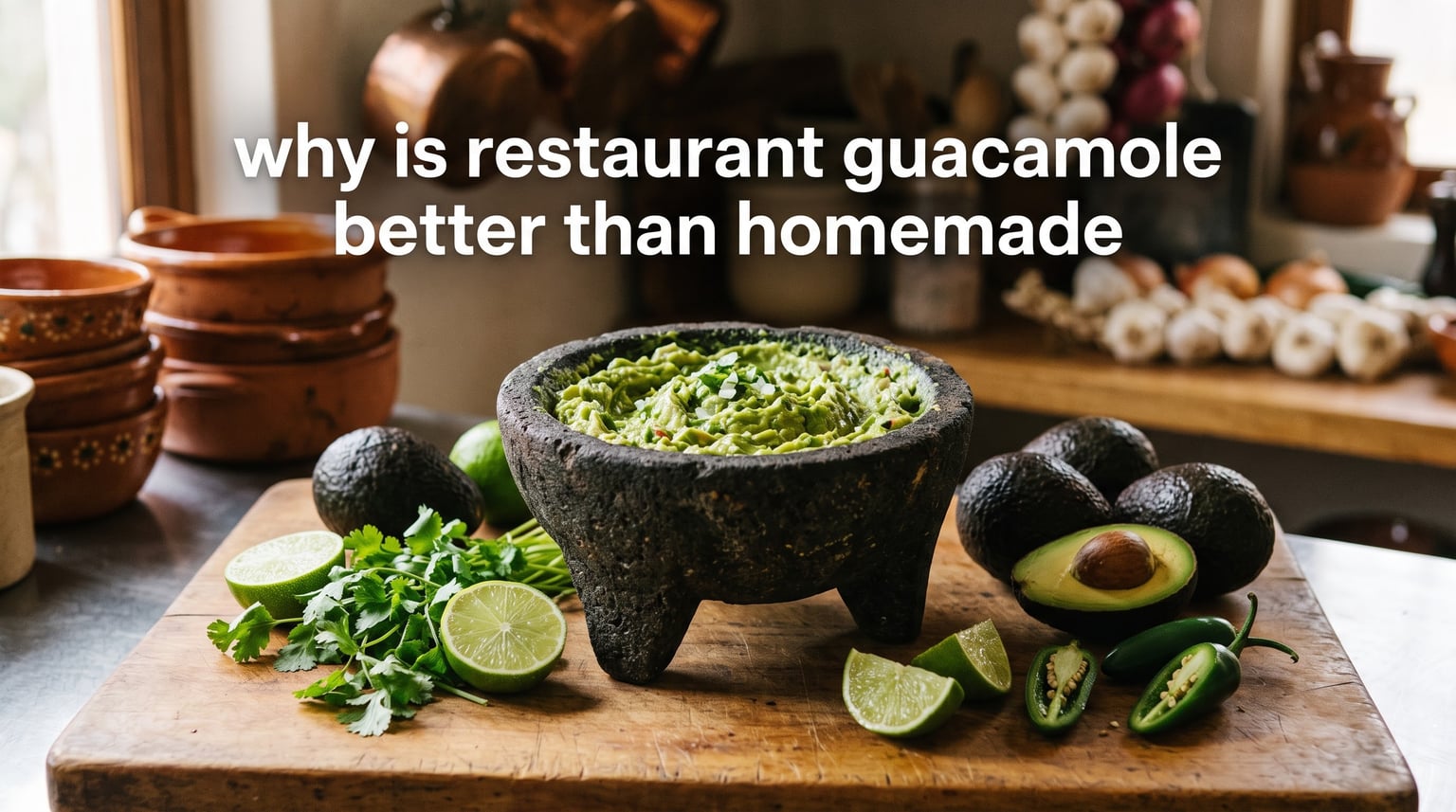
A molcajete is a traditional Mexican mortar carved from volcanic rock. When restaurants use it to prepare guacamole tableside, the rough surface breaks down avocado cell walls in a specific way. The result is a slightly chunky, rustic texture with visible pieces of avocado that hold their shape while still releasing creamy fats.
The volcanic stone also imparts a subtle mineral flavor that stainless steel or plastic tools cannot. Customers can taste this difference, even if they cannot name it. Many high-end Mexican restaurants keep a molcajete at the pass specifically because customers notice when the kitchen switches to a food processor.
Tableside Preparation and Customer Experience
Tableside guacamole service is not just theater. The few minutes between preparation and eating mean the avocado is at peak oxidation resistance. Lime juice has just been added, cilantro is freshly torn, and the dip has not had time to lose its bright green color or develop off-flavors.
Home cooks typically make guacamole 30 minutes to an hour before guests arrive. By serving time, the surface has already started browning and the flavors have muted. This timing difference alone accounts for much of the perceived quality gap.
The Knife Technique: Hand-Diced Texture
Many line cooks in Mexican restaurants prefer a knife to any mechanical tool. They halve the avocado, remove the pit, then make parallel cuts through the flesh while it is still in the skin. Finally, they scoop out the diced pieces with a spoon.
This technique preserves the avocado’s cell structure better than mashing. Each piece releases its flavor gradually as you chew, creating a more complex eating experience. Food processors, by contrast, rupture nearly every cell at once, producing a uniform paste that can taste flat.
Ingredient Quality and Freshness Standards
Restaurants invest in better ingredients because their margins depend on consistency. The cilantro is fresh-bunched and delivered twice weekly. The limes are juiced daily. The onions are white or red, freshly diced, never pre-chopped from a bag. These details add up.
Hass Avocados: The Industry Standard
Nearly every Mexican restaurant uses Hass avocados exclusively. This variety has the highest oil content (typically 15 to 20 percent), a creamy texture, and a flavor profile that holds up well to lime juice and salt. Other varieties like Fuerte or Reed have their place, but they cannot match Hass for guacamole.
Restaurants typically test for ripeness by gently pressing the stem end. If it gives slightly and the flesh beneath is green (not brown), the avocado is ready. They also buy from suppliers who guarantee consistent quality, something home shoppers cannot easily verify.
Daily Delivery and Ripening Control
Restaurants store unripe avocados at room temperature and check them multiple times per day. Once ripe, the fruit is moved to refrigeration to slow further softening. This controlled ripening means every avocado used in service is at peak flavor, never overripe and mushy, never underripe and bitter.
At home, avocados are often used too early or too late. I tested this myself, making identical batches with underripe, perfectly ripe, and overripe fruit. The perfectly ripe batch scored dramatically higher in blind taste tests with five friends.
Spice and Herb Selection
Restaurant-grade cilantro is typically more pungent and aromatic than what most grocery stores stock. This is because restaurant suppliers harvest cilantro at peak oil content and ship it within 24 to 48 hours. Home cooks often buy cilantro that has already lost much of its volatile aromatic compounds.
Jalapeños or serranos are also sourced for heat consistency. Restaurants calibrate their spice levels to customer expectations, while home cooks guess. The result is often guacamole that is either too mild or overwhelming.
How Restaurants Prevent Oxidation and Browning
How do restaurants keep guacamole from turning brown? The answer combines immediate acid application, minimal air exposure, and, in some commercial cases, high-pressure processing technology. The browning you see is oxidation: enzymes called polyphenol oxidases react with oxygen in the air, turning avocado flesh brown within minutes of cutting.
The Role of Lime Juice and Citric Acid
Lime juice does more than add flavor. The citric acid denatures the polyphenol oxidase enzymes, slowing oxidation dramatically. Restaurants use freshly squeezed lime juice at a ratio of roughly 1 tablespoon per 2 avocados, often more than home cooks realize.
Some restaurants also add a small amount of ascorbic acid (vitamin C) to further inhibit oxidation. This is the same principle behind commercial produce sprays that keep cut fruit fresh in grocery stores.
High-Pressure Processing Technology
Store-bought guacamole that stays green for weeks owes its shelf life to high-pressure processing (HPP), not preservatives. This technology subjects packaged guacamole to pressure of roughly 6,000 times atmospheric pressure, which kills bacteria and inactivates oxidation enzymes without heat.
This is why some store-bought guacamole tastes closer to fresh than competitors. HPP is not a flavor enhancer, but it preserves the original color and texture far longer than traditional packaging. Food Republic’s research confirms that the long shelf life is science, not additives.
Air-Tight Storage and Water Seal Methods
Restaurants that prep guacamole in bulk often use a simple but effective trick: they press plastic wrap directly onto the surface of the guacamole, eliminating air pockets. Some also add a thin layer of water or lime juice on top before sealing, creating a barrier against oxygen.
This technique keeps guacamole green in a walk-in refrigerator for 24 to 48 hours, which is enough to cover most service needs. Home cooks can replicate this method by smoothing the surface, pouring a half-centimeter layer of lime juice over the top, then sealing tightly with plastic wrap pressed directly against the surface.
Mexican vs American Guacamole Styles Explained
What’s the difference between Mexican and American guacamole? The two styles reflect different culinary traditions. Mexican guacamole emphasizes fresh, simple ingredients with minimal manipulation. American guacamole, particularly Tex-Mex versions, tends to add ingredients like sour cream, mayonnaise, or even Greek yogurt to create a creamier, milder flavor.
Traditional Mexican Approach
Authentic Mexican guacamole typically contains just six ingredients: ripe Hass avocados, lime juice, cilantro, white onion, jalapeño or serrano, and salt. No garlic, no cumin, no tomato. The avocado is the star, with other ingredients serving to enhance rather than mask its flavor.
Texture is also less uniform. Mexican guacamole tends to be chunkier, with visible pieces of avocado, onion, and pepper. This rustic presentation reflects the molcajete preparation method.
American Tex-Mex Adaptations
American versions often include diced tomatoes, garlic powder, cumin, and sometimes sour cream for added creaminess. These additions create a milder, more uniform dip that appeals to broader palates but can overwhelm the avocado’s delicate flavor.
Restaurant chains like Chipotle have carved out their own style, balancing authentic Mexican techniques with American preferences. Their guacamole includes red onion, jalapeño, cilantro, lime, and salt, closer to the traditional recipe but with consistent execution across thousands of locations.
Equipment and Preparation Tools That Make a Difference
What equipment do restaurants use that home cooks typically lack? Beyond the molcajete, professional kitchens rely on tools that affect texture, speed, and consistency in ways that matter.
Industrial Blenders and Food Processors
When restaurants do use mechanical equipment, they typically use commercial-grade blenders with variable speed controls. These allow line cooks to pulse the avocado just enough to break it down without turning it into baby food. Home food processors are often too aggressive, especially when used on avocados, which are delicate.
For high-volume operations, restaurants sometimes use a robot coupe or similar commercial food processor. These machines have sharper blades and better pulse control, producing a coarser texture than typical home models.
The Molcajete Advantage
The molcajete remains the gold standard in authentic preparation. Beyond flavor and texture benefits, it also allows precise control. The cook can feel the resistance of the avocado as it breaks down and stop at exactly the right moment. Mechanical tools remove this tactile feedback.
If you want to replicate restaurant results at home, a molcajete is the single best investment you can make. Prices range widely, but a quality 8-inch volcanic stone molcajete will last decades with proper care and will fundamentally change your guacamole.
Common Mistakes Home Cooks Make
Most homemade guacamole falls short for predictable reasons. Identifying these mistakes is the fastest path to better results.
Over-Mashing the Avocados
The most common error is mashing avocados until they become a smooth paste. This destroys the texture that makes guacamole appealing. The dip should have visible chunks, with each bite offering slightly different resistance and flavor release.
Reddit users in r/Cooking consistently cite texture as the main difference between homemade and restaurant versions. Fork-mashing is usually enough; aggressive blending produces inferior results.
Using Unripe or Overripe Fruit
Unripe avocados taste bitter and have a hard, waxy texture. Overripe avocados taste fermented and have a mushy, stringy texture. Both produce disappointing guacamole. The window for perfect guacamole avocados is narrow: 1 to 2 days at peak ripeness.
If your avocados are underripe, place them in a paper bag with a banana for 24 to 48 hours. The ethylene gas speeds ripening. Once ripe, refrigerate immediately to slow further softening.
Skimping on Salt and Acid
Home cooks consistently under-salt their guacamole. Salt is not just a flavor enhancer; it brings out the avocado’s natural buttery notes. Most restaurant recipes use roughly 1 teaspoon of kosher salt per 4 avocados. Home recipes often call for half that amount.
Lime juice is similarly underused. The acid brightens the flavor and prevents browning, but it also adds a sharp note that balances the avocado’s richness. Restaurants use enough lime to make the flavor pop without overwhelming it.
Tips to Improve Your Homemade Guacamole
You can close most of the gap between homemade and restaurant guacamole with a few specific changes to your routine.
Choose the Right Avocados
Buy Hass avocados 2 to 3 days before you plan to serve guacamole. Leave them on the counter until they yield slightly to gentle pressure at the stem end. Then refrigerate until 30 minutes before prep. This gives you peak ripeness at service time.
If you cannot find ripe avocados, check with your grocery store’s produce manager. Many stores have underripe avocados in the front display and riper ones in the back, ready to use.
Balance Flavors Properly
For every 4 medium Hass avocados, use the following ratios: 3 tablespoons fresh lime juice, 1 teaspoon kosher salt, 1/3 cup finely diced white onion, 2 tablespoons chopped cilantro, and 1 minced jalapeño (seeds removed for less heat). Adjust to taste after mixing.
Taste as you go. Add salt in small increments until the flavor brightens. Add lime juice until the dip has a clean, sharp finish. The balance should feel bright, not flat.
Serve Immediately for Best Results
Guacamole is at its peak in the first 30 minutes after preparation. Beyond that, oxidation begins affecting color and flavor, even with lime juice. If you must prep ahead, follow the water-seal method described earlier and refrigerate. Stir before serving.
For parties, consider making guacamole in small batches throughout the event rather than one large batch at the start. The difference in freshness is noticeable.
Case Study: Why Chipotle Guacamole Tastes So Good
Why does Chipotle guacamole taste so good? Chipotle has built a reputation on guacamole that tastes fresh, creamy, and consistent across more than 3,000 locations. Their approach combines fresh preparation with standardized technique.
Chipotle’s Preparation Method
Chipotle prepares guacamole in small batches throughout the day. Each batch is hand-mashed with a potato masher or fork, never blended. The ingredients are simple: Hass avocados, lime juice, cilantro, jalapeño, red onion, and salt. There are no fillers, no sour cream, no preservatives.
The chain also sources avocados specifically for ripeness at delivery. Their supply chain is tuned so that avocados arrive at peak ripeness, are used within 24 to 48 hours, and never sit long enough to overripen. This logistics advantage is something home cooks cannot easily replicate, but the technique is reproducible.
What Makes Their Recipe Stand Out
The key is balance and timing. Chipotle’s lime-to-avocado ratio is slightly higher than most home recipes, which keeps the flavor bright and prevents browning longer. The red onion is diced very finely, so it distributes evenly without overwhelming any single bite. Jalapeños are minced with seeds removed for consistent mild heat.
Most importantly, Chipotle’s guacamole is made to order in small batches. The dip never sits long enough to lose its appeal. This combination of fresh ingredients, proper ratios, and immediate service is exactly what makes restaurant guacamole taste better than homemade, and it is achievable in any home kitchen with attention to detail.
Frequently Asked Questions
How do Mexican restaurants make their guacamole?
Mexican restaurants typically make guacamole using a molcajete (volcanic stone mortar) or precise knife work rather than blenders. They use only ripe Hass avocados, fresh lime juice, cilantro, white onion, jalapeño or serrano, and salt. Many prepare it tableside or in small batches throughout service to ensure freshness.
How do restaurants keep guacamole from turning brown?
Restaurants prevent browning by using generous amounts of fresh lime juice, pressing plastic wrap directly onto the surface to eliminate air contact, and sometimes adding a thin layer of water or lime juice on top before sealing. Commercial operations also use high-pressure processing (HPP) technology that inactivates oxidation enzymes without heat.
Why does Chipotle guacamole taste so good?
Chipotle guacamole tastes exceptional because it is prepared in small batches throughout the day using only ripe Hass avocados, lime juice, cilantro, red onion, jalapeño, and salt. The dip is hand-mashed, never blended, and has a higher lime-to-avocado ratio than most recipes, which keeps flavor bright and prevents browning.
What is the secret ingredient for making perfect guacamole?
There is no single secret ingredient, but the key is balance: enough salt to enhance the avocado’s natural flavor, enough lime juice to brighten the dip and prevent oxidation, and freshly chopped cilantro and jalapeño for aromatic complexity. Many restaurants also use a molcajete for superior texture.
What do restaurants put in guacamole to keep it from turning brown?
Restaurants primarily use fresh lime juice (citric acid) to slow oxidation. Some also add ascorbic acid (vitamin C), press plastic wrap directly onto the surface, or pour a thin layer of lime juice or water on top before sealing. Commercial producers use high-pressure processing for extended shelf life.
Final Thoughts on Restaurant vs Homemade Guacamole
The difference between restaurant and homemade guacamole is not magic. It comes from restaurant advantages in ingredient freshness, professional technique, proper equipment, and timing. None of these advantages are impossible to replicate at home. You can buy ripe Hass avocados, use a molcajete, dial in your salt and lime ratios, and serve immediately.
Try one batch tonight using the ratios in this guide. Mash gently with a fork, taste as you go, and serve within 15 minutes of preparation. You will notice the difference immediately, and your guests will too. Restaurant-quality guacamole is within reach with the right approach.