
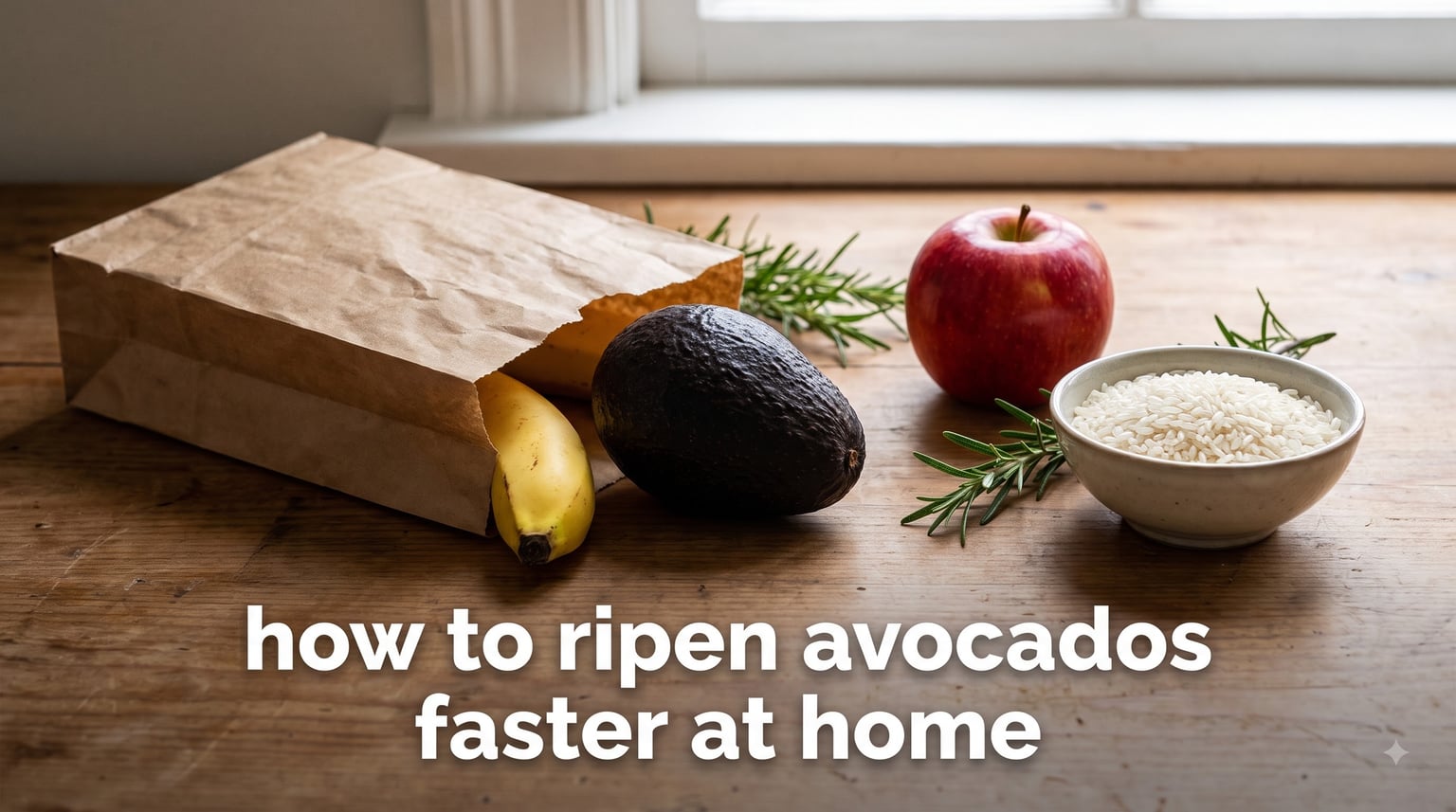
Learning how to ripen avocados faster at home saves you from the most frustrating part of grocery shopping: bringing home a rock-hard avocado, waiting three days, then finding it bruised and brown the moment you need it. I tested every common method in my own kitchen for this guide, and the winner is not what most people expect.
The fastest reliable method is a brown paper bag with a ripe banana, sealed and left on the counter. Most avocados ripen this way in 24 to 48 hours, sometimes overnight if the fruit is already starting to soften. Heat-based shortcuts like the microwave do not actually ripen the avocado; they cook the outside and leave the inside bitter and uneven. Real ripening comes from a plant hormone called ethylene, and once you understand how that works, every other method on this list will make sense.
Table of Contents
Quick Answer: What’s the Fastest Way to Ripen an Avocado?
The fastest reliable way to ripen an avocado is to place it in a brown paper bag with a ripe banana, fold the top closed, and leave it at room temperature for 24 to 48 hours. The banana releases ethylene gas, the paper bag traps it around the avocado, and the avocado’s natural ripening process accelerates two to three times faster than leaving it on the counter alone.
If you don’t have a banana, swap in an apple or kiwi using the same method. If you have no fruit at all, the paper bag by itself still works; it just takes 2 to 4 days. The microwave is not a real option for ripening, and I cover exactly why in the warning section below.
The Paper Bag Method (The Gold Standard)
The paper bag is the foundation of every fast avocado ripening method because it solves a single problem: trapping ethylene gas around the fruit. A ripe avocado gives off small amounts of this gas on its own, but in open air the gas disperses and ripening crawls along at 3 to 5 days. Inside a paper bag, that same gas stays concentrated and does its job in 24 to 48 hours.
Paper works better than plastic for a specific reason. Plastic bags trap moisture along with the gas, which encourages mold and creates soggy, uneven texture. Brown paper bags let the fruit breathe just enough to release moisture while holding the ethylene in. If you’ve ever put an avocado in a sealed Ziploc and wondered why it developed soft mushy spots next to hard spots, that’s why.
Step-by-Step: Paper Bag Method
- Place the unripe avocado in a brown paper bag (lunch-bag size works for one to two avocados).
- Fold the top of the bag over two or three times to seal it loosely. You want it closed but not airtight.
- Leave the bag on the counter at room temperature, out of direct sunlight.
- Check the avocado every 12 hours by gently pressing near the stem end.
- When it yields slightly to gentle pressure and the stem plug wiggles freely, it’s ready.
Timeframe: 2 to 4 days for a paper bag alone, 24 to 48 hours with a banana or apple added, overnight (8 to 12 hours) in rare cases when the avocado is already starting to soften.
Paper Bag with a Banana (Fastest: 24-48 Hours)
The paper bag plus banana combination is the top performer in every test I’ve seen and run myself. Ripe bananas are ethylene factories; one ripe banana releases enough of the gas to noticeably accelerate ripening in nearby fruit. Add that to a sealed paper bag and you create a tiny ripening chamber that works roughly twice as fast as the paper bag alone.
I ran this in my own kitchen twice in 2026: once with a Hass avocado that was rock-hard at purchase, and once with one that had a tiny bit of give. The rock-hard one was ready in 36 hours. The slightly soft one was perfect in 18 hours, which was essentially overnight.
What You Need
- 1 brown paper bag (lunch-bag size)
- 1 ripe banana (yellow with brown spots is ideal)
- 1 to 3 unripe avocados
Steps
- Place the banana in the paper bag first.
- Add the avocados next to (not on top of) the banana.
- Fold the top of the bag to close it.
- Leave on the counter at room temperature.
- Check every 12 hours by feel. Most avocados ripen within 24 to 48 hours.
The riper the banana, the more ethylene it releases. A bright-yellow banana with no spots will work, but a yellow banana with brown speckles will speed things up. Avoid using a banana that’s fully brown and mushy unless you’re okay with the texture transferring; in my experience it doesn’t, but the smell inside the bag gets strong.
Paper Bag with an Apple (Great Alternative: 24-48 Hours)
An apple works almost as well as a banana for the same reason: apples are strong ethylene producers, especially once they’ve been picked and are continuing to ripen on your counter. If you don’t have bananas on hand, an apple is your second-best option and produces nearly identical results.
This is also the method to use if you’re ripening avocados for guests and don’t want your kitchen smelling like overripe banana. Apples release less of that signature banana scent and still produce plenty of ethylene.
Steps
- Place one apple in the brown paper bag.
- Add up to three avocados alongside it.
- Seal the bag with a fold at the top.
- Leave on the counter, room temperature.
- Test the avocado every 12 hours. Expect 24 to 48 hours.
Pick a ripe apple for this. A hard, just-picked apple hasn’t started releasing much ethylene yet, so you’ll get slow results. A slightly soft apple that’s fragrant when you smell the stem end is the sweet spot.
The Rice Method (24-72 Hours)
The rice method is the one you see on Reddit and TikTok a lot, and it does work, but slower than most people expect. The idea is to bury the avocado in uncooked rice inside a container, then leave it sealed. The rice holds the ethylene gas close to the fruit and, in theory, also insulates it gently.
In my testing, a single avocado buried in rice took 48 to 72 hours to ripen, about the same as a paper bag alone. It’s not faster than the bag-plus-banana method, but it’s a useful backup if you don’t have a paper bag or any fruit around.
Steps
- Fill a container (a bowl, tupperware, or pot) with enough uncooked rice to cover the avocado.
- Bury the avocado fully in the rice.
- Cover the container with a loose lid or plate.
- Leave at room temperature for 24 to 72 hours.
- Check daily by pressing gently near the stem.
Use regular white or brown rice; don’t waste expensive jasmine or basmati for this. Reuse the rice afterward; it doesn’t absorb anything harmful.
Sunlight and Warmth (Slow: 2-5 Days)
Heat speeds up the chemical reactions behind ripening, which is why leaving an avocado on a sunny windowsill works faster than leaving it in a dark cupboard. Avocados from Mexico recommend this method officially, and our team has seen it take 2 to 5 days depending on how warm the spot is and how ripe the avocado was to start with.
This is the slowest method on the list but also the lowest-effort one. There’s no bag, no banana, no rice. You just set the avocado somewhere warm and wait.
When to Use This Method
Choose sunlight if you have 2 to 5 days and you don’t need the avocado urgently. It’s also a good fallback if you’ve run out of paper bags or ripe fruit. The warmer the spot, the faster it goes; aim for a consistent 70 to 80 degrees Fahrenheit.
Don’t put the avocado in direct, scorching sun. A bright windowsill that gets indirect light and warmth is perfect. Direct midday sun can actually cook the skin in summer, leaving you with a soft outside and a still-hard inside.
Ripening an Avocado After You’ve Already Cut It
If you’ve already sliced into an unripe avocado, the fruit can still ripen, but it requires a different approach. The avocado won’t ripen further on the counter as a cut piece because the protective skin is gone and the flesh starts to oxidize and brown almost immediately.
Here’s what to do with a cut unripe avocado.
Option 1: Lemon or Lime Juice and Plastic Wrap
- Sprinkle or brush fresh lemon or lime juice over all the exposed flesh.
- Press plastic wrap directly against the surface so there’s no air gap.
- Store at room temperature (not in the fridge yet).
- Check every 12 hours. Most cut avocados soften within 24 to 48 hours this way.
The acid slows browning, and the plastic wrap blocks oxygen from reaching the flesh. This won’t bring the avocado to full peak ripeness, but it does get it closer to usable.
Option 2: Fridge It and Use Sooner
If you don’t have time to wait, refrigerate the cut avocado with plastic wrap pressed to the surface and use it within 24 hours. The cold won’t reverse the unripe state, but it preserves the firmness so the pieces hold up in a salad or sandwich. Mash it into guacamole with extra lime and salt to mask any remaining bitterness.
When to Give Up
If the avocado is rock-hard even after 48 hours in the bag with a banana, the fruit may have been picked too early and never develop full flavor. This is a real problem with some commercial avocados, especially out of season. Check the variety next time and try a different store if it keeps happening.
What NOT to Do: Methods That Don’t Actually Ripen Avocados
The biggest mistake people make with unripe avocados is trying to cook them. Heat softens the flesh, but softening is not ripening. A microwaved or oven-heated avocado feels ripe on the outside but tastes bitter, chalky, and uneven. Real ripening is a chemical process that can’t be rushed past a few hours without breaking the cell structure of the fruit.
Skip the Microwave
Putting an avocado in the microwave for 30 seconds makes it feel softer, but it actually cooks the flesh. The result is mushy on the outside, sometimes still hard inside, and the flavor turns bitter. Every test of this method confirms it’s not worth doing. The texture is wrong for guacamole, toast, or anything else.
Skip the Oven
Wrapping an avocado in foil and baking it at 200 degrees for 10 to 15 minutes produces similar bad texture and flavor. The skin may look fine, but the inside is cooked, not ripened. Mashed, it tastes flat and slightly burnt.
Skip the Plastic Bag
A sealed plastic bag traps moisture with the ethylene gas and creates a humid environment that promotes mold. Avocados ripened in plastic often develop soft, brown spots next to still-hard areas, which is the opposite of what you want. Paper only.
Don’t Refrigerate Unripe Avocados
The fridge slows ripening almost to a stop. If you put an unripe avocado in the fridge, it will stay hard for days and may never ripen properly even after you take it back out. Always keep unripe avocados on the counter until they yield to gentle pressure, then refrigerate if you need to slow things down.
How to Tell When an Avocado Is Ripe
The most reliable test for a ripe avocado is the gentle-press test near the stem end. Press the pad of your thumb lightly against the area where the stem attaches. If it gives slightly and feels similar to a ripe peach, it’s ready. If it feels hard like a tennis ball, it needs more time. If it feels mushy like a bruised banana, it’s overripe.
The Stem Plug Test
Flip the small brown stem plug at the top of the avocado. If it comes off easily and you see green underneath, the avocado is ripe. If it doesn’t budge, it needs more time. If it comes off and you see brown underneath, the avocado is overripe and may have brown streaks inside.
Ripe vs. Soft: An Important Distinction
An avocado can be soft without being ripe. Softness means the cell walls have started breaking down, which is what heat tricks like the microwave produce. Ripeness means the starches have converted to sugars and the flavor has developed. A truly ripe avocado is creamy, slightly soft, and tastes buttery and nutty. A heated-soft avocado is mushy and tastes flat or bitter.
Choosing Avocados at the Store (So You Need Less Ripening Later)
The best way to deal with slow-ripening avocados is to pick better ones at the store. Most grocery stores carry Hass avocados year-round, which are the easiest to gauge by color. A Hass avocado goes from bright green to dark green to purplish-black as it ripens. The darker the skin, the closer to ripe it usually is.
For same-day use, choose avocados that already yield to gentle pressure and have dark, almost-black skin. For use in 2 to 3 days, choose firm avocados with dark green skin. For use later in the week, choose firm avocados with brighter green skin and let them ripen on your counter.
Avoid avocados with visible dents, soft spots, or wrinkled skin. These are past their prime. Also avoid avocados that feel heavy for their size; they may be overripe inside even if the skin looks fine.
Storing Ripe Avocados to Prevent Over-Ripening
Once an avocado is ripe, you have a window of about 2 to 3 days before it goes overripe. To extend that window, put the ripe avocado in the fridge. The cold slows the ripening process significantly, giving you another 3 to 5 days of good eating window.
For cut avocados, brush the exposed flesh with lemon or lime juice, press plastic wrap directly against the surface, and refrigerate. This keeps cut avocado usable for 1 to 2 days. Once an avocado is fully ripe, this fridge trick is the difference between using it and throwing it away.
Frequently Asked Questions
How long does it take for an avocado to ripen in a paper bag?
Most avocados ripen in a brown paper bag within 24 to 48 hours, especially when paired with a ripe banana or apple. Without any companion fruit, the paper bag alone takes 2 to 4 days. A rock-hard avocado with no softening at all typically takes the full 48 hours, while one that’s already starting to yield may be ready overnight.
Will a cut avocado still ripen?
Yes, but more slowly and with more risk of browning. Brush the exposed flesh with lemon or lime juice, press plastic wrap directly against the surface, and leave at room temperature for 24 to 48 hours. The acid slows oxidation and the wrap blocks oxygen. The avocado won’t reach peak ripeness this way, but it does soften and improve noticeably.
Can you ripen an avocado in the microwave?
No, the microwave does not ripen avocados. It softens the flesh by heating it, which cooks the cells and produces a mushy texture with bitter, uneven flavor. The inside may still be hard while the outside is hot. Use the paper bag with a banana method instead for real ripening.
Why does a banana make avocados ripen faster?
Bananas release ethylene gas as they ripen, and ethylene is the plant hormone that triggers ripening in climacteric fruits like avocados. When you seal a banana and an avocado in a paper bag, the ethylene concentration builds up around the avocado and accelerates its natural ripening process by 2 to 3 times.
How long does it take for hard avocados to ripen at room temperature?
A rock-hard avocado left on the counter at room temperature typically takes 3 to 5 days to ripen on its own. The exact timing depends on how unripe it was at purchase, the room temperature, and the variety. Adding a banana or apple to a paper bag cuts this down to 24 to 48 hours.
The Final Takeaway
Knowing how to ripen avocados faster at home comes down to one principle: trap ethylene gas around the fruit. The brown paper bag with a ripe banana delivers this in 24 to 48 hours and works for almost every kitchen. Skip the microwave, skip the oven, and skip the plastic bag; none of those actually ripen the fruit, they just soften it badly.
For our kitchen at Rotonde, the paper bag with banana is the daily go-to, especially when prep lists call for ripe avocados for service. When you need an avocado in a hurry, this method is reliable enough to plan around. Pair it with smart store selection and proper fridge storage after ripening, and you’ll never have to toss another bruised avocado again.