
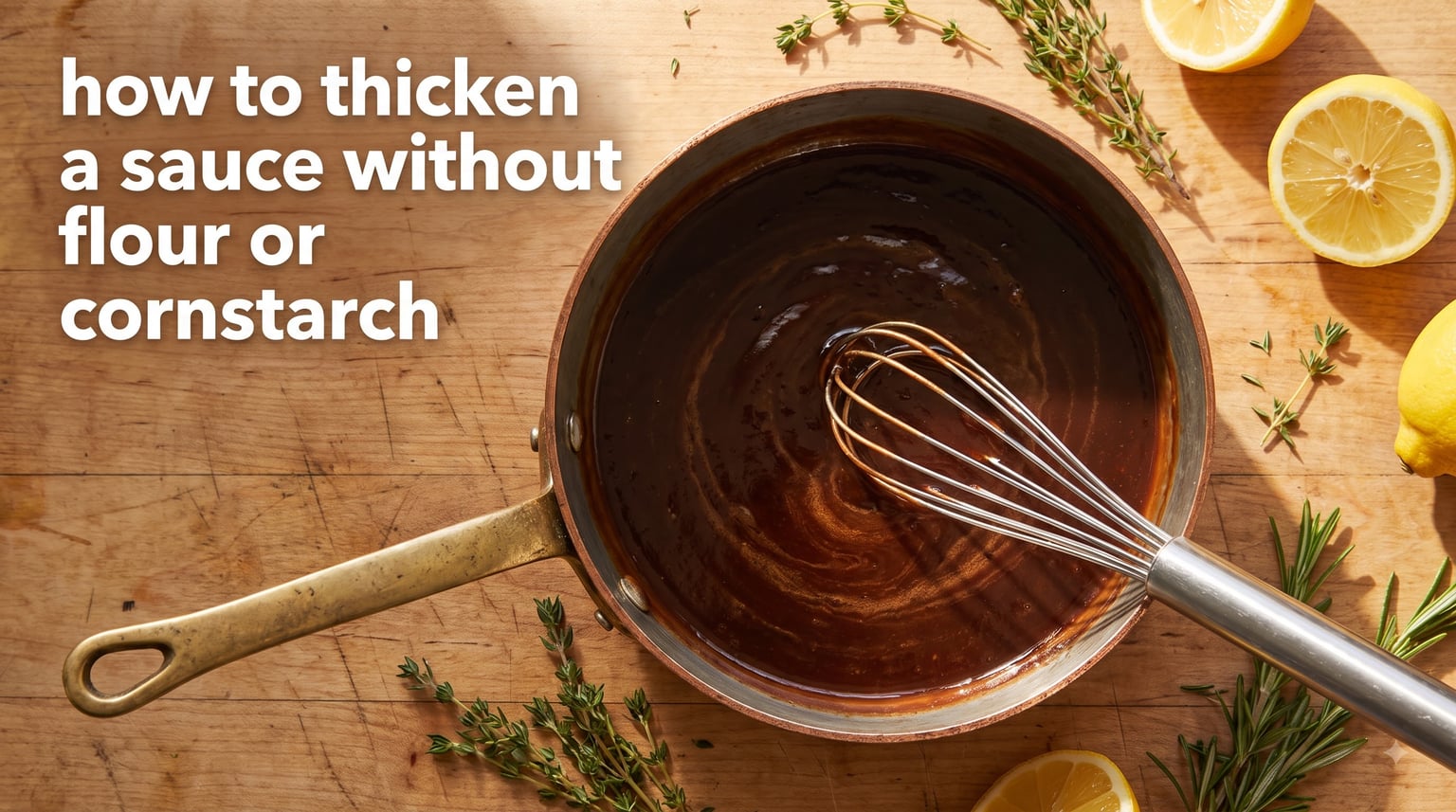
Running out of flour or cornstarch mid-recipe is one of the most frustrating kitchen moments. I have been there, whisking frantically while my gravy stays stubbornly thin. The good news is that learning how to thicken a sauce without flour or cornstarch opens up a whole toolkit of techniques that work just as well, often better, and sometimes with less effort.
This guide covers nine methods I use in my own kitchen, from simple simmering to keto-friendly xanthan gum. You will get step-by-step instructions, exact ratios, and troubleshooting tips for when things go wrong. By the end, you will have a method for every sauce you will ever make, whether you need to thicken a cheese sauce, finish a pan gravy, or rescue a runny stir-fry glaze.
Quick Answer: Thicken a Sauce Without Flour or Cornstarch
You can thicken any sauce without flour or cornstarch by using one of these methods:
- Reduce the sauce by simmering until the water evaporates.
- Temper egg yolks into warm sauce for cream sauces and custards.
- Mount with cold butter for glossy pan sauces and gravies.
- Use arrowroot, tapioca, or potato starch as gluten-free alternatives.
- Stir in tomato paste for deep flavor and body in red sauces.
- Puree vegetables directly into the sauce for stealth thickness.
- Blend in cooked rice or bread for rustic Mediterranean-style sauces.
- Whisk in xanthan gum, konjac, or glucomannan for keto and low-carb.
- Add cream or cream cheese for dairy-rich sauces like Alfredo.
Table of Contents
What Can I Use to Thicken a Sauce Without Flour or Cornstarch?
You have nine reliable options, and the right one depends on what kind of sauce you are making. For most weeknight gravies, simmering to reduce is the fastest. For dairy sauces, egg yolks and butter give you that restaurant-quality gloss. For gluten-free or low-carb diets, arrowroot and xanthan gum are pantry heroes.
Here is the master list I will cover in detail below, in order of how often I reach for each:
- Reduction (simmering off water)
- Egg yolk tempering
- Butter mounting (beurre monté)
- Arrowroot starch
- Tapioca starch
- Potato starch
- Tomato paste
- Pureed vegetables
- Rice or bread blended into the sauce
Plus a bonus section on keto and low-carb thickeners for special diets. Each method has a clear “why it works” explanation, the exact ratio to use, and a “when to use it” recommendation so you can match the technique to your sauce.
How to Thicken a Sauce by Reduction (Simmering)
Reduction is the oldest sauce-thickening technique in the book, and it is the one I default to when I am not in a rush. When you simmer a sauce uncovered, water evaporates, and the flavor compounds and starches left behind become more concentrated. The sauce thickens, and the flavor deepens at the same time.
How to do it: Bring your sauce to a gentle simmer. Lower the heat so it barely bubbles, and let it cook uncovered. Stir every few minutes to prevent scorching. Most thin sauces reduce by about a third in 10 to 20 minutes and reach gravy consistency.
Why it works: Evaporation removes water while flavor molecules, proteins, and any natural sugars stay behind. The result is a thicker, more intense sauce without adding anything new.
When to use it: Reduction is perfect for pan sauces, gravies, tomato sauce, braising liquids, and any sauce where you want deeper flavor. It is the cleanest method because nothing is added.
Visual cue: Dip a wooden spoon in. If the sauce coats the back of the spoon and your finger leaves a clear line when you drag it through, the sauce is done.
How to Thicken Sauce With Egg Yolks (Tempering Method)
Egg yolks are one of the most powerful natural thickeners in any kitchen. They add richness, body, and a velvety texture that no starch can match. The catch is that you cannot just crack a yolk into hot sauce. You have to temper it first, or you will get sweet-and-sour scrambled eggs floating in your gravy.
How to temper egg yolks: Whisk two to three egg yolks in a small bowl. Slowly drizzle in about half a cup of the warm sauce while whisking constantly. This raises the temperature of the yolks gradually. Then pour the yolk mixture back into the pot while whisking the main sauce over low heat. Cook for one to two more minutes until thickened, but do not let it boil or the yolks will curdle.
Why it works: Egg yolks contain proteins (mainly lipoproteins) that coagulate and trap water when gently heated, creating a stable, thick network. The fat in the yolk also adds richness and a glossy mouthfeel.
When to use it: Egg yolks shine in cream sauces, carbonara, custard-based pasta sauces, dessert curds, and any dairy-rich sauce where you want a silky, luxurious texture.
Ratio: Two yolks will thicken about one and a half cups of sauce. Three yolks are good for two cups.
Warning: If you see the sauce start to look grainy or if little flecks appear, the eggs are scrambling. Immediately remove the pot from the heat and whisk vigorously, or strain the sauce through a fine mesh sieve.
Mounting a Sauce With Butter (Beurre Monté)
Mounting a sauce with butter is the trick that makes restaurant pan sauces taste so silky. A beurre monté is a warm emulsion of butter and a small amount of liquid, and when you whisk it into a finished sauce, it adds body, gloss, and richness in seconds.
How to do it: Reduce your sauce until it is just slightly thinner than you want it. Remove the pan from the heat. Whisk in cold butter one tablespoon at a time, incorporating each piece fully before adding the next. Two to three tablespoons of butter per cup of sauce is usually enough.
Why it works: Butter is roughly 80 percent fat and 20 percent water and milk solids. Whisking it into a warm sauce creates an emulsion, similar to a vinaigrette. The fat coats every particle in the sauce, which gives the illusion of thickness and that signature glossy finish.
When to use it: Mounting is ideal for pan sauces for chicken, fish, or steak, where you want restaurant-quality flavor. It also works beautifully in cream sauces, butter sauces like beurre blanc, and any savory sauce that needs a final touch of luxury.
Tip: The butter must be cold, and the sauce must be warm but not boiling. If the sauce is too hot, the emulsion will break, and you will end up with a greasy puddle.
Using Alternative Starches: Arrowroot, Tapioca, and Potato Starch
Arrowroot, tapioca starch, and potato starch are the three gluten-free starches I keep on hand. They thicken at lower temperatures than flour, they are flavor-neutral, and they are widely available. Each behaves a little differently, so it is worth understanding what makes them distinct.
Arrowroot: Made from the root of a tropical plant, arrowroot thickens quickly and gives a clear, glossy finish. It works best in fruit sauces, stir-fry sauces, and clear gravies. Use one tablespoon of arrowroot per cup of liquid. Mix it with two tablespoons of cold water first to make a slurry, then stir it into the simmering sauce. Arrowroot does not hold up well after cooling, so add it at the end of cooking. It also turns slimy if boiled in dairy, so avoid it for cream-based sauces.
Tapioca starch (also called tapioca flour): Pressed from cassava root, tapioca gives a slightly chewy, glossy finish. It freezes and reheats well, which makes it a great choice for pies, casseroles, and make-ahead gravies. Use one and a half tablespoons per cup of liquid, mixed with two tablespoons of cold water. Tapioca can withstand boiling, so it is more forgiving than arrowroot.
Potato starch: A fine white powder from potatoes, potato starch is a strong thickener with a neutral flavor. Use one tablespoon per cup of liquid, mixed with cold water. It works well in soups, stews, and pan sauces. Potato starch is not ideal for acidic sauces like tomato, where it loses thickening power over time.
Why these work: All three are pure starches. When heated in liquid, the starch granules absorb water, swell, and burst, releasing long-chain molecules that trap water and thicken the sauce. This is the same process flour and cornstarch use, but without gluten or corn allergens.
Common mistake: Adding starch directly to hot liquid. Always make a slurry with cold water first, or you will get lumps every time.
Thickening With Tomato Paste for Tomato-Based Sauces
Tomato paste is a powerhouse thickener for any tomato-based sauce. It is concentrated, packed with umami, and adds body without diluting the flavor. I use this method for pasta sauce, chili, meat sauce, and gravies built on tomato.
How to do it: Sauté two to three tablespoons of tomato paste in a tablespoon of olive oil or butter for two to three minutes, until it darkens slightly. This step, called “cooking out the paste,” removes the raw tinny taste and builds deep flavor. Then add your other sauce ingredients and simmer as usual.
Why it works: Tomato paste is tomato flesh with most of the water removed. It is dense, sticky, and naturally high in pectin, which thickens as it cooks.
When to use it: Any red sauce, from simple marinara to a slow-simmered ragù. It is especially good when you want a deeper, richer tomato flavor without turning the sauce orange or pasty.
Ratio: Two tablespoons of tomato paste per two cups of sauce is a good starting point. You can add more to taste.
Pureed Vegetables: A Natural Way to Thicken Any Sauce
Blending soft cooked vegetables into a sauce is one of my favorite ways to thicken without starch. It adds body, deepens the flavor, and sneaks in extra nutrition. You cannot taste the vegetables once they are pureed into a well-seasoned sauce.
How to do it: Cook your vegetables until very soft. Onions, carrots, celery, cauliflower, butternut squash, and potatoes all work. Use an immersion blender directly in the pot, or transfer the sauce to a countertop blender and puree until smooth. If you want a silky texture, strain the puree through a fine mesh sieve.
Why it works: Pureed vegetables contain natural starches, fibers, and pectin. When blended into a sauce, they disperse evenly and add body without changing the flavor when well-seasoned.
When to use it: This method is perfect for creamy pasta sauces, vegetable soups, healthy mac and cheese, and any sauce where you want a creamy mouthfeel without dairy. It is a lifesaver for vegan and dairy-free cooking.
Best vegetables for the job: Cauliflower and potato give the most neutral flavor. Butternut squash adds sweetness. Carrots add color and natural sweetness. Roasted red peppers add smoky depth.
Blending With Rice or Bread for Body
This is the technique I learned from Italian nonnas, and it is one of the simplest ways to thicken a rustic sauce. You blend cooked rice or torn-up bread into the sauce, and the starches and fibers thicken it while adding a velvety texture.
How to do it: Take one slice of crustless bread (or a quarter cup of cooked white rice) and tear it into pieces. Soak it in a few tablespoons of warm sauce for a minute to soften. Blend the bread and a ladle of sauce together until smooth, then stir the puree back into the pot. Simmer for five more minutes to thicken.
Why it works: Bread and rice are full of starch. When blended, they release that starch into the sauce, thickening it the same way a roux would, but with a softer, more delicate texture.
When to use it: This method shines in Mediterranean sauces like panzanella-inspired dressings, Tuscan ribollita, and rustic pasta sauces. It is also a great way to use up stale bread.
Tip: Use day-old bread with the crusts removed. Fresh bread can turn gummy. If you are using rice, white rice works better than brown because it breaks down more smoothly.
Keto and Low-Carb Thickeners: Xanthan Gum, Konjac, and Glucomannan
If you follow a keto or low-carb diet, traditional starches are off the table, and reduction alone can take forever. This is where the modern hydrocolloids come in. Xanthan gum, konjac flour, and glucomannan are powerful thickeners that work in tiny amounts and add almost no carbohydrates.
Xanthan gum: Produced by fermenting sugars with a bacterium called Xanthomonas campestris, xanthan gum is a powder that thickens instantly in cold or hot liquid. Use one-quarter to one-half teaspoon per cup of liquid. Sprinkle it over the surface of the sauce and whisk vigorously, or you will get clumps. Xanthan gum can add a slight slippery texture if you use too much, so start with less and add more as needed.
Konjac flour (also called konjac root powder): Ground from the konjac tuber, this powder is even more powerful than xanthan gum. Use one-quarter teaspoon per cup of liquid. Konjac gives a glossy, almost gelatinous finish, which works beautifully in Asian-inspired sauces and pie fillings.
Glucomannan: This is the active fiber in konjac, sold as a pure powder. It behaves very similarly to konjac flour and is sometimes used as a dietary supplement. Use one-quarter teaspoon per cup of liquid and whisk into cold liquid first to avoid clumps.
Why they work: These powders are long-chain polysaccharides. When they contact water, they absorb many times their weight in liquid and form a gel-like network that thickens the sauce almost instantly.
When to use them: Any time you need a low-carb, gluten-free, or grain-free thickener. They are especially useful in keto gravies, sugar-free pudding, and gluten-free stir-fry sauce.
Warning: A little goes a very long way. Too much xanthan gum or konjac will turn your sauce into a slimy paste. Always start with the smallest amount and increase gradually.
Comparison Table: All Thickeners at a Glance
Here is a side-by-side comparison of all nine methods, so you can pick the right thickener for any sauce without scrolling back up.
| Method | Best For | Ratio (per 1 cup liquid) | Pros | Watch Out For |
|---|---|---|---|---|
| Reduction | All sauces | Simmer 10-20 min | No extra ingredients, deeper flavor | Takes time, can scorch |
| Egg yolks | Cream sauces, custards | 2 yolks per 1.5 cups | Silky, rich, glossy | Must temper or scramble |
| Butter mounting | Pan sauces, butter sauces | 2-3 tbsp per cup | Adds gloss and richness | Not dairy-free |
| Arrowroot | Clear sauces, stir-fry | 1 tbsp + 2 tbsp water | Gluten-free, neutral flavor | Slimy in dairy, no reheating |
| Tapioca starch | Pie fillings, gravies | 1.5 tbsp + 2 tbsp water | Freezer-friendly, glossy | Slightly chewy texture |
| Potato starch | Soups, stews, pan sauces | 1 tbsp + 2 tbsp water | Neutral, strong thickener | Loses power in acid |
| Tomato paste | Tomato-based sauces | 2 tbsp per 2 cups | Deep flavor, pantry staple | Adds tomato taste |
| Pureed vegetables | Creamy sauces, vegan dishes | 1 cup cooked veggies | Adds nutrition, vegan | Can change flavor and color |
| Rice or bread blend | Rustic Mediterranean sauces | 1 slice bread or 1/4 cup rice | Uses pantry staples | Adds slight starchy taste |
| Xanthan gum | Keto, gluten-free | 1/4 to 1/2 tsp | Low-carb, instant | Slimy if overused |
This is the kind of quick-reference chart I wish I had when I was first learning sauce work. Print it out and stick it on the inside of a cabinet door, and you will never have to think twice about which thickener to reach for.
Troubleshooting: Why Your Sauce Won’t Thicken
Even with the right method, sauces can refuse to cooperate. Here are the four most common problems I run into, and exactly how to fix them.
The sauce is still too thin after simmering. You are not reducing it enough, or the heat is too high and water is evaporating faster than the sauce can cook down. Turn the heat to medium-low and let it bubble gently. If you have a lid on, take it off. Reduction works through evaporation, and a lid traps steam.
The sauce is clumpy or lumpy. You added starch directly to hot liquid, or you did not whisk the slurry well enough. The fix is easy: pour the sauce through a fine mesh sieve to catch the lumps, or use an immersion blender to smooth everything out. Next time, whisk the starch with twice as much cold water before adding it to the pot.
The sauce tastes starchy or pasty. You used too much thickener, or you did not cook it long enough. Most starches need at least two to three minutes of simmering to cook out the raw flavor. If the sauce is over-thickened, whisk in more of the base liquid (broth, wine, cream) a tablespoon at a time until the texture is right.
The sauce broke or looks greasy. This usually happens with butter-mounted sauces that got too hot, or egg yolks that scrambled. To rescue a broken butter sauce, set it over low heat and whisk in a tablespoon of cold water at a time until it comes back together. If the eggs scrambled, unfortunately, the best move is to strain the sauce and start the tempering step over with fresh yolks.
Arrowroot turned slimy in my dairy sauce. This is a chemistry issue. Arrowroot and dairy do not play well together, especially when boiled. Switch to tapioca starch for dairy sauces, or use egg yolks or butter instead.
Which Thickener Should You Use for Each Sauce Type?
Different sauces have different needs. Here is a quick guide to the best thickener for the most common sauces home cooks make.
Cheese sauce (mac and cheese, nacho cheese): Use a combination of reduction and either pureed vegetables or egg yolks. Cheese sauce is delicate, and starches can make it grainy. For gluten-free mac and cheese, I puree steamed cauliflower or potato into the béchamel base before adding the cheese. Egg yolks also work beautifully if you temper them in carefully.
Pan gravy (for chicken, turkey, steak): Reduction plus butter mounting. After deglazing the pan with broth or wine, simmer the liquid to reduce by half, then mount with cold butter for a glossy finish. If you want it thicker, whisk in a small amount of arrowroot or potato starch slurry.
Tomato sauce (pasta, pizza, chili): Tomato paste plus reduction. Sauté the paste in oil first to deepen the flavor, then simmer your sauce for at least 20 minutes to reduce and concentrate.
Stir-fry sauce: Arrowroot or tapioca starch. These give the glossy, clingy texture that makes restaurant stir-fry sauce coat every piece of meat and vegetable. Mix the starch with cold water and a tablespoon of soy sauce before adding it to the hot pan.
Cream sauce (Alfredo, vodka sauce): Egg yolks plus reduction. Temper the yolks into the simmering cream, then reduce to your desired thickness. The yolks add richness and help the sauce cling to pasta without needing extra starch.
Stew or braise: Pureed vegetables plus reduction. A few carrots or potatoes blended into the braising liquid will thicken the entire pot without changing the flavor. You can also remove a cup of the liquid, blend it with a piece of bread, and stir it back in.
Keto or low-carb gravy: Xanthan gum or konjac. A quarter teaspoon of xanthan gum whisked into a cup of warm broth gives you perfect gravy in under a minute. Be careful not to add more, or you will end up with a paste.
Frequently Asked Questions
What can I use as a thickener if I don’t have cornstarch or flour?
You have nine reliable options: reduce the sauce by simmering, temper egg yolks into warm sauce, mount with cold butter, use arrowroot, tapioca, or potato starch, stir in tomato paste, puree soft vegetables, blend in cooked rice or bread, or use keto thickeners like xanthan gum. Each method has a different best use case, so pick the one that matches your sauce type.
What can I use to make gravy if I don’t have flour or cornstarch?
For classic pan gravy, the easiest approach is reduction combined with butter mounting. Simmer the deglazed pan liquid until it reduces by half, then whisk in cold butter one tablespoon at a time. If you want it thicker, whisk a quarter teaspoon of xanthan gum into a cup of warm broth, or stir in a tablespoon of arrowroot mixed with cold water.
Can I thicken a sauce without cornstarch?
Yes, absolutely. Reduction, egg yolk tempering, butter mounting, and pureed vegetables are all cornstarch-free methods that have been used in professional kitchens for centuries. Modern options like arrowroot, tapioca starch, and xanthan gum give you even more flexibility, especially if you are cooking gluten-free or low-carb.
What can I use instead of thickener?
You can thicken a sauce without any thickener at all by simmering it to reduce the water content. As water evaporates, the flavor compounds and natural starches in the sauce become more concentrated, and the texture thickens. This method works for almost any sauce and also deepens the flavor.
How do you thicken a sauce without changing the flavor?
Reduction is the cleanest method because nothing is added. Butter mounting adds richness without changing the core flavor. Egg yolks add a subtle richness and body. Arrowroot and tapioca starch are flavor-neutral when properly cooked. Avoid tomato paste unless you are making a tomato-based sauce, since it will add a strong tomato taste.
Final Thoughts on Thickening Sauces Naturally
Learning how to thicken a sauce without flour or cornstarch is one of the most useful skills you can build in the kitchen. Once you know how to reduce, temper, mount, and puree your way to the right consistency, you will never panic over a thin sauce again. The next time you are mid-recipe and reach for the flour only to find an empty canister, take a breath, pick a method from the comparison table above, and trust the process.
Start with reduction for weeknight gravies, add egg yolks when you want to impress with a carbonara or a custardy dessert, and keep a small jar of xanthan gum in the pantry for low-carb cooking. With these nine techniques in your back pocket, you have everything you need to make any sauce the right thickness, every time.