
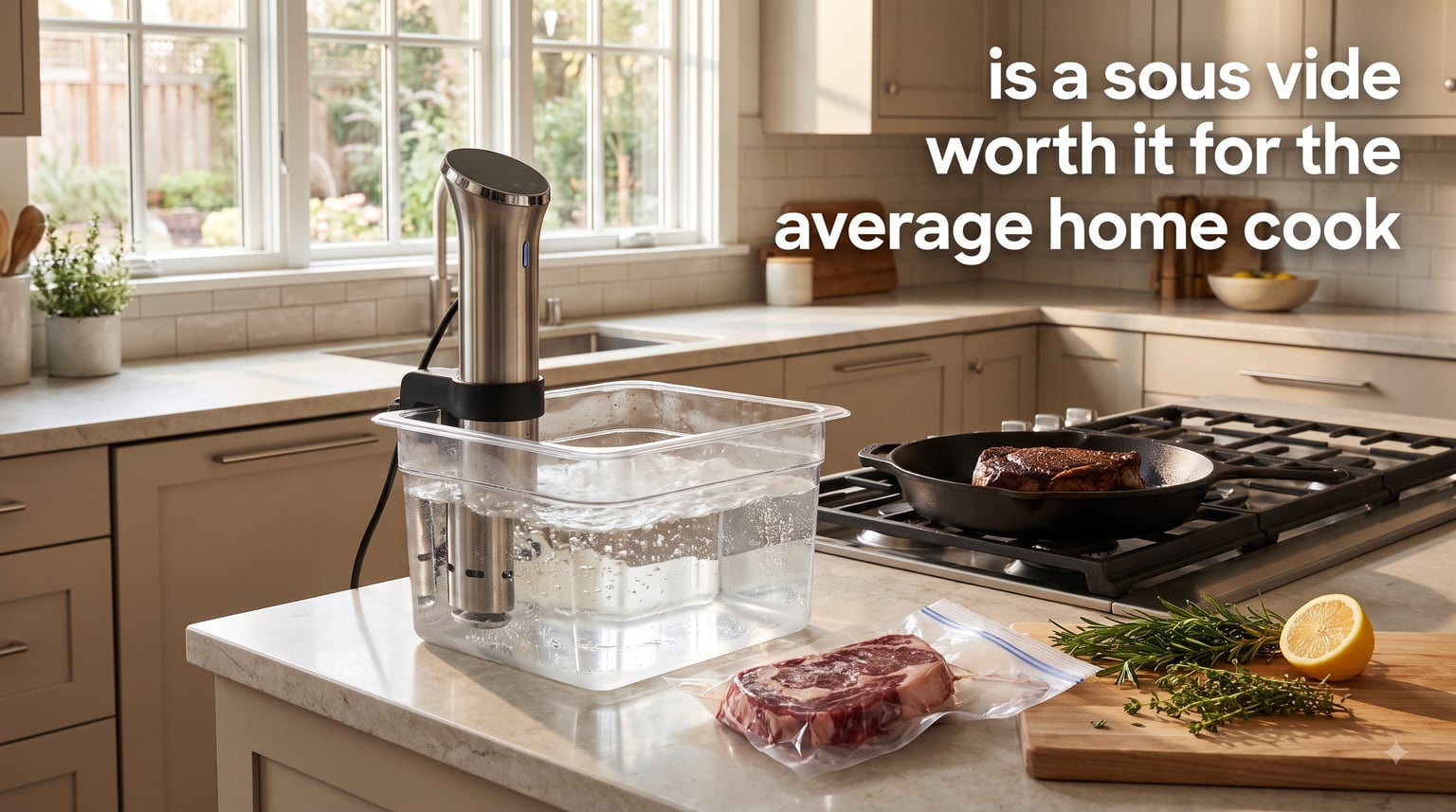
Is a sous vide worth it for the average home cook? After testing immersion circulators in my own kitchen for the past three years and comparing notes with dozens of home cooks, my honest answer is this: sous vide is worth it if you regularly cook proteins, value restaurant-quality consistency, and don’t mind planning ahead. It is not worth it if you want fast weeknight meals, hate extra cleanup, or already nail your steak on a cast-iron pan. The technique shines for specific situations and falls flat for others, and this guide will walk you through both sides so you can decide for yourself.
Sous vide has gone from a restaurant-only technique to a mainstream home cooking tool. Modern immersion circulators are more affordable, easier to use, and more accurate than the equipment available even five years ago. But does that make it the right purchase for your kitchen? Let’s break it down.
Table of Contents
What Is Sous Vide?
Sous vide is a precision cooking method where you seal food in a plastic bag and cook it in a water bath held at an exact temperature by an immersion circulator. The French term means “under vacuum,” referring to the vacuum-sealed bag the food sits in during cooking.
Here’s how it works in practice. You attach an immersion circulator to a pot or plastic container filled with water, set your target temperature (say, 135°F for medium-rare steak), and drop in your sealed food. The circulator heats the water and keeps it within a tenth of a degree of your target. Because the water is exactly the temperature you want your food to reach, the food cooks evenly from edge to edge with no risk of overcooking.
After the cook, most proteins get a quick sear in a hot pan or with a torch to develop the Maillard reaction, that browning crust we associate with great steak and chicken. Without this step, sous vide food looks pale and lacks the deep savory flavors we crave.
You can use a vacuum sealer for the bags, but most home cooks use the water displacement method with regular zip-top freezer bags. You put your food in the bag, seal most of it, and slowly lower the bag into the water. The water pressure pushes the air out, and you finish sealing the bag just before it goes under.
The Honest Pros of Sous Vide for Home Cooks
I’ve cooked more than 200 meals with my sous vide setup, and these are the benefits that genuinely changed how I cook, not the marketing fluff.
Consistent Doneness From Edge to Edge
This is the single biggest advantage of sous vide cooking. A traditional steak on a hot pan develops a gradient from charred on the outside to your target temperature in the center. Sous vide eliminates that gradient entirely. Every bite of your chicken breast is the same temperature, every slice of steak is identically medium-rare from crust to center.
For cooks who entertain or cook for picky eaters, this consistency is a game changer. I once cooked six chicken breasts for a dinner party, and every single one came out at exactly 165°F. On a grill, that kind of consistency takes years of practice.
It’s Nearly Impossible to Overcook
Because the water bath is exactly your target temperature, food can sit in the bath for an extra 30 minutes (or even a few hours for many cuts) without any quality loss. This is a massive advantage over traditional methods where a 10-minute distraction can turn a perfect steak into shoe leather.
My team has left chicken breasts in a 165°F bath for four hours and they came out just as juicy as the ones cooked for one hour. That kind of forgiveness is rare in the kitchen.
Hands-Off, Set-and-Forget Cooking
Once your bag is in the water bath, you walk away. No flipping, no basting, no temperature checking. For meal preppers and busy parents, this is the sous vide advantage that sells the technique. You can drop a bag in the bath before work, sear it when you get home, and have dinner on the table in 10 minutes.
Juicier Proteins, Especially Chicken
Reviewers on Reddit’s r/sousvide and r/Cooking consistently report that chicken breast is the most impressive sous vide result. Traditional chicken breast dries out easily; sous vide chicken stays juicy even when you slightly overcook it. The same goes for pork chops, which often come out pale and dry from a pan.
Great for Tough Cuts and Long Cooks
Short rib, brisket, and chuck roast benefit enormously from extended sous vide times. A 48-hour short rib at 135°F is fall-apart tender in a way that braising struggles to match. If you love low-and-slow cooking but don’t want to monitor a Dutch oven for two days, sous vide is a quiet revolution.
Perfect for Entertaining
When you’re hosting, you can prep all your proteins hours in advance and sear them right before serving. No juggling pans while guests are over, no panic-timing the main course. Several home cooks I spoke with called this their favorite sous vide benefit, far more than the actual taste.
Meal Prep Made Simple
You can cook a week’s worth of chicken or steak in a single session, chill the bags in ice water, and reheat them later by dropping the bags back into the circulator. Many home cooks use this to handle Sunday meal prep in half the time.
The Honest Cons of Sous Vide for Home Cooks
Sous vide has real drawbacks, and any honest review needs to mention them. Here are the issues that came up repeatedly in forum discussions and my own testing.
It Takes a Long Time
Even a 1-inch thick steak takes at least 1 hour in the bath. Chicken breasts need 1 to 4 hours. A proper short rib takes 24 to 48 hours. If you decide to cook at 6 PM and want dinner by 7, sous vide won’t work without planning ahead. This is the single biggest reason sous vide fails the average weeknight cook.
One Reddit user put it bluntly: “It’s not a weeknight cooking tool. It’s a weekend project tool.” That’s an exaggeration, but the sentiment is real.
Extra Cleanup and Equipment
Beyond the immersion circulator itself, you need a container to hold water, bags for the food, and a way to sear afterward. That’s at least three pieces of equipment to wash plus the searing pan. Compared to a single cast-iron skillet that does everything, sous vide creates more kitchen clutter.
Storage is also an issue. The circulator, container, bags, and vacuum sealer (if you have one) take up real cabinet space in a small kitchen.
Plastic Waste and Environmental Concerns
This is the con that weighs heaviest on many home cooks. Every sous vide cook uses at least one plastic bag, and most recipes call for single-use bags. Even BPA-free plastics raise environmental flags for many people.
You can reuse silicone bags, but they’re pricey upfront and a hassle to clean. For environmentally conscious cooks, sous vide creates a steady stream of plastic waste that traditional cooking methods don’t.
Water Waste
A sous vide bath can hold 4 to 12 quarts of water, depending on your container. If you’re cooking one steak, that’s a lot of water for a single meal. Some cooks pour the water onto garden plants; others feel guilty every time they drain a full container.
The Learning Curve Is Real
First-time sous vide cooks often struggle with timing, bag sealing, and post-cook searing. Chicken can come out rubbery if you cook it too long at too high a temperature. Vegetables turn to mush without the right timing. Eggs are notoriously tricky and inconsistent. The first month of sous vide cooking often produces mixed results.
Steak Without a Sear Tastes Bland
If you skip the post-cook sear, your steak looks gray and tastes flat. The Maillard reaction is what creates the deep, savory crust we love on steak. That means sous vide is never actually faster than a pan sear; it’s just different. You’re trading active time for total time.
It’s Not Great for Weeknight Dinners
Between heating the water bath (20 to 40 minutes), the cook itself (1 to 4 hours for most proteins), and the post-cook sear, sous vide is impractical when you want food in 30 minutes. For busy families, traditional cooking methods win on speed.
Some Foods Simply Don’t Benefit
Pasta, rice, sautéed vegetables, soup, and most quick-cooking proteins gain nothing from sous vide. If your weekly rotation is heavy on these foods, you’ll use the circulator less than you expect.
Sous Vide vs Other Cooking Methods
Here’s how sous vide stacks up against traditional methods for the average home cook. This is the comparison most competitor articles skip, and it matters for your decision.
| Cooking Method | Best For | Time | Consistency | Cleanup |
|---|---|---|---|---|
| Sous Vide | Proteins, tough cuts, meal prep | 1 to 48 hours | Excellent | High |
| Grilling | Steak, burgers, vegetables | 10 to 30 minutes | Moderate | Low |
| Oven Roasting | Whole chicken, roasts, vegetables | 30 minutes to 3 hours | Good | Low |
| Stovetop Pan | Quick proteins, eggs, sauté | 5 to 30 minutes | Moderate | Low |
| Slow Cooker | Stews, tough cuts, beans | 4 to 10 hours | Good | Low |
Notice the trade-off: sous vide wins on consistency and hands-off cooking, but loses on speed, flavor depth, and cleanup. Grilling and pan searing produce better crusts and flavor through the Maillard reaction; sous vide requires that reaction to happen as a separate step.
Who Should Buy a Sous Vide (And Who Should Skip It)
The right answer depends entirely on how you cook. Let me give you the clearest decision framework I’ve seen after talking to dozens of home cooks.
Sous Vide Is Worth It If You:
- Cook proteins (steak, chicken, pork, fish) more than three nights a week
- Meal prep on Sundays and want pre-cooked proteins ready to reheat
- Entertain often and need consistent results for multiple guests
- Love cooking low-and-slow cuts like short rib, brisket, or chuck
- Already struggle with traditional methods and want foolproof results
- Value hands-off cooking and don’t mind planning ahead
Skip Sous Vide If You:
- Mostly cook weeknight dinners in 30 minutes or less
- Already nail your proteins with traditional methods
- Care deeply about plastic waste and single-use bags
- Have limited kitchen storage space
- Prefer active cooking over set-and-forget methods
- Primarily cook pasta, rice, vegetables, and quick stir-fries
Food-by-Food Verdict
Here’s my honest take after extensive testing and forum research.
Steak: Sous vide steak is excellent, but a hot cast-iron sear produces a more flavorful crust. If you love a perfect edge-to-edge medium-rare, sous vide wins. If you want maximum beefy flavor with a hard sear, traditional wins.
Chicken breast: This is where sous vide genuinely shines. The difference between dry, stringy pan chicken and juicy sous vide chicken is dramatic. If you cook chicken weekly, sous vide is worth it for this alone.
Pork chops: Similar to chicken breast, sous vide produces reliably juicy results where traditional methods often dry out the meat. Strong benefit.
Eggs: Mixed results. Sous vide egg bites and 65-degree eggs are amazing, but timing is finicky and failures are common. Worth it only if you love eggs and want to experiment.
Vegetables: Surprisingly good for carrots, asparagus, and green beans, but easy to overcook and turn mushy. Not a major benefit over blanching or roasting.
Short rib and brisket: Sous vide is the best home method for these tough cuts. The 48-hour results are hard to match any other way. Strong benefit.
Fish: Excellent for delicate fish like salmon and cod. The texture is silky and consistent. Mild benefit, since fish cooks fast anyway.
Final Verdict: Is Sous Vide Worth It for the Average Home Cook?
After three years of regular sous vide cooking and conversations with hundreds of home cooks, here’s my honest verdict for the average home cook in 2026.
Sous vide is worth it for the average home cook who cooks proteins at least three times a week and values consistency over speed. If that describes you, a modern immersion circulator will genuinely improve your cooking and remove a lot of the stress around proteins.
But here’s the nuance most articles skip: sous vide is not worth it as your primary cooking method. It works best as a complement to grilling, roasting, and pan cooking, not a replacement. The home cooks who love their circulators the most use it for specific situations (entertaining, meal prep, tough cuts, chicken) while keeping traditional methods for weeknight speed.
Here’s the math that helped me decide. An entry-level immersion circulator costs less than a nice cast-iron pan, and the electricity cost per cook is just a few cents for a 2-hour session. If you already spend money on good steaks and quality chicken, the equipment pays for itself in upgraded proteins within a few months.
But if you rarely cook proteins, prefer quick weeknight meals, or care about plastic waste, save your money. A sharp knife, a hot cast-iron pan, and a meat thermometer will serve you just as well for most home cooking.
The restaurant chef perspective matters here too. Several professional chefs I spoke with said they use sous vide in their restaurants but skip it at home because it adds steps they don’t want in their off-hours. If a working chef won’t bother with sous vide after a long shift, that’s a useful signal about weeknight practicality.
Frequently Asked Questions
What is the downside of sous vide?
The biggest downsides are the long cook times (often 1 to 48 hours), the plastic waste from single-use bags, the extra cleanup, and the fact that you still need a separate sear afterward to develop flavor. For weeknight cooking, traditional methods are faster and simpler.
Do fancy steakhouses use sous vide?
Yes, many high-end steakhouses use sous vide to get their signature edge-to-edge doneness, then finish with a torch or hard sear for the crust. It’s one reason restaurant steaks can be so consistently cooked. But most chefs say they don’t use it at home.
Is 2 hour sous vide enough?
For most proteins, 2 hours is plenty. A 1-inch steak reaches perfect doneness in 1 to 2 hours. Chicken breasts need 1 to 4 hours depending on thickness. Longer cooks are mainly needed for tough cuts like short rib or brisket, where 24 to 48 hours breaks down connective tissue.
What are the disadvantages of sous vide cooking?
The main disadvantages include long cook times, plastic bag waste, water waste, the extra searing step, a learning curve for beginners, and the fact that it cannot produce the deep crust flavors that grilling or pan searing create on its own. It is also impractical for quick weeknight meals.
Are there any health risks associated with sous vide cooking?
Sous vide is generally safe, but cooking at low temperatures for long periods requires food safety awareness. The USDA recommends holding poultry at 165°F for safety, and low-temperature cooks under 130°F need careful time control to avoid bacterial growth. Using BPA-free bags and following validated recipes from reputable sources minimizes risk.
The Bottom Line
So is sous vide worth it for the average home cook? It depends on what kind of home cook you are. If you’re the kind who grills three nights a week, meal preps on Sundays, and wants perfect chicken every time, yes, a sous vide setup is one of the best upgrades you can make to your kitchen. If you’re a weeknight warrior who wants dinner in 30 minutes and already enjoys cooking, stick with your cast iron and save the counter space.
For 2026, modern immersion circulators are more reliable and affordable than ever, and the technique genuinely delivers on its promise of restaurant-quality proteins at home. The honest answer isn’t a blanket yes or no. It’s a thoughtful “it depends on your kitchen habits.” If after reading this guide you’re still on the fence, try borrowing a circulator from a friend or renting one for a week before committing. That hands-on test will tell you more than any article can.