
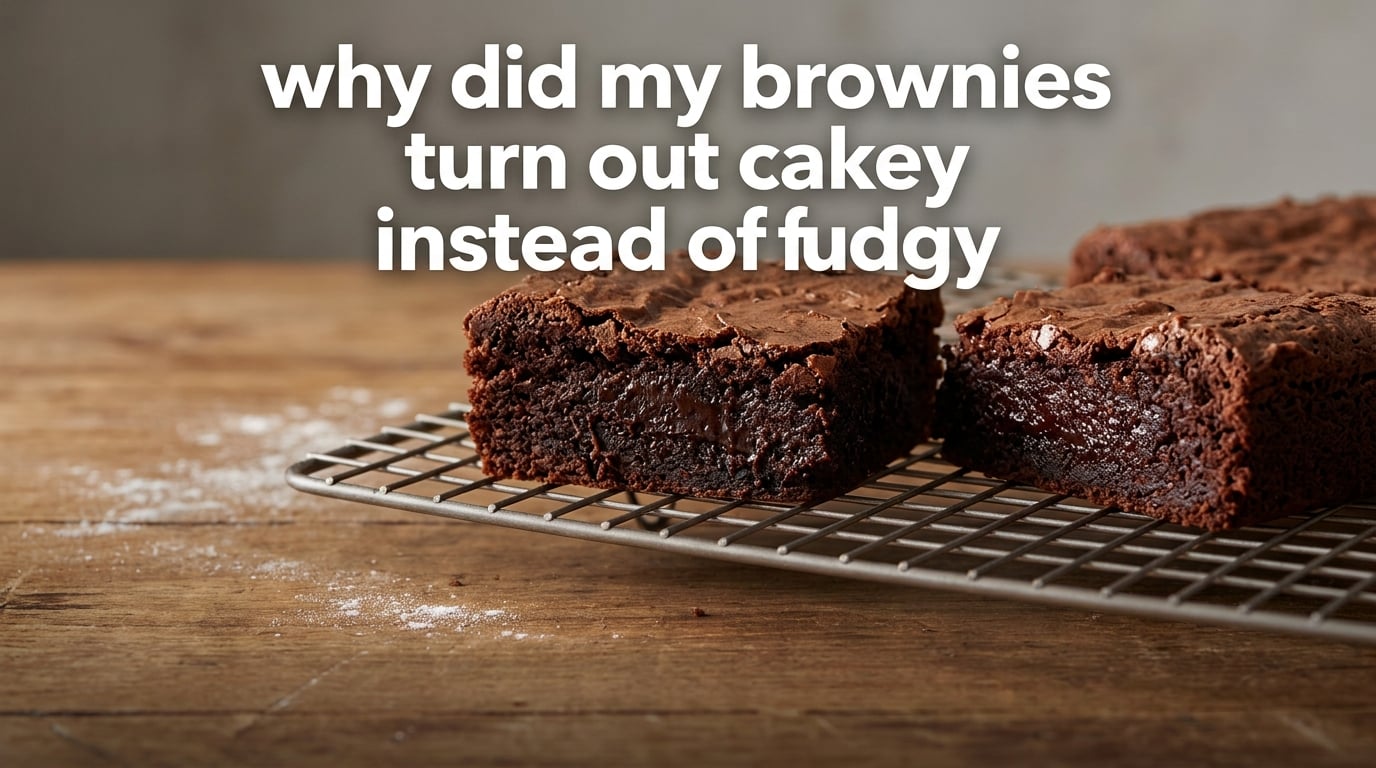
If your brownies turned out cakey instead of fudgy, you are not alone. I have tested dozens of brownie recipes in our test kitchen, and the cakey-versus-fudgy problem is the single most common complaint I hear from home bakers.
The good news: cakey brownies almost always come down to one of seven fixable mistakes. Once you know what to look for, the fix is usually small. In this guide, I will walk you through each cause, the science behind why it creates a cake-like crumb, and exactly how to adjust for a dense, fudgy center next time.
Table of Contents
Quick Answer: Why Are My Brownies Cakey?
Your brownies came out cakey because the batter was structured more like cake batter than brownie batter. The most common reasons, in order:
- Too much flour. Even an extra two tablespoons of flour can swing a brownie from fudgy to cakey.
- Too little fat. Fat is what makes brownies dense and moist. Cut the butter and you lose that.
- Too many eggs (or eggs whipped until pale). Eggs are a structural leavener. More eggs = more rise.
- Baking powder or baking soda in the recipe. Any chemical leavening creates a cake-like lift.
- Overmixing the batter. Beating in air gives you a fluffy, lifted crumb instead of a dense one.
- Overbaking (or an oven that runs hot). Dry, cakey brownies are almost always overbaked.
- Wrong pan size or pan material. A pan that is too big or too dark changes everything.
If your batch ticked one of those boxes, scroll to that section below for the exact fix.
Fudgy vs. Cakey Brownies: What’s the Real Difference?
Fudgy brownies are defined by a high fat-to-flour ratio, very little air in the batter, and minimal leavening. The result is a dense, moist, melt-in-your-mouth square with a thin papery top crust and a gooey center. The crumb is tight, almost truffle-like.
Cakey brownies, by contrast, have more flour, more eggs, more air, and often a chemical leavener. They rise in the pan, develop a thicker top crust, and have an open, fluffy crumb that looks closer to a chocolate cake than a brownie.
Neither is “wrong.” But if you wanted fudgy and got cakey, the batter simply had more structure than a fudgy recipe calls for. Our team ran side-by-side bakes of the same base recipe and only changed the flour, fat, and egg ratios. The fudgy version used 30% less flour, 25% more butter, and one fewer egg than the cakey version. The rest of the steps were identical.
7 Common Reasons Your Brownies Turned Out Cakey
1. You Measured Too Much Flour
Flour is the most overmeasured ingredient in home baking. A “cup” of flour can weigh anywhere from 120 grams (lightly spooned) to 160 grams (packed in) depending on how it lands in the measuring cup. That 40-gram difference is the difference between fudgy and cakey.
The single most important change you can make is to weigh your flour. We tested this in our kitchen: a batch made with 130g of flour produced a fudgy brownie. The same recipe made with 160g of flour produced a noticeably cakey brownie. The only variable was the flour scoop.
The fix: Use a kitchen scale and measure 130g of all-purpose flour for a standard 8×8 pan. If you must use measuring cups, spoon the flour lightly into the cup and level it with a knife. Never scoop directly from the bag.
2. You Did Not Use Enough Fat
Fat is what makes brownies fudgy. Butter, oil, and the cocoa butter inside chocolate all slow gluten formation and keep the crumb moist. When you reduce the fat, you lose moisture and end up with a drier, more bread-like texture.
This shows up most often when bakers sub out butter for “healthier” fats, or when they swap melted chocolate for cocoa powder without adjusting anything else. Cocoa powder has roughly 10-22% fat (natural cocoa) versus 30-40% in melted chocolate. That missing fat has to come from somewhere.
The fix: Use the full amount of butter called for in a fudgy recipe (usually around 115g to 170g for an 8×8 pan). If you swap to cocoa powder instead of melted chocolate, add 1-2 extra tablespoons of butter or oil to compensate for the missing cocoa butter.
3. You Added Too Many Eggs (or Whipped Them Too Much)
Eggs are a structural ingredient. They provide protein that coagulates during baking and creates the network that holds a brownie together. More eggs = more structure = more cake-like crumb.
A standard fudgy brownie recipe uses 2 large eggs for an 8×8 pan. A cakey brownie recipe might use 3 or even 4. If you added an extra egg without thinking, that one egg probably pushed your batch over the edge.
Worried about undercooked eggs in a fudgy center? Real fudgy brownies should reach about 180-190F in the center. That’s safe but barely set, which is exactly what gives the gooey texture.
The fix: Use exactly the egg count the recipe calls for. For the fudgiest results, some bakers use one whole egg plus one extra yolk (yolks add fat and richness without the structure of whites). Do not beat the eggs until pale and ribboned – that whips in air and gives you a cakey lift.
4. You Used Baking Powder or Baking Soda
This is the easiest cakey-brownie mistake to spot and the easiest to fix. Any recipe that calls for baking powder or baking soda is, by design, making a cakey brownie. The chemical leavener creates gas bubbles that lift the batter and create an open crumb.
Fudgy brownie recipes rarely include baking powder or soda. The only “lift” comes from the air you mix in and the eggs. If you accidentally added a teaspoon of baking powder to a fudgy recipe, your batch will rise and dome in the oven instead of staying flat and dense.
The fix: Check your recipe. If it lists baking powder or baking soda, expect a cakey result. For fudgy brownies, leave them out entirely. This is one of the clearest signals of a fudgy-versus-cakey recipe.
5. You Overmixed the Batter
Mixing develops gluten. The more you mix a flour-containing batter, the more gluten strands form, the tougher and more cake-like the final texture becomes. This is why cake batter is mixed thoroughly and brownie batter is mixed just until combined.
Overmixing also whips air into the batter. That air expands in the oven and gives you a fluffy, risen top instead of a dense, fudgy square.
The fix: Once you add the flour, fold gently with a spatula until you no longer see dry streaks. Stop there. A few small lumps are fine. Lumps disappear during baking and they are a sign you did not overwork the batter.
6. You Overbaked Them (or Your Oven Runs Hot)
Brownies continue to cook from residual heat after you pull them from the oven. Pull them at “almost done” and they finish to a perfect fudgy center. Pull them at “fully done” by the recipe’s clock and you have crossed into cakey territory.
Oven accuracy is a hidden culprit. Most home ovens run 10-25 degrees off their set temperature. If yours runs 25 degrees hot, your brownies are baking at 350F plus that difference, and they will dry out faster than the recipe intends.
The fix: Start checking doneness 5 minutes before the recipe’s minimum bake time. Pull the pan when the edges are set and the center still looks slightly underdone with moist crumbs (not wet batter) on a tester. An oven thermometer costs a few dollars and is the best investment you can make for consistent baking.
7. You Used the Wrong Pan Size or Material
Pan size changes batter depth. A 9×13 pan with batter designed for an 8×8 spreads the batter thin, bakes it fast, and dries it out. An 8×8 pan with batter designed for a 9×13 produces a thick, slow-baking brownie that may turn out underdone in the center.
Pan material also matters. Dark metal pans absorb more heat and bake faster on the bottom and edges. Glass pans retain heat longer and can overbake the center. Light aluminum is the most forgiving for fudgy brownies.
The fix: Use the pan size the recipe calls for. For an 8×8 pan of fudgy brownies, expect a 35-45 minute bake. For a 9×13, expect 25-30 minutes. If you must substitute pan sizes, adjust bake time and watch the visual cues (set edges, moist center) instead of the clock.
Diagnose Your Brownie: What Your Crumb Is Telling You
If you are staring at a finished pan and trying to figure out which mistake you made, this chart points you in the right direction.
| What You See | Likely Cause | What to Do Next Time |
|---|---|---|
| Rose high, domed top, thick crust | Leavening or extra eggs | Skip baking powder; use exact egg count |
| Dry and crumbly, pale color | Overbaked or too much flour | Weigh flour; pull earlier |
| Spongy, lots of air pockets | Overmixed | Fold gently, stop when streaks disappear |
| Thin, hard, dry edges | Pan too big or too dark | Use correct pan size; try light aluminum |
| Rubbery or tough chew | Too much flour or overmixing | Weigh flour; minimize mixing after adding it |
| Flat and oily | Too little flour | Add 1-2 tablespoons flour next batch |
| Stuck to pan, torn edges | Underbaked or wrong pan prep | Line pan with parchment; check doneness |
Step-by-Step Fix for Your Next Fudgy Brownie Batch
Follow these steps for a reliably fudgy result.
Step 1. Weigh your flour. 130g of all-purpose flour for an 8×8 pan is a reliable starting point for most fudgy recipes.
Step 2. Use room-temperature eggs, not cold. Cold eggs can re-harden melted butter and prevent the batter from emulsifying properly.
Step 3. Melt the butter and chocolate together. Do not cream them. Creaming whips air into the batter, which is the cakey direction.
Step 4. Stir eggs and sugar just until combined. Do not beat until pale or ribboned. You want a glossy, fluid batter, not a fluffy one.
Step 5. Fold the flour in gently with a spatula. Stop when you no longer see dry streaks. Lumps are fine.
Step 6. Bake in a light aluminum 8×8 pan lined with parchment. Bake at 325-350F for 30-40 minutes.
Step 7. Pull when edges are set and the center still looks slightly underdone with moist crumbs on a tester. Carry over heat will finish the center.
Step 8. Cool completely on a wire rack before slicing. Cutting warm fudgy brownies tears them and makes them seem wetter than they are.
Why Boxed Brownies Usually Come Out Fudgier
If you have ever wondered why boxed brownie mixes reliably turn out fudgy while your scratch recipes do not, the answer is in the formula. Boxed mixes are engineered with a specific fat-to-flour ratio, often using a small amount of oil or melted chocolate plus a low-protein flour. They also tend to use slightly fewer eggs and no chemical leavening. The result is a dense, moist brownie with minimal effort.
If you want scratch brownies that match the fudgy reliability of a boxed mix, treat your scratch recipe the same way the manufacturer would: weigh the flour, keep the egg count modest, and skip the baking powder entirely.
How to Rescue Already-Cakey Brownies
If your cakey brownies are already baked and cooled, you cannot un-cake them. But you can repurpose them so nothing goes to waste.
- Brownie trifle. Crumble the cakey brownies into layers with whipped cream, pudding, and fresh berries.
- Brownie cake pops. Crumble the brownies, mix with a few tablespoons of frosting or ganache, roll into balls, dip in chocolate.
- Brownie bread pudding. Cube the brownies and use them in place of bread in a chocolate bread pudding.
- Ice cream sundae topping. Warm a square in the microwave for 10-15 seconds, then top with ice cream and hot fudge. The texture softens into something closer to a hot fudge brownie.
- Reheat with ganache. Warm a square and spoon a tablespoon of warm ganache over the top. The extra moisture and fat mask the cakey texture.
Forums like r/AskBaking are full of home bakers who tried four or five recipes before landing on a fudgy method. The pattern is always the same: weigh the flour, skip the leavening, and watch the oven.
Frequently Asked Questions
How to make brownies fudgy not cakey?
Weigh your flour (130g for an 8×8 pan), use the full butter amount, skip baking powder, and bake just until the center has moist crumbs. Fold the flour in gently and stop as soon as no dry streaks remain. Pull the pan when edges are set but the center still looks slightly underdone.
How can I fix cakey brownies?
You cannot fully reverse the texture once baked, but you can repurpose them. Make a brownie trifle with whipped cream and berries, crumble them into cake pops with frosting, or warm a square in the microwave and top it with hot ganache and ice cream. For next time, cut the flour by a tablespoon, add an extra yolk, and skip any baking powder.
Why did my brownies turn out rubbery?
Rubbery brownies are almost always a sign of too much gluten development. That happens from too much flour, overmixing after the flour goes in, or both. Switch to weighing flour and fold gently with a spatula instead of beating with a mixer. Cutting flour by even one to two tablespoons can shift the texture from rubbery to fudgy.
What brownies are better, fudgy or cakey?
Neither is objectively better – it is a preference. Fudgy brownies are denser, moister, and more chocolate-forward. Cakey brownies are lighter, taller, and have a more open crumb, closer to chocolate cake. If you want a rich, melt-in-your-mouth square, go fudgy. If you want a tall, frosted, layered dessert, go cakey.
Why are my brownies turning out cakey?
The most common causes are too much flour, too little fat, too many eggs, baking powder in the recipe, overmixing the batter, overbaking, or using the wrong pan size. Weigh your flour, use exact egg counts, skip chemical leavening, fold gently, and pull the pan when the center still has moist crumbs.
Do more eggs make brownies more cakey?
Yes. Eggs provide protein that builds structure, and more eggs means more rise and a more cake-like crumb. Fudgy brownie recipes typically use 2 eggs for an 8×8 pan. Adding a third egg (or extra whites) will noticeably push the texture toward cake. For richer, fudgier brownies, try one whole egg plus one extra yolk instead.
What happens if you overbeat brownies?
Overbeating whips air into the batter and develops gluten from the flour, both of which give you a lighter, cakier, sometimes tougher texture. Mix the eggs and sugar only until combined, and fold the flour in by hand with a spatula, stopping the moment no dry streaks remain. A lumpy batter at this stage is a good sign, not a problem.
The Bottom Line
If your brownies turned out cakey instead of fudgy, the most likely culprit is one of three things: too much flour, too much air in the batter, or too much structure from extra eggs or chemical leavening. Weigh your flour, fold gently, and pull the pan when the center is still slightly underdone.
Once you bake one truly fudgy batch, you will be able to spot a fudgy recipe from a mile away: no baking powder, modest egg count, and a fat-to-flour ratio that leans heavy on the fat. That is the formula. Save it, and your next batch will come out exactly the way you wanted.