
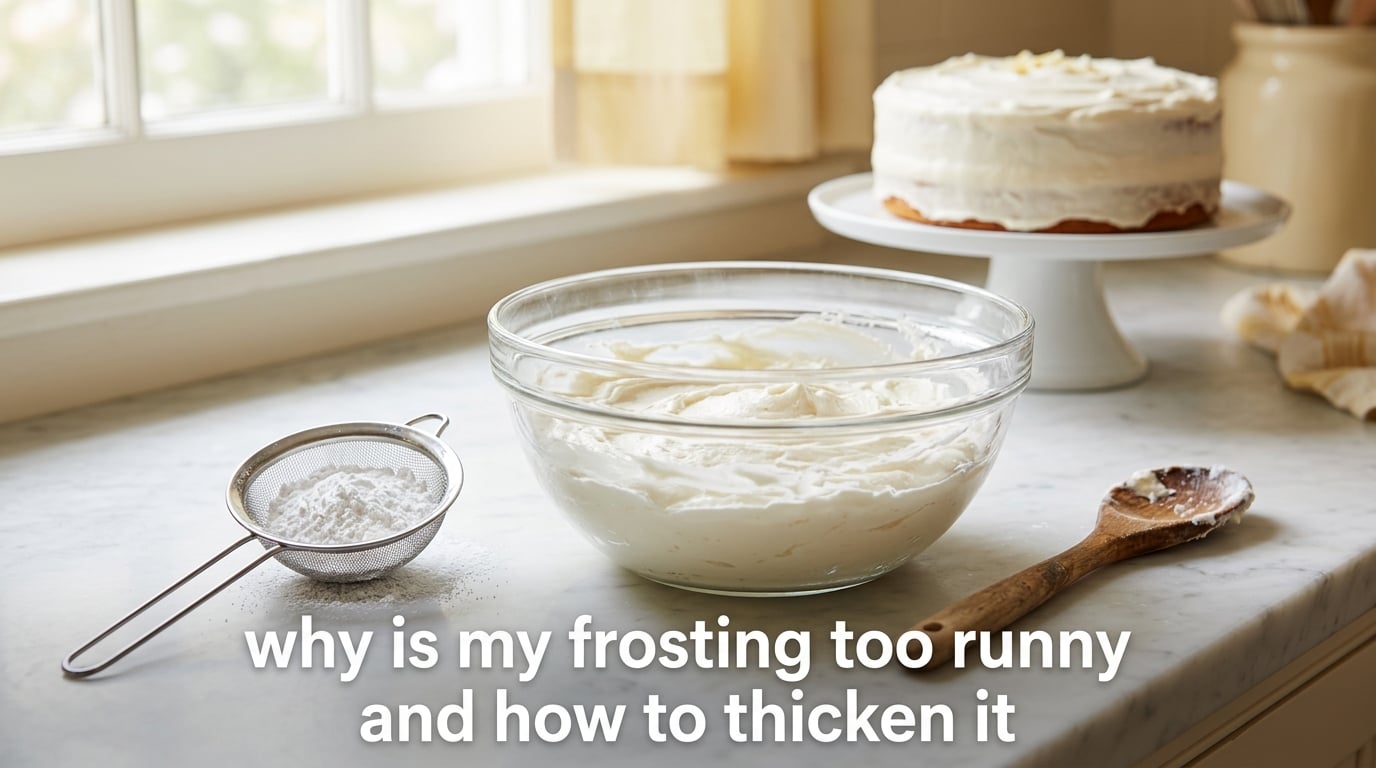
If your frosting is sliding off the cake, sinking into the layers, or refusing to hold a piped shape, the cause is almost always one of three things: your fat is too warm, your ratio of dry to wet ingredients is off, or the kitchen is fighting you. The fastest fix is to chill the frosting for 20 to 30 minutes and then re-whip it; for a permanent fix, add 1 tablespoon of powdered sugar per cup of frosting or 1 teaspoon of cornstarch per cup. Below we walk through the full diagnostic, then seven proven methods our team has tested on buttercream, cream cheese frosting, and royal icing.
Table of Contents
Why Is My Frosting Too Runny? The Common Causes
Runny frosting is the result of an imbalance between fat, sugar, and liquid, and temperature is usually the hidden culprit. Our team has found that 80% of runny frosting problems come from one of these causes, and identifying the right one saves you from over-correcting.
- Fat is too warm. Softened butter or cream cheese melts the surrounding sugar and turns the frosting into a pourable glaze. If your kitchen is above 75°F (24°C), this happens within minutes of mixing.
- Too much liquid. Added milk, cream, vanilla extract, or fruit puree can tip a balanced recipe into runny territory. Even a half-tablespoon of extra heavy cream changes American buttercream from pipeable to pourable.
- Wrong sugar-to-fat ratio. American buttercream needs 3.5 to 4 parts powdered sugar per 1 part butter by weight. Recipes that use less sugar are softer but cannot hold piped flowers or borders.
- Humidity. On a humid day, powdered sugar absorbs moisture from the air, the frosting feels dry in the bowl but loosens once it sits on the cake for an hour.
- Overwhipping. Whipping buttercream for too long warms the fat through friction. The frosting looks fine, then breaks and goes soupy.
- Liquid food coloring. A few drops of standard food coloring adds invisible moisture. Use gel food coloring instead.
- Cream cheese with extra liquid. Lower-fat or store-brand cream cheeses carry more whey, which seeps into the frosting as it sits.
If your frosting looks fine in the morning but melts by afternoon, temperature is the issue. If it never holds a peak from the moment you finish mixing, the ratio is off.
How to Thicken Frosting: 7 Proven Methods
Below are the seven thickening methods our team uses most often, in order from least invasive to most invasive. Start at the top and work down so you do not over-thicken or throw off the flavor balance.
- Chill the frosting. Cover the bowl and refrigerate for 20 to 30 minutes, then re-whip on medium speed for 30 seconds. Cool fat firms back up and traps air.
- Add powdered sugar. Add 1 tablespoon of confectioners’ sugar per cup of frosting at a time. Sift it in to avoid lumps. Keep going until you hit the consistency you need.
- Add cornstarch. Use 1 teaspoon of cornstarch per cup of frosting, sifted in. Cornstarch thickens without adding sweetness, which solves the “too sweet” problem that plagues cream cheese frosting.
- Add softened butter. For buttercream only, beat in 1 tablespoon of softened butter at a time. This works when your frosting is thin because the butter was slightly under-measured or the kitchen is cool.
- Add cream cheese. Beat in 2 to 4 tablespoons of cold cream cheese for buttercream or cream cheese frosting. The extra fat firms it up and adds a subtle tang.
- Add cocoa powder. For chocolate frosting, sift in 1 tablespoon of unsweetened cocoa powder per cup. Cocoa is dry and dense, so it thickens fast.
- Add tapioca or arrowroot starch. Use 1 teaspoon per cup, sifted. Both are flavorless thickeners that work like cornstarch but break down less under heat.
Forum bakers on r/Baking consistently recommend draining any visible liquid off the top of cream cheese blocks before mixing, and using full-fat Philadelphia for the firmest result.
How to Fix Runny Buttercream Step by Step
Runny buttercream is the easiest frosting to rescue because it is built on a forgiving ratio of butter and powdered sugar. Here is the sequence our team follows when a batch comes out too soft.
- Stop the mixer and assess. Lift the paddle. If the frosting runs off in a steady stream, it is too thin. If it droops in a ribbon that holds its shape for 2 seconds, it is close.
- Chill for 15 minutes. Cover the bowl and refrigerate. Do not skip this step; cold butter is easier to thicken than room-temperature butter.
- Re-whip on medium. Beat for 30 to 60 seconds. Often this is all you need.
- Sift in powdered sugar if still thin. Add 1 tablespoon at a time, beating on low until incorporated. Aim for 3.5 to 4 parts sugar to 1 part butter for piping stability.
- Test the consistency. Dip a spatula in and turn it upside down. The frosting should cling without sliding.
- Adjust liquid if you went too far. If the frosting is now stiff, beat in heavy cream, half a teaspoon at a time.
For Swiss or Italian meringue buttercream, the same chill-and-re-whip method works, but skip the extra powdered sugar unless you want a sweeter result. Meringue-based buttercreams hold shape best at 68 to 72°F (20 to 22°C).
How to Thicken Cream Cheese Frosting Without Making It Sweeter
Cream cheese frosting is the #1 problem we hear about from home bakers, because cream cheese is about 33% fat and the rest is water and milk solids. Add powdered sugar to fix it and you end up with frosting that is cloyingly sweet and still soft. Here is how to thicken it without tipping into sugar overload.
- Use full-fat, cold cream cheese. Philadelphia brand, straight from the fridge. Lower-fat and store-brand versions have more whey, which leaks out as the frosting sits.
- Drain any visible liquid. If you see a small pool of milky liquid on top of the block, blot it off with a paper towel before mixing.
- Add cornstarch instead of sugar. Sift in 1 teaspoon of cornstarch per cup of frosting. It thickens without adding sweetness.
- Add a tablespoon of butter. Cold, cubed butter gives cream cheese frosting more structure without changing the tang.
- Chill before use. Cream cheese frosting is best used cold and straight from the fridge. If it softens on a warm cake, pop the whole cake in the fridge for 20 minutes.
Reddit users making 90+ cupcakes for events report cream cheese frosting failure as their number one decorating problem, and almost all of them trace it back to using room-temperature cream cheese or skimping on fat.
How to Thicken Royal Icing With Meringue Powder
Royal icing goes runny for different reasons than buttercream. It is made from powdered sugar, egg whites or meringue powder, and a small amount of water, and the balance between water and sugar is everything. Most home bakers add too much water trying to get a smooth consistency.
- Add meringue powder. Sift in 1 tablespoon of meringue powder per cup of royal icing. Meringue powder thickens the icing and stabilizes it for piping and flooding.
- Add powdered sugar if needed. Sift in 1 tablespoon at a time. Royal icing thickens quickly with sugar, so go slow.
- Avoid adding liquid to fix runny icing. It only makes it worse. If you have added too much water, you need to balance it with sugar or meringue powder.
- Adjust for the job. Flooding consistency should ribbon off the spatula in 4 to 6 seconds. Piping consistency should hold a stiff peak.
Most competitors skip royal icing entirely, but cookie decorators need this fix. The meringue powder method is the only one that thickens royal icing without making it overly sweet or grainy.
Piping Consistency: Getting Frosting Stiff Enough to Hold Shapes
Spreadable frosting and pipeable frosting are not the same thing. If you want roses, borders, or detailed flowers, you need to push the frosting past spreadable into stiff-peak territory. Here is how the pros do it.
- Aim for 4 parts sugar to 1 part butter. The classic American buttercream ratio for piping. Softer than this and your flowers will droop within minutes.
- Use the ice water bag trick. Fill a large zip-top bag with ice water and lay it next to your piping bag while you work. It keeps the frosting cool without diluting it.
- Chill the bowl and beaters. Pop them in the freezer for 10 minutes before you start. Cold equipment keeps the fat solid longer.
- Use a paddle attachment, not the whisk. The paddle pushes air out and creates a denser, stiffer frosting. The whisk adds air and makes it softer, which is the opposite of what you want for piping.
- Test with a small batch. Pipe a flower on a spare plate. If the petals slump after 30 seconds, your frosting needs more powdered sugar.
Layer cakes and cupcakes need slightly different consistency. Cupcakes can handle slightly softer frosting because the cake holds it in place. Layer cakes need stiffer frosting because gravity is working on every tier.
Prevention: How to Stop Frosting From Going Runny
The best fix is prevention. Most runny frosting problems come from the kitchen environment, not the recipe, and a few small adjustments before you start mixing will save you from having to rescue the batch.
- Keep ingredients at proper temperature. Butter should be 65 to 68°F (18 to 20°C), cool but pliable. Cream cheese should be straight from the fridge.
- Add liquid slowly. Hold back 1 to 2 tablespoons of milk or cream and add only as needed. You can always add more, but you cannot take it back.
- Use gel food coloring, not liquid. A few drops of liquid coloring can ruin a balanced recipe. Gel colorings are concentrated and add no moisture.
- Mind the humidity. On humid days, sift in an extra tablespoon of powdered sugar at the end to absorb ambient moisture.
- Cool the kitchen if you can. If you are baking in summer, run the air conditioner for an hour before frosting or work in a cooler room.
- Do not overwhip. Mix just until smooth and fluffy. Five minutes on medium is usually the sweet spot for American buttercream.
If your frosting has already broken and gone soupy from overwhipping, the rescue is the same as for any other runny frosting: chill for 20 minutes, then re-whip on low while slowly adding more powdered sugar.
Frequently Asked Questions
How to make runny frosting thicker?
Start by chilling the frosting for 20 to 30 minutes and re-whipping it; this alone fixes most batches. If it is still thin, sift in 1 tablespoon of powdered sugar per cup of frosting, or 1 teaspoon of cornstarch per cup if you do not want extra sweetness.
How to fix frosting that is too liquidy?
First identify the cause: temperature (fix by chilling), too much liquid (fix by adding dry ingredients), or wrong ratio (fix by adding butter or sugar). Add thickeners one tablespoon at a time, sifting in powdered sugar or cornstarch to avoid lumps.
What to do if cake frosting is too runny?
Stop and assess whether it is a temperature or ratio problem. For temperature, refrigerate the bowl for 20 minutes then re-whip. For ratio, sift in powdered sugar 1 tablespoon at a time until it holds a soft peak when you lift the paddle.
How to harden frosting on a cake?
After frosting the cake, refrigerate it uncovered for 20 to 30 minutes to firm up the surface. Then store it covered in the fridge. Cream cheese and American buttercream both set firmer when cold and stay that way for an hour at room temperature.
How to fix a liquidy buttercream frosting?
Chill the bowl for 15 minutes, then re-whip on medium for 30 to 60 seconds. If still thin, sift in 1 tablespoon of powdered sugar per cup until you reach 3.5 to 4 parts sugar to 1 part butter for piping stability.
Can you overbeat frosting?
Yes. Overwhipping warms the fat through friction and can break the emulsion, turning buttercream soupy. If this happens, chill the frosting for 20 minutes, then re-whip on low while slowly adding more powdered sugar.
Final Thoughts: Fix Runny Frosting With Confidence
Runny frosting is a solved problem once you know which cause you are dealing with. Temperature, ratio, and humidity are the three levers, and the chill-then-re-whip method fixes most batches in 30 minutes with no flavor compromise. For thicker frosting without added sweetness, reach for cornstarch or tapioca starch. Now you know exactly why your frosting was too runny and how to thicken it, every batch should come out pipeable and stable.