
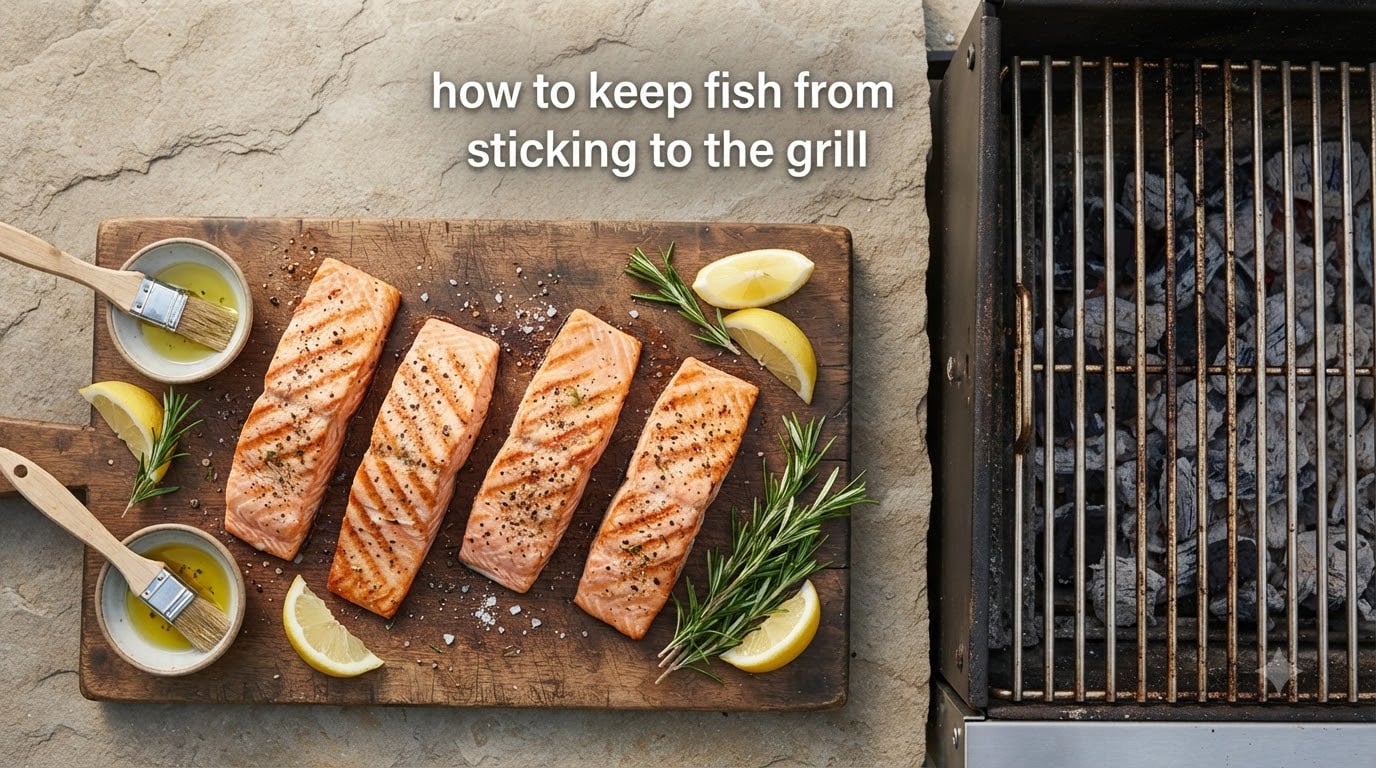
There is nothing more frustrating than spending good money on a beautiful salmon fillet only to watch half of it weld itself to the grill grates. I have been there more times than I care to admit. The good news? Keeping fish from sticking to the grill is a skill anyone can learn, and it comes down to a handful of specific techniques that professional chefs use every single day.
In this guide, I will walk you through exactly how to keep fish from sticking to the grill using proven methods that work on both gas and charcoal setups. You will learn the science behind why fish sticks in the first place, a step-by-step grilling process, the best fish species to choose, and what to do when things go wrong mid-cook.
Table of Contents
How to Keep Fish from Sticking to the Grill
Here are the seven essential tips for grilling fish without it sticking:
1. Clean the grill grates thoroughly before every session. Old food residue is the number one cause of sticking.
2. Preheat the grill to high heat (around 500°F) for at least 10 to 15 minutes with the lid closed.
3. Oil the grates, not just the fish. Fold a paper towel, dip it in high smoke-point oil, and rub it across the hot grates with tongs.
4. Pat the fish completely dry with paper towels before seasoning. Moisture creates steam and prevents a proper sear.
5. Oil the fish itself with a thin coat of avocado or vegetable oil for an extra layer of protection.
6. Place the fish and leave it alone. Do not touch, poke, or try to move it until it releases naturally from the grates.
7. Flip only once using a thin fish spatula, sliding it gently under the fillet in one confident motion.
Why Does Fish Stick to the Grill?
Understanding the science helps you prevent the problem. When raw fish touches a hot metal grate, its surface proteins begin to denature and form chemical bonds with the metal. This happens almost instantly if the grate is not hot enough or lacks a barrier of oil.
There are three main reasons fish sticks to the grill:
Cold or dirty grates. Old food residue creates an uneven, sticky surface. A cold grate means the fish proteins bond to the metal before a sear can form.
Moisture on the fish surface. Water turns to steam when it hits the hot grate, which cools the metal surface right where the fish touches it. This prevents the Maillard reaction (the browning that creates a natural release) and causes the fish to fuse to the grate.
Moving the fish too early. When you place fish on a properly heated, oiled grate, a sear forms on the contact surface. If you wait patiently, that sear will eventually release the fish on its own. Trying to flip before that sear sets means you are ripping the fish apart.
How to Grill Fish Without Sticking: Step-by-Step
Step 1: Clean the Grill Grates
Start with clean grates. While the grill is warming up, use a stiff grill brush to scrub off any leftover food from previous cooks. If you do not have a brush, crumple a ball of aluminum foil and use long tongs to scrape the grates. A clean surface is the foundation of nonstick grilling.
Step 2: Preheat the Grill to High Heat
Preheat your grill to high heat, aiming for around 450°F to 500°F. Close the lid and let it heat for at least 10 to 15 minutes. On a gas grill, turn all burners to high. On a charcoal grill, spread a full chimney of lit coals evenly. The grates need to be screaming hot to create an instant sear.
Step 3: Oil the Grates
This is the step most home cooks skip, and it makes all the difference. Fold a few layers of paper towel into a thick pad, soak it in an oil with a high smoke point like avocado or canola, and use long tongs to rub it across the hot grates. The oil fills in the microscopic pores in the metal and creates a nonstick barrier. Repeat two to three times until the grate surface looks glossy.
Step 4: Prepare the Fish
Take the fish out of the refrigerator 15 to 20 minutes before grilling to take the chill off. Pat every surface dry with paper towels, pressing firmly. Any moisture on the surface will work against you. Brush or rub the fish with a thin layer of oil, then season with salt and pepper. If you are using skin-on fillets, score the skin lightly with a sharp knife to prevent curling.
Step 5: Place the Fish on the Grill
Lay the fish down at a 45-degree angle to the grates (this gives you those nice crosshatch marks). If you have skin-on fillets, place them skin-side down first. The skin protects the flesh and acts as a natural nonstick layer. Close the lid immediately to maintain heat.
Step 6: Wait for the Fish to Release
This is where patience pays off. Leave the fish completely alone for 3 to 5 minutes, depending on thickness. You will know it is ready to flip when it releases from the grates without resistance. If you try to lift it with a spatula and it sticks, put it back down and wait another minute. The fish will tell you when it is ready.
Step 7: Flip Once and Finish
Slide a thin fish spatula gently under the fillet and flip it in one confident motion. Cook for another 2 to 4 minutes on the second side until the internal temperature reaches 145°F or the flesh flakes easily with a fork. Remove from the grill immediately to avoid overcooking.
Best Fish for Grilling Without Sticking
Not all fish are created equal when it comes to grilling. Some species hold up beautifully on the grate, while others will fall apart no matter how careful you are.
Easiest to grill: Salmon, tuna, swordfish, mahi-mahi, and halibut. These are firm, meaty fish with enough fat content to stay moist and hold together. Salmon with the skin on is practically foolproof because the skin acts as a protective barrier between the flesh and the grate.
Moderate: Red snapper, striped bass, and arctic char. These work well but require more attention to oiling and heat management. Always use skin-on fillets with these species.
Challenging: Cod, tilapia, flounder, and other thin white fish. These are delicate and flaky, making them prone to falling apart. If you must grill these, use a fish basket or grill mat as insurance. Alternatively, wrap them in aluminum foil packets for a no-stick solution.
When in doubt, choose a fish that is at least one inch thick and has the skin still on. Thicker fillets give you more time before overcooking, and the skin provides structure and a natural nonstick surface.
Best Oil for Grilling Fish
The oil you choose matters more than you might think. You need an oil with a high smoke point, meaning it can handle the intense heat of the grill without burning and creating bitter, sticky residue.
Best choices: Avocado oil (smoke point around 520°F), refined canola oil (400°F), and vegetable oil (400°F). These can handle the high temperatures required for a proper sear without breaking down.
Use with caution: Extra virgin olive oil has a smoke point of around 375°F, which is too low for high-heat grilling. It will burn, create off-flavors, and leave a sticky residue on the grates that actually makes sticking worse. Save your good olive oil for finishing the dish after it comes off the grill.
Apply oil to both the grates and the fish for maximum protection. Think of it as a two-layer insurance policy against sticking.
Alternative Methods: Fish Baskets, Cedar Planks, and Grill Mats
If you are nervous about grilling fish directly on the grates, or you are working with a particularly delicate fillet, there are several tools that act as a safety net.
Fish basket: A wire basket that holds the fillet between two grates. You can flip the entire basket instead of the fish itself. This is the most popular solution for people who grill fish regularly. It works especially well for thinner fillets and whole fish.
Cedar plank: A soaked wooden plank that goes directly on the grill with the fish on top. The fish never touches the metal grate at all, so sticking is impossible. It also adds a subtle smoky, woodsy flavor. Popular for salmon in particular.
Grill mat: A nonstick sheet that sits on top of the grate. The fish cooks through the mat with grill marks but without any direct contact with the metal. Easy to use, easy to clean, and virtually foolproof.
Aluminum foil: A sheet of foil with a little oil on it provides a completely nonstick surface. You will not get true grill marks this way, but the fish will cook evenly and never stick. This is also the go-to method for grilling fish in foil packets with vegetables and seasonings.
What to Do If Your Fish Starts Sticking
Sometimes, despite your best efforts, fish starts to stick mid-cook. Do not panic, and do not try to force it off the grill. Here is how to rescue it:
Close the lid and wait. Often, closing the grill lid for 30 to 60 seconds will generate enough extra heat to finish the sear and allow the fish to release naturally. The trapped heat completes the Maillard reaction on the contact surface.
Slide, do not lift. Instead of trying to pry the fish upward, slide the spatula along the grate surface in a gentle sawing motion. This cuts through the bond rather than tearing the fish apart.
Use two spatulas for large fillets. If you are grilling a big piece of salmon or swordfish, use a spatula in each hand to support the full length of the fillet during the flip. This distributes the pressure and prevents the fish from breaking in the middle.
Accept the loss and move on. If a portion of the skin or a thin edge stays on the grill, do not keep scraping. The rest of the fillet is still perfectly edible. Serve it skin-side down and no one will notice.
Common Mistakes to Avoid
Even experienced cooks make these errors when grilling fish:
Skipping the preheat. A lukewarm grill is a sticky grill. Give it a full 10 to 15 minutes with the lid closed to reach the right temperature.
Not cleaning the grates first. Leftover chicken, burger, or vegetable residue creates an uneven surface that fish will grab onto. Clean grates every time.
Putting cold fish on the grill. Pull the fish from the fridge 15 to 20 minutes before grilling. Cold fish hitting hot metal causes immediate protein bonding.
Using olive oil for high-heat grilling. It burns at grill temperatures, leaving sticky carbon residue on the grates. Switch to avocado or canola oil.
Flipping too early. This is the single most common mistake. If the fish resists when you try to slide a spatula under it, it is not ready. Wait another minute and try again.
Grilling frozen fish. Always thaw fish completely before grilling. Frozen fish releases excess water as it cooks, creating steam that prevents searing and guarantees sticking.
Frequently Asked Questions
How do you keep fish from sticking to the grill?
To keep fish from sticking to the grill, preheat the grill to high heat (around 500°F), clean the grates thoroughly, and oil both the grates and the fish using a high smoke-point oil like avocado or canola. Pat the fish completely dry before grilling, and do not move it until it releases naturally from the grates.
Should you oil fish before grilling?
Yes, you should oil both the fish and the grill grates. Brush the fish with a thin coat of high smoke-point oil such as avocado or canola oil before placing it on the grill. This creates a double barrier against sticking and helps achieve a better sear.
Do you grill fish skin side down first?
Yes, always place skin-on fillets skin-side down first. The skin acts as a natural protective barrier between the delicate flesh and the hot grill grates. It also crisps up nicely and helps the fillet hold together during the flip.
What is the best oil to use when grilling fish?
Avocado oil is the best choice for grilling fish because it has the highest smoke point (around 520°F) and can handle the intense heat of the grill without burning. Canola oil and vegetable oil are also good alternatives with smoke points around 400°F.
How do you know when fish is done on the grill?
Fish is done when the internal temperature reaches 145°F as measured with an instant-read thermometer. You can also check by pressing the fish gently with a finger — if it flakes easily and the flesh has turned from translucent to opaque throughout, it is ready to come off the grill.
Can you grill fish on foil?
Yes, grilling fish on aluminum foil is an excellent way to prevent sticking entirely. Lightly oil a sheet of foil, place the seasoned fish on it, and set it directly on the grill. You will not get traditional grill marks, but the fish will cook evenly and never stick. This method also works well for foil packet cooking with vegetables and aromatics.
Final Thoughts
Learning how to keep fish from sticking to the grill comes down to a few key fundamentals: a clean, preheated grill, proper oiling of both the grates and the fish, and the patience to let the fish release on its own before flipping. Once you master these techniques, you will never dread grilling fish again.
Start with forgiving species like salmon or tuna, use a fish basket if you need extra confidence, and remember that practice makes perfect. The grill is one of the best ways to cook fish, and now you have everything you need to do it without losing half your dinner to the grate.