
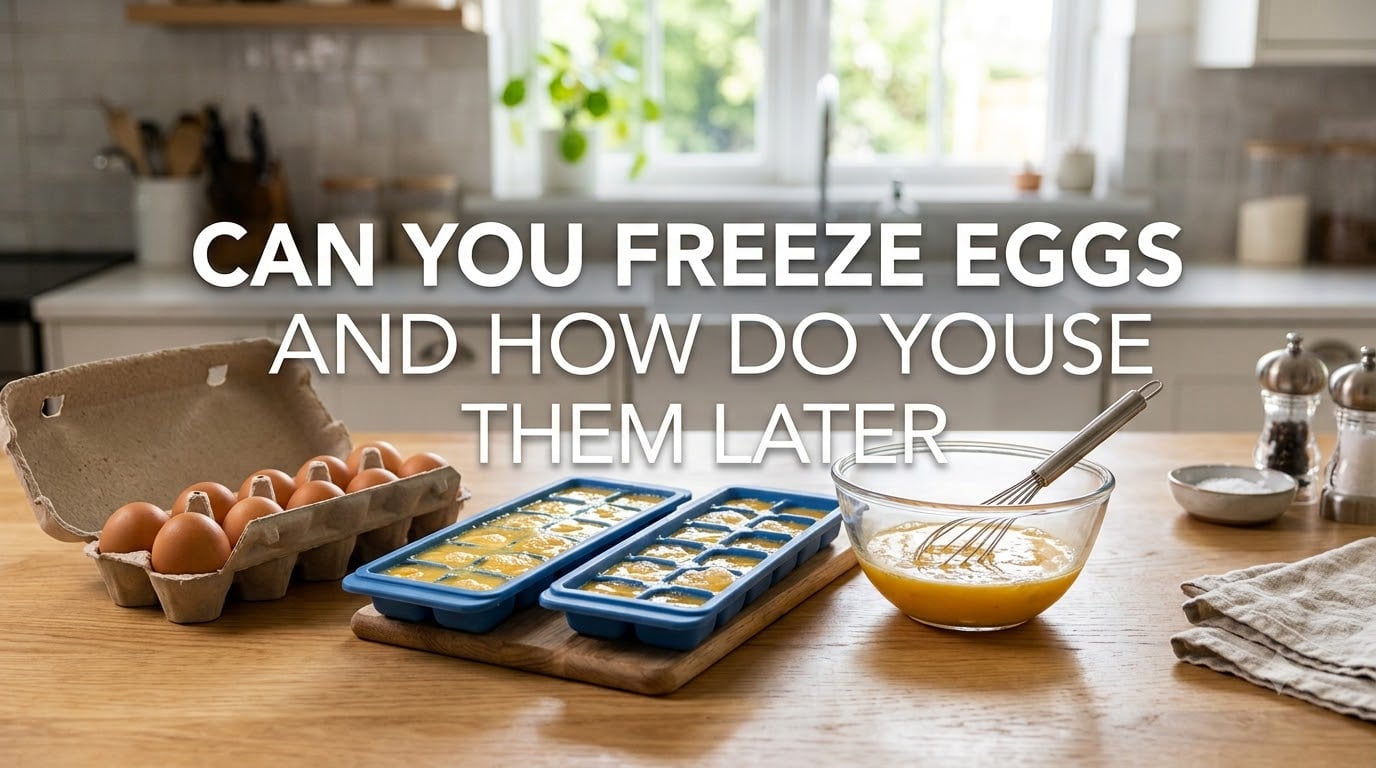
Yes, you can freeze eggs — and it’s one of the smartest ways to extend their shelf life up to a full year. Whether you bought too many, got a big haul from your backyard chickens, or just want to save money during price spikes, freezing eggs is a practical kitchen skill worth learning. If you’ve ever wondered can you freeze eggs and how do you use them later, this guide has you covered. I’ve been freezing eggs for over five years now, and I’ll walk you through every method that actually works, common mistakes to avoid, and the best ways to use your frozen eggs later.
The catch is that you can’t just toss whole eggs in the freezer and call it done. You need to crack them out of the shell first, and different egg components (whites, yolks, and whole eggs) each freeze a little differently. Below, I’ll cover exactly how to freeze eggs so they taste great when you thaw them out.
Table of Contents
How to Freeze Eggs: 4 Methods That Actually Work
You can freeze whole eggs, egg whites, or egg yolks separately — each method works well when done correctly. The key is removing eggs from their shells before freezing and using the right storage containers. Here are the four methods I use regularly.
Method 1: How to Freeze Whole Eggs
Freezing whole eggs is the fastest approach if you want to preserve eggs without separating them. It works perfectly for scrambled eggs, baking, and general cooking.
- Crack the eggs into a clean bowl. Never freeze eggs in the shell — the liquid expands and will crack the shell, creating a mess and a food safety risk.
- Beat gently with a fork or whisk until the yolks and whites are just combined. You don’t need to whip air into them — just break up the yolks so everything blends evenly.
- Portion into containers. An ice cube tray works beautifully here — each standard compartment holds about one large egg (roughly 3 tablespoons). You can also use a muffin tin or small freezer-safe containers.
- Freeze until solid, which takes about 4–6 hours depending on your freezer temperature.
- Transfer to freezer bags. Pop the frozen egg cubes out and move them to a labeled, airtight freezer bag. Squeeze out as much air as possible before sealing.
- Label with the date and the number of eggs. Trust me — you won’t remember what’s in that bag three months from now.
Method 2: How to Freeze Egg Whites
Egg whites freeze exceptionally well — better than yolks, honestly. They thaw with almost no texture change, making them ideal for meringues, angel food cake, and omelets.
- Separate the whites from the yolks. Make sure no yolk gets in — even a small amount of fat can prevent egg whites from whipping properly after thawing.
- Pour into ice cube trays. Each standard ice cube compartment holds about 2 tablespoons of egg white, which equals roughly one large egg white.
- Freeze until solid, then pop out and transfer to a labeled freezer bag.
One thing to note: egg whites don’t need any additives before freezing. Unlike yolks, they maintain their consistency without salt or sugar.
Method 3: How to Freeze Egg Yolks
Freezing egg yolks is where most people run into trouble. Raw yolks develop a thick, gel-like texture when frozen without treatment — they become almost impossible to blend smoothly after thawing. The fix is simple: add a pinch of salt or sugar before freezing.
- Separate the yolks from the whites.
- Add a preservation agent: For savory uses (scrambled eggs, quiches), stir in ⅛ teaspoon of salt per 4 yolks. For sweet uses (custards, baking), use 1½ teaspoons of sugar per 4 yolks instead.
- Beat gently to incorporate the salt or sugar evenly throughout the yolks.
- Portion into ice cube trays — one tablespoon of treated yolk equals roughly one egg yolk.
- Freeze until solid, then transfer to a labeled freezer bag.
According to the National Center for Home Food Preservation at the University of Georgia, you can also use corn syrup as an alternative: 1½ teaspoons of light corn syrup per 4 yolks. The purpose is the same — preventing the yolks from becoming too thick or grainy during freezing.
Method 4: How to Freeze Scrambled Eggs and Cooked Eggs
You can freeze scrambled eggs, and they work surprisingly well for quick breakfasts and meal prep. Cook the eggs until they’re just barely set — slightly underdone compared to how you’d eat them fresh. They’ll finish cooking when you reheat them.
- Scramble the eggs with a little butter or oil. Season lightly — flavors can intensify during freezing.
- Cool completely on a plate or baking sheet. Putting warm eggs in the freezer creates condensation and ice crystals.
- Portion into freezer bags in the amounts you’ll use — two eggs’ worth per bag works well for individual servings.
- Remove air, seal, and freeze.
Hard-boiled eggs, on the other hand, don’t freeze well at all. The whites become rubbery and watery, and the texture is honestly pretty unpleasant. I’ve tried it multiple times and the results are never worth it. If you have extra hard-boiled eggs, use them within a week in the refrigerator instead.
Can You Freeze Eggs in the Shell?
No, you should never freeze eggs in the shell. When egg liquid freezes, it expands by about 9%. This expansion cracks the shell, which lets bacteria in and creates a leaky mess in your freezer. The egg white and yolk also separate unevenly when frozen inside the shell, so even if the shell survives, the egg won’t reconstitute properly.
I learned this the hard way my first year of freezing eggs. I thought I could save time by just putting a carton in the freezer — I ended up with cracked shells, leaked egg, and a freezer that needed a deep clean. Always crack your eggs into a bowl first.
How Long Do Frozen Eggs Last?
Properly frozen eggs last up to 12 months in the freezer according to the FDA. That said, I find they taste best when used within 3–6 months. After that, you might notice a slight decline in flavor and texture, especially with yolks.
Here’s a quick reference for frozen egg shelf life:
- Frozen whole eggs: Up to 12 months (best within 6 months)
- Frozen egg whites: Up to 12 months (quality stays high throughout)
- Frozen egg yolks (treated): Up to 12 months (best within 6 months)
- Frozen scrambled eggs: Up to 3 months for best quality
Always label your bags with the date and contents. Frozen eggs are safe indefinitely as long as they stay at 0°F or below, but quality degrades over time.
How to Thaw and Use Frozen Eggs
The safest way to thaw frozen eggs is overnight in the refrigerator. Place the frozen egg cubes or bag on a plate (to catch any condensation) and let them defrost for 8–12 hours. Once thawed, use them within 24 hours.
If you’re in a rush, you can thaw sealed bags of frozen eggs under cold running water — this cuts the time down to about 30 minutes. Never thaw eggs at room temperature, as this creates a breeding ground for bacteria.
Here’s a useful conversion guide when cooking with frozen eggs:
- 3 tablespoons of thawed whole egg = 1 large egg
- 2 tablespoons of thawed egg white = 1 large egg white
- 1 tablespoon of thawed egg yolk = 1 large egg yolk
Give the thawed eggs a quick whisk before using — they may have separated slightly during freezing. For baking, bring them to room temperature first for better results in cakes and cookies.
Common Mistakes When Freezing Eggs
After years of freezing eggs and helping friends troubleshoot their own batches, I’ve seen the same mistakes come up again and again. Here’s what to avoid:
- Freezing eggs in the shell. This is the number one mistake. Always crack them out first — the expansion will break the shell every time.
- Skipping the salt or sugar on yolks. Untreated yolks develop an unpleasant gel-like texture that won’t blend smoothly. A tiny bit of salt or sugar prevents this entirely.
- Not removing air from freezer bags. Air causes freezer burn, which degrades flavor and texture. Press out as much air as possible before sealing, or use a straw to suck out the excess.
- Freezing warm eggs. Let cooked eggs cool completely before freezing. Warm food creates ice crystals that make eggs watery when thawed.
- Not labeling. Frozen egg cubes all look identical. Without labels, you’ll end up guessing whether a bag contains yolks, whites, or whole eggs — and whether it’s been in there two weeks or eight months.
- Thawing on the counter. Room-temperature thawing encourages bacterial growth. Always thaw in the refrigerator or under cold running water.
- Refreezing thawed eggs. Once eggs are thawed, use them. Refreezing degrades texture and increases food safety risks.
Best Recipes and Uses for Frozen Eggs
One of the best parts about freezing eggs is having them ready whenever you need them. I keep a stash of frozen egg cubes in my freezer at all times, and here’s how I use them most often.
For Frozen Whole Eggs
- Scrambled eggs and omelets: Thaw overnight and cook as usual. They taste almost identical to fresh.
- French toast: Thaw and use in your custard mixture. Works perfectly.
- Quiches and frittatas: Frozen whole eggs are ideal for egg-based dishes where texture is less critical.
- Pancakes and waffles: Add thawed eggs directly to your batter.
For Frozen Egg Whites
- Meringue and pavlova: Thawed egg whites whip up beautifully — some bakers say even better than fresh.
- Angel food cake: The perfect recipe for using up stored whites.
- Egg white omelets: A quick, protein-packed breakfast.
- Cocktails: Egg white foam for whiskey sours and other shaken cocktails.
For Frozen Egg Yolks
- Custards and crème brûlée: Thawed yolks (the sugar-treated kind) work beautifully in custard-based desserts.
- Hollandaise sauce: Use thawed yolks for a quick hollandaise.
- Caesar dressing: Rich, creamy, and easy with thawed yolks.
- Carbonara: Thawed yolks create that silky sauce you want in a good carbonara.
Batch Meal Prep with Frozen Eggs
If you’re a meal prepper, frozen eggs are a huge time-saver. I freeze eggs in two-egg portions — perfect for a single serving of scrambled eggs or a batch of pancakes. On busy mornings, I grab a bag from the freezer the night before and have breakfast ready in under 10 minutes. It’s faster than cracking fresh eggs when you’re half asleep.
Frequently Asked Questions
Can you freeze raw eggs in Ziploc bags?
Yes, you can freeze raw eggs in Ziploc bags. Crack the eggs into a bowl first, beat them gently, then pour into the bags. Press out as much air as possible before sealing. Lay the bags flat in the freezer so they freeze in thin, stackable slabs that thaw faster.
Are fresh eggs still good to eat if frozen accidentally?
If fresh eggs accidentally froze in the refrigerator but the shells are intact and they were kept at safe temperatures, they are generally safe to use. Crack them into a bowl to check — if they look and smell normal, use them right away in cooked dishes like scrambled eggs or baking. Discard any eggs with cracked shells.
Is there a downside to freezing eggs?
The main downside is that frozen eggs don’t work well for dishes where you need raw eggs with intact structure, like poached eggs or fried eggs. Yolks can develop a slightly thicker texture if not treated with salt or sugar before freezing. Hard-boiled eggs also don’t freeze well — the whites become rubbery.
Can you freeze scrambled eggs?
Yes, scrambled eggs freeze well for up to 3 months. Cook them until slightly underdone, cool completely, then portion into freezer bags. Reheat in the microwave or on the stovetop from thawed. They’re great for quick breakfast meal prep.
Do frozen eggs taste different from fresh eggs?
When properly frozen and thawed, most people can’t tell the difference between frozen and fresh eggs in cooked dishes like scrambles, baking, and casseroles. You might notice a slight texture difference in dishes where egg structure is the star, like poached eggs — which is why frozen eggs work best in mixed or baked recipes.
How do you know if frozen eggs have gone bad?
Check for signs of freezer burn (white, dry patches on the surface), off smells after thawing, or unusual discoloration. If frozen eggs have been stored for over 12 months, they’re likely safe but may have lost quality. Always thaw in the refrigerator and use within 24 hours. When in doubt, throw it out.
Conclusion
Freezing eggs is a simple, practical skill that saves money and reduces food waste. If you’ve been asking yourself can you freeze eggs and how do you use them later, now you have all the answers. Whether you freeze whole eggs, separate the whites and yolks, or prep scrambled eggs for quick breakfasts, the process takes just a few minutes per batch. The key rules to remember: never freeze eggs in the shell, treat yolks with a pinch of salt or sugar, and always label your containers with the date. With these methods in your toolkit, you’ll never have to toss out a carton of eggs again.