
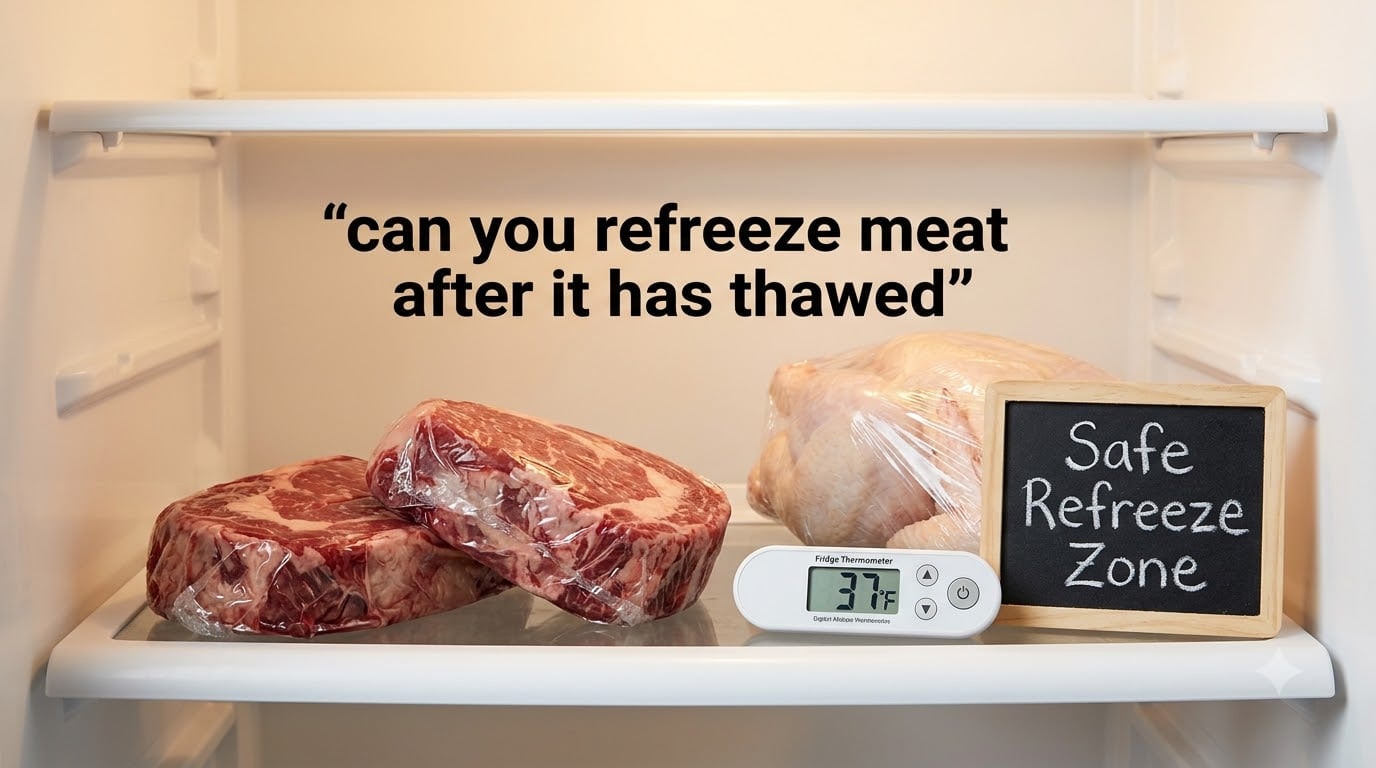
Yes, you can refreeze meat after it has thawed, but only if it was thawed safely in the refrigerator and never warmed above 40°F (4°C). According to the USDA, meat that has stayed at or below 40°F throughout the entire thawing process contains dormant, not multiplying, bacteria, so returning it to the freezer remains safe. If the meat ever entered the “danger zone” between 40°F and 140°F for more than two hours, bacteria such as Salmonella and E. coli can multiply to unsafe levels, and refreezing will not make it safe again. In our test kitchen, we portion, thaw, and refreeze briskets, whole chickens, and ground beef weekly, and following the USDA cold-chain rule is what keeps every batch safe.
This guide walks you through the USDA rule, the danger zone, the three safe thawing methods, exact thaw times by meat type, and the moments when you should absolutely skip refreezing. You’ll also get a power-outage playbook, three myths debunked, and the best-practice checklist our team uses to keep refrozen meat both safe and high-quality.
Table of Contents
What the USDA Says About Refreezing Thawed Meat
The USDA rule is direct: meat that has been thawed in the refrigerator, kept at or below 40°F, and has not entered the danger zone can be safely refrozen raw or cooked. The same applies to previously frozen meat you bought at the grocery store and thawed at home before use.
The rule hinges on one thing: temperature. As long as bacteria have not had a warm window to multiply, freezing them again simply pauses them again. Cooking before refreezing is not required when the cold chain has been respected.
Key USDA conditions for safe refreezing:
- Meat was thawed in the refrigerator at 40°F or below.
- Meat never sat at room temperature longer than two hours total.
- Meat never sat at temperatures above 90°F for longer than one hour.
- Ice crystals are still visible, or the meat feels refrigerator-cold to the touch.
If any of those conditions fail, the safest path is to cook the meat fully and then either eat it or freeze the cooked result, because heat kills bacteria that freezing cannot.
Understanding the Food Safety Danger Zone
The “danger zone” is the temperature band where foodborne bacteria grow fastest, sitting between 40°F and 140°F (4°C to 60°C). Inside the band, bacterial populations can double every 20 minutes, which is why a single overlooked hour on the counter can quietly push meat past the safety threshold.
Below 40°F, most harmful bacteria stay dormant or grow extremely slowly. Above 140°F, the heat begins destroying them. The danger zone is the in-between window where bacteria thrive and toxins can accumulate, and freezing in this window only pauses growth rather than reversing it.
Three practical danger-zone rules to remember:
- Two-hour rule: discard any perishables left at room temperature for more than two hours total.
- One-hour rule at 90°F or above: cut the two-hour window down to one hour when the room is hot, such as in a summer kitchen or a parked car.
- Thermometer truth: when in doubt, measure the meat’s internal temperature with a clean probe. Anything reading 40°F or higher for any meaningful stretch is no longer safe to refreeze raw.
The Three Safe Ways to Thaw Meat
How you thaw meat determines whether refreezing is on the table later. The USDA recognizes three safe methods, and only one of them is forgiving enough to allow a follow-up refreeze.
Refrigerator Thawing (the only refreeze-friendly method)
Place the wrapped meat on a bottom shelf in a leak-proof container and let it thaw slowly at 40°F or below. Plan ahead, because a 5-pound brisket can take up to two full days. The reward: meat thawed this way stays safe to refreeze and stays at peak quality.
Cold Water Thawing (use only if you plan to cook immediately)
Submerge the sealed meat in cold water, changing the water every 30 minutes so it stays below 70°F. Allow about one hour per pound. Once thawed, cook the meat right away. Do not refreeze raw meat thawed this way, because parts of the surface inevitably warm above 40°F during the bath.
Microwave Defrost (cook immediately, do not refreeze raw)
Use the defrost setting and remove packaging that traps steam. Microwave thawing heats edges unevenly, which means partial cooking and bacterial risk. The USDA is explicit: cook the meat immediately after microwave thawing and never refreeze it raw.
Refrigerator Thaw Times by Meat Type
Use this reference table to plan your thaw. Times assume a 40°F refrigerator and a fully wrapped cut. Larger roasts and whole birds take longer per pound than small cuts.
- Ground meat (beef, turkey, pork): about 24 hours per 5 pounds, plan a full day for a 1-pound package.
- Steaks, chops, and small roasts: 12 to 24 hours, with thinner cuts done overnight.
- Larger roasts (beef, pork, lamb): 4 to 7 hours per pound, so a 6-pound pork shoulder needs roughly a day and a half.
- Whole chicken: 24 hours for up to 4 pounds, plus about 4 extra hours per additional pound.
- Whole turkey: 24 hours per 4 to 5 pounds, so a 12-pound bird needs three full days in the fridge.
- Fish fillets and shellfish: 12 to 24 hours, usually overnight is enough.
If your thaw runs longer than expected, that is fine. As long as the fridge stays at or below 40°F, the meat simply waits safely and can still be refrozen.
When You Should NOT Refreeze Meat
Some thaw situations permanently rule out raw refreezing. Skipping a refreeze in these cases is the difference between a safe kitchen and a foodborne illness.
Do not refreeze meat that:
- Was thawed on the counter at room temperature for more than two hours total.
- Sat in a hot environment above 90°F for more than one hour, including car trunks in summer.
- Lost its chill during transport and warmed above 40°F in the middle of the package.
- Was thawed in cold water or the microwave without being cooked immediately afterward.
- Shows slimy patches, off smells, or a sticky surface, even if the timing looks okay.
Partially thawed meat is a gray area, but the rule is simple. If ice crystals still show and the inside feels refrigerator-cold, refreeze it. If the meat is fully soft and warmer than 40°F in any part, treat it like a fresh thaw and cook it before deciding what to do next.
How Long Thawed Meat Stays Safe in the Fridge
USDA refrigerator storage times after thawing are tighter than most home cooks realize. Plan to cook or refreeze within these windows once the meat is fully thawed.
- Ground meat (beef, pork, lamb, poultry): 1 to 2 days.
- Steaks, chops, and roasts (beef, lamb, pork, veal): 3 to 5 days.
- Fresh poultry (whole or pieces): 1 to 2 days.
- Cooked meat dishes: 3 to 4 days.
- Fish and shellfish: 1 to 2 days.
These windows assume the fridge stays at 40°F or below. A fridge that creeps to 42°F cuts every window in half, so a refrigerator thermometer is one of the cheapest safety upgrades you can make.
What Happens to Quality When You Refreeze Meat
Safety and quality are two different conversations. Refreezing meat that stayed cold is safe every time, but the texture and flavor take a hit with each freeze-thaw cycle. Knowing what changes helps you decide when refreezing is worth it and when it is better to cook now.
Three quality effects to expect:
- Ice crystal damage: water inside cells expands when frozen. Each cycle punctures more cell walls, so thawed meat loses more liquid and ends up drier after cooking.
- Moisture and flavor loss: that lost liquid carries flavor with it. Refrozen steaks and chicken breast can taste noticeably blander.
- Lipid and protein oxidation: exposed fats and proteins react with oxygen during each thaw, producing off-flavors sometimes described as “warmed-over” or “cardboard-like.”
Our team has found that one refreeze is usually fine for most cuts. Two refreezes start showing real texture drop. Three or more refreezes and you are basically wasting a good piece of meat, so cook it instead.
Refreezing Cooked Meat vs Raw Meat
Cooked meat actually holds up better than raw in some ways, because the heat treatment kills active bacteria before you refreeze. The rules are similar but a little more forgiving.
Two differences to remember:
- Cooked meat should be cooled to 40°F or below within two hours before going back into the freezer, to avoid spending extra time in the danger zone.
- Refrozen cooked meat loses less perceived quality than refrozen raw meat, because the cells were already broken down during cooking, so another freeze-thaw round is less dramatic.
If the original raw meat went through a borderline thawing window, cooking it first and then freezing the cooked result is the safe recovery path. Restaurants rely on this trick every day with leftover mise en place.
Power Outage: What to Do When the Freezer Goes Down
A power outage is the one real-world scenario where most of the rules above get stress-tested at once. A full freezer holds safe temperature for about 48 hours if the door stays closed. A half-full freezer only manages about 24 hours. After that, the clock starts ticking.
Power outage recovery checklist:
- Keep the freezer door closed as long as possible. Every opening adds heat.
- Place an appliance thermometer in the freezer if you have one. If it still reads 40°F or below, the food is safe to refreeze.
- When the power returns, check for ice crystals and firmness. Anything still frozen solid or with visible crystals can be refrozen without cooking first.
- If the meat has thawed completely but the interior still feels refrigerator-cold, cook it now and freeze the cooked result.
- If anything smells sour, looks slimy, or has been warmer than 40°F for more than two hours, throw it out. The cost of replacing meat is cheaper than a bout of food poisoning.
Restaurants handle this with strict receiving logs and labeled prep containers. Home cooks can borrow the same habit by dating every package with a Sharpie the moment it goes into the freezer.
Myths About Refreezing Meat, Debunked
A surprising amount of kitchen folklore has built up around refreezing. Here are the three most common myths, and what the science actually says.
Myth 1: Refrozen meat is never safe. Wrong. The USDA rule allows safe refreezing whenever the cold chain was respected. The texture drop is real, but the safety concern only appears when the meat warmed into the danger zone.
Myth 2: You can tell if meat is bad by smell alone. Partly wrong. Pathogens such as Salmonella and E. coli can multiply without changing smell, color, or texture. Sensory checks catch spoilage bacteria, which cause off odors and slime, but they miss dangerous pathogens. Temperature history matters more than your nose.
Myth 3: Freezer burn means the meat is unsafe. Wrong. Freezer burn is a quality issue, not a safety one. Gray, dry patches come from air reaching the surface, causing dehydration and oxidation. Cut away the affected areas and the rest is perfectly safe to eat or refreeze.
Best Practices for Freezing and Refreezing Meat
A few habits turn refreezing from a gamble into a routine. These are the same techniques our kitchen team uses for prep and leftovers.
- Vacuum seal or wrap tightly in a freezer-safe material with as little air as possible. Air is what causes freezer burn and accelerates oxidation.
- Portion before freezing so you only thaw what you need. One-pound ground beef packs refreeze far better than a five-pound brick.
- Label every package with the contents and the freeze date. USDA quality guidelines recommend using frozen meat within four to twelve months for best quality, depending on the cut.
- Cool cooked food to 40°F or below before refreezing, ideally within two hours of cooking.
- Keep the freezer at 0°F or below and the fridge at 37°F to 40°F for the widest safety margin.
Frequently Asked Questions
Is it safe to eat meat that has thawed and been refrozen?
Yes, as long as the meat was thawed in the refrigerator and never warmed above 40°F (4°C). The USDA confirms that refrozen meat kept under refrigeration is safe to eat, though you may notice drier texture and slightly less flavor.
Is it safe to refreeze meat after thawing it?
Yes, when the meat was thawed in the refrigerator at 40°F or below. If it was thawed in cold water or the microwave, cook it first and then you can freeze the cooked result.
Is it safe to refreeze partially thawed meat?
Yes, if ice crystals are still visible and the meat still feels refrigerator-cold. If the meat is fully soft and any part warmed above 40°F for more than two hours, cook it before deciding.
How many times can you thaw and refreeze meat?
Technically, you can refreeze safely any number of times as long as the cold chain holds. In practice, two refreezes start showing real texture loss, and three or more cycles waste a good piece of meat. Cook it instead after the second refreeze.
Can you refreeze meat thawed at room temperature?
No. Meat left at room temperature for more than two hours (or one hour above 90°F) has entered the danger zone. Cook it thoroughly and freeze the cooked result, or discard it.
Can you refreeze meat thawed in the microwave?
No raw meat thawed in the microwave should be refrozen. The microwave defrost setting heats edges unevenly, so cook the meat immediately after thawing and then refreeze the cooked dish if you want to save it.
What meats should not be refrozen?
Any meat that warmed above 40°F for more than two hours, anything thawed on the counter, anything thawed in cold water or the microwave without being cooked, and anything showing slime, off smells, or discoloration. Cook these cuts instead or discard them.
Can you refreeze vacuum sealed meat?
Yes, vacuum-sealed meat follows the same USDA rules. If it was thawed in the refrigerator and never warmed above 40°F, it is safe to vacuum-seal again and refreeze. Vacuum sealing actually reduces freezer burn during storage.
The Bottom Line on Refreezing Thawed Meat
You can refreeze meat after it has thawed whenever it stayed refrigerated throughout the thaw and never crossed 40°F. The USDA rule is the only one that matters here. Use the refrigerator thaw method, watch the two-hour and one-hour-at-90°F danger-zone rules, and cook anything that spent time on the counter before deciding whether to refreeze the cooked result.
In our restaurant kitchen, we treat every package like a small cold-chain. Date it, store it at 0°F or below, thaw it in the fridge, and we have never had a safety issue with refrozen cuts. Apply the same habits at home and refreezing meat becomes a routine instead of a risk.