
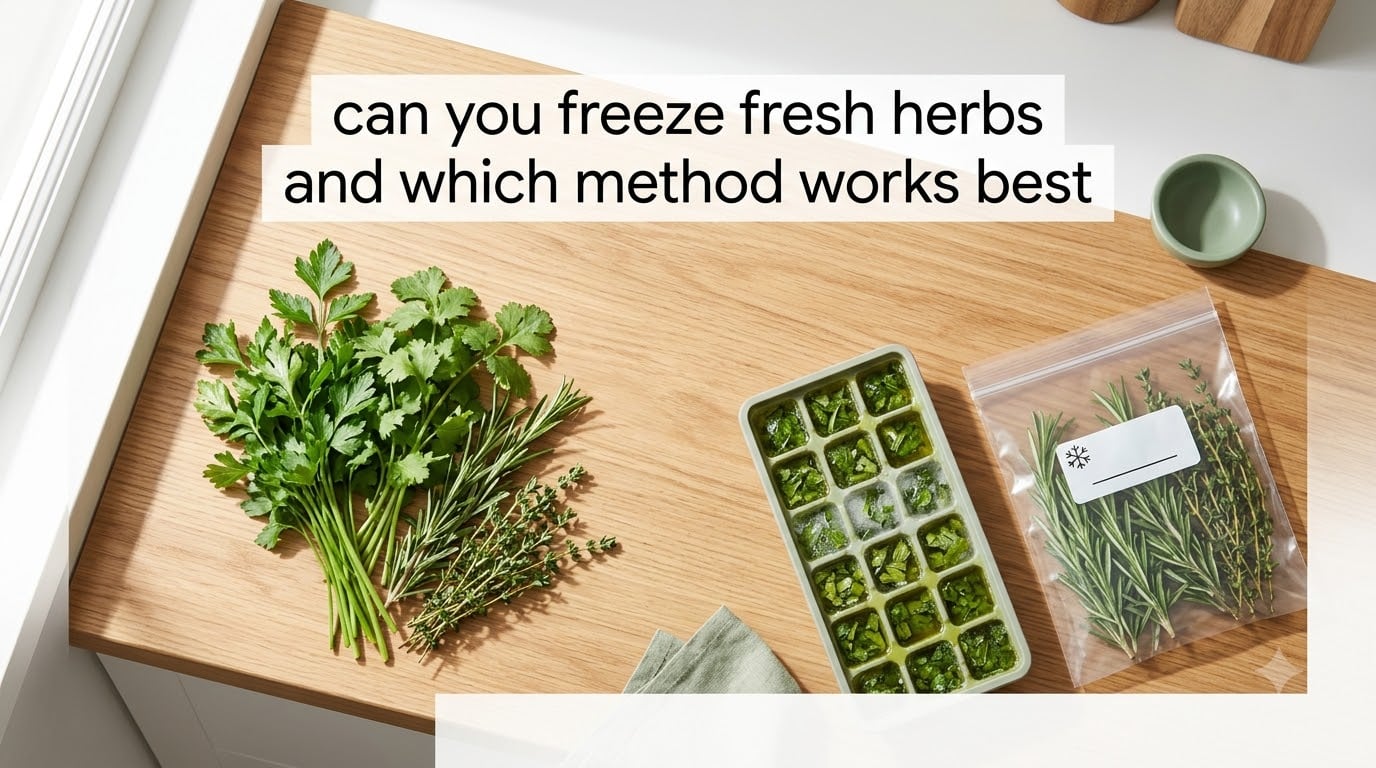
Yes, you can freeze fresh herbs — and which method works best depends on the herb in your hand and the dish you cook most. We tested four methods across tender leaves like basil and mint, and woody stems like rosemary and thyme, and the short answer is that freezing is one of the best ways to lock in flavor for months. Below, we walk through how to pick a method, prep your herbs, and avoid the black-basil, freezer-burn, and mystery-cube traps that catch most home cooks.
Freezing works because sub-zero temperatures halt the enzymes and microbes that wilt fresh herbs. Ice crystals do rupture cell walls, which is why thawed herbs turn limp and lose their snap. What survives beautifully is the flavor — the volatile oils that make basil smell like July and rosemary taste like the grill. So think of frozen herbs as flavor boosters for cooked dishes, not garnishes for a plate.
Table of Contents
Quick Answer: Yes, You Can Freeze Fresh Herbs
Here is the at-a-glance cheat sheet. Use this to match the herb in your kitchen to the right method before you read any further.
| Herb | Best Method | Why |
|---|---|---|
| Basil | Olive oil (flat bag or trays) | Avoids oxidation that turns leaves black |
| Parsley | Chopped in airtight container or oil | Stays bright; great all-purpose |
| Cilantro | Oil trays or chopped in bags | Water turns it gray; oil keeps flavor |
| Mint | Whole-leaf flash freeze | Keeps leaves whole for drinks and desserts |
| Chives | Chopped flash freeze on sheet pan | Stays in usable pieces |
| Dill | Oil trays or chopped | Loses potency fast — freeze promptly |
| Rosemary | Whole sprigs on the stem | Stems act as handles; woody holds up |
| Thyme | Whole sprigs on the stem | Leaves stay attached; easy to strip |
| Oregano | Whole sprigs or chopped | Holds flavor well either way |
| Sage | Whole leaves flash frozen | Big leaves stay usable for frying |
If you only have ten seconds: freeze tender herbs in olive oil, and woody herbs whole on the stem. Everything below adds the why and the how.
Which Herbs Freeze Best (And Which Don’t)
Almost every culinary herb freezes well, but they break into two clear camps that dictate your method.
Tender (Soft) Herbs
Tender herbs have soft stems and high water content: basil, parsley, cilantro, mint, chives, dill, and tarragon. They freeze fine, but their cell walls collapse on thaw — so plan to use them in cooked dishes, not as a garnish. Basil and cilantro are the most sensitive; basil famously turns black when exposed to air while frozen.
Woody (Hard) Herbs
Woody herbs have firm, fibrous stems and lower water content: rosemary, thyme, oregano, sage, and bay. They freeze exceptionally well — often better than drying, since drying can crush their resinous oils. Leaves cling to the stem after freezing and strip off cleanly with a thumb rub.
One herb to skip: delicate garnishes like chervil or microgreens. They turn to mush no matter what method you use, and are better used fresh within a day or two.
How to Prepare Herbs Before Freezing
Good prep is the difference between bright, aromatic frozen herbs and a sad freezer-burned brick. We follow the same five steps every time.
- Harvest or buy at peak. Freezing preserves what’s already there. Wilted, yellowing, or slimy herbs will not improve in the freezer — they will simply preserve those flaws.
- Rinse in cold water. A quick dip in a bowl of cold water (not running, which can bruise tender leaves) lifts off grit. Swish gently, lift out, don’t pour through the colander.
- Dry thoroughly. Wet herbs freeze into clumps and invite ice crystals. A salad spinner knocks off most water, then pat dry between two clean kitchen towels. Air-dry on a towel for 20 minutes if you have the time.
- Strip and sort. For tender herbs, pluck leaves from stems now. For woody herbs, leave the stems on — they act as handles and the leaves cling better during freezing.
- Decide: whole, chopped, or in oil. This is the only real choice. Whole sprigs work for rosemary, thyme, oregano, sage. Chopped works for parsley, chives, mint. Olive oil works for almost everything, especially basil and cilantro.
Pro tip: If you’re processing a big garden harvest in batches, lay everything out on a clean towel before you start. It turns a chaotic kitchen into an assembly line.
Method 1: Flash Freeze Whole Herbs on a Baking Sheet
This is the cleanest method for woody herbs and any time you want leaves you can pick up individually later.
- Line a rimmed baking sheet with parchment paper.
- Lay herbs in a single layer — leaves or whole sprigs — leaving space between each piece.
- Flash freeze for 1 to 2 hours, until completely solid.
- Transfer the frozen herbs to a labeled freezer bag, press out the air, seal, and return to the freezer.
Best for: rosemary, thyme, oregano, sage, mint, whole basil leaves. Duration: 4 to 6 months at peak flavor. Why it works: pre-freezing on a sheet prevents the herbs from clumping into a brick, so you can grab exactly the amount you need.
Forum users on r/Cooking consistently report this as the easiest method for large harvests — label the bag, lay it flat in the freezer, and stack like books.
Method 2: Chop and Freeze in Airtight Containers
Best for weeknight cooking. You chop once, portion once, and skip the cutting board at dinnertime.
- Roughly chop herbs with a sharp knife or pulse in a food processor.
- Pack into airtight containers, freezer bags, or silicone ice cube trays in tablespoon-sized portions.
- Press out air from bags; leave a half-inch of headspace in rigid containers (herbs expand as they freeze).
- Label with the herb name and the date.
Best for: parsley, chives, mint, oregano, mixed herb blends. Duration: 3 to 4 months for best flavor. Why it works: chopping releases less water than you’d think, and the smaller pieces thaw in seconds when they hit a hot pan.
Tip: Many home cooks freeze pre-mixed blends — Italian (basil, oregano, thyme), soup (parsley, thyme, bay), or fines herbes (parsley, chives, tarragon, chervil). Mix the dried or fresh combo once, then freeze in single-serving portions.
Method 3: Freeze Herbs in Ice Cube Trays (Water or Oil)
Portion control is the reason to choose trays. Each cube equals roughly one tablespoon of herb, ready to drop into a pot.
- Finely chop herbs and pack each tray well to about two-thirds full.
- Cover with water or olive oil (see the comparison below).
- Freeze for 4 to 6 hours until solid.
- Pop cubes out and store in a labeled freezer bag, pressing out the air.
Water vs oil: water cubes are perfect for stocks, soups, and boiling — they melt into the liquid. Oil cubes are better for sautés, pasta sauces, and roasted vegetables, where you want fat as the carrier instead of water diluting the flavor.
Skip water for basil and cilantro. Basil turns black on contact with air while frozen in water, and cilantro goes gray and flavorless. Both stay bright in oil.
Method 4: Freeze Herbs in Olive Oil (Flat-Bag or Trays)
This is our team’s default for weeknight cooking, and it is the method r/Cooking users call out most often as the easiest. Oil protects flavor compounds from oxidation and gives you a ready-to-sauté portion every time.
The Flat-Bag Method (Serious Eats Approach)
- Chop herbs and place them in a heavy-duty zipper-lock freezer bag.
- Pour in enough neutral or extra virgin olive oil to cover — typically a 1:2 ratio of herbs to oil by volume.
- Press the bag flat, squeeze out air, seal, and lay it flat in the freezer.
- Once frozen, you can stack it like a file, and snap off chunks as needed.
The Ice Cube Tray Method
- Chop herbs, pack trays to two-thirds full.
- Top with olive oil — extra virgin works for Mediterranean dishes, neutral oil (canola, grapeseed, avocado) for dishes where you don’t want the olive flavor.
- Freeze, pop out, and bag the cubes with a label.
Best for: basil (the only reliable method to keep it green), parsley, cilantro, dill, mixed Italian blends. Duration: 4 to 6 months. Why it works: oil seals the leaves off from oxygen, which is the cause of the black-basil problem.
Ratio rule of thumb: 1 part chopped herbs to about 2 parts oil by volume. Too little oil and you get freezer burn on exposed leaves; too much and you’re wasting oil.
Bonus Method: Make Compound Herb Butter
If you have butter in the fridge, you have a freezer-friendly herb delivery system. Compound butter melts onto steaks, fish, vegetables, and warm bread with restaurant-quality flavor.
- Soften one stick of unsalted butter.
- Mix in 2 to 3 tablespoons of finely chopped herbs (parsley, chives, thyme, and rosemary are classic).
- Spoon onto plastic wrap, roll into a log, and twist the ends.
- Freeze for up to 3 months. Slice off rounds as needed.
This works beautifully with woody herbs like thyme and rosemary, which hold up to the fat without losing their punch.
Best Freezing Method by Herb Type
This is the comparison table no competitor publishes. Use it as your kitchen reference — print it, pin it to the fridge, and consult it before each batch.
| Herb | Method 1: Whole on Sheet | Method 2: Chopped | Method 3: Water Trays | Method 4: Oil Trays/Bag | Winner |
|---|---|---|---|---|---|
| Basil | Good | OK | Avoid (turns black) | Best | Oil |
| Parsley | OK | Good | Good (for stocks) | Best | Oil |
| Cilantro | OK | Good | Avoid (grays) | Best | Oil |
| Mint | Best | Good | OK | Good | Whole |
| Chives | Best | Good | Good | Good | Whole |
| Dill | Good | Good | OK | Best | Oil |
| Rosemary | Best | Good | OK | Good | Whole on stem |
| Thyme | Best | Good | OK | Good | Whole on stem |
| Oregano | Best | Good | Good | Good | Whole on stem |
| Sage | Best | Good | OK | Good | Whole leaves |
Notice the pattern: tender, high-moisture herbs want oil; woody herbs want their stems. That single rule covers 90% of decisions.
How Long Do Frozen Herbs Last?
All frozen herbs technically keep indefinitely at 0°F, but flavor fades with time. Here is the realistic window we use for peak quality.
| Method | Peak Flavor | Acceptable | Still Safe |
|---|---|---|---|
| Whole on sheet (flash frozen) | 4 to 6 months | 6 to 9 months | 12 months |
| Chopped in airtight container | 3 to 4 months | 5 to 7 months | 9 months |
| Ice cube trays in water | 3 to 4 months | 5 to 7 months | 9 months |
| Olive oil flat bag or cubes | 4 to 6 months | 7 to 9 months | 12 months |
| Compound butter | 2 to 3 months | 4 to 5 months | 6 months |
Freezer burn is your real enemy, not the calendar. If your herbs developed ice crystals, lost color, or smell like the inside of the freezer, they’ve crossed over. Toss and start fresh.
How to Use Frozen Herbs (No Thaw Needed)
The single biggest mistake is thawing frozen herbs on the counter. You do not need to thaw them — and doing so makes them watery and limp.
Drop Them Straight Into Hot Dishes
Frozen herbs go directly into simmering soups, stews, boiling pasta water, or a hot skillet with oil. The cube or clump melts in under a minute and releases flavor into the fat or liquid.
Finish a Dish
For sautés and pan sauces, add frozen herbs in the last 30 seconds of cooking. The residual heat wakes up the volatile oils without overcooking the leaves.
Blend Them Into Sauces
Frozen oil cubes are ready-made sauce starters. Drop one into tomato sauce, curry, or braised lentils at the start of cooking.
For Drinks and Smoothies
Mint leaves frozen whole on a sheet work beautifully in iced tea, lemonade, and smoothies. Just drop them in frozen.
What Frozen Herbs Are NOT Good For
Be honest about the limitations and you will never be disappointed.
- Fresh garnishes. Thawed basil on a Caprese is sad basil. Use fresh for anything plate-facing.
- Salads. Lettuce, slaw, and herb salads need crisp leaves. Frozen herbs collapse.
- Pesto that depends on bright color. Frozen basil in oil stays greener than frozen basil in water, but neither matches fresh. If presentation matters, make pesto fresh.
- Anything raw. Dressings, marinades, and sauces that don’t get cooked will taste flat from frozen herbs. Use them in dishes that see heat.
- Infused oils meant to stay raw. Frozen-herb oil is for cooking. For raw finishing oil, use fresh herbs or dried.
Dried vs Frozen Herbs: Which Is Better?
Both have a place. Here is how we decide.
| Factor | Frozen | Dried |
|---|---|---|
| Flavor match to fresh | Very close | Different (concentrated, mellower) |
| Storage space | Higher (ice cube trays, bags) | Minimal (jars) |
| Shelf life at peak | 3 to 6 months | 6 to 12 months |
| Convenience | Drop straight in | Sprinkle straight in |
| Best for | Cooked dishes, weeknight sautés | Dry rubs, long simmers, soups |
| Weak for | Garnishes, salads | Bright finishing, delicate sauces |
| Equipment needed | Freezer, trays, bags | Dehydrator or oven, jars |
Quick rule: if you cook the herb (soups, sauces, sautés, braises), freeze. If you want it on the shelf for months without freezer space, dry.
Common Herb-Freezing Mistakes to Avoid
We have made all of these so you don’t have to.
- Freezing wet herbs. Surface water turns to ice crystals and ruins texture. Dry thoroughly before freezing.
- Skipping the label. Frozen chopped parsley, cilantro, and chives look identical. Always label with the name and date.
- Forgetting to press out air. Air inside a freezer bag causes freezer burn. Squeeze it flat before sealing.
- Using the wrong oil for the dish. Extra virgin olive oil has a strong flavor; for Asian or neutral-flavored dishes, use canola, grapeseed, or avocado oil instead.
- Overfilling ice cube trays. Water and oil expand when they freeze. Leave a little room at the top or you’ll have a tray that won’t seal.
- Thawing on the counter. It turns herbs into a soggy mess. Drop them straight into hot dishes instead.
- Freezing herbs past their prime. Already-wilting herbs freeze into already-wilting cubes. Use them fresh or compost them.
- Expecting garnish quality. Thawed herbs are for flavor, not looks. Keep a small fresh bunch for plating.
Frequently Asked Questions
What’s the best way to freeze fresh herbs?
The best way to freeze fresh herbs depends on the type. For tender herbs like basil, parsley, and cilantro, freeze them in olive oil using a flat freezer bag or ice cube trays. For woody herbs like rosemary, thyme, oregano, and sage, flash freeze whole sprigs on a baking sheet first, then bag them. Both methods lock in peak flavor for 4 to 6 months.
Can you freeze basil without it turning black?
Yes. Basil turns black when frozen in water because of oxidation. To keep basil green, freeze it in olive oil instead. Chop the leaves, pack them into ice cube trays or a flat freezer bag, cover with olive oil at about a 1:2 ratio of herbs to oil, and freeze. The oil seals the leaves off from oxygen and preserves both color and flavor for 4 to 6 months.
How do you freeze herbs in olive oil?
Chop your herbs finely. Pack them into ice cube trays or a heavy-duty zipper-lock freezer bag, then pour in enough olive oil to cover, roughly a 1:2 ratio of herbs to oil by volume. Press out the air, seal the bag flat, or freeze the trays until solid. Pop the cubes out and store in a labeled freezer bag. Use extra virgin olive oil for Mediterranean dishes or a neutral oil like canola or grapeseed for other cuisines.
How long do frozen fresh herbs last?
Frozen herbs technically keep indefinitely at 0°F, but flavor fades with time. For peak quality, use them within 4 to 6 months. Acceptable flavor lasts 6 to 9 months. They remain safe to eat up to 12 months. Olive oil cubes and flash-frozen whole herbs last longest. Chopped herbs in airtight containers peak earlier, around 3 to 4 months. Freezer burn, not the calendar, is the real signal that herbs have gone past their prime.
Do you need to thaw frozen herbs before cooking?
No. Do not thaw frozen herbs on the counter; they turn watery and limp. Drop them straight into simmering soups, stews, boiling pasta water, or a hot skillet with oil. The cube or clump melts in under a minute and releases flavor into the fat or liquid. Add frozen herbs in the last 30 seconds of cooking for sautés and pan sauces.
Which herbs freeze well and which don’t?
Almost all culinary herbs freeze well. Tender herbs with soft stems and high water content (basil, parsley, cilantro, mint, chives, dill, tarragon) freeze well but lose crisp texture on thaw, so use them in cooked dishes. Woody herbs with firm stems (rosemary, thyme, oregano, sage, bay) freeze exceptionally well and often beat drying for flavor. Delicate garnishes like chervil and microgreens do not freeze well; use them fresh within a day or two.
Can you freeze rosemary and thyme?
Yes, rosemary and thyme are among the easiest herbs to freeze. Their woody stems and lower water content protect the leaves during freezing. Flash freeze whole sprigs on a parchment-lined baking sheet for 1 to 2 hours, then transfer to a labeled freezer bag. The leaves cling to the stem in the freezer and strip off cleanly with a thumb rub when you need them. They keep peak flavor for 4 to 6 months.
Final Verdict
You can absolutely freeze fresh herbs, and the best method is the one that matches the herb in your hand. Our team defaults to olive oil for tender herbs like basil, parsley, cilantro, and dill, and whole sprigs on the stem for woody herbs like rosemary, thyme, oregano, and sage. Both methods lock in peak flavor for 4 to 6 months and require only a baking sheet, freezer bags, or ice cube trays.
Start with one herb this week — basil in oil is the easiest win, and you’ll see the difference the first time you drop a green cube into a pot of soup. Once you see how simple it is, expand to parsley, then to whatever’s overflowing in your garden or marked down at the market. By the end of one season, you’ll have a freezer full of summer flavor ready for any weeknight.